Monthly Archives: March 2014

Shaxi, Yunnan


Shaxi Cultural Revolution Maoist Headquarters (

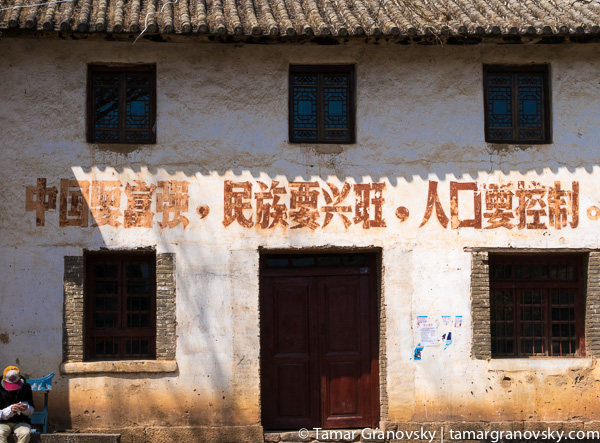
Shaxi, Cultural Revolution Maoist Headquarters (“If the country wants to prosper and become strong then follow the birth plan” — jie hua shen yu : one child one couple)

Shaxi, Yunnan Province:

Shaxi is a small, quiet, even sleepy village, situated in a fertile valley surrounded by mountains, a three-hour bus ride northwest from Dali. As you walk about, you see locals labouring in construction, working in small shops, or selling food or vegetables on the street.  The fields are tended mostly by women, while the men herd goats. The Bai are very industrious but also seem to take their time as they work. It appears that they embrace their traditional lives. It is a friendly village and Yulan (a friend from Kunming) and I were able to strike up a number of conversations with the minority villagers. Shaxi is beginning to see its share of tourists, and the stores, cafes, and hostels/hotels designed for people like us, yet it is still primarily a town of locals, and many of these sites are mostly empty. At the moment, its interest in outsiders is only secondary – although this will almost certainly change in the next few years.

Buildings in Shaxi (and Dali) are made of a foundation of locally quarried stone and the walls are constructed with rammed-earth, covered by slaked lime and decorated on the outside with grey or blue ink-and-wash paintings. I have been told that nails are not used and instead, a system of double brackets supports the roof atop thick wood pillars. Like elsewhere in Yunnan, and the rest of China, the rooves are covered in round roof edge tiles. These tiles are used for decoration or for very specific symbolism (represented in the colours of the eaves, the specific roofing materials, and, finally, the roof top decorations). Old Town Shaxi is a maze of criss-crossing narrow alleyways, with one main street leading in and out of the village and a second, narrower street (filled with tourist shops, cafes, etc.) that leads to the old village square. A Friday market is held each week, as it has been for many, many years!

Shaxi, Building a House

Shaxi, Building a House

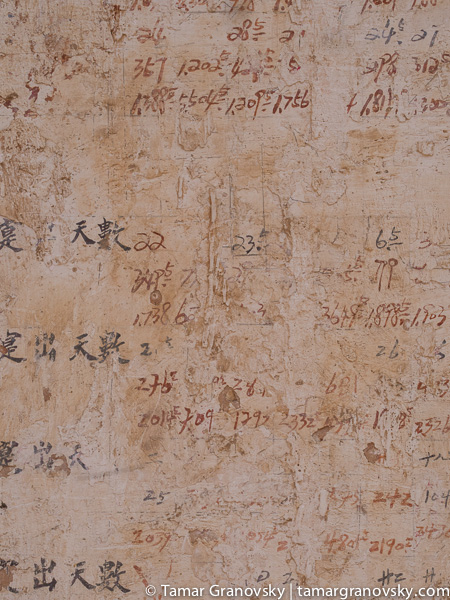
Shaxi, the Writing is on the Wall (pay up time to landowners of yesteryear?)

Shaxi, the Writing’s on the Wall (c.1940s? perhaps record-keeping when landlords collected rent from peasants who used their land, or, harvest records? – we were not able to get an answer for these calculations. if anyone knows what these numbers actually refer to please let me know. thank you!)

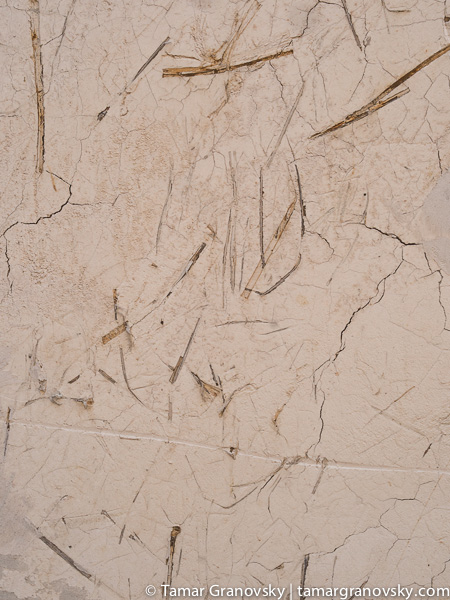
Saxi, Lime Wall with Horse Hairs and Straw

Shaxi, Lime Wall with Animal Hairs and Straw

On our first day in Shaxi, Yulan and I saw a few men leading donkeys with rattan baskets filled to the brim strapped to their backs. Women, both young and old, carry their produce and goods on their backs, hunching over to steady themselves and balance the baskets, whose straps stretch across their foreheads and are held onto on either side of their heads.

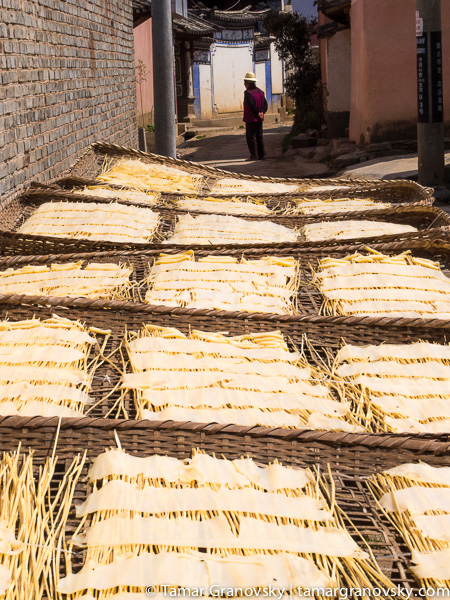
Shaxi Alley, (soy bean curd sheets drying in the sun)

Shaxi Alley, (soybean curd sheets drying in the sun)

Our second day in Shaxi was spent wandering the alleyways, speaking with more locals, and having breakfast and supper at the Long Feng Muslim Restaurant. The women who work there are welcoming and talkative, and laugh a lot!. The food is excellent, and the place is impeccably clean. At the front of the restaurant is the kitchen – open to the street. Behind this area and the main eating area is a small courtyard where the vegetables are prepared. Aging beef hangs from beams throughout the restaurant and courtyard. Breakfast consisted of a bowl of noodles in a spicy beef broth, with pieces of beef and vegetables. As is common, one can add extra condiments such as garlic, Sichuan pepper, pickled vegetables, hot pepper, etc. I think this soup may have been the best I have eaten in China. At supper we ordered a bowl of vegetable stew, as delicious as was the morning’s soup.

Shaxi, Long Feng Muslim Restaurant

Shaxi, Long Feng Muslim Restaurant

Lunch took us to Ben Tu Ren Jia, where we had two local dishes: zha ru bing (fried goat cheese sprinkled with sugar) and fen pi chao jidan (broad rice sheets mixed with egg and spices). Excellent food, again.

The streets of Shaxi are a pleasure to meander through and the countryside is perfect for walking in the fields and exploring the many nearby villages via bicycle.

Shaxi, Grandmother and Grandchild out for a Stroll

Shaxi, Grandmother and Grandchild out for a Stroll

Shaxi Doorway

Shaxi Doorway

Shaxi Doorway (detail)

Shaxi Doorway (detail)

We stayed at the local International Youth Hostel, which was inexpensive but very nondescript and dingy and dark. However, if you are on a budget this is a good enough choice. It is just not a place where you will want to chill (in fact, it was freezing there since its outer walls are literally made of plywood). I have been told that if you want to treat yourself,  a nice place to stay is the Old Theatre Inn — about a 15-minute bicycle ride from Shaxi. Breakfast is included and apparently the rooms are extremely comfortable, with all the amenities and a great view of the expansive farmland just beyond its doors, nestled among the villages and surrounding mountains.

Accommodation:

Places to Eat:

  • Ben Tu Ren Jia on the cobblestoned main street leading to the Town centre.
  • Long Feng Muslim Restaurant on Shaxi’s main road


Dali, Yunnan

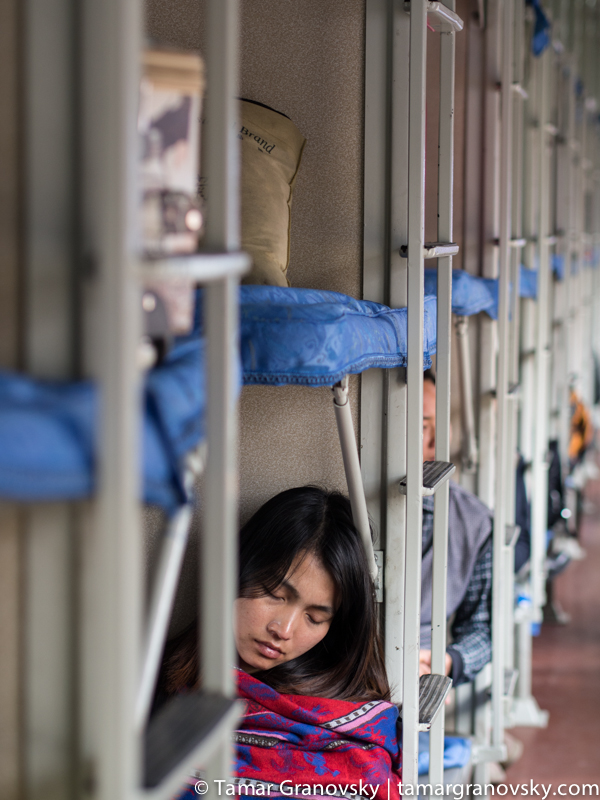
Woman Resting, Dali, Yunnan, China

Dali, Yunnan Province:

Yulan (one of my four teachers at Keats School in Kunming – and now a friend) and I travelled by overnight train (on a hard sleeper) to Dali, at the beginning of its Spring season. The capital of the Bai Autonomous Region, Dali is rich and fertile, and full of villages and farmland in the valley that surrounds the banks of the 40 km long Erhai Lake (洱海) (“er” = see; “hai” = lake or sea); the lake is shaped like an ear which is called “er” although the character “er” is written differently: 耳. The Bai heavily populate this area, and their traditions flourish despite the many tourists. There are also many expats who run a number of places in the town, including the guesthouse where we stayed. Older women dress in their traditional blue scarves and jackets. While we were there, the Bai community was celebrating the March Fair, which is held from March 15th to 21st of the lunar calendar, and, we were told, celebrates peace with traditional music, burned incense, and foods offered in sacrifice.

Bai Holiday, Dali, Yunnan
Bai Woman, Dali
Bai Woman, Dali

On our first day, we cycled 65 km., exploring the countryside and small villages in the greater Dali area. The local farmers were busy in their fields and children were fishing, with nets in hand and wearing only underwear. In one of these villages we found a lovely couple who makes bing (bread pockets which can be filled with many things, (we tried them with onions).

Man in Village Near Dali
Woman in Village Near Dali
Onion Bing, Dali, Yunnan, China
Onion Bing, (in village outside of Dali)

We stayed at a quiet guesthouse, Sleepy Fish, just inside the new east gate of the old town, and awoke to the sound of roosters crowing in the morning. At the start of each day, we went around the corner to eat shao er kuai (roasted rice flour cakes). This is a common Yunnanese dish; a roasted, thin, round, pancake-like er kuai, that is usually brushed with a peanut-sesame sauce and/or chile sauce (tian de / la de –> sweet and spicy), and wrapped around youtiao (deep-fried bread sticks), hotdogs, julliened potatoes, or other ingredients, depending on the vendor.

On day two we walked around the old town, where the main roads are overrun by tourists. Dali is known to have been “discovered” by backpackers and is still inundated with them, as well a new generation of young hippies. On these streets one sees small stores full of artisanal goods (including coffee shops), people doing bead-work on the streets, and others selling mass-produced embroidered fabrics, jewellery, etc. Dali is a town for tourists, but if you can get off the beaten path, you can still catch a glimpse of the daily lives of the people who live here, such as the farmers who sell their produce on the street. People still work their plots in the farmland that borders the old town. Some corners of Dali are real surprises – just by turning onto a side street you can happen upon a wide variety of glorious flowers and trees growing in small courtyards. This reminded Yulan of the poem written by the Song Dynasty Poet Ye Shao Weng’s poem Failure in Visiting the Garden:  “Spring air’s too overfull to be shut in the garden, Over the wall one red apricot-twig had to crane.”Spring in Dali really was in bloom; pear and apricot trees were flowering and outside town golden fields of rapeseed flowers, which bloom annually, were in striking abundance. 

 Dali, Apricot Tree in Bloom


Dali, Apricot Tree in Bloom (photograph courtesy of Hou Yulan)

Fields of Rapeseed (with old town Dali in the background)

Fields of Rapeseed (with old town Dali in the background)

Dali Street Scene

Dali Street Scene

Dali Street Scene, Renmin Lu

Dali Street Scene, Renmin Lu

Dali (Renmin Lu)

Dali Street Scene, Renmin Lu

Dali Alley

Dali Alley

Dali is full of excellent food (both on the street and in restaurants). For lunch on our second day we ate at Zai Hui Shou. Their specialty is lian ji mixian (cold rice noodle w/chicken, greens, peanuts, and a mix of a sweet and spicy sauce) and wan dou lian fen (cold yellow pea doufu – topped with peanuts, green onions, and a similar but slightly different sweet and spicy sauce). Suppertime took us to the four-generation-run restaurant,  Zhen Hua Fandian, where we ate: suan la yu – sour and spicy fish with an extremely flavourful and complicated broth; tang cou pai gu – sweet and sour pork ribs; and cha shou gu – mushroom with hot peppers). The third night in Dali we dined on braised pork, lotus root, and bamboo shoots  – at another highly recommended local restaurant, Xiao Duan Chu Fang. The atmosphere was pleasant in this spacious restaurant and the food was excellent (although more expensive than the two other somewhat simpler restaurants).

Wan Dou Lian Fen (cold yellow pea doufu)

Wan Dou Lian Fen (cold yellow pea doufu)

Accommodation:

Places to Eat:

  • Xiao Duan Chu Fang (Duan’s Kitchen) – 12 Renmin Lu
  • Zhen Hua Fandian – 181 Renmin Lu
  • Zai Hui Shou on Renmin Lu — 135 Renmin Lu

Why I Travel

During a Walk in the Alleyways of Kunming

During a Walk in the Alleyways of Kunming, Yunnan, China (that’s me on the right!)

For me, it is all about culture, landscape, food, architecture, and people – although not necessarily in that order. When I travel, my priorities change from day to day. But this is exactly why I travel. It puts me in situations I may never have imagined and spurs me to do things I thought I never could. It also provides me with new perspective on life. Most importantly, I suppose, through travel I have learned that people are generally kind and – despite its many pitfalls – the world is a fairly safe and basically good place. I never cease to be impressed by the kindness of strangers.” Many have become friends. China is a country that has never really gotten under my skin and yet it has begun to touch me. I am very aware that it is the people I have befriended who have made this happen. In the end, one of the most central aspects of travel is learning to connect with people. 

Weekly Traditional Chinese Music in a Pagoda at Daguan Park

Weekly Traditional Chinese Music Performance in a Pagoda at Daguan Park, Kunming, China

Weekly Traditional Chinese Music in a Pagoda at Daguan Park, Kunming, China

Weekly Traditional Chinese Music Performance in a Pagoda at Daguan Park, Kunming, China

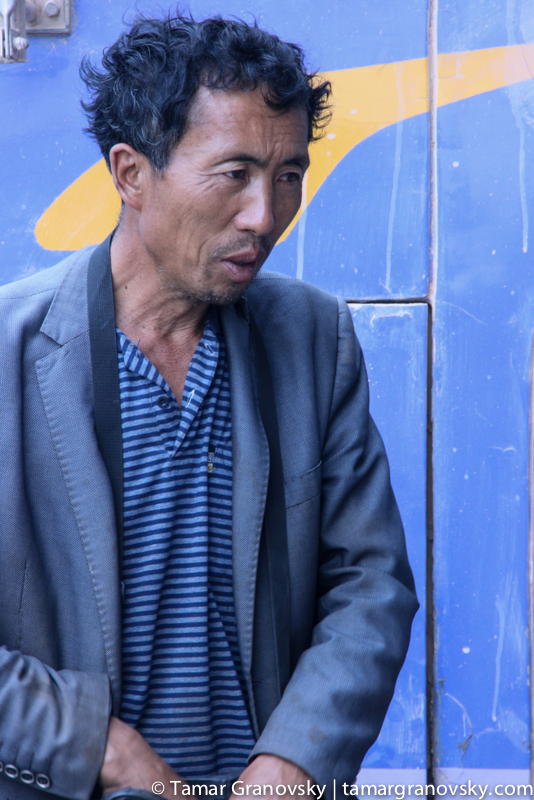
Man on the Street, Jianshui, China

Man on the Street, Jianshui, China

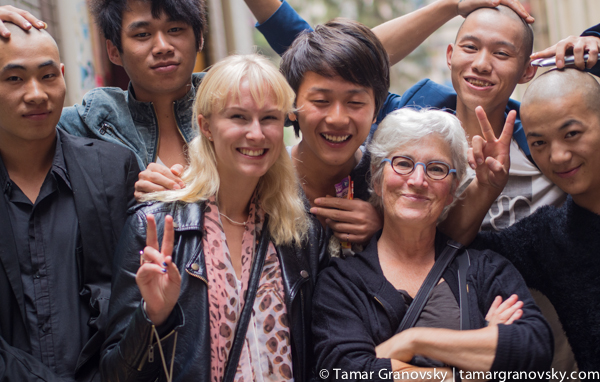
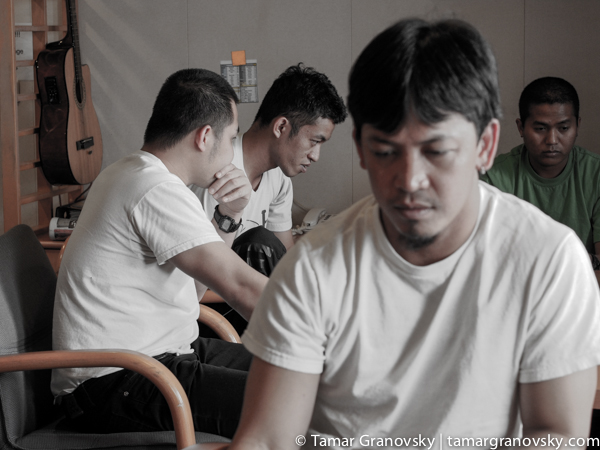
Some of the Crew on the Cargo Ship from Oakland, CA to Hong Kong

Some of the Crew on the Cargo Ship from Oakland, CA to Hong Kong

We all learn about other countries through films, media coverage, books, etc., but actually experiencing new places and people first-hand is a very different thing. Stereotypes and expectations have to be set aside. I find that the best way to get a good sense of a country is by adapting to its culture, pace, language, etc. As soon as I started travelling, I realised that I needed to learn at least the very basics about the cultures of the countries I was going to visit. I always make sure that I have key words and phrases to use – however poorly I may pronounce them. It is easy, and a very good idea, to laugh and smile a lot; this usually goes a long way in winning people over. And, of course, I always try to show great respect to people I meet. All of these small efforts ultimately enhance my experience and help me connect with those I encounter.

I enjoy being an explorer. I have travelled to few places (and yet, more than most people – I am fantastically fortunate) and feel compelled to return to almost every country I have visited, so that I can delve further in. The first time I go somewhere, I tend to do too much, afraid that I may not have a chance to return. When I am, fortuitously, able to visit again, I attempt to cover less ground and probe more deeply. Slowly, all too slowly, I am learning to experience new places by taking the time to just be. Travel is a voyage of discovery – not only of the unknown but of oneself. This voyage has become an inevitable and inseparable part of my life.

Street Scene, Kunming

Street Scene, Kunming

Singapore

Singapore

Coney Island, NY

Coney Island, NY

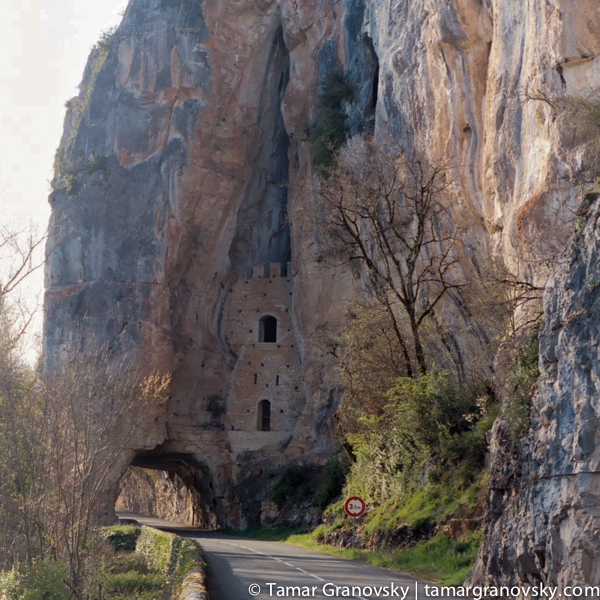
Outside of Cahors, France

Outside of Cahors, France

Luang Prabang, Laos

Luang Prabang, Laos

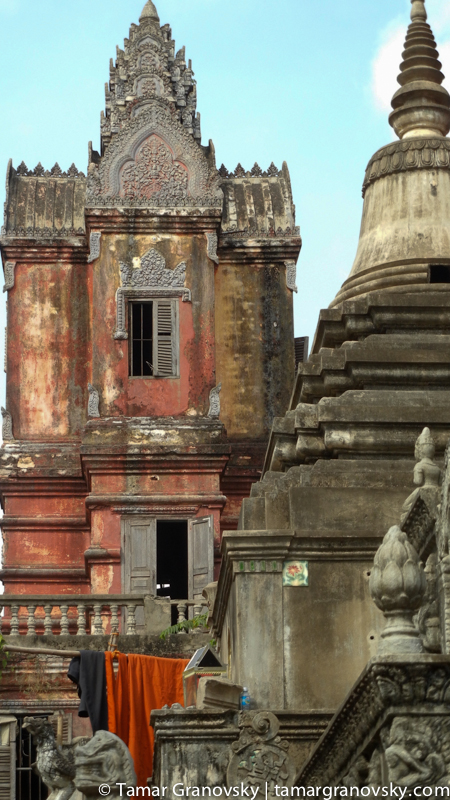
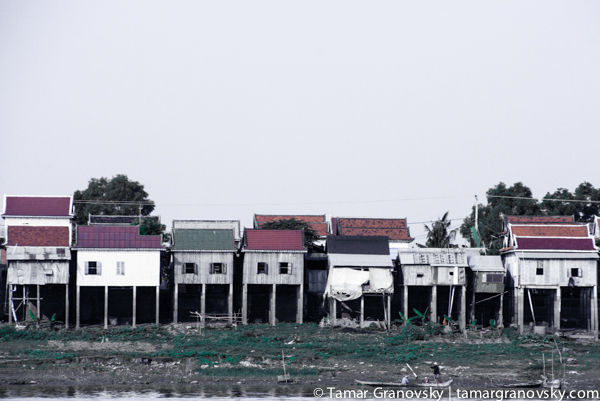
Phnom Penh, Cambodia

Phnom Penh, Cambodia

What I most savour is wandering, getting (a little) lost, and exploring neighbourhoods that are off the beaten path, so that I can get a sense of how people live. At times I feel as if I must look like a gawker to those who inhabit these communities. However, it is my endless curiosity about people that leads me there; I look for differences from, and similarities to, my own life experiences. I’ve been to Paris three times but have only visited museums there twice. There are so many districts, streets, parks and gardens, restaurants, cafes, markets, etc. to explore. It’s certainly not that I avoid museums, but in new cities I venture in only if there is something that I really want to see. At heart, I would rather spend my time meandering and observing, interacting with and learning about other people.

100 Days After Death Celebration (where I was invited to join, off the street, as I peaked in), Siem Reap, Cambodia

100 Days After Death Celebration (where I was invited to join, off the street, as I peeked in), Siem Reap, Cambodia

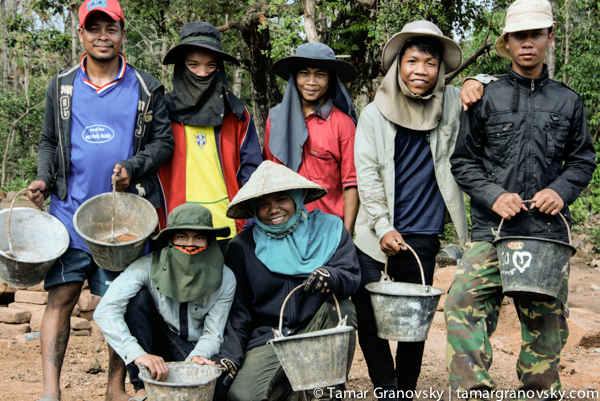
Workers at What Phou , Champasak, Laos

Workers at What Phou , Champasak, Laos

Naxi Woman with Daughter, Lijiang, China (I ate at her restaurant regularly, that week)

Naxi Woman with Daughter, Lijiang, China (I ate at her restaurant regularly, that week)

I have learned that travel can ground you in the present, if you are able to immerse yourself in each moment of your day-to-day experiences. These experiences can take you outside your comfort zone but they also make you face yourself – both your strengths and your weaknesses – and push you to adapt and to manage all manner of new exploit.

Fixing a Broken Rudder, Luang Prabang to Nong Kiau, Laos

Fixing a Broken Rudder on an 8-Hour Slow Boat Trip from Luang Prabang to Nong Kiau, Laos

Of course, one of the best ways to get to know a new place is by eating there. Food. Glorious food. I adore it. I am almost always willing to try new and different flavours, textures, meats, vegetables. I like to eat and I like to eat well. I am always in search of the best local food. But enjoying a cuisine is not the same as understanding the customs of a country with regard to its food. I have learned not just about different dishes, but also ways to order and eat them. In restaurants in China, for instance, at first I would shyly try to catch the attention of the wait person but eventually I adopted the body language and tone of voice of the local customers and I too, brazenly and loudly call out “fuwuyuan!” (waiter!).  

When ordering from street-food carts and small stalls, which in China and Southeast Asia are often devoted to one type of food, one has no choice but to order what they make. When I go into a restaurant with a menu, only to find that it has no English translation or photographs (menus with photographs are actually common) I’ve learned just to look at what others are eating and point – I want this, I want that. I always try to learn the rules of eating in the countries I visit, by either asking people I have befriended or watching others. In China, for example, only a foreigner uses a spoon to scoop up food from a communal dish and put it on his/her own. The Chinese just take their chopsticks and eat directly from the central dish, with little ceremony. If there are bones, they are discarded (or sometimes spat) on the table beside the individual’s plate.

The Outside Ring, Angkor Wat, Cambodia

The Outside Ring, Angkor Wat, Cambodia

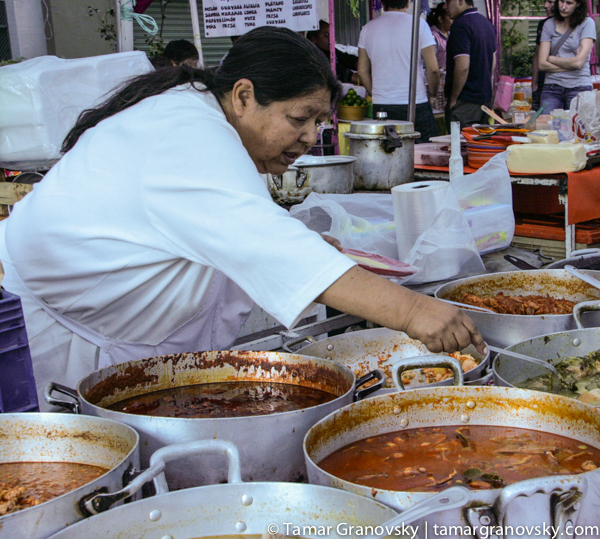
Street Food, Mexico City, Mexico

Street Food, Mexico City, Mexico

Food Truck, Cambridge, MA, U.S.A

Food Truck, Cambridge, MA, U.S.A

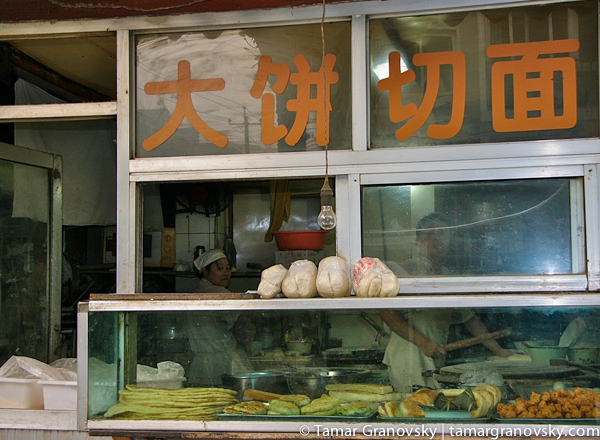
Food Stall, in a Beijing Hutong, Beijing, China

Food Stall, in a Beijing Hutong, Beijing, China

I am always on the lookout for the new, and the familiar, in this vast landscape of food. But natural landscapes spur me on too. As much as I adore city life, and am a city girl by nature, I also have a strong urge at times, to get away from it – often far away – from people, from concrete and glass, from the confines of our man-made world. The arts have always been part of the inspiration for my globe-trotting. As I have had the luxury to travel, I have learned that whether it’s the craggy and volcanic terrain of Iceland; the karst mountains and river-ways in Guangxi Province, China; the wats that are slowly being enveloped by Cambodia’s natural landscape; the Canadian prairies; or the desert of the American Southwest, the natural world is a stunning place and it calls out to the artist in me. My favourite way to see the world is with my camera in hand, so that I can capture both the vast views and the smallest details of my surroundings. These often magnificent landscapes are impossible to describe in words. Therefore, I will let the following photographs say it all:

Near Pas de Calais, France

Bray Dunes near Pas de Calais, France

Countryside in Normandy, France

Countryside in Normandy, France

Along the Mekong, Phnom Penh to Siem Reap, Cambodia

Along the Mekong, Phnom Penh to Siem Reap, Cambodia

Toward Kong Lor Cave, Outside of Ban Nahin, Laos

Toward Kong Lor Cave, Outside of Ban Nahin, Laos

Off of Victoria Island, Vancouver, Canada

Off of Vancouver Island, British Columbia, Canada

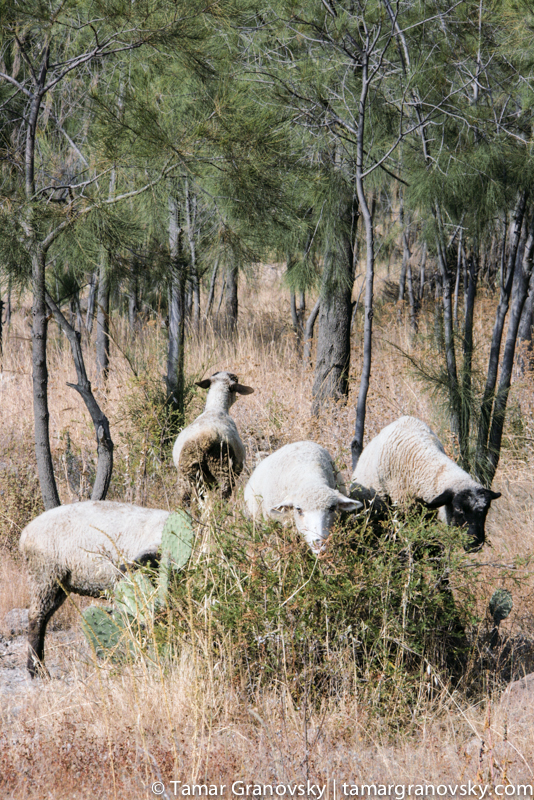
Outside of La Purificacion, Mexico

Outside of La Purificacion, Mexico

Bandelier National Monument, New Mexico, U.S.A

Bandelier National Monument, New Mexico, U.S.A

The Pacific Ocean Somewhere Between Oakland, CA, U.S.A. and Hong Kong

The Pacific Ocean Somewhere Between Oakland, CA, U.S.A. and Hong Kong

There is also a darker side to travelling in developing countries (something I never considered until I visited Southeast Asia); one encounters quite a bit of poverty. How do I deal with poverty and other tragedies I witness in some of the places I have travelled to? I have seen people on the street (often missing limbs) begging. Sometime they are with their young children – or they just send their children out for the day to do the begging themselves. Do I ignore all of this? Acknowledge those on the streets who beg, with a nod of my head? Volunteer briefly somewhere? I have done the first two. I’m ashamed to say I have not done the latter, although I have thought about it, often. I feel I have no choice but to try to shut it out and make an effort, instead, to buy as locally as possible, in shops where I know people work extraordinarily hard, long hours. I also visit NGOs. Still, I cannot forgive myself for remaining outwardly indifferent to those in need. As a Westerner and a First World traveller I have faced this often in China and Southeast Asia. It is worth noting, though, that I’ve also had the same experience in North America.

But both in my own country and while travelling, I have, on occasion, attempted to engage, and even bought a meal for, some of the impoverished people whom I’ve met on the street. I have been glad when I did so, that I did not simply turn my head, and instead chose to connect, however briefly. Confronting these issues and our own discomfort with them is not easy; it takes time and effort. I now feel compelled to volunteer in a community in need, when I return home, and may consider joining a service-based trip to an impoverished region somewhere in the world, in my future travels.

Everywhere I go, I have had to learn to embrace the differences and the cultures and not feel guilty about being an outsider who clearly comes from a wealthy country. However much I have learned in seven months in China, or three weeks in Italy, as a visitor I will never do more than scratch the surface. The truth of the matter is that despite having made friends who live in Beijing, Xingping, or Kunming, or befriended the people who sell me baozi or coffee daily, I am and always will simply be a tourist. I attempt to connect, but the cultural and linguistic differences often make it difficult to truly do so.

San Francisco, CA, U.S.A

San Francisco, CA, U.S.A

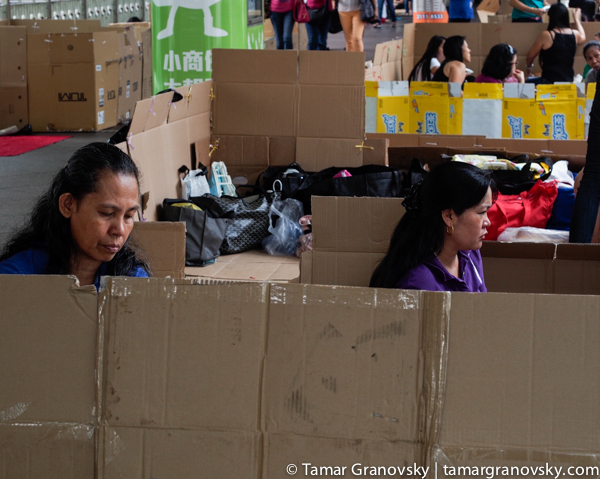
Sunday in Central, Hong Kong, Filipino Women on their Day Off Gathering Together

Sunday in Central, Hong Kong, Filipino Women on their Day Off Gathering Together

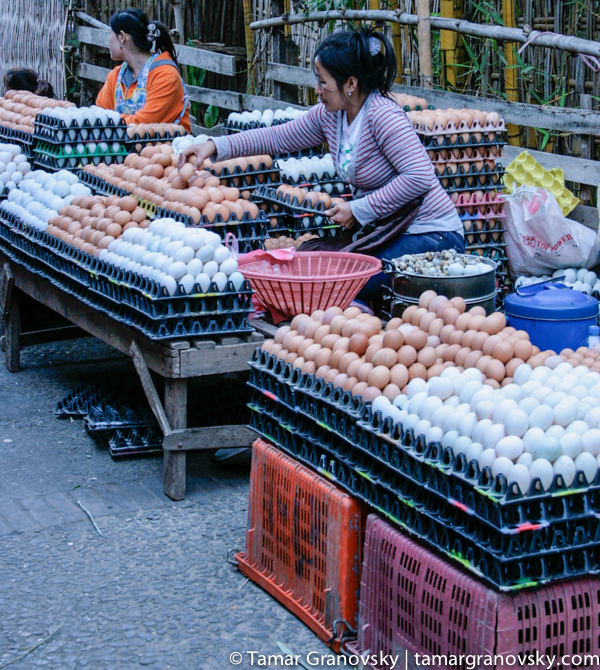
Market, Luang Prabang, Laos

Market, Luang Prabang, Laos

Tombstones in the Countryside, Xingping, Guangxi Province, China

Tombstones in the Countryside, Xingping, Guangxi Province, China

I have a friend who takes tours when she travels. She has asked me several times to join her, and says that tours take you to places you might not otherwise easily see. I enjoy travelling on my own for the very same reason. There are many benefits to independent travel. I set my own pace, schedule, and itinerary. I eat what I want, whenever and wherever I feel like it. I decide my daily activities and go with the flow as each day unfolds. I can stick to my plan for a particular day, but I may just as easily deviate from it and do something different. I choose whether to take a day or night train, or bus, or whether, instead, I want to fly somewhere. Although I’ve never gone on a tour, I suspect that I have more opportunities on my own, to chat with locals and even other travellers, than do people on tours. Guided groups may be logistically easier, but really they are just another, and to my mind more limited, way of seeing the world. The fact remains that however one travels, solo or with a group, we are all tourists. 

Many friends and family members tell me I am brave to travel solo in places that are so foreign to my Western cultural upbringing. I don’t think I am particularly brave; this is simply what I want to do. And by travelling on my own, I have learned some important things about myself.

My voyage of discovery has led me to many places and has changed me in a number of ways. I have learned to manage with less and laugh more. By travelling on my own, I have had to become more outgoing and sociable, and my many adventures (and even misadventures) have left me feeling confident and adaptable. In essence, learning more about the world and how other people live, makes me feel like my own world has expanded. I would like to think that I am more easy-going now, although I don’t know if family and friends would completely agree with this: after all, I am who I am…. But having survived my many travel mistakes, from being bitten by a dog in Laos, to several brushes with travel scams, I now feel that I’m just not as troubled when things go wrong. I have learned that there is no point in being stressed out; when you go with the flow, things have a way of working out perfectly fine.

Me! at the Great Wall, China

Me! at the Great Wall, China

For those of you who are beginning to feel your wanderlust grow beyond being satisfied by a long weekend here, or a two-week vacation there, I offer just a few tips that have helped me in my travels.

  • Plan, but also try to go with the flow: When I plan a short vacation overseas, I tend to over-schedule. Create a skeleton of a strategy first, and firm up the more important logistical details before you leave on your voyage, but always make sure you allow for flexibility. You will discover, by speaking with locals or fellow travellers, that your expectations and goals may change.
  • Set your budget: You do not need infinite funds to see the world but you do need to know what you can afford. Your money will carry you farther if you travel in places like Southeast Asia. It will, of course, run out much more quickly in North America or Europe.
  • Pack lightly: I travel with very little – I have been away from home since the beginning of August and travel with a carry-on bag and a day pack, and this includes a camera with three lenses and a travel tripod. Washing items by hand is a simple endeavour and, depending on where you find yourself, it costs very little to have your clothes cleaned for you. Remember, if you need anything else, you can always buy it.
  • Be adaptable: Travelling for a longer period of time can really take you outside your comfort zone. Depending on where you travel, chances are transportation will not run like clock-work. Each new environment provides different challenges and no two places are exactly alike. Consider the situation, stay calm, and adapt accordingly.
  • Eat well and remain open-minded: In most of the world, food is a central link to culture, tradition and family. Do not be afraid to try food that may be utterly foreign to you. Ask locals, such as guesthouse employees, taxi or tuk tuk drivers, where they eat. Consider taking a cooking class. I have done so in the past, have learned a lot about why a cuisine uses particular ingredients, and have thoroughly enjoyed myself.
  • Do not be afraid to venture off the beaten path: But also, don’t ignore more heavily explored areas. There is good in both, and keeping your eyes and heart open to each will allow you to connect to a place and people.
  • Respect the local culture.
  • Learn a few words of the language of the country you are travelling in. This will carry you a long way! Ask questions of locals and other travellers. When given the chance, most people will be glad to have a conversation with you – even if you end up using a sign language of sorts to communicate.
  • Establish a routine: Visit the same restaurant, cafe, fruit stand as often as you can – even daily, if possible. You’ll get to know the people there. It is always a pleasure to become an honourary part of the community, if only for a short while.
  • Stay connected with friends and family. It will make travel easier for you. Today, long distance communication is easier than ever, via email and Skype. At times these modes of communication are a life-saver! 
  • Trust your gut.
  • Pace yourself and allow for downtime. It has taken me years to figure this one out.
  • Have fun! Learn! Maybe you can even blog about it!
Dali to Kunming by Train, Yunnan, China

Dali to Kunming by Train, 3-Level Hard Sleepers During Day-time Travel, Yunnan, China

China as I See it

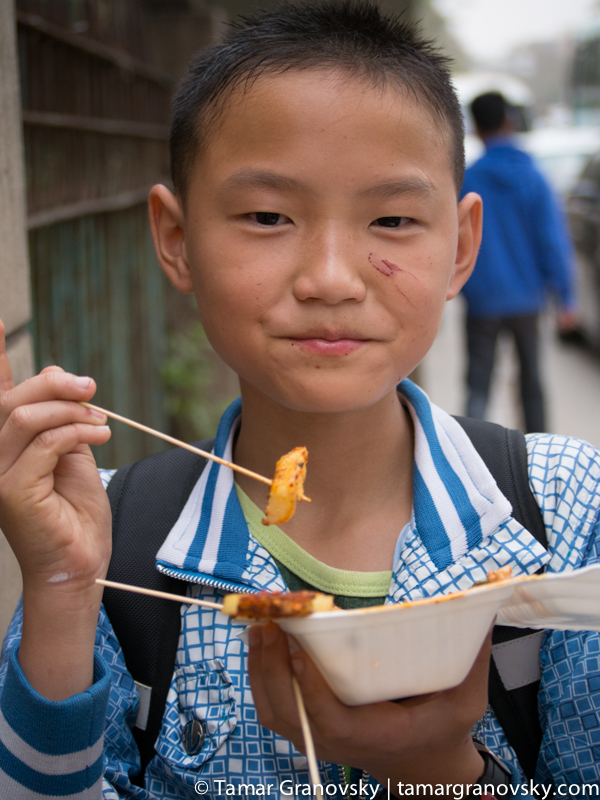
Boy, Kunming

Boy, Kunming

When I first headed to China in 2012, I presumed I would find the culturally rich country with a long and enduring history, that I knew from reading and from museum exhibitions; and magnificent, vast, natural landscapes that I’d seen in movies, photographs, and paintings. I also expected, from what I had read in the news, overcrowded cities and evidence of the reckless exploitation of natural resources. Having travelled in Southeast Asia, I also anticipated a wide assortment of diverse and tasty food. I did not have many preconceptions about the people other than presuming that they might be better educated and perhaps more mobile than those in the other, somewhat less-developed, regions of Asia that I had visited. I had hoped to encounter warmth and hospitality. Some of my preconceptions have proved true but I’ve also had some unexpected revelations. As I wrote in my posting, First Impressions of China, China is neither a third nor first world country and is changing at tremendous speed; public transportation is fairly top notch, construction is faster than lightening, consumption is high, and it is hard to tell whether the infrastructure will be able to take all this rapid growth. Yet, despite all this recent transformation, it seems that family, food and tradition are still central to the Chinese people and their values. Because I have met so many wonderful people over these seven months in China, I have decided to share with you just a few photos of their many faces.

Feeding Seagulls from Russia During Migratory Season, Kunming

Feeding Seagulls from Russia During Migratory Season, Kunming

I came to China to study the language in September 2013 (I’ll be leaving the country at the end of March 2014). My sole incentive was to try to better understand this country’s people and culture. I have succeeded in learning quite a bit on all counts. So, in no particular order, here are my updated impressions and some of my discoveries about China.

Hygiene: Garbage is thrown on the streets in cities, towns, and villages, since people are employed to pick it up (although those who are really in the countryside seem to take great care of their environment). Much of the population continues to spit on the ground (it starts with the clearing of the throat – a sound I’ve learned to dread – and is followed by phlegm shooting like a spitball onto the ground, where the vestige pools. Most men smoke, and in the cities women are beginning to do the same, although they often do so in secret because it still is taboo. Cigarette butts too, are thrown onto the ground.

The western-style toilet is making its way into China – particularly in big cities, where you may find a few of them in a row of toilets in public washrooms. In most places, however, there are still squat toilets (often without toilet paper, or water, or soap). In some instances (such as in bus stations), these toilets drain directly into an outhouse-like hole or trough, and are without doors for privacy. I have been told that when some Chinese find a western toilet they actually may stand on the toilet seat and then squat. Some toilets are clean, but from what I’ve seen, a great many are not. Cleanliness aside, there is something so basic about this experience that I actually enjoy using them anyway. In the West, we are very private about the goings-on in our bathrooms. We lock the doors and don’t want anyone around. I like that in Chinese bathrooms the ego is relinquished and disposing bodily waste is just what we do. How unflushed faeces, or splashed urine, reflect on hygiene is a whole other story. Here is a link to images of an array of Chinese toilets.

As I mentioned in my First Impressions posting, babies are clothed in pants that are split along the crotch, so that the moment a baby needs to relieve itself, parents can hold him/her over a curb, next to a tree,or wherever convenient. I have always found this a brilliant idea, until I recently saw a mother holding her child over a restaurant sink meant for customers to wash their hands.

Lastly, it is not uncommon to see city-dwellers wearing face masks to protect themselves from dust, pollution, and germs in general. All across China, cities are experiencing extraordinarily high levels of air pollution. In Kunming, (where pollution levels are somewhat lower than in many other cities in the country), most people do not wear masks that filter pollution particulate matter. Instead, fashionable face masks are often worn as accessories; people want to look good while trying to avoid dust from ongoing construction, germs, and smog. When the pollution is “high” it looks as though there is fog outside. I have experienced this grey/yellow atmosphere in Beijing, produced by extremely dangerous levels of pollution (one can barely see a few blocks away). My teachers claim, as do many others, that it is just fog, but I have noticed that I am sensitive to the air quality as it worsens, and I monitor the air quality index so I know it is definitely not fog when the mountains surrounding the city, or the tall buildings in the distance, are shrouded in a cloud of grey. I bought myself approved masks for heavy pollution conditions, but the majority of the Chinese population buys its masks in convenience stores or other stores where the fashionable models are available. Very few people wear masks that really protect them – although this is beginning to change, thankfully. It’s a small first step because, of course, the greater issue of the pollution itself needs to be addressed.

Husband and Wife, Kunming

Husband and Wife, Kunming

Driving: On city streets, drivers seem to lack situational awareness.  It appears, to an outsider and pedestrian, that no one pays attention to what is around them. Those on motor bikes do not check behind them as they move from the sidewalk onto the street. The average driver travels as though part of a school of fish. In the West, roads are lined for traffic flow and we stick to these lanes, unless passing another vehicle. In China, delineated traffic lanes strike me as being mere suggestions. It’s not that China doesn’t have traffic laws but many drivers are probably ignorant of them and just follow the crowd instead. From what I observe, infrastructure and resources need to be improved. There has been a dramatic increase in the number of cars and scooters on the road and this change has occurred much too quickly. There are few traffic police and instead, just recently in Kunming, they have hired ordinary citizens to attempt to reign in drivers when a light turns red. There is a need for aneffective legal system to deter the behaviours that cause traffic jams and, no doubt, accidents.

In Kunming, electric scooters are widely used. They are quiet and environmentally efficient. The vehicles are plugged in overnight, and can travel for about 40 kilometres before needing another charge. In this regard, China is certainly ahead of the West, where there is still objection to electric vehicles, no doubt because of big oil interests.

Man, Kunming

Man, Kunming

Education: China has great respect for its teachers, a tradition that goes back thousands of years. Modern Chinese education began about a century ago, but because of the Cultural Revolution it was slow to develop and has lagged behind the West. Unlike in North America, educators are highly regarded and garner great respect and admiration. Children attend school six days a week and take many after-class lessons. They are expected to study hard and succeed. Parents hope that their children will eventually go on to university and improve their lives.  The general population realizes that in order for the country to succeed and to develop economically and socially, it needs to make great progress in the world of science and technology, economics, etc. Education is key to all of this.

Old Friends, Kunming

Old Friends, Kunming

People: One of the most interesting aspects of Chinese culture is its mixture of direct and indirect behaviour. Most people are usually very blunt, and tell you exactly what they think and feel. I discovered early on that people rarely look at you in the eye. Apparently, steady eye contact is viewed as improper and can be seen as an act of defiance (when people become angry they often sustain eye contact). When a Chinese parent disciplines a child, that child is expected to look down. In the West, in contrast, children are often told, “Look at me when I’m talking to you.”  And yet, I have a had a number of people keep a strong gaze fixed on me; it has just been without looking me in the eye – usually they will look between your eyes, at the bridge of your nose, to avoid engagement. I have found that my attempts to establish eye contact have not always been reciprocated. Yet, perhaps because I smile a lot, I am often rewarded with eye contact and a smile in return.

In the city, the Chinese people are becoming more confident. There is an assertiveness that verges on rudeness. I have had people fight me, though not quite literally, for a taxi. On the Beijing subway and on buses in all of the cities I have visited, younger people remain seated when an elderly person boards a vehicle. When people bump into you on the crowded streets, they do not apologize. They don’t seem to hear my frequent apologies as I brush past them, and I have learned to not bother saying anything. These teeming urban centres can be difficult to negotiate if you come from the West. I tend to like to move at a brisk pace but I am learning to be more Zen (ha!) and just go with the flow, establishing my own space within the crowd. It is a matter of nudging, bumping, and navigating your way to your destination.

Then again, China is a populous country where people live in extreme proximity to one another. They are accustomed to having very little personal space. People walk down the street arm in arm – men with men, women with women. Another way in which people come in close contact is through gradually edging toward someone with whom they’re engaged in conversation. This is the Chinese way to connect with you and I love it!

Old Friends, Kunming

Old Friends, Kunming

Food: The majority of local food is sold on the street and in smaller local markets. Agriculture and gardens abound wherever there is space – although this means mostly on the outskirts of cities. But the city also houses many communal gardens, as well as individual vegetable patches that are planted near riverbanks. I do believe, though this is unconfirmed, that this may, in part, be related to the rural migration to the city. Also, the older Chinese population still recalls the time of The Great Famine. Food is, in some ways, the heart of this country. When an animal is eaten the whole creature is used, and often, one cannot mistake the animal on the plate. When ordering food one finds that everypart is available, from head to toe and everything in between.

Although I am not a vegetarian, I have mostly avoided meat and fish and, instead, have enjoyed doufu and vegetables prepared in a myriad of manners. When I do not eat at school, I snack or have a meal on the street or in inexpensive, local restaurants. Two of my favourite foods in Kunming are a) Dai “cuisine” and b) Hot Pot.  Eating Hot Pot is a communal, and therefore social, activity. Meals, in general in China, are eaten “family style,” with shared common plates or dishes – both at home and in restaurants. People sit around the table and everyone from young to old is included in sharing the meal and conversation. In Kunming I have two favourite places where I devour Hot Pot. The activity proceeds as follows: you choose 1) a broth (mushroom, chicken, spicy, etc.) for yourself in some places and for the group in other places; 2) together you choose the foodstuff for the table (raw meat, tofu, vegetables, noodles); and 3) sauces, spices, etc., for yourself — that you select from an open bar and take back to your table. You add the food into the boiling broth, let it cook, and then, with chopsticks, dig in!!!

I have become a natural at both putting my chopsticks directly into the communal plate to serve myself, and putting any bones from meat I’ve eaten directly onto the table. It’s so simple and natural and without fuss.

China may be synonymous with tea, as per the expression “not for all the tea in China,” but every morning, when I wake up at 5 a.m.-6 a.m., (before my 8 a.m. breakfast at school), I drink Nescafe instant coffee. Starbucks abound here but there are MANY individual cafes, each one quirkier and sweeter than the next. These coffee houses are full of splendid atmosphere but the quality of the drink does not always match the decor. Cafes are still primarily for the Laowai (foreigner) although there is a growing leisure-culture among the younger generation and those with money, in which coffee is part of the day. In any case, the best and cheapest coffee I have found is moments away from my school and, happily, I am a regular!

Mother and Son, Kunming

Mother and Son, Kunming

Family: The family unit is still highly valued in China and respect for elders is taken seriously (although, unfortunately, this is changing slowly, as noted in the section above on youth, the elderly and transportation). There is also great focus on children and Chinese traditions revolve primarily around family. In the past, a home accommodated multiple generations and the father/husband was the indisputable head of the household. Today, the father remains a family decision-maker but no longer exercises absolute control. Another change in family tradition is that children do not always live at home until they are married, and arranged marriage is becoming a thing of the past. Chinese family culture is further discussed in three articles on the website seeingredinchina.com (apologies: domain name expired April 26, 2014):

Typically a family would live in a small compound with 3 buildings opening onto a shared courtyard. The kitchen was considered the center of the home. The entire village typically was made of a few clans who could trace their families back to a common ancestor (this wasn’t the case in cities). This gave people few reasons to ever leave their village, and made it difficult to move to a different village. Some villages would construct ancestral halls to honor their common ancestors which helped to preserve family trees. In such a society, family is more important than any other unit in society, even the government…

Chinese family culture changed during the era of the Cultural Revolution:

… Mao saw the clan and the family as institutions that kept the peasants oppressed so he issued several policies to break down the family structure. Families were made to eat in cafeterias; which meant no home needed a kitchen, children were raised in daycare centers instead of being looked after by relatives, parents were cremated instead of buried, and the ancestor tablets (family records) and ancestral halls were destroyed in the Cultural Revolution.

Mao’s attempts to remove the family from the center of Chinese life ultimately failed, but not before destroying a few aspects of traditional culture.

… [A]ncestral temples were destroyed most families lost the records of their extended family… Chinese women [have] the same rights as Chinese men. This means that far more women are now working outside the home, and women now also exercise their right to divorce. This empowerment has changed how parents view their offspring, as it is now thought better to have a daughter than a son if you want to ensure that you will be taken care of in retirement.

Women’s growing role in the work place has left a gap in the family structure for child care. In the communist period, factories built daycares to remove the importance of family. When State-owned enterprises privatized they closed their daycares. To address this problem it has become common to have the grandparents move in for several years to help with raising the child. So it is still common to find the three generations living together under one roof.

Other miscellaneous thoughts:

  • Haggling can be difficult if you’re not familiar with the practice. However, for many services and goods in China, prices are not written down anywhere. You are expected to negotiate. I have learned to establish a price point and am always prepared to forego the purchase if I cannot get the item for that price. Typically, I dicker by starting at a lower price than I intend to pay and working my way up to my price point. Sometime I have to literally walk away, to land the deal I am looking for. This is all part of the dance.
  • China is one of the few countries with high-speed trains. Above the doorway at each end of a train car, the recorded speed is posted. When I travelled from Beijing to Shanghai, the train reached a speed of 312km/hr.
  • I hear that there is corruption and abuse of power within the various levels of government here, which results in dramatic income inequality. Those with money and connections usually get what they want (as is the case in many other parts of the world).  Despite growth and infrastructural improvements in Kunming, many people live in poverty. Developers and investors continue to build, and much of the new construction remains empty. Not only are city blocks being razed but so is the countryside, as cities keep expanding. I understand there are fears about the safety of these buildings, although hearsay indicates that stricter laws arestarting to be implemented so that the onus is on the developers/builders/owners, with huge fines and even the death penalty for those responsible, should a building collapse. Unsubstantiated but interesting: I have also heard that these empty buildings are intended to house displaced people in the event of a disaster. If this is true, it indicates that China is a country that is concerned about its citizens.
  • Odd names for stores: Many stores in Kunming have names that are not quite French, not quite English, and just plain strange. Here are a few of my favourites:  “The Van is Foot” (a shoe store); “La Four” (my favourite cafe – do they mean le four — the oven, in French — or L.A. 4 for the Jazz quartet? The decor does not suggest either); “A Cup of Rigorous Attitude” (another cafe. the name says it all?); “PRICH” (women’s clothing – rich? bitch? rich bitch? it is an odd one); “Unsightly and Peculiar”  (another clothing store – who wouldn’t want to shop here?); Rambo Bread Works (killer bread?); Sincere Space (I passed by this building quickly, on the bus, the other day – it looked like it could be an apartment or office building).
  • And of course, the smog in major urban areas is terribly hazardous to one’s health. The pollution here is insufferable. Even in Kunming, where the air is relatively clear and clean and you can see the stars at night, pollution levels can go above 150 (which means the air quality is unhealthy and “Everyone may begin to experience health effects; members of sensitive groups may experience more serious health effects,” according to http://aqicn.org ).
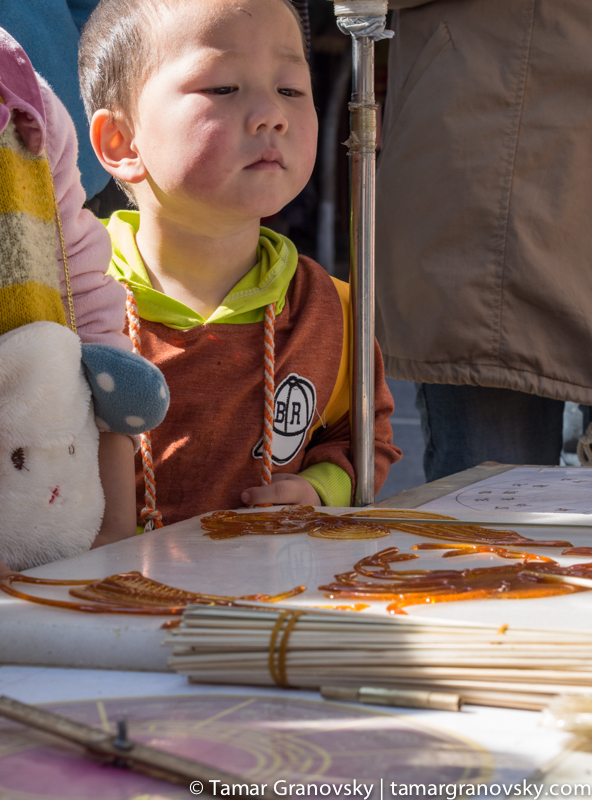
Watching Caramel "Animal" Candy Being Made, Kunming

Watching Caramel “Animal” Candy Being Made, Kunming

But!!! I still enjoy the streets filled with people yelling at each other or into their phones. In the hotter areas men roll up their shirts so that their bellies are exposed – I suppose to cool themselves without taking their shirts off entirely. There is a cacophony of honking horns from cars, buses, and motorcycles, warning people in smaller vehicles (including cyclists) and pedestrians, that they are coming your way, so beware! What we consider to be private is often public in China: in interior city blocks and in the countryside, for instance,people wash their dishes on the streets. Life is not clear-cut in China. It is complex and nuanced – as societies tend to be. Much work has been done to make changes in this country (many of them positive) but clearly it is not a simple task (see my post “Raising China“). I am far from opposed to progress; change is a constant in our lives. I just hope the Chinese government will be able to ensure the basic dignity of the Chinese people while they continue to institute society-wide, long-term solutions to their country’s problems, and address the needs of their citizens. Tradition is an important part of any society and many people in China are steadfastly holding onto theirs, so that change may, perhaps, be slowed down to a more natural and thoughtful pace.

Tea at the Confucius Temple, Kunming

Tea at the Confucius Temple, Kunming

I hope that with continued emphasis on education (and higher education, in particular), Chinese citizens will be equipped with the knowledge and experience to implement integrated, sustainable growth. My greatest hope for China is that it will hold onto its rich, long, history and complex culture, while looking far down the road as it moves forward. I am optimistic that it will find a way to use a whole/holistic system approach: that its natural resources will be respected and that both smaller and larger communities in this country will ultimately benefit.

Woman, Kunming
Woman, Kunming

Kunming Train Station Attack

Much has been said these last few days of the train station assault in Kunming this past weekend; I have little to add. However, I want to make mention of Saturday night’s attack since I am currently in Kunming and actually heard shots/bangs (of some sort), from my bedroom, at the time that the event took place. Having experienced two weeks of Chinese Spring Festival fireworks and firecrackers, I knew that the sounds I heard were not of that ilk. I listened for sirens but did not hear any, so my moment of concern was short-lived. I was quite surprised and horrified to hear about what occurred Saturday night when I woke up on Sunday and received emails of concern from friends and family. These last few days, Kunming has seen an increase in police presence with guns. In this city it is common, here, to see police on almost every other corner (vans, or little cubicles are permanently posted at these sites). At night now, the lights have been flashing so that people may easily access them should there be a need/emergency. Today, Chinese state-run media has reported that all eight suspects have been arrested or killed. None-the-less, security is still stepped up and SWAT teams continue to patrol certain Kunming streets.
The Chinese government is blaming the Uighur (Muslim) community. I realise relations between the Han majority, who dominate this country, and the Uighur minority from the western province of Xinjiang is not easy. When I asked a local Muslim restaurant owner if his resto would remain open during the Chinese Spring Festival he said, “Of course! We never celebrate the Chinese holidays.” At that moment, I understood there might be animosity between the peoples. Regardless of who is to blame for this weekend’s attack, here is a link that may be of interest with background information about the Uighurs and the Chinese Han: http://chinachange.org/2014/03/03/excerpts-from-my-west-china-your-east-turkestan-my-view-on-the-kunming-incident/