Author Archives: Tamar Granovsky

Unknown's avatar

About Tamar Granovsky

Tamar Granovsky began working in photography in Boston, Massachusetts. She is now based in Montreal, Quebec. In 2018 she was named LensCulture’s Top 50 Emerging Talents. She has been included in various juried group exhibitions including the 5th Biennial of Fine Art and Documentary Photography in Barcelona; Photography Now 2017, at the Center for Photography in Woodstock; and the 22nd Juried Show: Peter Urban Legacy Exhibition at the Griffin Museum. In 2020 her work appeared in Boston as part of 8th Edition Regional Photographers Showcase of The FENCE. Her first solo show was at Cambridge’s Multicultural Arts Center, in September / October 2019. Prior to her career as a photographer, Tamar had several solo and group exhibitions, in Canada, in mixed media sculpture installation and was a recipient of a Canada Council Exploration Program Grant. Her pursuit of photography follows a career in sculpture, with a 17-year hiatus from the arts, as an archivist. The reflective, evocative, and grounding properties of the medium feed Tamar’s love for photographic work.

Mexico 2010

Karen, a friend who I met in Calgary, Alberta, while doing my Masters in Visual Arts, spent a few years in Truro, Nova Scotia after we graduated, with her husband and son. They then went off to the Philippines for six years; although I always meant to visit I received an email one day that said they were moving to Mexico. I could have kicked myself and did scold myself for days for missing the opportunity to visit the Philippines while knowing someone in the country. So of course I vowed to visit Karen in Mexico. Three years later I received an email from her telling me that she and her husband were moving to Ithaca, New York, in a month. That same day I booked a flight to Mexico and a week later I found myself in Texcoco, a city and municipality located 25 km northeast of Mexico City. Karen and Gary lived in La Purificacion right next to San Miguel Tlaixpán.
La Purificacion

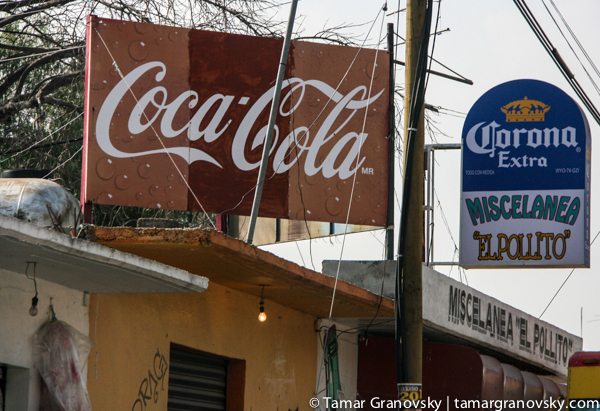
La Purificacion

La Purificacion

La Purificacion

La Purificacion

La Purificacion

On the streets of San Miguel Tlaixpan

On the streets of San Miguel Tlaixpan

Toward the City of Texcoco

Toward the City of Texcoco

The most gracious of hosts, Karen took me on a tour of the area. We visited the Universidad Autonoma de Chapingo which is an agricultural college that is federally funded (and therefore a public institution). We set off on a Saturday to see the campus chapel whose doors and inside murals (click on the mural link and hit the forward arrow to see more photos of the mural on pages, 11-14, too) were created by Diego Rivera between 1925 and 1927. It was our bad luck that the person who opens the chapel to the public did not show up to work that day. I had to remain content with the doors which were powerful and magnificent bas reliefs, the public sculpture, and the grounds.

Universidad Autónoma de Chapingo Chapel by Diego Rivera

Universidad Autónoma de Chapingo Chapel Doors by Diego Rivera
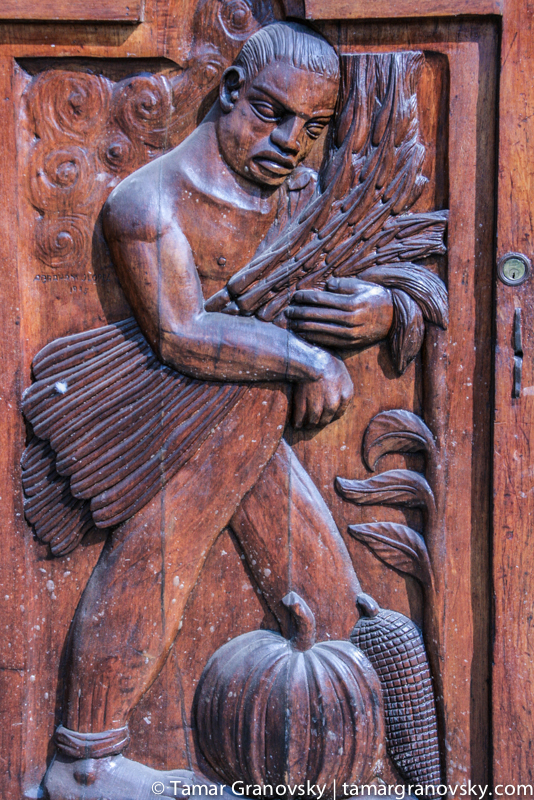
Detail: Universidad Autónoma de Chapingo Chapel Door by Diego Rivera

Detail: Universidad Autónoma de Chapingo Chapel Door by Diego Rivera

Papier Mache Sculpture at the Universidad Autonoma de Chapingo

Papier Mache Sculpture at the Universidad Autonoma de Chapingo

That same day we went to the Chapingo Market, a wet market that Karen frequented. We had lunch there and did some food shopping for the coming days.

Chapingo Market, making stuffed tortillas

Chapingo Market, Making Stuffed Tortillas
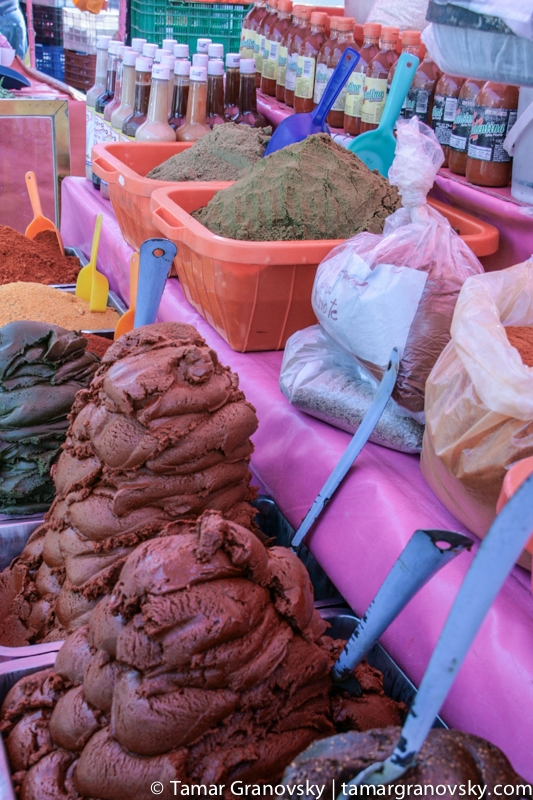
Chapingo Market, mole

Chapingo Market, Mole

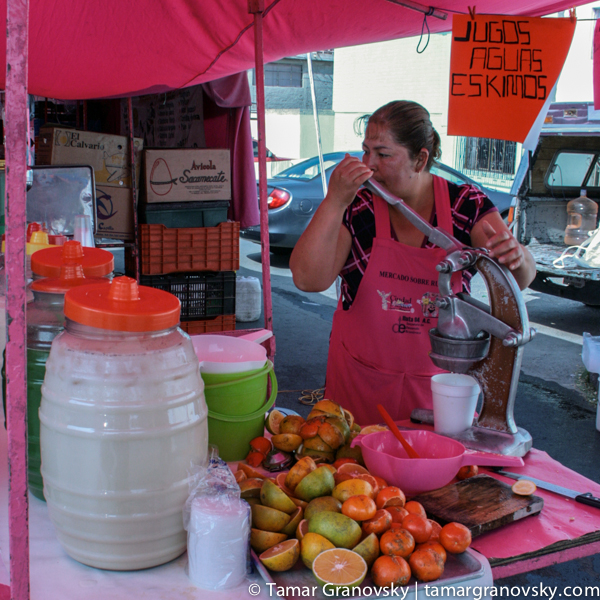
Chapingo Market, fruit juices and waters

Chapingo Market, Fruit Juices and Water

The Teotihuacan Pyramids are located 30 miles northeast of Mexico City. It seems that no one knows who hand built Teotihuacan – even though it was one of the largest urban centres in the ancient world, over a thousand years ago. in the National Geographic article, “Who Built the Great City of Teotihuacan?” George Cowgill notes, “It was the largest city anywhere in the Western Hemisphere before the 1400s. […] It had thousands of residential compounds and scores of pyramid-temples and was comparable to the largest pyramids of Egypt.”
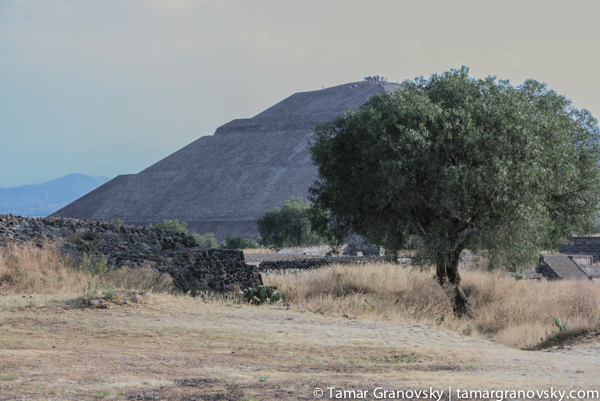
Teotihuacan Pyramids

Teotihuacan Pyramids
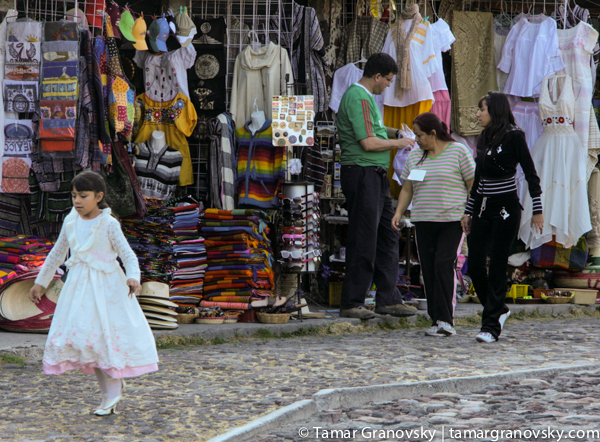
Teotihuacan Pyramids

Teotihuacan Pyramids

At Teotihuacan

At Teotihuacan, open market

Near San Miguel Tlaixpán is the town of Tepetlaoxtoc de Hidalgo. We wandered the streets there and ate a typical lunch of grilled chicken with churros and coffee for dessert.

Tepetlaoxtoc de Hidalgo

Tepetlaoxtoc de Hidalgo
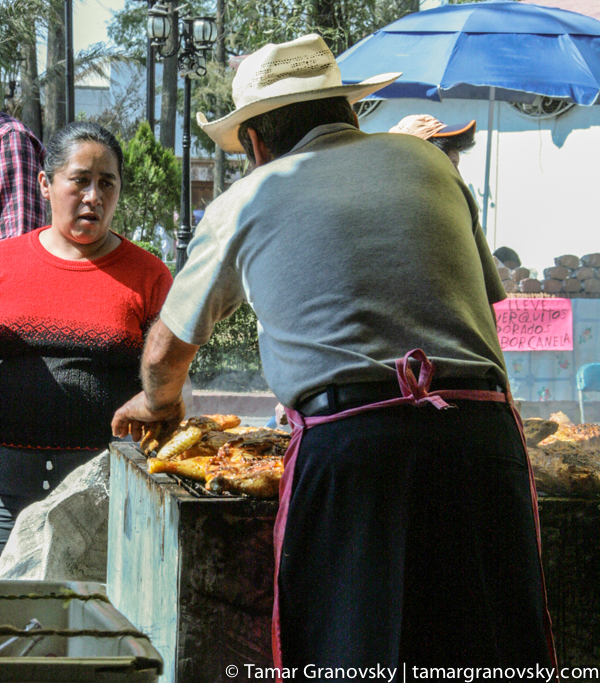
Tepetlaoxtoc de Hidalgo

Tepetlaoxtoc de Hidalgo

Tepetlaoxtoc de Hidalgo - lunchtime grilled chicken

Tepetlaoxtoc de Hidalgo – lunchtime grilled chicken

Tepetlaoxtoc de Hidalgo - anyone for churros?

Tepetlaoxtoc de Hidalgo – anyone for churros?

The final few days of my short stint in Mexico took me to Mexico City where I wandered Zona Rosa and Juáre; Centro Historica; Condesa and Hipodromo; and the Bosque de Chapultepec. The latter area is large, a one- thousand acre park in the centre that is divided into three sections. Not having the time to explore the whole park I walked through the first section and visited one of the three museums housed there, the contemporary art museum Rufino Tamayo. The main road that goes through the park, to get to this museum is home to changing contemporary outdoor art. Contemporary public art is seen everywhere in the centre of Mexico City. If only the greater metropolitan area of Boston could be as open and adventurous. Sadly, Boston leans toward the “traditional” rather than being adventurous and supportive of the contemporary arts. Fortunately, this is slowly changing.

Mercado La Lagunilla

Mercado La Lagunilla

While in Mexico City I visited three markets: Mercado La Lagunilla – a street market filled with goods such as crafts, clothing, food vendors, and toys;  Mercado sobre Ruedas in Condesa (a large wet and dry market with fresh produce, meat, fish, and food vendors as well as clothing, toys, kitchen ware, and more) which kept me occupied one morning and lunch-time; and the Mercado de la Ciudadela – an indoor artisanal craft market.

Mercado sobre Ruedas
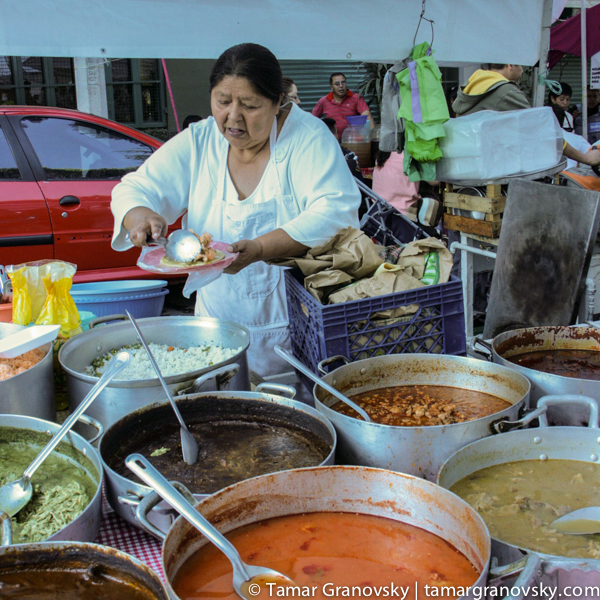
Mercado sobre Ruedas

Mercado sobre Ruedas

Mercado sobre Ruedas

Stopped by students in front of the Iglesia de Santa Cruz y le Soledad

Stopped by students in front of the Iglesia de Santa Cruz y le Soledad

As I walked through the historic streets of the Centro Historica, on the Plaza de la Soledad (in front of the Iglesia de Santa Cruz y le Soledad) I was stopped by highschool students who were asking tourists, in English (this was a requirement) where they were from, why they were visiting Mexico, what they liked about Mexico, and other such questions. Part of their assignment was to tape the conversation and take a photo of the person they’d interviewed. It appears I was the first person to ask to take a photo of them, in return. Hard to believe!

Mexico City is a bustling and dense place with over twenty million people. The neighbourhoods I meandered through varied from flashy / trendy to laid-back to touristy to warm and welcoming. But, as I arrived and left the city it was difficult not to notice that the Mexico City is quite impoverished outside the centre and is surrounded by squalor and slums.

.

Travels in 2007: Part 2. Iceland

As I mentioned in the first part of this post Travels in 2007: Part 1. France, Iceland Air offers cheap flights to Europe in the hope of getting visitors to stop over in Iceland on the way to or from a person’s major destination. Steve and I decided to do exactly that and after ten days in the southwestern part of France we moved on to Iceland.

The topography off the road from Keflavik (the main airport in Iceland) to Reykjavik is totally unlike anything I have seen – very lunar/volcanic like. After driving a small, manual, car in France and seeing few large vehicles except for trucks it was a bit of a shock to drive a large, automatic, car and be surrounded by like automobiles. Outside of the Keflavik airport crushed cars hang high on poles alongside signs warning people to drive carefully. Subsequently, we found out that road conditions in Iceland are often treacherous with gravel and filled with potholes. The main road going from west to east, Route 1, in the south is mostly paved. Other country roads are washboarded and narrow. They can also be quite slick if it is or has been snowing. Steve and I had asked for an all-terrain vehicle so that we could drive back-roads to reach specific hiking spots. The man at the car rental insisted that all we needed was a simple sedan and nothing else. Oh! How wrong he was and we had to change our itinerary based on his poor recommendation and our naive acceptance of his word.

Route 1, Road to Vik

Route 1, Road to Vik

During our one day in Reykjavik we sauntered streets, traipsed into and out of some very chique clothing and design boutiques, and stopped to eat hotdogs (pylsur) for lunch (and Minke whale meat for supper). We would have ventured to try puffin while in Iceland but it was not in season.

The hotdog seems to be Iceland’s national food; it is found everywhere, including gas stations. Hotdogs are best ordered all dressed with chopped raw onions, a remoulade, ketchup, mustard, a nutty brown sugar of sorts, and crunchy fried onions. In central Reykjavik Baejarins Beztu Pylsur, opened in 1937, is a must stop destination for a tourist. If you like hotdogs Iceland is your place! In the meantime, here is an introduction to some traditional Icelandic foods.

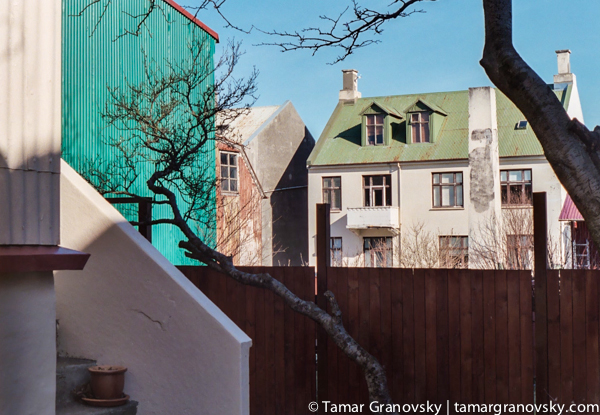
Reykjavik

Reykjavik

As you may know, Iceland, geologically, is full of active volcanoes, glacier-cut fjords, black sand beaches, waterfalls, and rivers. The country’s main product is geothermal energy  – renewable energy production via water heated by volcanoes and geothermal springs – and hydro power. Most homes there are supplied with heating and energy from these renewable sources. Because the majority of Iceland is powered by geothermal energy; the high sulphur content makes the water and air smell like foul eggs. Brushing ones’ teeth can be challenging.

Geothermal plant

Geothermal Plant

Geothermal plant

Geothermal Plant

During our walk home after supper, to our bed and breakfast in Reykjavik, Steve and I happened to look up at the sky and actually saw the Aurora Borealis (aka the Northern Lights). In the city!! Auroras occur when charged particles outside the Earth’s atmosphere collide with atoms in the upper atmosphere. Iceland is a perfect place to see the Northern Lights because of its cool, crisp evenings. It seems that April is a good time to see these lights and we spent every night thereafter waiting to see the night sky show, sometimes with luck and sometimes not.

The following day we took Route 1 to Vik where we passed some very large waterfalls, black sanded riverbeds, river deltas where we walked and sank knee-deep in the sand, afraid we’d sink further, as in quick sand. We also passed grassy fields and snow-capped mountains. In general, Iceland is a tree-less country.

We stayed two nights on Route 1 at the Hotel Anna. Returning there our second evening after a day of excursioning, we discovered that the power had gone out; this led us to some interesting insights into the Icelandic soul. Our room was getting cold to frigid; our dinner at the little attached restaurant (the only place to eat for miles!) was becoming and increasingly distant possibililty; it was also extremely dark. What was management’s reaction to our difficulties? A shrug. From this we learned that Iceland is a land of Individuals of the self-sustaining and self-sufficient stripe. This is not meant to be pejorative. It was simply an observation. Finally, at about 10:30 pm, the power returned and supper was made for us and the one other family staying at the hotel that night. The packets of cooked dried Swiss Knorr soup mix never tasted so good.

Heading to Stykkishólmur, we had to return along Route 1 so stopped at the tongue of a glacier where I accidentally stepped with one foot… and then leg, up to the hip into a snow crevasse. Steve had to pull me out or else I might not have easily been able to extricate myself. We headed to Stykkishólmur, a town that is situated in the western part of Iceland on the northeastern portion of the Snæfellsnes Peninsula and whose Inhabitants make their living mainly from fishing but also tourism. We passed snowy, rocky peaks, as well as flat plateaus and valleys. We also drove through an astounding 5 km. tunnel under a fjord.

On the road Stykkishólmur just after a snow squall

On the road Stykkishólmur just after a snow squall

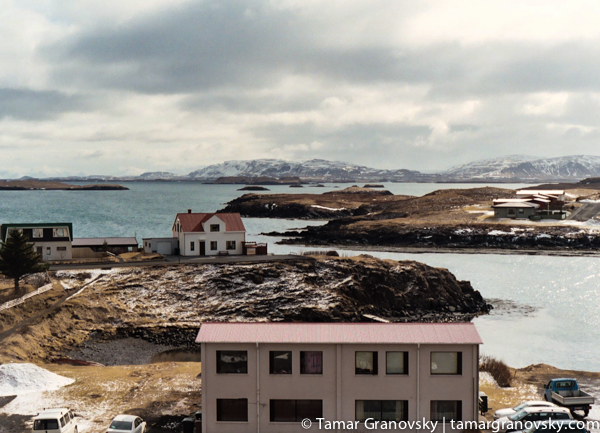
Stykkishólmur

Stykkishólmur

Stykkishólmur

Stykkishólmur

Volcanic rock just outside of Stykkishólmur

Volcanic rock just outside of Stykkishólmur

The first night there we patronized one of the three restaurants in this small town. The young woman who served us spoke excellent English, knew about Boston, and held as her most cherished wish to visit the apex of United States culture, The Mall of America in Bloomington, Minnesota.  At the airport on our way home we discovered that there is a direct flight to Minnesota from Iceland.

Our final day before returning to the airport to head back to Boston, we decided on a non-strenuous regime of circumnavigating the Snæfellsnes National Park. We stopped along the way to amble through a lava field, saw basalt cliffs, and “THE ARCH” at Anasartapi. We barely saw another soul or car and in fact counted only 12 cars in seven hours. The land was barren and beautiful.

I highly recommend April as the perfect time to travel to Iceland; it is not too cold or dark, it is off the high-tourist season, and if you are lucky you will get to see the Aurora Borealis.

Travels in 2007: Part 1. France

Iceland Air offers cheap flights to Europe in the hope of getting visitors to stop over in Iceland on the way to or from a person’s major destination. Steve and I decided to do exactly that and made a ten-day visit to the south of France in parts of Aquitane and the Midi-Pyrenees and then head over to Iceland. Not a bad vacation! Not at all.

Our travels began in Bordeaux where many of the people we met assumed we were British, for some reason. Little did they know… one Canadian and one American in their presence. Steve spent the first day taking photographs of bunkers north of Bordeaux at Saint-Palais-Sur-Mer.

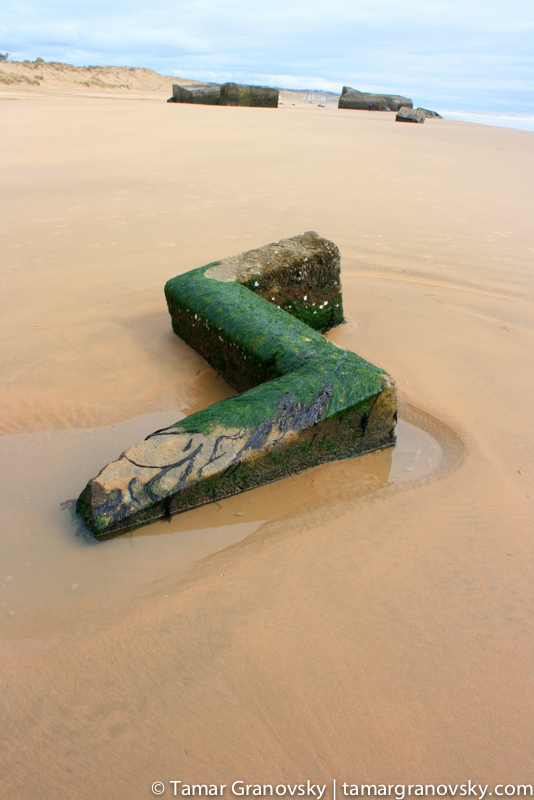
Saint-Palais-Sur-Mer

Saint-Palais-Sur-Mer (photo credit: Steve Behrends)

Saint-Palais-Sur-Mer

Saint-Palais-Sur-Mer (photo credit: Steve Behrends)

Saint-Palais-Sur-Mer

Saint-Palais-Sur-Mer (photo credit: Steve Behrends)

I used the day to explore the city without camera in hand: I wound in and out of the streets in the centre of Bordeaux; walked to the Gare de Bordeaux Saint Jean – a station constructed of three sections with railroad tracks that go through and out of the station; saw the Palais du Justice, a contemporary work of architecture located in the heart of and juxtaposed with the medieval city; and visited the CAPC (Centre of Contemporary Visual Arts) where the work of Yonah Friedman was on exhibition.

My impression: Bordeaux is an odd mix of neighbourhoods filled with Middle Age architecture side by side with razed buildings that have been replaced with contemporary architecture. The streets in the old part of the city are narrow and one has to keep an eye on the sidewalk in order to avoid the dog excrement that litters the ground! It is, however, a very easy city to get around in, by both foot and bus. Driving is another matter – the city is not easily navigable and we got lost a few time trying to get in and out of it.

The next few days were spent to the west of Bordeaux, along the French coast, exploring yet more bunkers at: Soulac-sur-Mer, Le Gurp, Le Pin Sec, Cap Breton, Labenne and Pilat Plage.

We ate at three excellent restaurants –  one of which was an informal brasserie called Le Xaintrailles that made magnificent duck confit and served a very drinkable wine from Listrac Medoc; the place was comfortable, casual, reasonably priced, and (most importantly) the food  was good, so that we returned there on our last night in France before heading off to Iceland. We ate extremely well at Restaurant du Loup (it is a quiet restaurant, walls awash with deep, warm colours, tables covered with white linens and with candles alit). The food here is typical of the area and the foie gras was the absolute highlight. And then there was La Tupina – the service was excellent and the staff gave us lots of time to relax, eat, and enjoy ourselves. Everything we ate was utterly delicious: a different bottle of Listrac Medoc from when we were at Le Xaintrailles, sauteed foie gras, wild pork (fatty and delicious), seven-hour lamb, and finally espressos and a glass each of Armagnac to finish off the meal. All three restos are highly recommended to anyone visiting Bordeaux and wanting to eat representative food of the region. All three are still in business as I write this post in 2013.

Our final five days in Southern France were a whirlwind of driving on unmarked back roads in the countryside. We stayed at various gites (B&Bs) outside of the villages and treated ourselves to a hotel in the centre of Cahors. Recommended restos helped define the route; but it seems that all we did, despite some excellent eating, was drive and drive and drive and drive and drive and drive and drive. In fact, once we nearly ran entirely out of gas on a windy, hilly, undefined road where not a car passed us. We were uncertain if we’d make it to our destination (a small town that we hoped had diesel for us at the ready!) since the fuel gauge indicated the tank was on its 40 km. reserve. Fortuitously we made it with just under 20 km. left to the choking end!!!

However, with all of this driving we experienced varied landscape: ridge-lined mountains and low-lying valleys, farmland, vineyards, grottoes, forests, arid, desert-like red iron-filled and rocky landscapes, and little villages. The food and markets along the way were always a pleasure. We drove mostly fast, straight roads back to Bordeaux so that we could begin the second part of our overseas trip in Iceland before heading home to the U.S.

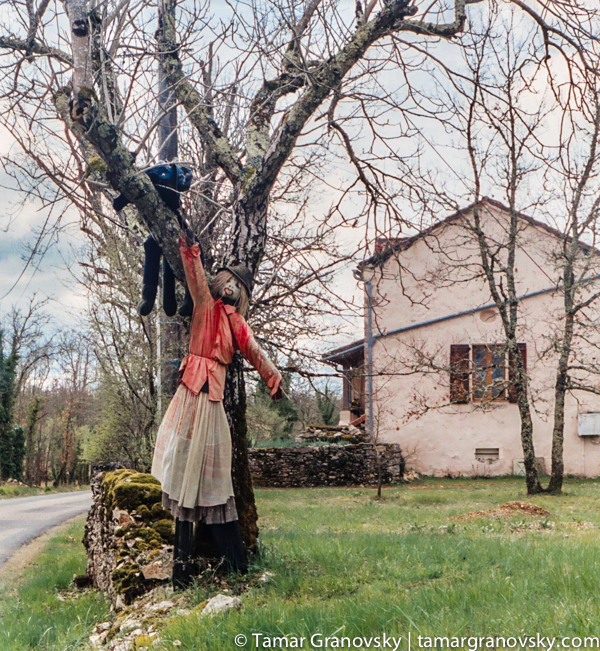
Scarecrow on small country road

Scarecrow on a Small Country Road

Madonna

Madonna in La Florida

La Florida

La Florida

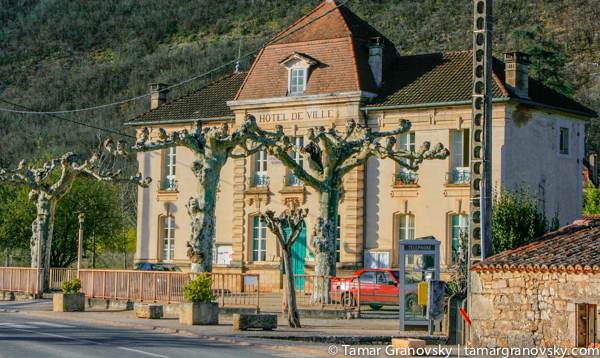
Hotel de Ville

Hotel de Ville

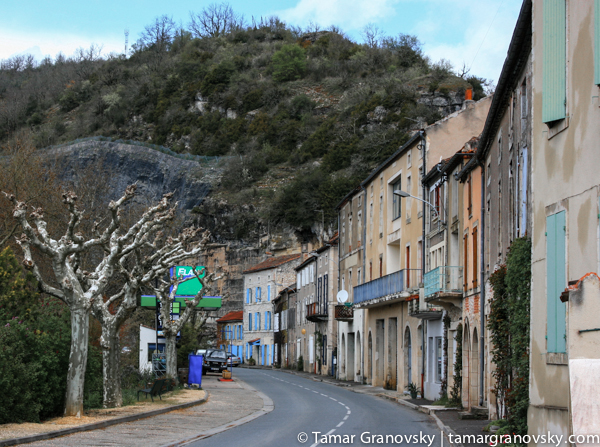
Village in the mountains

Village in the Mountains

France 2004: Paris and Atlantikwall Bunkers

Bonjour France! Paris with Michelle, and Atlantikwall bunkers in the north of France with my husband Steve.

It was my first time in Paris and I felt completely at home – a first trip to France that I’d repeat in a heartbeat. Wandering the streets of several arrondissements (districts or neighbourhoods) in Paris gave me a sense of how the city is laid out and I was able to experience Paris without rushing around. I watched people as I drank an espresso at cafes, sat in some of the many smaller parks designed for children to play and adults to rest in (homes/apartments are small so these outdoor spaces are crucial and everyone uses them), or relaxed in the larger parks including the Place des Vosges, Jardin du Luxembourg, and the Jardin des Plantes. Paris for me was (and still is) all about wandering, allowing myself to get lost, explore, learn my way around, and get a feel for this great city. And of course the food. Glorious food in the form of markets, cafes, boulangeries, patisseries, and restos. My friend Michelle and I ate like royalty. And of course there were the shops: small boutiques and large department stores, like the spectacular Galeries LaFayette; it all seemed forbidden somehow and yet how could one say “no” to temptation? One brilliant week in Paris.

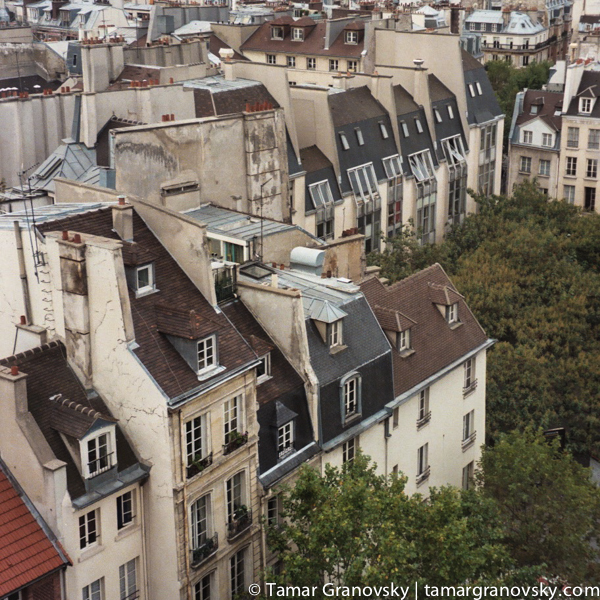
View from le Centre Pompidou

View from le Centre Pompidou

Before visiting a few bucolic villages in the countryside south of Normandy in the Pays de la Loire at the end of my travels with Steve, I was off for a stint of bunker hopping.

After a six-hour flight from Boston, Steve arrived in Paris only for us to discover that we could rent manual transmission cars, only. Since, at the time I did not know how to drive a manual automobile he drove the four hours north to our bed and breakfast at Madame Martin’s, in Pas de Calais. Advertised as a bilingual B&B (Steve is woefully ignorant of all languages except for English), the stark truth was quickly revealed. Only Madame’s husband, recently deceased, had ever spoken something other than French. To make matters worse (for Steve), our urine-scented room, the poor quality of food offered by Madame Martin, and the generally awkward atmosphere upped the ante. Luckily, I jumped in as translator to make this stay easier.

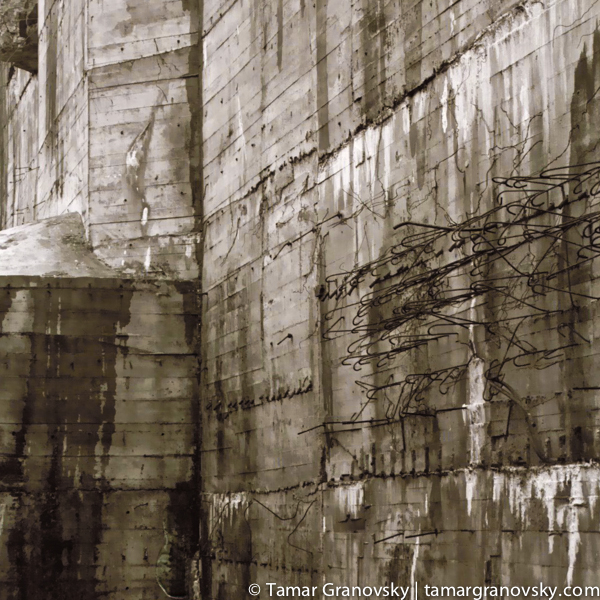
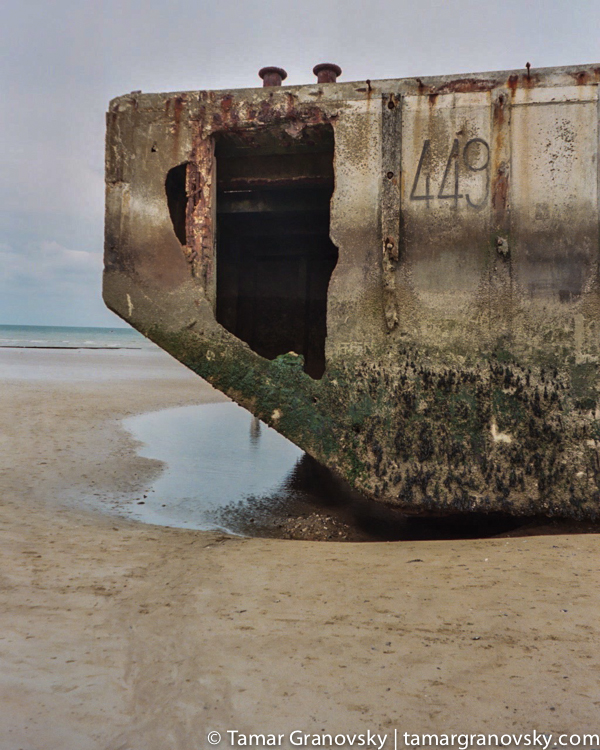
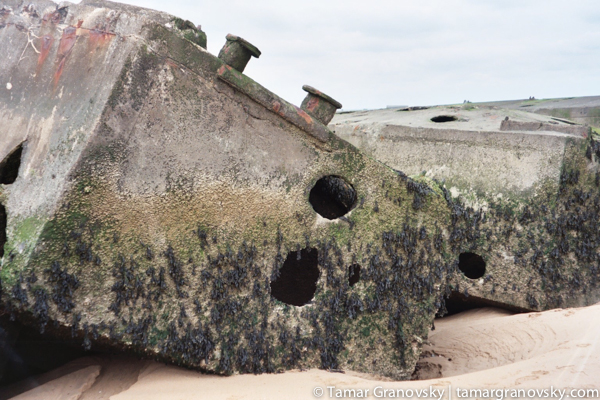
From Madame Martin’s on to bunkers! The Germans built the Atlantikwall between 1942 and 1945; it was a system of concrete fortifications in western Europe to protect the Germans from expected British ally invasions. These bunkers now scar the land in a strangely beautiful way – by means of urban archaeological decay.  Bunkers are found all across the coast of France (and Europe). During this trip Steve and I wandered the shores of:  (day 1) Pas de Calais to see the Le Blockhaus d’Eperlecques (le blockhaus), then north to Wissant, and lastly Oye-Plage at sunset for even more bunkers; (day 2) Dunkerque (Bray Dunes) and then time in Bayeux which included a walk in the countryside, a look at the magnificent Bayeux tapestry, and a lovely lunch at L’Assiette Normande; (day 3) Arromanches to see the Port Winston Ruins and then take a drive along the coast to Grand Camp-Masy and the Dunes of Varrieville for a walk through the Utah Beach Bunkers. The sites are surreal and the French people have learned to live with these mostly immense sinking constructions, re-imagining the usability of their coastal landscape without attempting to destroy the bunkers to restore the coast.

The Blockhaus at Eperlecques

The Blockhaus at Eperlecques

Port Winston at Arramanches

Port Winston at Arramanches

Port Winston at Arramanches

Port Winston at Arramanches

Montreal: My Home, My Love

Cambridge, MA is where I live with my husband and cat; I have made it home and have made friends here.

Tamar and Steve at home in Cambridge, MA

Tamar and Steve at home in Cambridge, MA

However, when in Montreal I am at home for it is the city I love. I adore hearing both English and French and love the fact that Franglais is a language unto itself (well perhaps not exactly). The fact is, two major linguistic groups dominate the cultural life of Montreal. Walking the city is easy and enjoyable and the food and markets are the best. The city is food-centric and ranges from cheap to expensive, divey to funky to fancy, and French to International cuisine. It is a people and bicycle friendly city with festivals to beat all other cities by the sheer number of them. The water around the city is people-friendly for walkers, cyclists, roller-bladers, canoers, and kayakers.  To quote Food Guy Montreal: “There is something about this city that just makes me want to share everything with everyone. I will stand by our bagels, promote poutine, cherish the establishments, and make sure to give everything in between a try.” This, I know, is just the first of many more posts of my favourite city in North America. Below are some photographs to give you an idea of how lovely a city Montreal is.

Street Art

Street Art

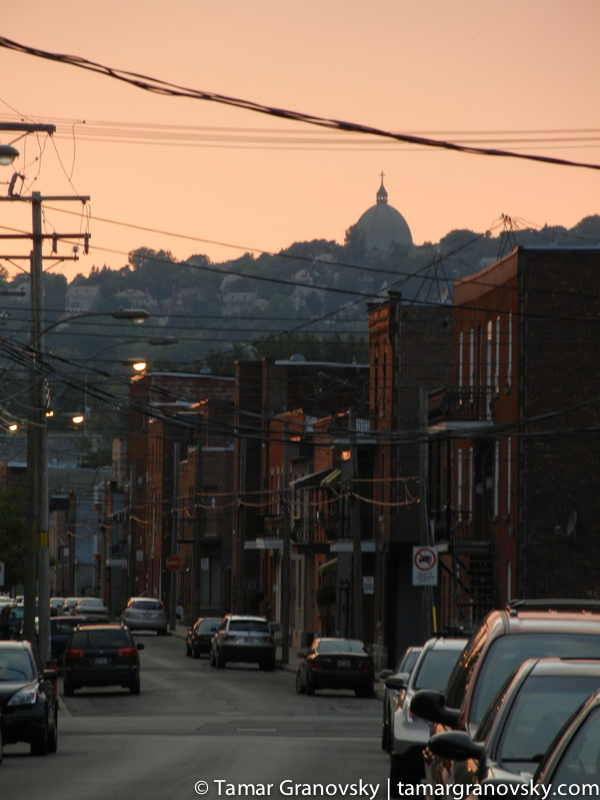
Montreal at Dusk from St. Henri

Montreal at Dusk from St. Henri

Rue St. Denis

Rue St. Denis

Patati Patata at Rue. St. Laurent and Rachel

Patati Patata at Rue. St. Laurent and Rachel

On the Metro

On the Metro

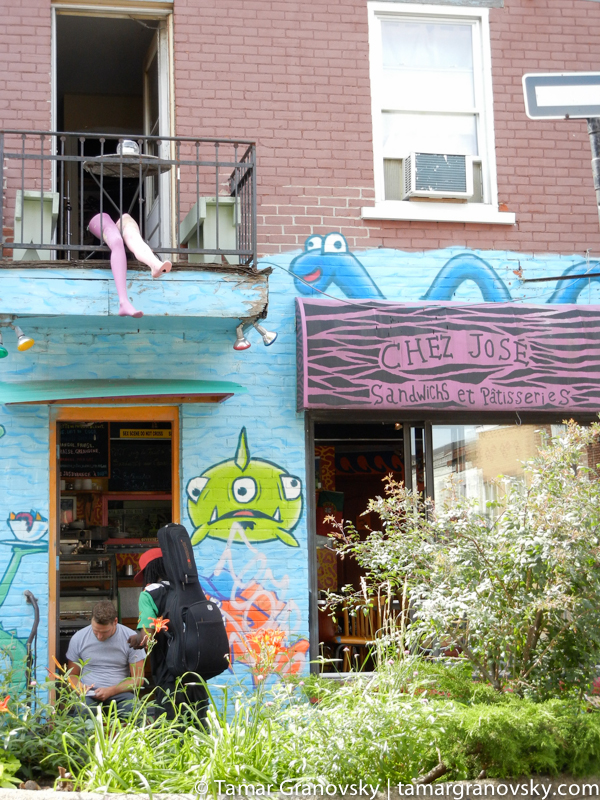
Chez Jose, Avenue Duluth

Chez Jose, Avenue Duluth