Beyond, in space, desert brush is green.
before, in time, brush and green
were wind, the sun, the earth
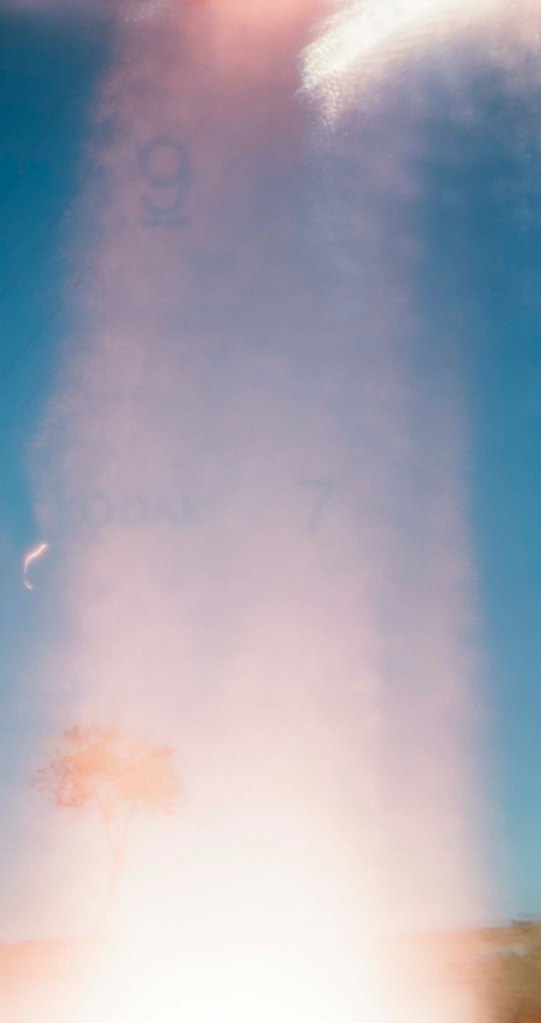
I was introduced to the Salton Sea, California, through the film, “Plagues & Pleasures on the Salton Sea,” and first visited there a few years later, in 2015. I returned another seven times over four years, for a total of seventeen weeks. Time allowed me to become more intimately acquainted with this place and, through photography, I was able to reveal the region through layers so as to give an intimate, emotive impression of what I was seeing.
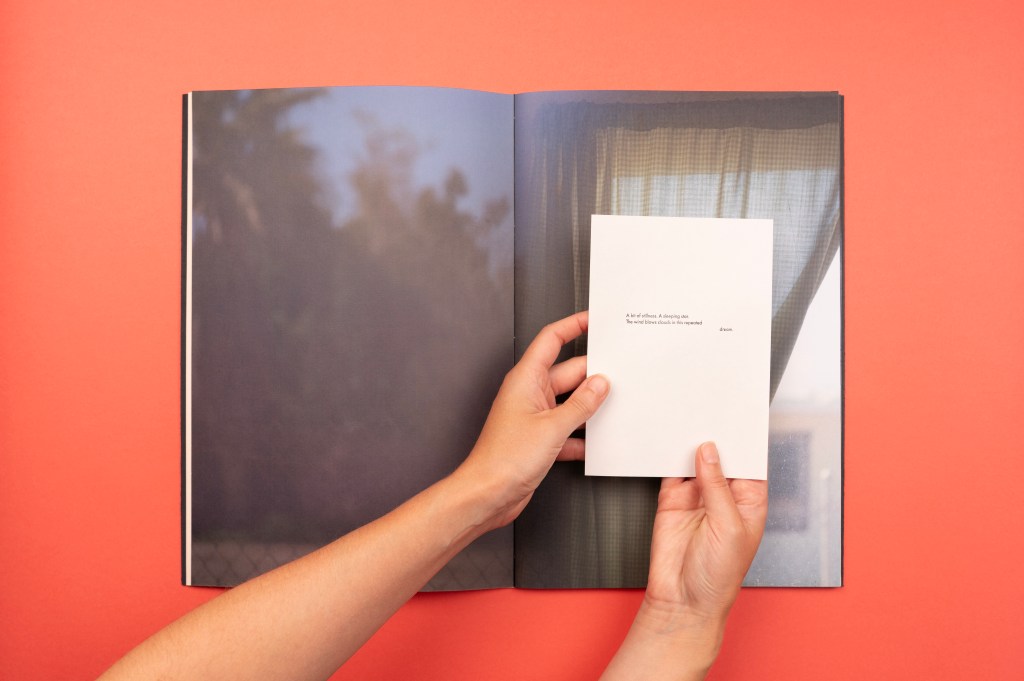
Because of the pandemic in 2020 my photography project came to an end. As I thought about the work I began to envision the photographs as a book that would also include poems that I had written at night in my motel room, irrespective of the photos I had taken during the day. I researched small photobook publishers and was lucky to find Emily Macaulay of Stanley James Press. Emily designed the book with me and she managed the photo printing. She created the letterpress printed text pages and hand stitched / bound this oversized book in an edition of 75 copies. I did not imagine, when the book was completed in October 2023, that I would turn this project into an exhibition.
Last year, however, I had the opportunity to submit a proposal to the Victoria Hall Gallery, in Westmount, Quebec, and this exhibition was the product: a photo installation with words and sound. It ran from April 11 until May 12.
The photographs in the main gallery space were printed on large sheets of paper (32.5″ x 43.5″ and 41.5″ x 78.5″), and tacked to the wall, unframed, in order to create a more bodily experience. Photographs in an auxiliary space were smaller, more documentary in nature and, framed. I recorded the sound environment around the Salton Sea because, to me, sound is an integral part of the landscape. Gisela Fulla Silvestre, a sound editor and re-recording mixer, let the natural sounds lift the emotional narrative for this exhibition. The poems and sound track in the main area were critical as different ways to enter, feel, and understand the installation. They added another dimension and layer to the work. Sound, words and photographs came together to help visitors become more immersed or absorbed in the work and world of the Salton Sea.
The town is in the middle of the desert.
The house is in the middle of town.
Its call is always the same,

"Come home. Come home."
It’s hot. It’s sunny.
Few clouds.
Bone and stone become one,
here.
A fragment of memory.
Familiar in this unexpected setting.
There is solace.
And now to toot my horn – here is a review in the Westmount Independent :
And here is (a poor) video of the exhibition but nonetheless a documentation of it :
Man on Bench by the The Mediterranean Sea .Nice, France.
The world is blue at its edges and in its depths. This blue is the light that got lost. Light at the blue end of the spectrum does not travel the whole distance from the sun to us. It disperses among the molecules of the air, it scatters in water. Water is colorless, shallow water appears to be the color of whatever lies underneath it, but deep water is full of this scattered light, the purer the water the deeper the blue. The sky is blue for the same reason, but the blue at the horizon, the blue of land that seems to be dissolving into the sky, is a deeper, dreamier, melancholy blue, the blue at the farthest reaches of the places where you see for miles, the blue of distance. This light that does not touch us, does not travel the whole distance, the light that gets lost, gives us the beauty of the world, so much of which is in the color blue.
From “A Field Guide to Getting Lost,” by Rebecca Solnit
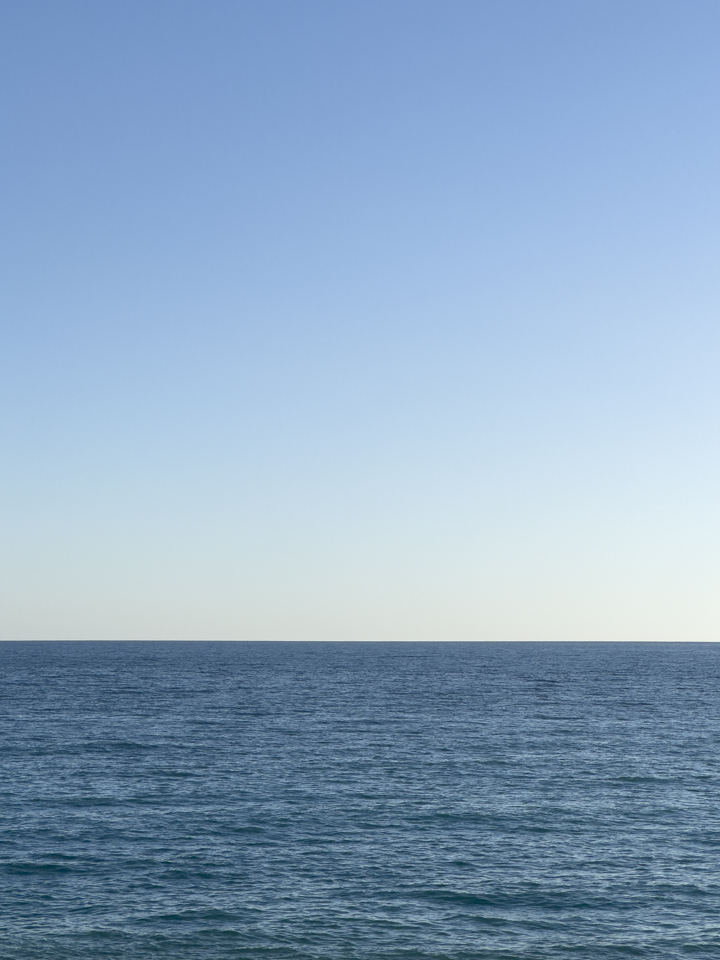
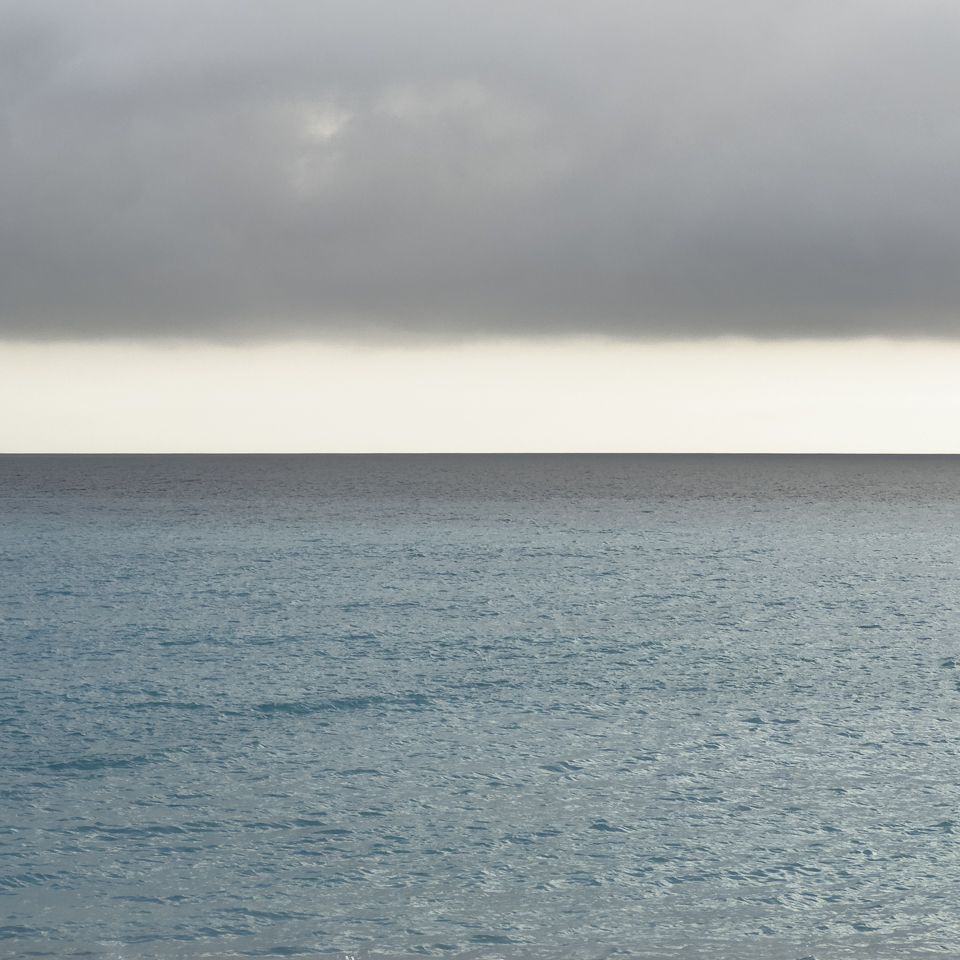
The Mediterranean Sea as seen from the Promenades des Anglais. Nice, France.
During a two month winter sojourn in Nice, France, I aggressively returned to life after a few months of winter in Montreal. The sun and sea woke me up. I had the opportunity to walk on the Promenades des Anglais, along the Mediterranean Sea, almost daily. The chance to easily walk or bike uninterrupted in a city is a rarity. Here, people can do that. I walked with great purpose or I strolled. I was able to lose myself in thought, listen to music or, listen to others’ conversations. I shared benches with strangers; I shared the deep blue water, too. I was outside and exposed, so to speak, to nature, the sun, to a space to move and think. Here was a place where, along with others, I surveyed the far away blue.
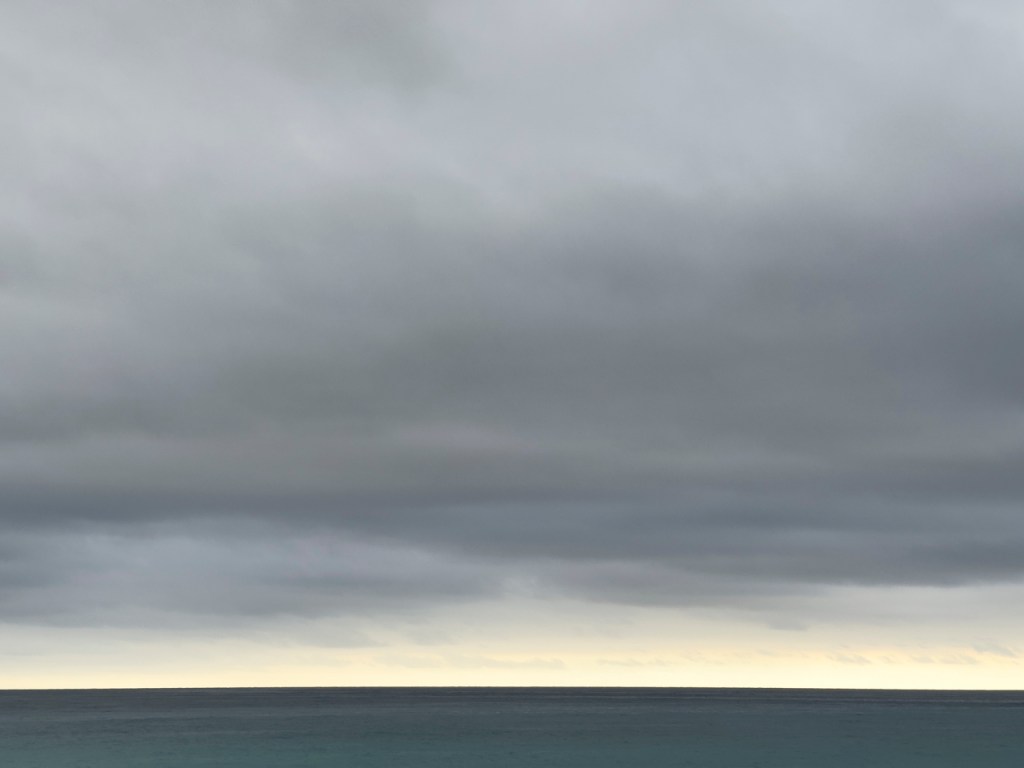
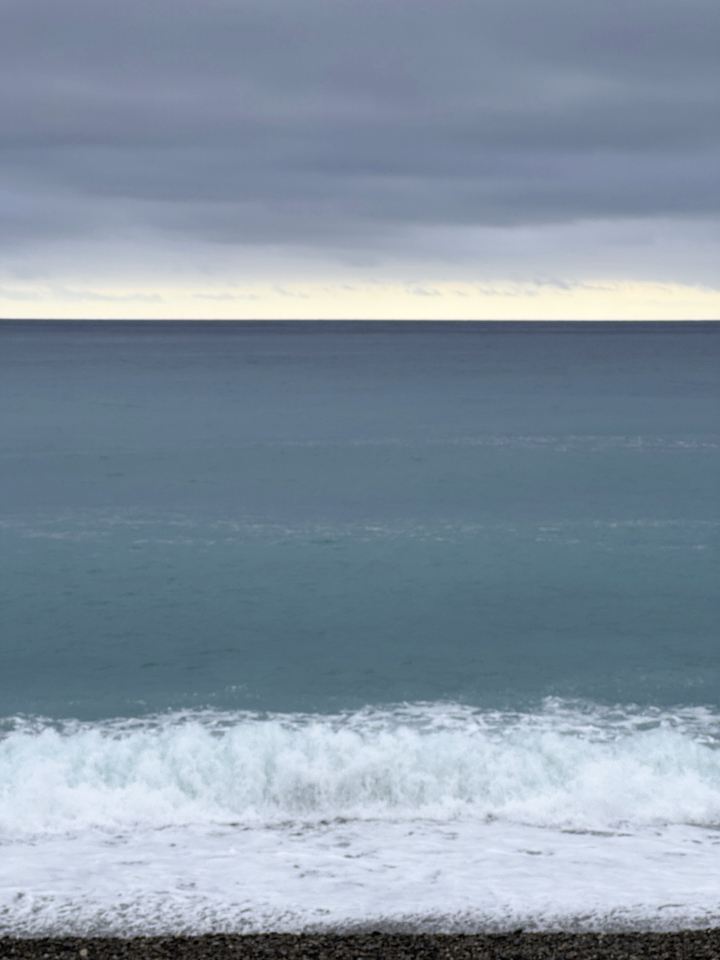
In the distance, the water defined the horizon as the sea reached the land’s rocky surface. Above it was blue sky. Sometimes, white cloud. Or blueish grey cloud. Also, blankets of dark cloud at times.
The Mediterranean Sea as seen from the Promenades des Anglais. Nice, France.The Mediterranean Sea as seen from the Promenades des Anglais. Nice, France.
My father showed me how one can live one’s life. He was a dreamer. I suspect my desire to explore came from him. He and I were cut from part of the same cloth. But I found myself thinking about my mother. She was a believer in routine. I tend to want to break away from it. Yet, somehow, routine was what I found as I passed my days here. And, for the first time, I really wanted to share a place with her. This place. Nice.
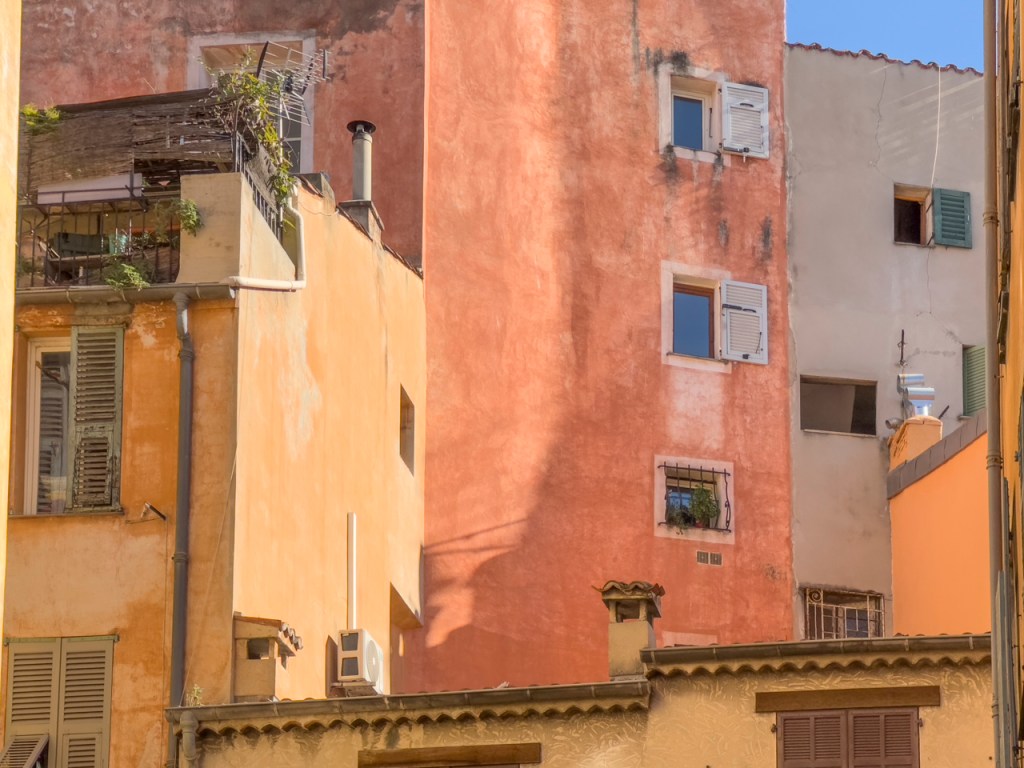
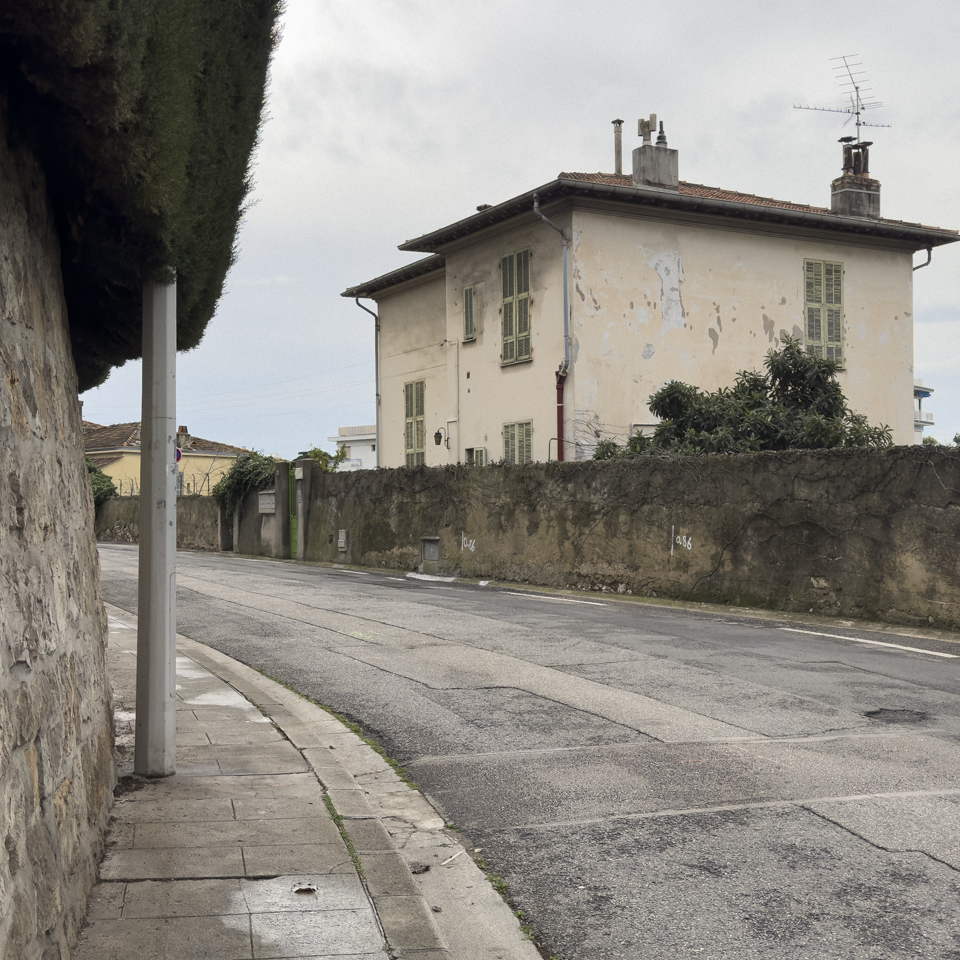
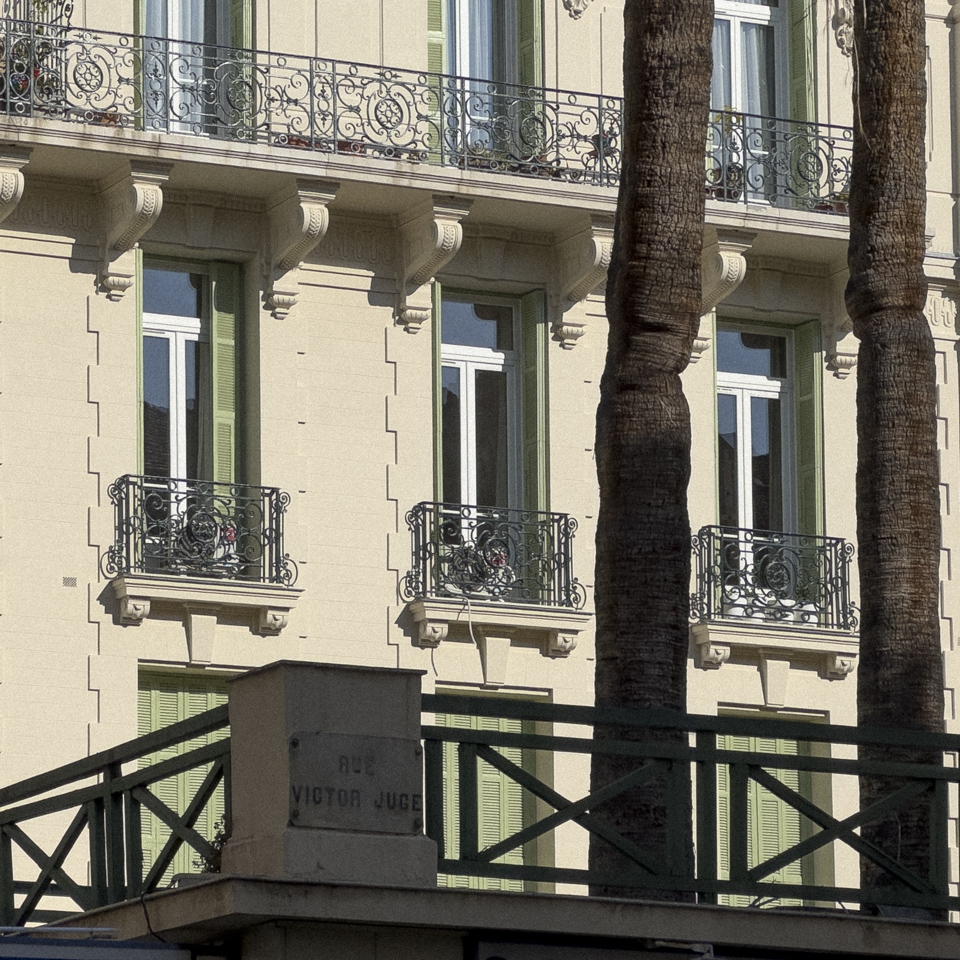
Le Vieux-NiceAvenue des BaumettesRue Victor JugeBoulevard François GrossoAvenue AuberParc Honoré d’Estienne d’Orves
I wanted to describe the everyday to her : the streets, the cafés, the stores, and the people. For example, I wanted to tell her that in the still dark early morning hours, when I went out for a croissant or small loaf of bread, I would pass by the same sanitation worker who picked up garbage from the neighbourhood sidewalks with his spear tipped stick. The work he did was out of sight for most since, by the time the day began for them when the sun finally rose, he was gone.
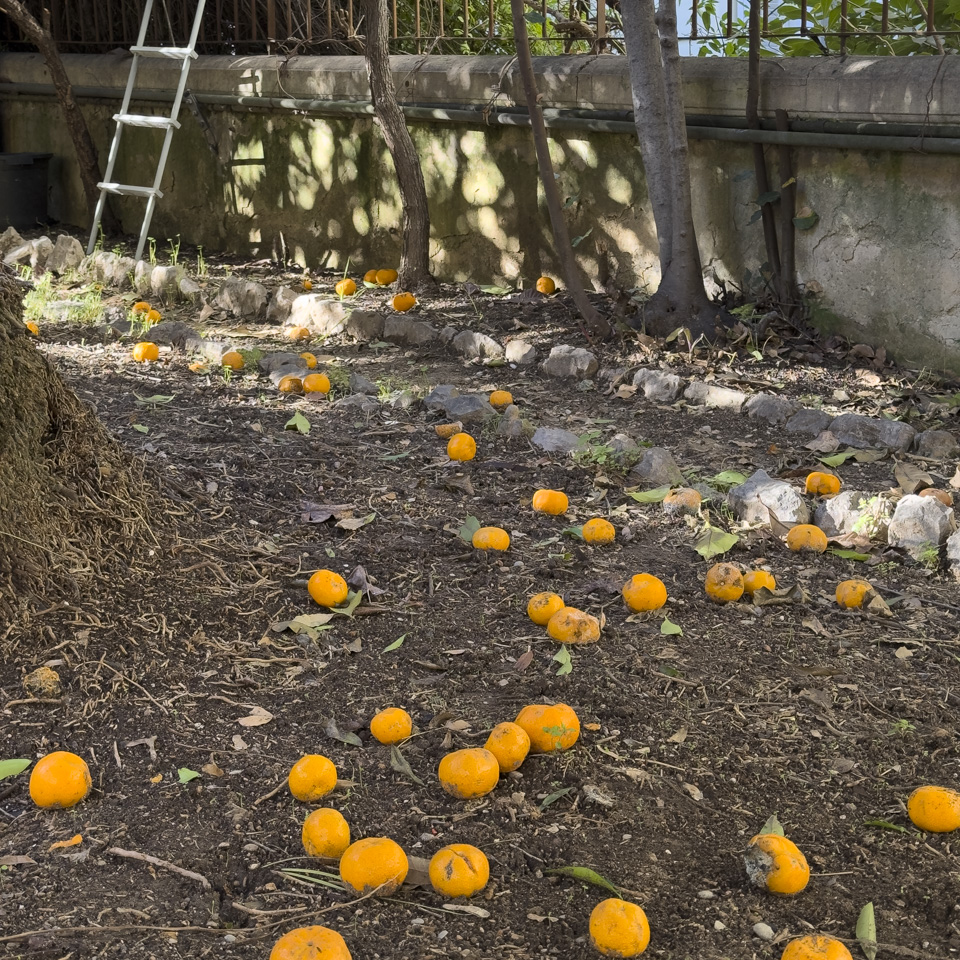
I would have liked to have told her about the orange bigarade trees. They were ubiquitous. Although I know I am exaggerating, it seemed these trees grew wherever there was a little green space by residential buildings. In the city, these trees are ornamental and are known for their hardiness; they do not produce the sweet fruit we eat but, instead, a bitter fruit known as bigarade. The scent of the flowers perfume the city air when these trees are in bloom. In the summer their canopies provide shade. I left just before the oranges began to truly fall. I never asked the question: if you do not pick and eat these fruit what do you do with them after they fall? I would like to believe that the city composts them. Perhaps people pick them from their gardens to make a bitter liqueur of one sort or another. Or jam. Or perfume. These products are what the bigarade is cultivated for outside of Nice.
Orange tree. Avenue Auber, Nice. France.Fallen oranges. Rue Jean-Baptiste Spinetta. Nice, France.
Except for a quick and unexpected jaunt to visit Liya, in Portugal, I stayed in Nice. It was all that I needed. Like an explorer I was able to wander and discover. Like a child I found that everything about the city excited me. Once I mapped up my neighbourhood I felt at home. Home enabled me to then further survey the city as I experienced the pleasure of getting lost, discovering, and facing something new. I sat outside a multitude of cafes. There were so many green spaces. People took their leisure, alone or with others. I lived in a central district of Nice and was happy to learn that very nearby lived a population of North Africans from former French colonies like Tunisia, Algeria and Morocco. There were also religious Jews in the neighbourhood. These culturally diverse communities seemed strong although I know that French cities (and especially port cities, like Nice, where there is a sizeable immigrant population) have been areas of trouble with less harmony (particularly with the Muslim community), due to the rise of the Far Right.
I left home – Steve, Tuli, and Montreal – to go somewhere unfamiliar. I worried that I would not care for Nice, that it would be too big a city, and that it would feel alien. Nonetheless, I went with this uncertainty because I dreamed of more sun than cloud, a temperate climate, and the boardwalk. And in the end, the unfamiliar became familiar. My walks. The Mediterranean sea. The blue. The deep, bright, azure blue sea with a horizon far, far away helped me adapt easily so that by the time two months in Nice was over it was as if I was losing home again.
The Mediterranean Sea as seen from the Promenades des Anglais. Nice, France. The Mediterranean Sea as seen from the Promenades des Anglais. Nice, France.
Perfectly aligned cigarette boxes on display and for sale.
I still feel China in me. I smell it and taste it.
The stench of cigarette smoke was all enveloping; it seemed that every man held a cigarette between his pursed lips or fingers; Ba was almost always with one. But there were other odours. My throat closed as I inhaled the remarkable potency of chili oil as lunch dishes were being prepared. More importantly, though, were the marvelous fragrances of those meals themselves. I recall the scent of fried eggplant or slivered potatoes, hung shao rou (braised pork belly) or, delicious stir fried amaranth with garlic.
I can also hear China. The sound of roosters in the distance and the content murmurs of “auk, auk auk auk, auk” or “rrrrRR!!” of the hens in the yard. At night, in the dark, there was an orchestra of frogs. The background vocals of the cicadas was even louder. Clearer. Crisp.
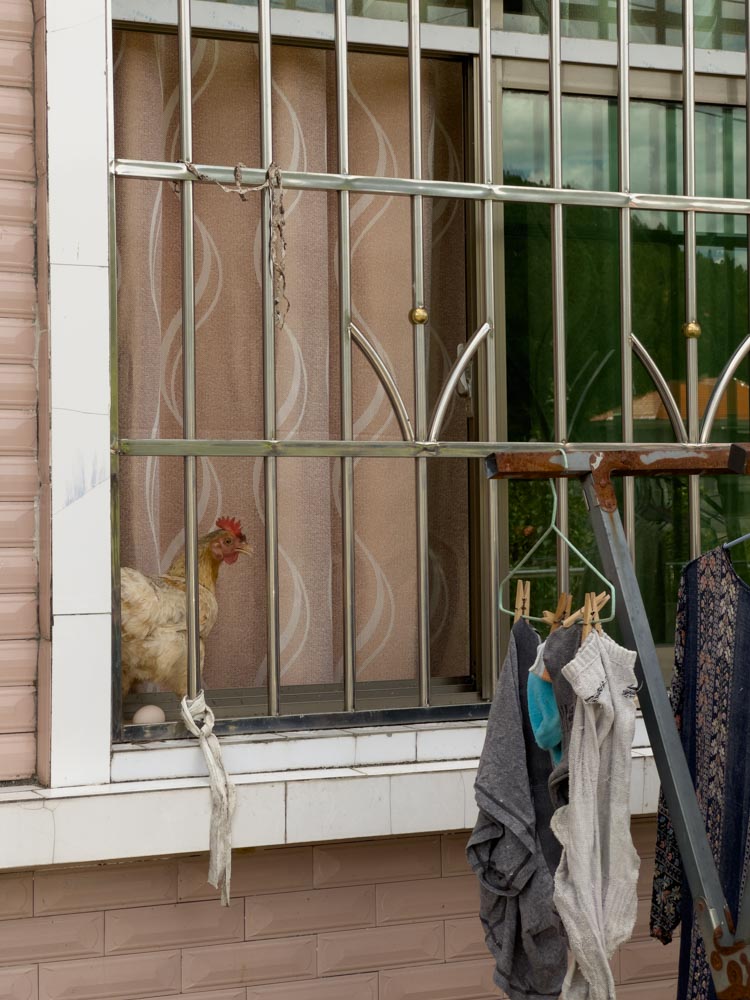
The hens were everywhere, In the front and backyards as well as in the house. They ate peaches. They loved the peaches. And watermelon. And anything else we gave them. They defecated everywhere and from time to time I would catch a dog eating the excrement.
This is the backdrop.
Yellow peaches.
Lian Xi Cun (the village) Zhongcun (the town) Yanling County Hunan Province China
Zhong Cun, Yanling County, Hunan, China.
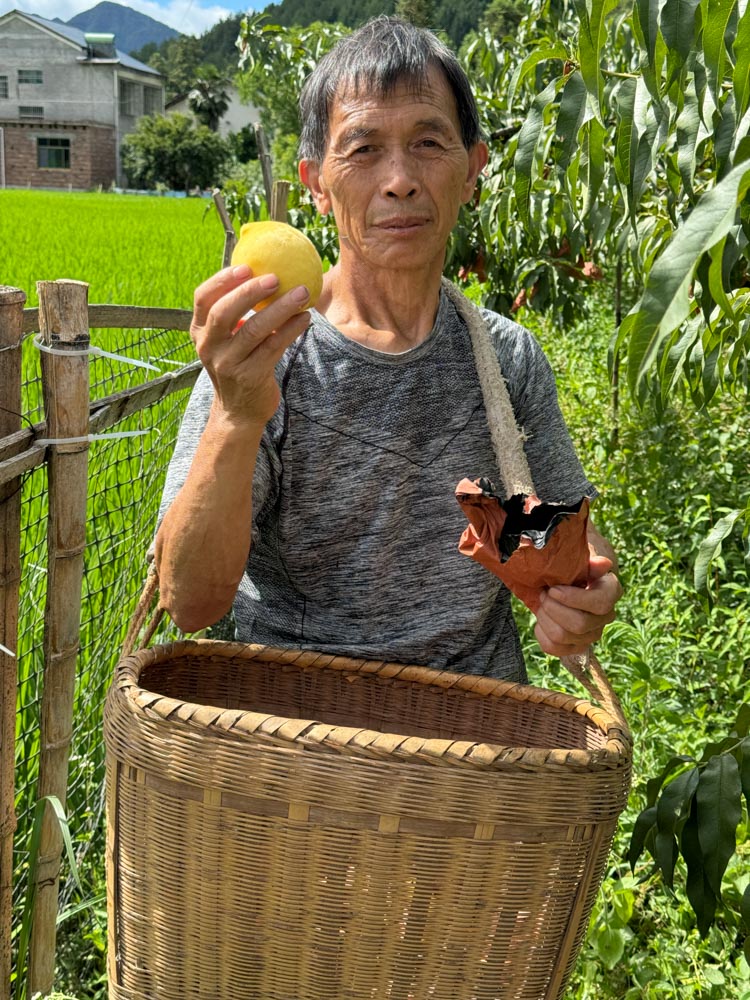
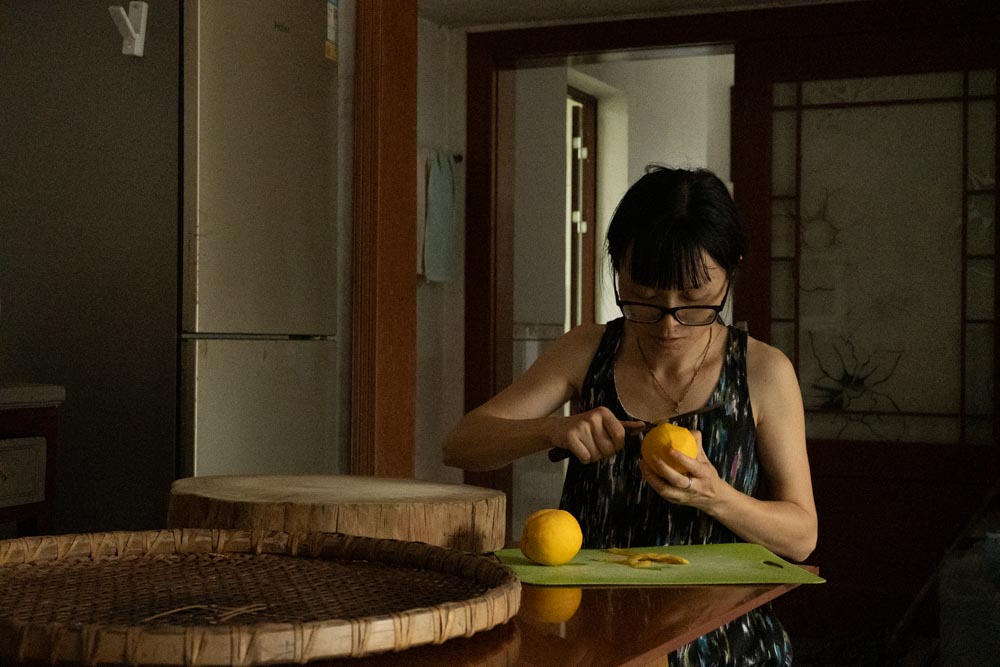
The excuse for my invitation to Li Xian was peaches. Yellow peaches. Pale yellow. Some wore a slight tinge of orange. Every peach was wrapped in its own salmon coloured double layer protection bag. Because of this the peaches were kept safe from not only pests but also the sun so that they remained yellow; they were not allowed to turn to sunset orange/pink. The area is known for yellow peaches. At sunrise Ba, my friend Liya’s dad, picked the peaches. When needed, Pedro and Liya helped. Martin and I unwrapped those peaches which had been very gently dumped from their bamboo baskets into vibrant yellow plastic crates when they were brought in from the field. We placed them in one of three piles (hard and yellow, softer with a kiss of orange, damaged or simply too ripe for shipping). Then we wrapped the undamaged golden fruit (that could easily be mistaken for lemons) with a white, netted, plastic wrap for protection. We learned that there was a correct way to put the fruit in their sleeves and an even more precise method to packing the boxes that were prepared for shipping each mid-afternoon.
Peach crates to be sent out wholesale.
Ba picking peaches.
A hen laying an egg on the windowsill.
Ba is my age. Apparently, he has been tired for a long time. Very tired. He feels a general malaise and often gets sick with headaches. He has issues with his lungs. He takes a handful of pills. He makes a concoction of tea. He fears for his health. Several times during my stay at his home he did not get out of bed until we checked in on him. But he insisted on doing everything himself although, in fact, he did not. The four of us, we who came from Canada, Portugal, and Singapore helped him, did what we could. Liya did the brunt of the work alongside her father. The work never ended for either of them. As well as the physical work related to peaches, they collected orders from wholesalers or individuals. They yelled at each other because they were fully dedicated workers with their own ideas about how things should be done. Often Ba escaped with his cell phone. He was as addicted to it as he was to his cigarettes. Liya, luckily, had us. In between our work we played. We laughed. In the future she will remember this when she sees the many photographs Martin and I took of her laughing.
Ba with a perfect peach.
The blue thermos is the one Ba drinks his tea from.
Liya beginning the task of preparing peaches for drying in the sun on the rooftop of a shed.
Liya and Martin laughing during a tea break.
Yanling County is known for its isolation and poverty. It was well known as being red – closely tied to China’s red culture campaign. According to Chinese history books, Mao launched the Land Reform Movement of New China in Zhongcun Town.
Lian Xi village is across the Xielia river from Zhongcun Town center, sitting on the west bank. The name of the village is Lian Xi 联西 (lián xī). 西 Xī is west and 联 lián means unite/united, adjacent. The population is about 700, although many do not permanently reside in the village because of migration to urban areas.
Market gathering in Zhong Cun.
Main Street. This is the tallest building in Zhong Cun and is six stories high. For now it towers over all the other buildings that are no higher than three stories.
Liya says that when she hears or see the words Lian Xi, what comes to her head is her primary school, mountains, rice paddies, dialects… She says that Lian Xi, overall, has not changed since she was a girl; she is now 35.
View from the 2nd floor of Ba’s house.
One big change is the new Chinese National Highway. The old one-lane highway winds around this mountainous region. Mudslides get in the way during heavy rains. The new highway consists of many tunnels that burrow through and go around the mountains. Getting to Zhongcun Town and Lian Xi is easier and faster than on the old highway. However, many people still rely on the more economical local bus that takes the old highway to get from one place to another.
The Xielia He (river) that separates Zhong Cun from Lian Xi.
China is a populous and agricultural country. Land is state and collectively owned. Private ownership is prohibited. Since the 1980s rural (village) collective committees assign parcels of land for cultivation to eligible households.
Liya’s dad (Ba) is not originally from Lian Xi. He and two of his younger sisters moved there after their parents and grandparents died. Ba was 17 at that time and discovered that it was too difficult for him to raise his younger siblings. It was during the Mao era; food was extremely scarce for impoverished families like his. Ba and one of his sisters were assigned to a couple without children and his other sister went to another family. Liya’s mum is from Lian Xi. When she married Ba she moved in with his adopted household, as is tradition for women in China in mostly rural areas and amongst less educated couples.
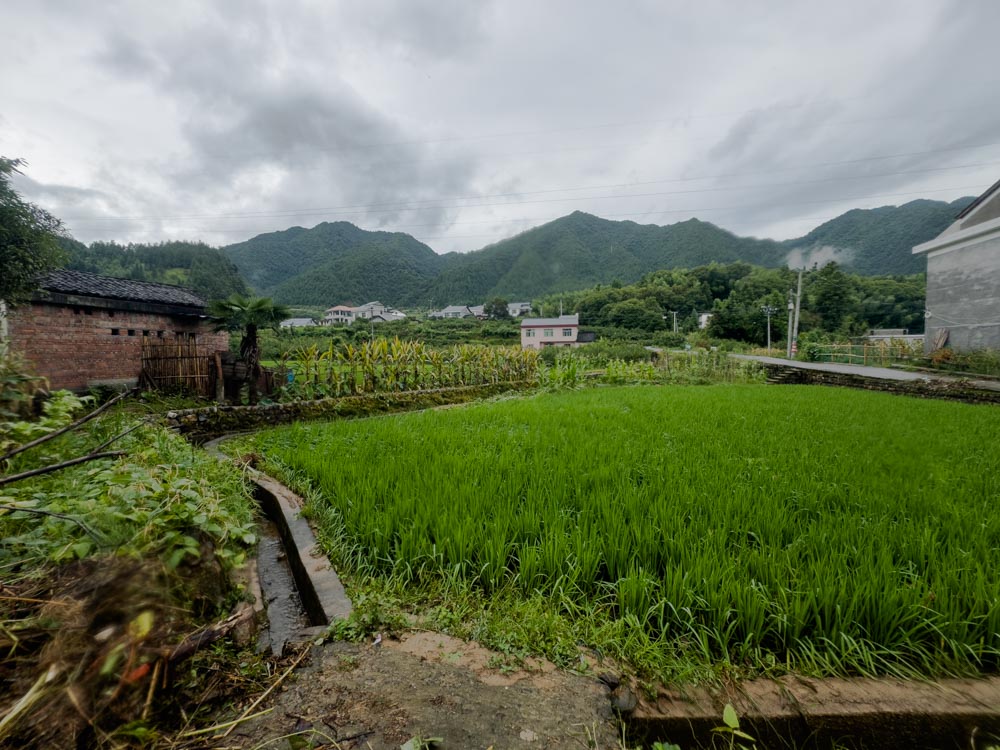
A rice field after a heavy rainfall.
Providentially and purely by happenstance, Ba inherited some of the land he cultivates today. The land belonged to the couple that sheltered him, and, for some reason, it was never taken back by the committee after they died. Once there were two mu but now there is only one mu because the new national highway superseded it. A mu is approximately 0.17 acres. Most women do not own land, even today. However, if a woman’s husband dies, even if she moves out, his land belongs to her (so to speak – since the land doesn’t belong to anyone but the collectives). Plots are no longer relied on for full food provision nor does everyone cultivate rice, as was the case when Liya was young.
Liya in the kitchen with help from a friend.
The stove top where all the magical food came from.
Should Liya decide to move back to China from Portugal and want to “buy” land, she can only do this in Yanling county because the hukou system ties her to her village home. This system, which was started in the 1950s, was created to control and limit rural migration to the cities, but has subsequently created social inequity between rural and urban China. An individual’s hukou registration and labeling as agricultural or non-agricultural, determines jobs, benefits etc and these classifications are nearly impossible to change.
My two weeks in Li Xian made me think about rural China, the lives there, and the roles women play in this country. Liya is a young woman who broke with tradition when she left her village and then China, where the potential for her economic, and personal, growth would have been severely limited. She transformed herself, overcame the challenges and pursued her dreams on her own terms. While I was with Liya at Ba’s home in Li Xian (under the ever-watchful eye of Mao, whose larger than life photo and image is omnipresent across China) I witnessed a family dynamic of almost constant tension and struggle for authority and understanding between Liya and her father. This inter-generational battle might never have taken place if Liya had followed tradition and stayed in the village or moved to Yanling.
Liya and her friends Yishuai and Xiaoting, both of whom I met and who were also from small villages, are all unusually accomplished young women who had thought about their situations, taken on tremendous challenges and transformed their lives through sheer determination.
It was a hopeful sign that even in a country still so tied to rural life and steeped in traditional roles, new generations are capable of setting their own paths.
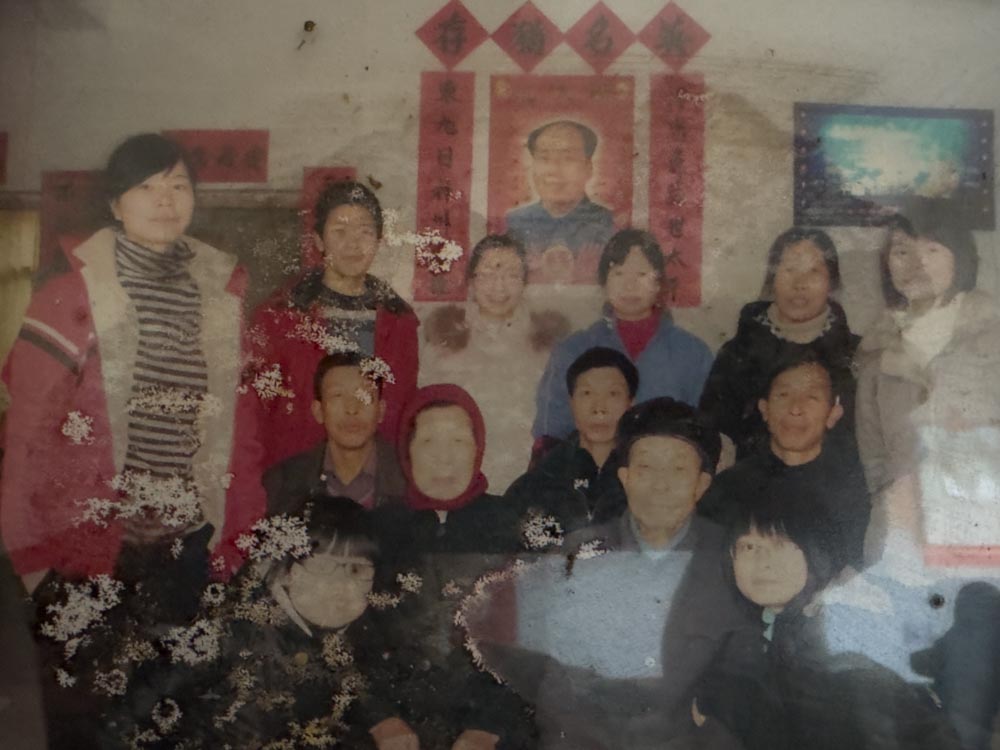
The dining area with Mao. The second, “guest” dining area bears a poster of Mao in his robe after his dip in the Yangtze River in Wuhan – the place where he set the stage for the Cultural Revolution. It was there that Mao showed off his physical fitness and general good health.
The large photos are of Ba’s father and mother. Take note that a picture of Mao (left) is included with the family photos.
Siren Song cover. Photo credit: Curtis James, 2023
Through the millennia the Colorado River has, from time to time, spilled over into the Salton Basin creating lakes in what is now known as California. At the turn of the last century irrigation canals were built along the river to help develop agriculture in the Imperial Valley. Because of that, in 1905, a diverted Colorado River was breached by floodwater and filled up the river valley basin. Thus the Salton Sea, California’s largest lake, was formed there, in the desert. Fish were stocked, birds began flocking to the waters and fishing sports were encouraged. Eventually additional canals were built to supply water to the area. In the mid-20th century more fish were added to the body of water, palm trees were planted along the shoreline, a State Park opened, and developers built luxury resorts; celebrities and ordinary folk came flocking.
But a few decades later, because of agricultural run-off, the Salton Sea became increasingly salinated and fish died out as did grebes and pelicans. In 1999 more than 7.5 million tilapia and croakers died from depleted oxygen in the lake. The Salton Sea Authority states that over 400 species of birds rely on this ecosystem. Migratory birds need the Salton Sea. “In fact it [this ecosystem] is the second most Avian bio-diverse region in the North America, only second to the Everglades.” (https://saltonsea.com/about/faq/) Since the early noughts there have been various plans to restore the area.
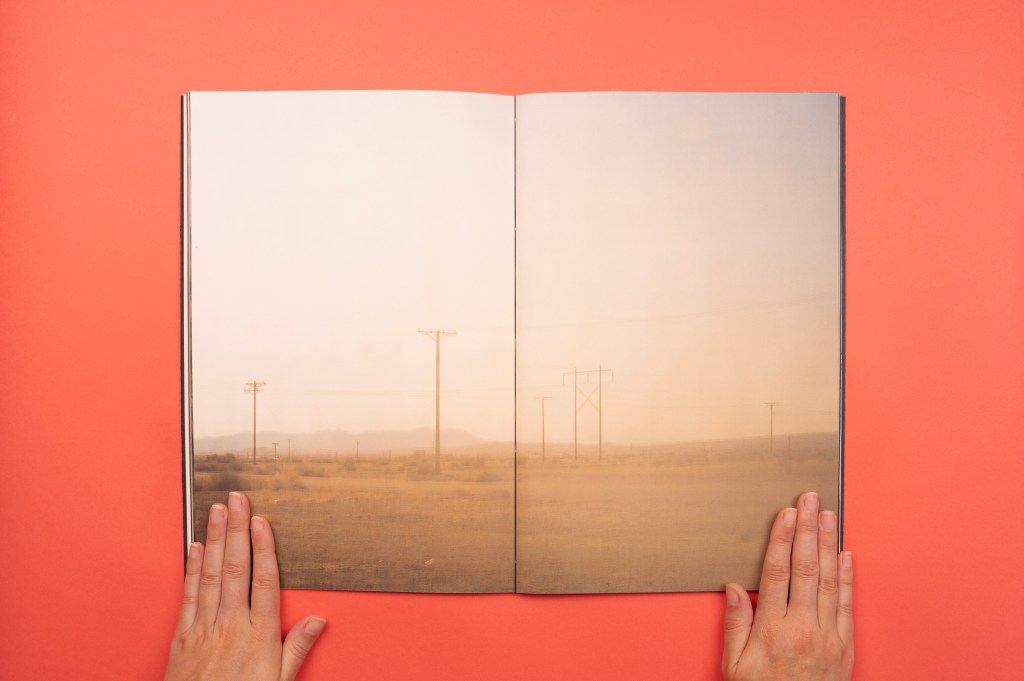
Front gate-fold photo of the Salton Sea. Photo credit: Curtis James, 2023
With this as a backdrop I made my first visit to the Salton Sea, in May 2015. Repeated attempts to channel waterways, develop agriculture, and create resorts beside this accidental “sea” left scars on the surrounding communities. This dead sea had visibly evaporated with each visit I made between then and 2019 yet decay and survival clearly coexisted there. Sparseness, the desert’s horizon, open terrain, and the distant mountains still define this world and pulled me in.
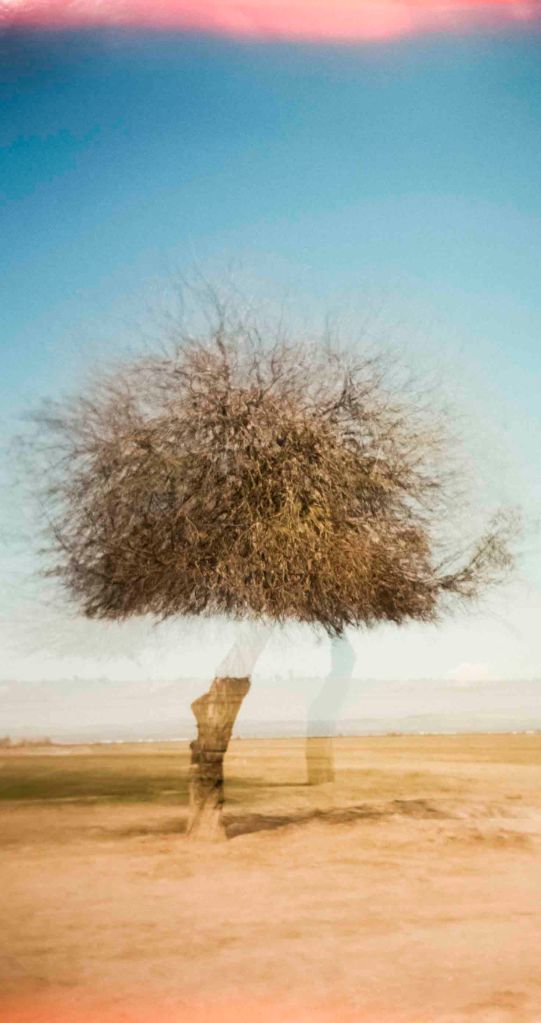
My book, Siren Song is the result of a five-year photo project at the Salton Sea. The book is more about the people – or specifically, their absence – than about the land. The photographs are of traces of the everyday in the vicinity of this toxic, abandoned lake. It is a meditation on a place that somehow felt like home to me. The book reveals itself through its tangible dimensions and paper stock and layers of words and images.
Tree with Fields in Background. Outside Westmoreland, California. 2019.
These last few months have been so strange with a pandemic that has taken such a toll, worldwide. In the last few weeks we have seen worldwide protests against systemic racism, police brutality and the struggle to imagine that black and all lives matter. In some ways I am reluctant to post about my good fortune. And yet I am so grateful and thankful for all the support I continue to receive. Images from my project “Siren Song” are part of the Photoville Fence New England exhibition on display in Winchester, MA, this summer. A photograph from “Siren Song” is included in the PhotoPlace Gallery exhibition Dreamscapes and Visions. Lastly, pictures and text from my project, “This Miracle,” were posted as a small photo essay in the online magazine, Edge of Humanity. This has all been a tremendous honour!
Light. Arandai, Chapada Diamentina, Bahia, Brasil. 2017.
I am so very pleased to announce that the work for my project Siren Song was awarded Bronze Winner in the Portfolio Category at the 2019 Tokyo International Foto Awards. Here you can see what I submitted.
I thank the jurors so very much! It is truly great encouragement. I also thank Susan Burnstine for all of her support as a mentor. And… how can I not thank the friends I made over the years I have visited the Salton Sea in California’s Imperial Valley. Grazie mille Bill e Tina for making me feel a part of your wonderful family and introducing me to your friends. When I go to the Salton Sea it is like returning home.



















 Tamar Granovsky | Wanderings Afar and Near