China as I See it

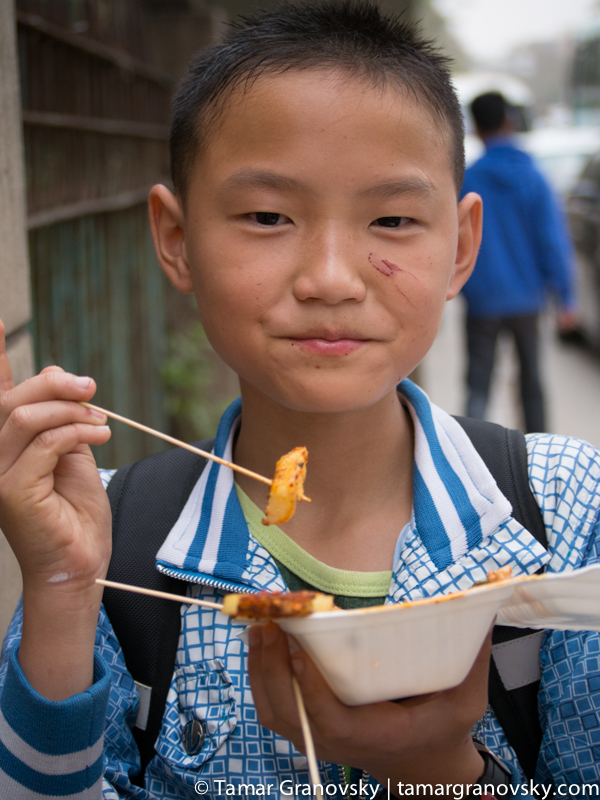
Boy, Kunming

Boy, Kunming

When I first headed to China in 2012, I presumed I would find the culturally rich country with a long and enduring history, that I knew from reading and from museum exhibitions; and magnificent, vast, natural landscapes that I’d seen in movies, photographs, and paintings. I also expected, from what I had read in the news, overcrowded cities and evidence of the reckless exploitation of natural resources. Having travelled in Southeast Asia, I also anticipated a wide assortment of diverse and tasty food. I did not have many preconceptions about the people other than presuming that they might be better educated and perhaps more mobile than those in the other, somewhat less-developed, regions of Asia that I had visited. I had hoped to encounter warmth and hospitality. Some of my preconceptions have proved true but I’ve also had some unexpected revelations. As I wrote in my posting, First Impressions of China, China is neither a third nor first world country and is changing at tremendous speed; public transportation is fairly top notch, construction is faster than lightening, consumption is high, and it is hard to tell whether the infrastructure will be able to take all this rapid growth. Yet, despite all this recent transformation, it seems that family, food and tradition are still central to the Chinese people and their values. Because I have met so many wonderful people over these seven months in China, I have decided to share with you just a few photos of their many faces.

Feeding Seagulls from Russia During Migratory Season, Kunming

Feeding Seagulls from Russia During Migratory Season, Kunming

I came to China to study the language in September 2013 (I’ll be leaving the country at the end of March 2014). My sole incentive was to try to better understand this country’s people and culture. I have succeeded in learning quite a bit on all counts. So, in no particular order, here are my updated impressions and some of my discoveries about China.

Hygiene: Garbage is thrown on the streets in cities, towns, and villages, since people are employed to pick it up (although those who are really in the countryside seem to take great care of their environment). Much of the population continues to spit on the ground (it starts with the clearing of the throat – a sound I’ve learned to dread – and is followed by phlegm shooting like a spitball onto the ground, where the vestige pools. Most men smoke, and in the cities women are beginning to do the same, although they often do so in secret because it still is taboo. Cigarette butts too, are thrown onto the ground.

The western-style toilet is making its way into China – particularly in big cities, where you may find a few of them in a row of toilets in public washrooms. In most places, however, there are still squat toilets (often without toilet paper, or water, or soap). In some instances (such as in bus stations), these toilets drain directly into an outhouse-like hole or trough, and are without doors for privacy. I have been told that when some Chinese find a western toilet they actually may stand on the toilet seat and then squat. Some toilets are clean, but from what I’ve seen, a great many are not. Cleanliness aside, there is something so basic about this experience that I actually enjoy using them anyway. In the West, we are very private about the goings-on in our bathrooms. We lock the doors and don’t want anyone around. I like that in Chinese bathrooms the ego is relinquished and disposing bodily waste is just what we do. How unflushed faeces, or splashed urine, reflect on hygiene is a whole other story. Here is a link to images of an array of Chinese toilets.

As I mentioned in my First Impressions posting, babies are clothed in pants that are split along the crotch, so that the moment a baby needs to relieve itself, parents can hold him/her over a curb, next to a tree,or wherever convenient. I have always found this a brilliant idea, until I recently saw a mother holding her child over a restaurant sink meant for customers to wash their hands.

Lastly, it is not uncommon to see city-dwellers wearing face masks to protect themselves from dust, pollution, and germs in general. All across China, cities are experiencing extraordinarily high levels of air pollution. In Kunming, (where pollution levels are somewhat lower than in many other cities in the country), most people do not wear masks that filter pollution particulate matter. Instead, fashionable face masks are often worn as accessories; people want to look good while trying to avoid dust from ongoing construction, germs, and smog. When the pollution is “high” it looks as though there is fog outside. I have experienced this grey/yellow atmosphere in Beijing, produced by extremely dangerous levels of pollution (one can barely see a few blocks away). My teachers claim, as do many others, that it is just fog, but I have noticed that I am sensitive to the air quality as it worsens, and I monitor the air quality index so I know it is definitely not fog when the mountains surrounding the city, or the tall buildings in the distance, are shrouded in a cloud of grey. I bought myself approved masks for heavy pollution conditions, but the majority of the Chinese population buys its masks in convenience stores or other stores where the fashionable models are available. Very few people wear masks that really protect them – although this is beginning to change, thankfully. It’s a small first step because, of course, the greater issue of the pollution itself needs to be addressed.

Husband and Wife, Kunming

Husband and Wife, Kunming

Driving: On city streets, drivers seem to lack situational awareness.  It appears, to an outsider and pedestrian, that no one pays attention to what is around them. Those on motor bikes do not check behind them as they move from the sidewalk onto the street. The average driver travels as though part of a school of fish. In the West, roads are lined for traffic flow and we stick to these lanes, unless passing another vehicle. In China, delineated traffic lanes strike me as being mere suggestions. It’s not that China doesn’t have traffic laws but many drivers are probably ignorant of them and just follow the crowd instead. From what I observe, infrastructure and resources need to be improved. There has been a dramatic increase in the number of cars and scooters on the road and this change has occurred much too quickly. There are few traffic police and instead, just recently in Kunming, they have hired ordinary citizens to attempt to reign in drivers when a light turns red. There is a need for aneffective legal system to deter the behaviours that cause traffic jams and, no doubt, accidents.

In Kunming, electric scooters are widely used. They are quiet and environmentally efficient. The vehicles are plugged in overnight, and can travel for about 40 kilometres before needing another charge. In this regard, China is certainly ahead of the West, where there is still objection to electric vehicles, no doubt because of big oil interests.

Man, Kunming

Man, Kunming

Education: China has great respect for its teachers, a tradition that goes back thousands of years. Modern Chinese education began about a century ago, but because of the Cultural Revolution it was slow to develop and has lagged behind the West. Unlike in North America, educators are highly regarded and garner great respect and admiration. Children attend school six days a week and take many after-class lessons. They are expected to study hard and succeed. Parents hope that their children will eventually go on to university and improve their lives.  The general population realizes that in order for the country to succeed and to develop economically and socially, it needs to make great progress in the world of science and technology, economics, etc. Education is key to all of this.

Old Friends, Kunming

Old Friends, Kunming

People: One of the most interesting aspects of Chinese culture is its mixture of direct and indirect behaviour. Most people are usually very blunt, and tell you exactly what they think and feel. I discovered early on that people rarely look at you in the eye. Apparently, steady eye contact is viewed as improper and can be seen as an act of defiance (when people become angry they often sustain eye contact). When a Chinese parent disciplines a child, that child is expected to look down. In the West, in contrast, children are often told, “Look at me when I’m talking to you.”  And yet, I have a had a number of people keep a strong gaze fixed on me; it has just been without looking me in the eye – usually they will look between your eyes, at the bridge of your nose, to avoid engagement. I have found that my attempts to establish eye contact have not always been reciprocated. Yet, perhaps because I smile a lot, I am often rewarded with eye contact and a smile in return.

In the city, the Chinese people are becoming more confident. There is an assertiveness that verges on rudeness. I have had people fight me, though not quite literally, for a taxi. On the Beijing subway and on buses in all of the cities I have visited, younger people remain seated when an elderly person boards a vehicle. When people bump into you on the crowded streets, they do not apologize. They don’t seem to hear my frequent apologies as I brush past them, and I have learned to not bother saying anything. These teeming urban centres can be difficult to negotiate if you come from the West. I tend to like to move at a brisk pace but I am learning to be more Zen (ha!) and just go with the flow, establishing my own space within the crowd. It is a matter of nudging, bumping, and navigating your way to your destination.

Then again, China is a populous country where people live in extreme proximity to one another. They are accustomed to having very little personal space. People walk down the street arm in arm – men with men, women with women. Another way in which people come in close contact is through gradually edging toward someone with whom they’re engaged in conversation. This is the Chinese way to connect with you and I love it!

Old Friends, Kunming

Old Friends, Kunming

Food: The majority of local food is sold on the street and in smaller local markets. Agriculture and gardens abound wherever there is space – although this means mostly on the outskirts of cities. But the city also houses many communal gardens, as well as individual vegetable patches that are planted near riverbanks. I do believe, though this is unconfirmed, that this may, in part, be related to the rural migration to the city. Also, the older Chinese population still recalls the time of The Great Famine. Food is, in some ways, the heart of this country. When an animal is eaten the whole creature is used, and often, one cannot mistake the animal on the plate. When ordering food one finds that everypart is available, from head to toe and everything in between.

Although I am not a vegetarian, I have mostly avoided meat and fish and, instead, have enjoyed doufu and vegetables prepared in a myriad of manners. When I do not eat at school, I snack or have a meal on the street or in inexpensive, local restaurants. Two of my favourite foods in Kunming are a) Dai “cuisine” and b) Hot Pot.  Eating Hot Pot is a communal, and therefore social, activity. Meals, in general in China, are eaten “family style,” with shared common plates or dishes – both at home and in restaurants. People sit around the table and everyone from young to old is included in sharing the meal and conversation. In Kunming I have two favourite places where I devour Hot Pot. The activity proceeds as follows: you choose 1) a broth (mushroom, chicken, spicy, etc.) for yourself in some places and for the group in other places; 2) together you choose the foodstuff for the table (raw meat, tofu, vegetables, noodles); and 3) sauces, spices, etc., for yourself — that you select from an open bar and take back to your table. You add the food into the boiling broth, let it cook, and then, with chopsticks, dig in!!!

I have become a natural at both putting my chopsticks directly into the communal plate to serve myself, and putting any bones from meat I’ve eaten directly onto the table. It’s so simple and natural and without fuss.

China may be synonymous with tea, as per the expression “not for all the tea in China,” but every morning, when I wake up at 5 a.m.-6 a.m., (before my 8 a.m. breakfast at school), I drink Nescafe instant coffee. Starbucks abound here but there are MANY individual cafes, each one quirkier and sweeter than the next. These coffee houses are full of splendid atmosphere but the quality of the drink does not always match the decor. Cafes are still primarily for the Laowai (foreigner) although there is a growing leisure-culture among the younger generation and those with money, in which coffee is part of the day. In any case, the best and cheapest coffee I have found is moments away from my school and, happily, I am a regular!

Mother and Son, Kunming

Mother and Son, Kunming

Family: The family unit is still highly valued in China and respect for elders is taken seriously (although, unfortunately, this is changing slowly, as noted in the section above on youth, the elderly and transportation). There is also great focus on children and Chinese traditions revolve primarily around family. In the past, a home accommodated multiple generations and the father/husband was the indisputable head of the household. Today, the father remains a family decision-maker but no longer exercises absolute control. Another change in family tradition is that children do not always live at home until they are married, and arranged marriage is becoming a thing of the past. Chinese family culture is further discussed in three articles on the website seeingredinchina.com (apologies: domain name expired April 26, 2014):

Typically a family would live in a small compound with 3 buildings opening onto a shared courtyard. The kitchen was considered the center of the home. The entire village typically was made of a few clans who could trace their families back to a common ancestor (this wasn’t the case in cities). This gave people few reasons to ever leave their village, and made it difficult to move to a different village. Some villages would construct ancestral halls to honor their common ancestors which helped to preserve family trees. In such a society, family is more important than any other unit in society, even the government…

Chinese family culture changed during the era of the Cultural Revolution:

… Mao saw the clan and the family as institutions that kept the peasants oppressed so he issued several policies to break down the family structure. Families were made to eat in cafeterias; which meant no home needed a kitchen, children were raised in daycare centers instead of being looked after by relatives, parents were cremated instead of buried, and the ancestor tablets (family records) and ancestral halls were destroyed in the Cultural Revolution.

Mao’s attempts to remove the family from the center of Chinese life ultimately failed, but not before destroying a few aspects of traditional culture.

… [A]ncestral temples were destroyed most families lost the records of their extended family… Chinese women [have] the same rights as Chinese men. This means that far more women are now working outside the home, and women now also exercise their right to divorce. This empowerment has changed how parents view their offspring, as it is now thought better to have a daughter than a son if you want to ensure that you will be taken care of in retirement.

Women’s growing role in the work place has left a gap in the family structure for child care. In the communist period, factories built daycares to remove the importance of family. When State-owned enterprises privatized they closed their daycares. To address this problem it has become common to have the grandparents move in for several years to help with raising the child. So it is still common to find the three generations living together under one roof.

Other miscellaneous thoughts:

  • Haggling can be difficult if you’re not familiar with the practice. However, for many services and goods in China, prices are not written down anywhere. You are expected to negotiate. I have learned to establish a price point and am always prepared to forego the purchase if I cannot get the item for that price. Typically, I dicker by starting at a lower price than I intend to pay and working my way up to my price point. Sometime I have to literally walk away, to land the deal I am looking for. This is all part of the dance.
  • China is one of the few countries with high-speed trains. Above the doorway at each end of a train car, the recorded speed is posted. When I travelled from Beijing to Shanghai, the train reached a speed of 312km/hr.
  • I hear that there is corruption and abuse of power within the various levels of government here, which results in dramatic income inequality. Those with money and connections usually get what they want (as is the case in many other parts of the world).  Despite growth and infrastructural improvements in Kunming, many people live in poverty. Developers and investors continue to build, and much of the new construction remains empty. Not only are city blocks being razed but so is the countryside, as cities keep expanding. I understand there are fears about the safety of these buildings, although hearsay indicates that stricter laws arestarting to be implemented so that the onus is on the developers/builders/owners, with huge fines and even the death penalty for those responsible, should a building collapse. Unsubstantiated but interesting: I have also heard that these empty buildings are intended to house displaced people in the event of a disaster. If this is true, it indicates that China is a country that is concerned about its citizens.
  • Odd names for stores: Many stores in Kunming have names that are not quite French, not quite English, and just plain strange. Here are a few of my favourites:  “The Van is Foot” (a shoe store); “La Four” (my favourite cafe – do they mean le four — the oven, in French — or L.A. 4 for the Jazz quartet? The decor does not suggest either); “A Cup of Rigorous Attitude” (another cafe. the name says it all?); “PRICH” (women’s clothing – rich? bitch? rich bitch? it is an odd one); “Unsightly and Peculiar”  (another clothing store – who wouldn’t want to shop here?); Rambo Bread Works (killer bread?); Sincere Space (I passed by this building quickly, on the bus, the other day – it looked like it could be an apartment or office building).
  • And of course, the smog in major urban areas is terribly hazardous to one’s health. The pollution here is insufferable. Even in Kunming, where the air is relatively clear and clean and you can see the stars at night, pollution levels can go above 150 (which means the air quality is unhealthy and “Everyone may begin to experience health effects; members of sensitive groups may experience more serious health effects,” according to http://aqicn.org ).
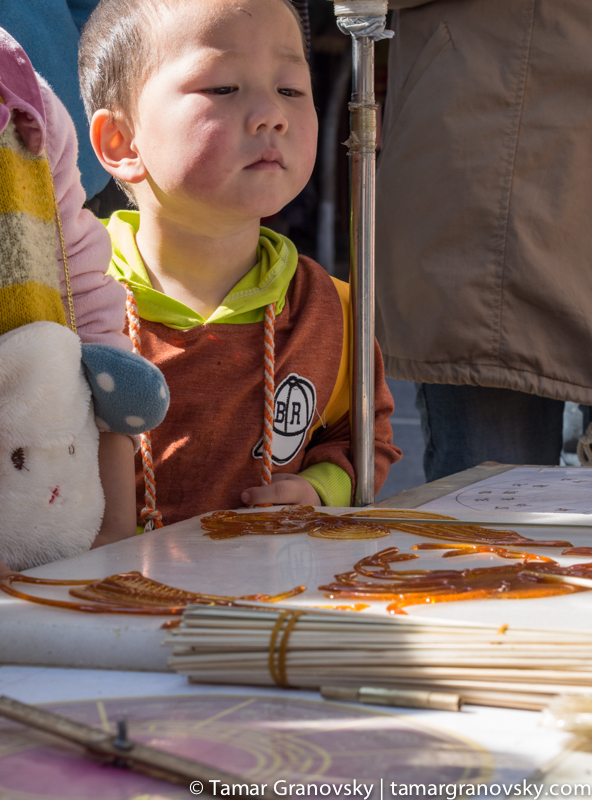
Watching Caramel "Animal" Candy Being Made, Kunming

Watching Caramel “Animal” Candy Being Made, Kunming

But!!! I still enjoy the streets filled with people yelling at each other or into their phones. In the hotter areas men roll up their shirts so that their bellies are exposed – I suppose to cool themselves without taking their shirts off entirely. There is a cacophony of honking horns from cars, buses, and motorcycles, warning people in smaller vehicles (including cyclists) and pedestrians, that they are coming your way, so beware! What we consider to be private is often public in China: in interior city blocks and in the countryside, for instance,people wash their dishes on the streets. Life is not clear-cut in China. It is complex and nuanced – as societies tend to be. Much work has been done to make changes in this country (many of them positive) but clearly it is not a simple task (see my post “Raising China“). I am far from opposed to progress; change is a constant in our lives. I just hope the Chinese government will be able to ensure the basic dignity of the Chinese people while they continue to institute society-wide, long-term solutions to their country’s problems, and address the needs of their citizens. Tradition is an important part of any society and many people in China are steadfastly holding onto theirs, so that change may, perhaps, be slowed down to a more natural and thoughtful pace.

Tea at the Confucius Temple, Kunming

Tea at the Confucius Temple, Kunming

I hope that with continued emphasis on education (and higher education, in particular), Chinese citizens will be equipped with the knowledge and experience to implement integrated, sustainable growth. My greatest hope for China is that it will hold onto its rich, long, history and complex culture, while looking far down the road as it moves forward. I am optimistic that it will find a way to use a whole/holistic system approach: that its natural resources will be respected and that both smaller and larger communities in this country will ultimately benefit.

Woman, Kunming

Woman, Kunming

Kunming Train Station Attack

Much has been said these last few days of the train station assault in Kunming this past weekend; I have little to add. However, I want to make mention of Saturday night’s attack since I am currently in Kunming and actually heard shots/bangs (of some sort), from my bedroom, at the time that the event took place. Having experienced two weeks of Chinese Spring Festival fireworks and firecrackers, I knew that the sounds I heard were not of that ilk. I listened for sirens but did not hear any, so my moment of concern was short-lived. I was quite surprised and horrified to hear about what occurred Saturday night when I woke up on Sunday and received emails of concern from friends and family. These last few days, Kunming has seen an increase in police presence with guns. In this city it is common, here, to see police on almost every other corner (vans, or little cubicles are permanently posted at these sites). At night now, the lights have been flashing so that people may easily access them should there be a need/emergency. Today, Chinese state-run media has reported that all eight suspects have been arrested or killed. None-the-less, security is still stepped up and SWAT teams continue to patrol certain Kunming streets.

The Chinese government is blaming the Uighur (Muslim) community. I realise relations between the Han majority, who dominate this country, and the Uighur minority from the western province of Xinjiang is not easy. When I asked a local Muslim restaurant owner if his resto would remain open during the Chinese Spring Festival he said, “Of course! We never celebrate the Chinese holidays.” At that moment, I understood there might be animosity between the peoples. Regardless of who is to blame for this weekend’s attack, here is a link that may be of interest with background information about the Uighurs and the Chinese Han: http://chinachange.org/2014/03/03/excerpts-from-my-west-china-your-east-turkestan-my-view-on-the-kunming-incident/

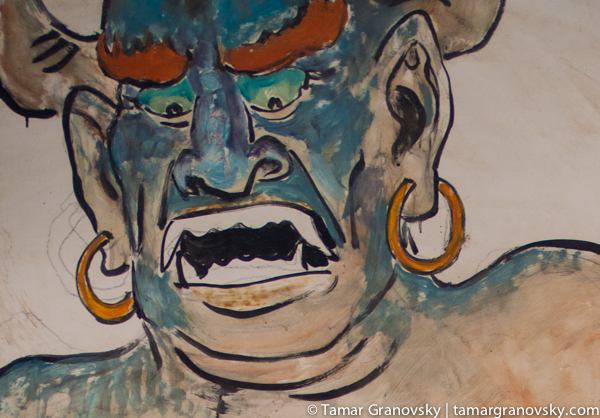
Hell in China

The concept of Hell (Diyu) in China is based in Buddhism, and consists of an underground maze with eighteen levels. Souls are taken here after death to atone for human sin. Once the soul has been cleansed of its sin, it can rejoin the living by means of reincarnation.

I visited Guandu Zhen (Guandu Old Town), south of downtown Kunming, where, in the centre of the town, I saw Vajra Pagoda (built in 1457) and a few temples that surround it. The following photographs are of the spectacular images of “Hell” I came across in a mural in one of the temples.

Guandu Zhen Temple - Hell

Guandu Zhen Temple – Hell

Guandu Zhen Temple - Hell

Guandu Zhen Temple – Hell

Guandu Zhen Temple - Hell

Guandu Zhen Temple – Hell

Guandu Zhen Temple - Hell

Guandu Zhen Temple – Hell

Guandu Zhen Temple - Hell

Guandu Zhen Temple – Hell

Guandu Zhen Temple - Hell

Guandu Zhen Temple – Hell

Guandu Zhen Temple - Hell

Guandu Zhen Temple – Hell

Guandu Zhen Temple - Hell

Guandu Zhen Temple – Hell

Guandu Zhen Temple - Hell

Guandu Zhen Temple – Hell

Guandu Zhen Temple - Hell

Guandu Zhen Temple – Hell

Hanzi: From Pictographic Writing to Simplified Characters

Meaning Jia Gu Wen Jin Wen Xiao Zhuan Kai Shu
sun Chinese symbol for sun; Jia Gu Wen. chinese symbol for sun; jin wen Chinese Symbol for sun; Jin wen Chinese symbol for sun; Kai shu
moon Chinese symbol for moon; Jia gu wen chinese symbol for moon; jin wen Chinese symbol for moon; Xiao zhuan Chinese symbol for moon; Kai shu
human Chinese symbol for person; Jia gu wen. Chinese symbol for human being; Jin wen. Chinese symbol for human being; Xiao zhuan. chinese symbol for human being; Kai shu
mountain Chinese symbol for montain; Jia gu wen. Chinese symbol for mountain; Jin Wen Chinese symbol for mountain; xiao zhuan Chinese symbol for mountain; kai shu
bird Chinese symbol for bird; Jia gu wen Chinese symbol for bird; Jin wen Chinese symbol for bird; xiao zhuan. Chinese symbol for brid; kai shu
fish chinese symbol for fish; jia gu wen Chinese symbol for fish; Jin wen chinese symbol for fish; xiao zhuan chinese symbol for fish; kai shu

The above from: http://www.foreigners-in-china.com/chinese-symbol-history.html

Since arriving in China at the beginning of September, 2013, I have been told by many people that in order to really learn Chinese, to truly understand it, one needs to learn Hanzi. This has not been my goal as I study the language in Kunming, Yunnan Province. My only intention has been to try to better understand China and its people by learning a little of the language and by simply living (and travelling) here for eight months. I have, however, found that learning words via flashcards that incorporate both pinyin and Hanzi has really sparked my interest in the meaning and origin of words through Hanzi.

Writing in China has evolved over 3000 years (some even say over 4000 years). Hanzi is the Chinese word for “Chinese character.” These characters are symbols that convey the meaning of a word. According to Hanzim.com, “[t]he earliest uncontroversial [pictographic] examples are the so-called ‘oracle bone inscriptions’ of the Shang Dynasty period (most of the 2nd millenium B.C.E.).”  Many of these early characters are similar to those used today.

Although Hanzi have evolved for centuries, it was during and after the Communist Revolution that Chinese script underwent a process of development into a standardized and more simplified script. In fact, it seems that Chairman Mao wanted to replace Hanzi with pinyin (a system of Romanized spelling for transliterating Chinese). I am thankful for pinyin since it has made my studying somewhat easier.

Radicals (pianpang bushou) are another important element of Hanzi. They are symbols and sometimes also stroke/symbol components meant to help people understand and distinguish the characters and put them into context. These radicals recur in Chinese Hanzi and may be combined to make up different characters. Some stand alone although most characters include radicals. Therefore, to understand the meaning of Hanzi, one needs to be able to identify the radicals. There are 214 of them. As an example, the mù radical “木” means: wood; tree; or wooden. So, if you combine three of these radicals together like this: 森 then you have the word sēn (forest). 木马 (mù​mǎ) is a wooden horse / rocking horse, and, 木工 (mù​gōng) means carpenter / woodworker.

As I mentioned in an earlier post, learning Chinese is unbelievably difficult; it is slow, frustrating, and seemingly impossible to get past the VERY basic stage. At this point, for me, it still feels tantamount to climbing Mount Everest! To think that I have already completed 2/3 of my studies and can barely speak or understand a thing. And yet I have been told I am doing very well!

Like elsewhere in the world, people in different regions of China speak differently. There are many dialects here: Mandarin, Cantonese, “Kunmingese” (perhaps not a real dialect), Naxi, and many, many more. Despite the fact that certain characters may be pronounced differently, the written language and meaning is the same. Below are links to diagrams of interest that demonstrate how Hanzi has evolved. I have also included just a few examples of Hanzi / Chinese words (in no particular order). I find that Hanzi logically illustrates the meaning of words. Some are so brilliantly visual in how they are put together; they produce a definition or phrase far more evocative than any I’ve seen in the English language:

  • AIRPLANE: 飞机 – fēi​jī (fēi =fly / jī = machine) Notice that “jī” includes the radical mu -木. At one time many machines were made of wood.
  • MAP: 地图 – dì​tú  (dì = earth; land; soil; ground / tú = diagram; chart, map, picture) ;
  • BAD LUCK: 倒霉 – dǎo​méi (dǎo​ = to place upside down; fall over / méi = mildew; mould; bacteria; fungi)
  • LIPSTICK: 口红 – kǒuhóng (kǒu = mouth; hóng = red)
  • IMMEDIATELY (straight away): 马上 – mǎ​shàng (mǎ​ = horse / shàng = on top; above) This word refers to the days when someone needed to get somewhere quickly and hopped on his/her horse.
  • NON-SWIMMER: 旱鸭子 – hàn​yā​zi (hàn​ = dry / yā​ = duck)
  • APPLAUD (clap): 鼓掌 – gǔ​zhǎng (gǔ​ = to drum; beat / zhǎng = palm of the hand)
  • ABOUT (approximately): 左右 – zuǒ​yòu (zuǒ​ – left / yòu = right)
  • AVOCADO: 牛油果 – niú​yóu​guǒ (niú​ = ox; cow / yóu = oil; fat; grease / guǒ = fruit; result)
  • JEALOUS: 吃醋 – chī​cù (chī = eat / cù = vinegar; jealousy)
  • SO CLOSE YET SO FAR: 咫尺天涯 – zhǐchǐtiānyá (zhǐ = an ancient measure unit of length / chǐ = ruler; measure of length / tiān = sky; heavens / yá = border; horizon)
  • SO SO (average; just passable): mǎ​mǎ​​hū​hū  – 马马虎虎 (mǎ​ = horse / hū = tiger) Here is a story behind the origin of this word: Long ago there was a painter who had two sons. One day the older son walked by and saw his father’s work which was near completion. He asked his father “What is that?” The father replied, “A horse.” The son said it looked more like a tiger to him than a horse and walked away. Later that day, the younger son happened upon the painting and asked his dad, “What is that a painting of?” The father answered, “It is a tiger,” to which this son said, “Oh! It looks like a horse to me.” The father decided he may, in fact, not be that good at the art of painting. Clearly he was mamahuhu.

And then of course you could by mistake say, “Wǒ xǐhuān páiduì” (“I like to stand in line”) rather than, “Wǒ xǐhuān pài​duì” (“I like to party”). But that is another story…

http://www.hanzim.com/hanzi.php/
http://www.foreigners-in-china.com/chinese-symbol-history.html

Paying the Price for Chinese Fashion

Discount Season on the Street - Selling Stockings

Discount Season on the Street – Selling Stockings

Economics 101 tells us that demand starts with the consumer responding to price. The consumer must both desire the product or service and be able to afford it. Clearly, not everyone can partake in all markets. However, as the price of goods falls, buying increases – just as when prices rise, fewer items (if any) are bought or cheaper items may be substituted for the more expensive. But of course there are exceptions. A costly piece of Louis Vuitton leather luggage or a luxury Aston Martin car, for instance, appeals to a particular buyer because of the status associated with it. Raising prices for these goods does not necessarily decrease demand because they are “Giffen” goods; part of their appeal is that they are expensive. In the retail clothing sector, when merchandise is discounted the demand for these goods increases and they are sold. Discount sales are a highly effective means of clearing merchandise. In the West this has become something of a social custom; Black Friday and Boxing Day are testaments to the success of such large-scale marketing promotions. In China on the other hand, the concept of sales has not been applied evenly in the retail sector. While bargaining is the norm for most transactions in China (haggling is encouraged if not expected), and discounts are common with all cheap and overstocked merchandise, some upscale Chinese clothing brands, still largely unknown in the West, appear to be immune to the “On Sale” convention.

Currently, much of the clothing in China is fairly inexpensive; it consists mainly of domestic brands and is usually sold in small shops or on the street, often in the older city block communities but also in stores for young consumers in the city centre.  It seems that “while the Chinese population is expected to grow 2% by 2020, income growth will continue to outpace population growth — which means more consumers with more buying power. Per capita disposable income is expected to grow 75% between 2012 and 2020, according to projections made by Euromonitor International.” (See: “Reaching the Chinese Consumer,” by Emily Thompson)

Discount Season on the Street

Discount Season on the Street

Typical Middle of the Way Shop - Not Cheap, Not Expensive

Typical Mid-priced Shop – Not Cheap, Not Expensive

Choosing not to offer seasonal discount sales is an important branding strategy for some Chinese retailers. Discounting distinctive merchandise is tantamount to “losing face,” an important concept in social interaction here. In China, “losing face” means that one has lost one’s dignity, social standing, honour, and/or trustworthiness. A common Chinese insult is, “You have no face.” It appears that in the new Chinese consumer culture a sale or discount is regarded as a defeat for those who aspire to buy into the exclusivity that an upscale brand offers. In theory, shoppers can be enticed to purchase clothing at regular prices if they know it will never go on sale. For some nouveau riche, brand-obsessed Chinese consumers, buying clothing at a discount is seen as distasteful and penny-pinching.

No Discount for You!

No Discount for You!

The reality though, is that domestic upscale clothing shops in China are empty of customers and little, if any, sales activity is taking place. Posh retail stores in fashionable shopping malls look eerily deserted; their high prices are out of reach for the majority of Chinese consumers. Would it not make sense to discount these products and sell them in order to divest inventory and make room for new merchandise? And, more importantly, what happens to the merchandise that isn’t sold? Allegedly, stores such as Louis Vuitton and Chanel burn unsold merchandise but a Google search turns up no credible information and Snopes.com has no answers either. What these companies do with unsold goods is anyone’s guess.

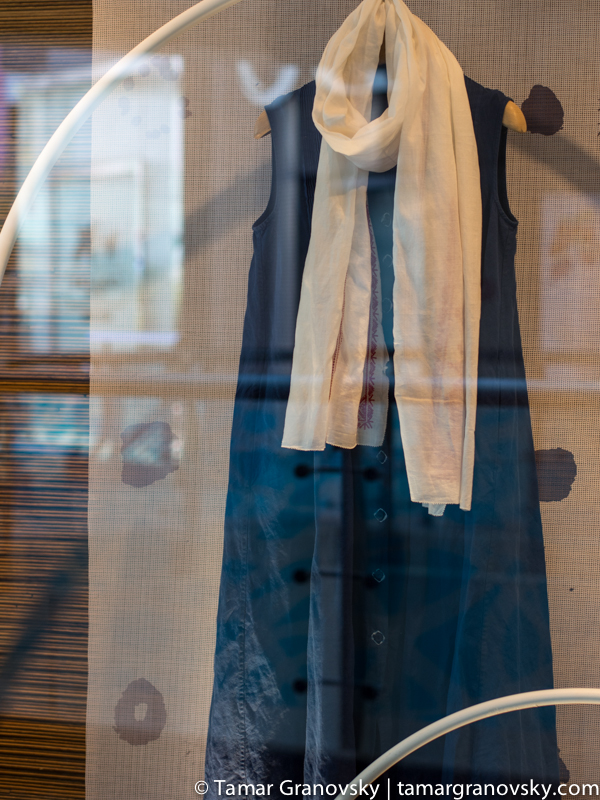
The Chinese retail clothing sector is abound with quality, design, and style that the West has not been privy to. Brands such as Exception de Mixmind, ZUCHUG, Ein and Origin have focused exclusively on the Chinese domestic market, providing consumers with “post-modern” styles that are uniquely designed, highly fashionable, and definitively Eastern. Stylish storefronts, strategically placed in China’s major urban boutique malls, exude exclusivity and wealth (and likely charge very high rents). As yankee00 recently commented in GoKunming, “I just Googled images of Exception de Mixmind, and by the looks of them, those things won’t go out of fashion before 2075.” Uma Wang, a Chinese clothing designer, has already made it into the Western market. Although these labels are largely unknown to Western consumers, plans are underway to bring more of them abroad. It will be interesting to see how Chinese clothing brands will adapt to Western retail marketing strategies.

No Discount for You!

No Discount for You!

As in any East-meets-West encounter, when brands from one market expand into another, some degree of compromise has to be reached. Consumer behaviour and expectations in different parts of the world are not the same. Consider the following phenomenon: most upscale clothing chains in North America (or just about any Western clothing chain, for that matter) will receive new seasonal items several times a year and, of course, because this is new merchandise it will not be put on sale. The consumer, however, has been conditioned to wait until the items go on sale – knowing full well that eventually they will be discounted. The sale phenomenon, and the extensive scale of discounts, have become particularly predominant since the late 2000s when the economic crisis decreased purchasing power and affected consumer spending habits accordingly. It appears that sales start earlier each year and discounts are larger. In such an environment, why would anyone pay full price? And how will Chinese brands compete in this type of setting?

No Discount for You!

No Discount for You!

They will probably have to compete on at least two fronts. The first is design and quality. Major Western retailers will have to step it up a few notches to compete with these emerging, upmarket Chinese clothing companies who have quality and unique design on their side. The second and more important issue is price. If Chinese clothing companies, upon entering the Western market, refuse to discount their merchandise they may be out-competed by labels that do offer sales. This issue, in fact, may prevent them from entering the Western market in the first place. Adaptability will be key.  When merchandise is marked down – even once a year – it becomes more accessible to those who can’t quite afford the extravagant. Domestically, Chinese consumers who have less disposable income might consider buying these brands to add to their wardrobes, if they were more affordable. It seems that this would be mutually beneficial; surely there is money to be made in sheer volume of sales in a country with a population such as China’s. The question is, does this conflict directly with the culture of “losing face?” Given that dickering is an integral part of daily life in China, firm and final discounts (and simply lowering prices a tad in the first place) could still allow these companies to save face. 

Acknowledgement: A large thank you goes to Margaret Skwara for instigating this topic, getting it started, and essentially co-writing it with me.

Raising China

Xingbake (i.e., Startbucks)

Starbucks (i.e., Xingbake in China — heavenly/star; wish; subdue)

China is a country full of contradictions and a nation that I am trying to comprehend. I am doing this, in part, by spending close to eight months here and learning the language. This posting is about the disjuncture between the city and the countryside – therelentless expansion of cities and the government’s push to move those in the countryside into the city. Migration from rural areas to urban centres is happening at an exponential rate and scale compared, for instance, to that of the Industrial Revolution in Europe; millions of Chinese are currently pouring into the cities. Cities are growing dramatically and are not, unlike in past dynasties, being built to last, due to both rapidity and poor quality of construction.

Xingping, Countryside

Xingping, Countryside

Where rural life still exists it is clear that its pace is slower than that of the city (even though some villages are being developed by the government for tourism). One can see donkeys and pushcarts carrying goods as well as people hauling heavy loads of produce on their backs. In Guangxi Province farmers grow oranges, mandarins, pomelos, and kumquats, as well as bamboo, hot peppers, and every Chinese green imaginable. They also grow two crops of rice a year and osmanthus flowers for tea. They are still maintaining their agricultural traditions. In fact, millions of people are trying to hold onto their small acreage, that is typically worked by hand – not machine – despite the fact that farmers do not own their land (See: Farming in China Amid China’s Economic Transformation, Many Farmers Struggle by David Pierson, July 07, 2011, Los Angeles Times)

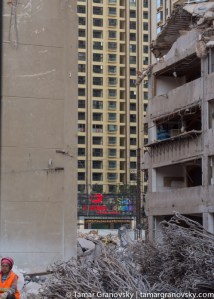
Razed and Raised

Razed and Raised

Meanwhile, cities are careening forward; after just three weeks away on travel in December, I could see that much had changed near my school in Kunming, where they are building part of the new subway line. Suddenly there is an entrance way and stairs leading down to the subway system where there had been ground to walk on before I went on my short sojourn. Roads have been re-routed and digging/excavation has already begun. Since I was last here in 2012, many areas have been razed and more still are in the process of being torn down, with new structures being built over the rubble. It seems the hope is that if they build it, they will come.

According to Ian Johnson’s June 15, 2013 article in the New York Times, “China’s Great Uprooting: Moving 250 Million Into Cities:”

The primary motivation for the urbanization push is to change China’s economic structure, with growth based on domestic demand for products instead of relying so much on export. In theory, new urbanites mean vast new opportunities for construction companies, public transportation, utilities and appliance makers, and a break from the cycle of farmers consuming only what they produce. “If half of China’s population starts consuming, growth is inevitable,” said Li Xiangyang, vice director of the Institute of World Economics and Politics, part of a government research institute. “Right now they are living in rural areas where they do not consume.”

Foreigners and Chinese alike tell me that the country is developing at an explosive rate. News articles on this topic abound and having visited Kunming twice in two years, I have seen for myself how true this is. In 2012 I spent a few days in the greater Lijiang area of Yunnan and stayed in Suhe, a UNESCO site just a few kilometres away from the old town of Lijiang. It was one of the first settlements of the Naxi people, was part of the silk road for tea trade, and dates back 1000 years (so I have read). A fellow Canadian who has set up a business there told me that in just a few years he has seen the town expand tremendously in the name of tourism – mostly funded by the government. It was clear to us that it is undergoing a dramatic changeand even if these “old towns” continue to be preserved, the surrounding area will eventually look like a large western suburban development, of sorts. During my second visit to Xingping, outside Yangshuo and Guilin in Guangxi province, I saw that this area too is being rapidly developed. I would not be surprised if in the next five years or so Yangshuo and Xingping will simply be extensions of each other.

The youth hostel, and hotel right next to it, where I stayed two years ago, have been obliterated and all that is left is rubble. The plan, apparently, is to build a large hotel on the spot. As of yet, according to those with whom I have spoken, plans and timelines have not been given. Here is a photo of what the area looked like then (photograph courtesy of www.china-discount-hotels.com):

https://i0.wp.com/images3.chinahotels.net/60/12_9bb2ce7e-0ba8-4566-88e1-ddd4df7a0bf1-hotel.jpg

Here are photos of what the area has looked like these past five months:

Razed and Raised

Razed and Raised

Razed and Raised

Razed and Raised

As Steve aptly noted in the last posting, Travels with Steve, Kunming is visibly undergoing gentrification. New buildings shoot up daily. People spend much of their free time shopping  – at smaller local shops and local Chinese chain stores geared toward young folk who can’t live without the next trendy, “disposable” clothing. Other stores court new money; one or two sales a day to sophisticated and discerning customers at Louis Vuitton or Givenchy or high-end Chinese clothing and accessory companies (such as Exception de Mixmind) can be all a business needs to pay its rent and salaries, and make a profit. These stores are extremely pricey and (to my eyes) seem to always be empty of paying shoppers. I’ve heard that the Chinese believe that sales devalue an exclusive brand. It appears that in this society that is eager to advance in the world and desires “things,” the few and far between high-status shoppers don’t worry about cost, even if luxury brands are two to three times the price of the same products in Europe.

In his June 29, 2011 BBC News article, “Inequality in China: Rural Poverty Persists as Urban Wealth Balloons,” Dr Damian Tobin (School of Oriental and African Studies) states:

The privatisation of state enterprises and the housing and social benefits that accompanied them, the re-zoning of rural land for industry, and a construction boom, created enormous possibilities for personal wealth.

The 2010 Credit Suisse Global Wealth Report noted that these forms of wealth, which accounted for much of the $9,600 in real assets per adult in China, were extremely important forms of wealth creation.

 But they also came at a cost.

Graph showing income in China

Looking only at the data for the whole country, however, conceals the growing disparity between urban and rural areas.

Even after three decades of rapid growth China remains a very rural economy.

Despite the continued growth in urbanisation, some 50.3% of China’s mainland population (or 674.15 million people) continue to live in rural areas.

In 2010, rural residents had an annual average per capita disposable income of 5,900 yuan ($898). That’s less than a third of the average per capita disposable income of urban residents, which stood at 19,100 yuan ($2,900).

I have read (somewhere…) that the Chinese government’s attempt at gentrification, aimed at transforming economically depressed areas, is sometimes doing the opposite and leaving many people unemployed and impoverished because it has not given the displaced population what was promised.  As the government funnels people from the countryside into the developing cities (the goal is to urbanize half of the population of 1.3 billion by 2020, and 70 percent by 2050  – source: http://www.pbs.org/pov/lasttrainhome/photo_gallery_background.php#.Utjx5vbOc7A), many urban communitiesare left stranded with little help or hope of recovery or improvement.

There is a significant gap between rich and poor in China. Based on a World Bank’s Inequality in Focus document, “The Challenge of High Inequality in China” by Terry Sicular, and the Chinese Gini co-efficient, income inequality “(ranging from zero, which represents perfect equality, to one, perfect inequality) rose from about 0.3 in the early 1980s to… a high of 0.49 in 2008… China is now among the least equal 25 percent of countries worldwide.”  Sicular goes on to show per capita household income data from 2002 to 2007 (source: the China Household Income Project [CHIP]). In 2002 the poorest 10% of the population earned 876RMB; in 2007 it grew to 1282 RMB. For the same time period the richest 10% earned 16,795RMB compared to 32,628RMB in 2007. For greater, more detailed, and interesting insight into China’s poverty/wealth discrepancy, do take the time to read this report.

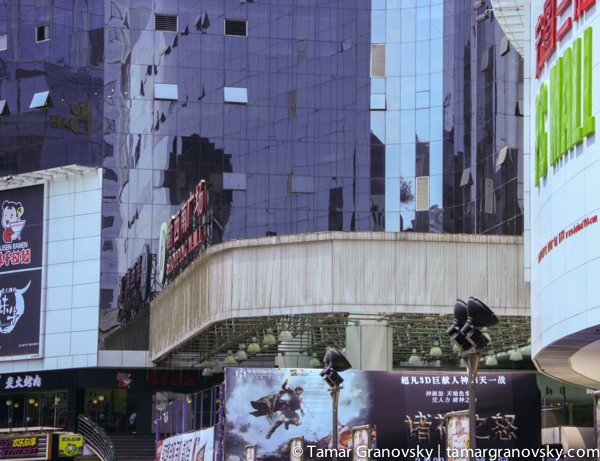
Kunming Cityscape

Kunming Cityscape

In a more recent New York Times article Ian Johnson writes, ” ‘We’re talking hundreds of millions of people who are moving into these places, but the standard of living for these relocatees has actually dropped,’ said Lynette Ong, a University of Toronto political scientist who has studied the resettlement areas. ‘On top of that is the quality of the buildings — there was a lot of corruption, and they skimped on materials’ …For farmers who were asked to surrender their ancestral lands for an apartment, the deterioration adds to a sense of having been cheated.”
The difficult conditions for transplanted residents of “improved” urban centres are multifold. “Because these migrants work outside their registered area, the low wage rates conceal enormous personal sacrifices, which include long working hours, poor housing conditions, and, most significantly, a loss in welfare benefits associated with the household registration system known as Hukou.” (Tobin 2011)

Hukou, Hair Salon

Kunming Alley, Hair Salon

Girl Studying in her Mother's Shop

Kunming Alley, Girl Studying in her Mother’s Shop

Shoe Repair Shop

Kunming Alley, Shoe Repair Shop

The local baozi shop in the alleys behind my school closed down a few weeks ago. It was owned by two couples, each with a young child – two siblings with their respective spouses. We always spoke for a few minutes and I felt as if I was, in an honourary sort of way, a part of their community; they were always glad to see me. I do not know how long that shop had been in business or whether thethe owners were born in Kunming but I always wondered how they managed. Clearly it was difficult for them to eke out a living; they worked long hours, seven days a week. I wonder, too, how other similar shops stay afloat.

Hukou

Kunming Inner City Block

In Kunming, as well as Beijing and other cities, there are three-to-five-storey apartment complexes that were built in the mid-twentieth century, housed inside large city blocks and arranged around communal (often treed) courtyards. These houses had (and still have) a variety of public and private areas for different activities. I have wandered some of these areas during my stay in Kunming.

Hukou with Chinese Card Game in the Background

Alleyway with Chinese Card Game in the Background

It is clear that many of the residents use this outside space as part of their homes, where they cook, wash, eat, and spend time  with neighbours. These areas appear to play an important role in people’s personal and social lives. These complexes and community courtyards are hidden treasures; little worlds unto themselves, often with schools and always with restaurants, hair salons, bakeries, fruit stores, etc. They reveal the way people really live, but slowly (not so slowly, really), in Kunming and elsewhere, these inner city blocks (as well as the remaining older alleyway housing) are being destroyed as the population grows and the city expands and modernizes.

Kunmimg Alley

Kunming Alley

As I wander the back streets and the city, I see that there are fewer and fewer of the 100+ year-old houses left in the alleys. They are all  being torn down. It is just a matter of time until the Kunming of ten or twenty years ago will no longer be recognizable; it is a city with its eyes fixed on the future. At the moment, Kunming is in the process of constructing a world trade centre. (more links: http://en.kunming.cn/index/content/2013-12/18/content_3462726.htm; http://en.kunming.cn/index/content/2013-09/09/content_3395448.htm; http://en.kunming.cn/index/content/2014-01/07/content_3476973.htm)

Does urban expansion and the increased availability of consumer goods truly offer a better quality of life to those living in the city? The transformation of China’s cities certainly cannot be driven solely by the government and developers. The Chinese aspire toward some sort of prosperity – and why shouldn’t they? It is clear that there is a growing upper class in China. The government is attempting to build better cities and there is, to a certain extent, a higher standard of living as high-rises (including many luxury complexes) continue to appear. But at what cost this endless development? As Maura Elizabeth Cunningham (May 20, 2013) ,in Dissent, writes in her article “The Costs of China’s Mega-Cities“,

China’s impressive, and speedy, drive toward urbanization has routinely relied on violence and exploitation to achieve results. Some of that violence is visible: urban residents often find their homes marked for demolition, sacrificed by the government to lucrative construction projects. In other instances, less visible structural violence and exploitation take their toll on migrant workers, who move to cities in search of higher wages and opportunities unavailable in their rural hometowns, but do not enjoy the full benefits of urban residence because they lack a local hukou, or household registration, in the cities where they live. (An urban hukou brings with it an assortment of social services, such as access to health care and education; without it, workers are forced to rely on often substandard clinics and schools that serve migrant communities.) People fight back—urbanites have routinely protested the destruction of their homes and neighborhoods, for example—but in the end, the government almost inevitably prevails, and the cities continue to grow.

Game of Majiang

Game of Majiang

Yet, the generation of people whose parents and grandparents lived through the Cultural Revolution are being better educated in a growing new China with connection to the rest of the world through technology, and the opportunities of travel. China is now a more open country and it continues to strive to be a first world nation as it embraces modern life and industry. Urban China is mostly confident in its modernity although one still sees, (I’m glad to say) an older way of life on city streets. The vibrant alleyways of Kunming (or Beijing for that matter)  function at a leisurely pace; people work hard but move unhurriedly, still transport their goods on foot or bicycle, and take time for a game of Chinese chess or majiang.

As a “waigouren” or “laowei” (i.e., a foreigner) and a Westerner, however, I worry about the pace at which China is changing. The seemingly never-ending development continues and includes not only expansion of existing cities but the creation of new ones in areas that are currently farmland. Having met a number of people in my two visits to this country, and spent some time in the countryside as well as the urban back-alley complexes, I find there is still a sense of traditional life that co-exists with the flurry of progress. The younger friends I have made here and my young teachers are interested in analyzing their society and having discussions with me about my impressions of the country. This makes me hopeful that young, educated, people will have long-term views and be able to help temper the overwhelming pace of change in the urban infrastructure, protect villages, and make a positive change, overall, as the Chinese nation grows. 

Kunming at Night

Kunming at Night

Kunming, Alley (Catching up on the Latest News)

Kunming, Alley (Catching up on the Local News)

China’s ongoing plan is to stimulate the economy and help relieve rural poverty by boosting domestic consumption and economic/social growth. Time will tell whether this strategy will succeed. In the meantime, the BBC documentary (filmed over six years), “The Fastest Changing Place on Earth” follows the remote Sichuan farming community of White Horse Village as its residents are wooed by the local government intermediary and sent into furor and disruption as a large metropolitan area literally encircles them over time. It is about conflict, compromise, and concession and above all, change.