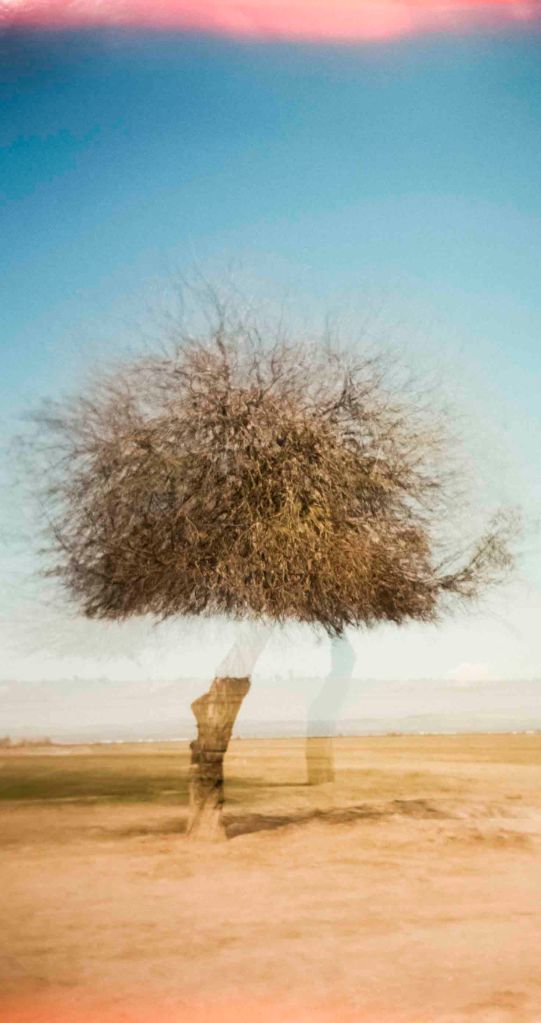
Beyond, in space, desert brush is green.
before, in time, brush and green
were wind, the sun, the earth
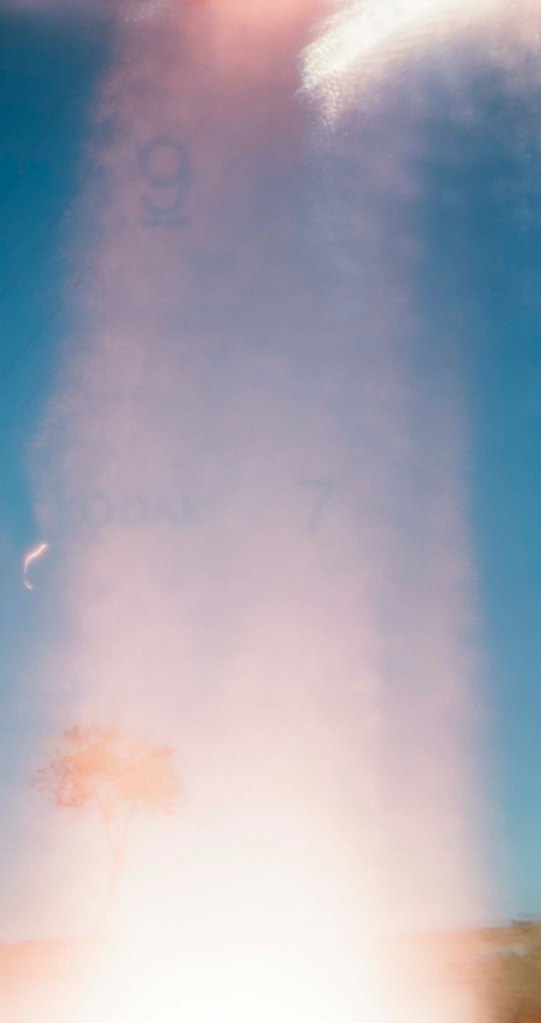
I was introduced to the Salton Sea, California, through the film, “Plagues & Pleasures on the Salton Sea,” and first visited there a few years later, in 2015. I returned another seven times over four years, for a total of seventeen weeks. Time allowed me to become more intimately acquainted with this place and, through photography, I was able to reveal the region through layers so as to give an intimate, emotive impression of what I was seeing.
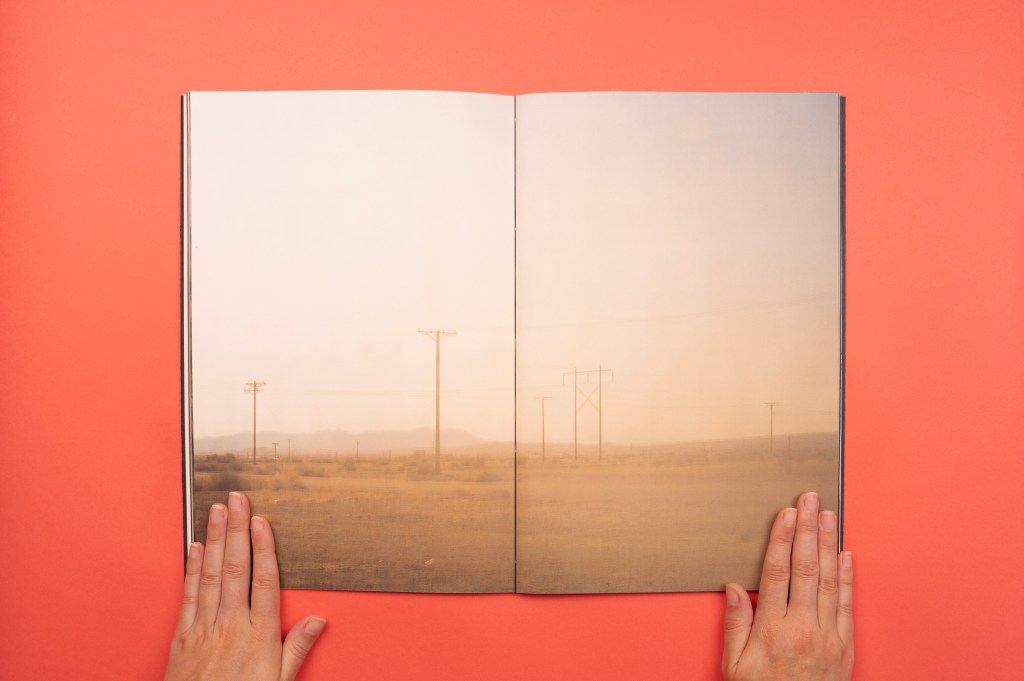
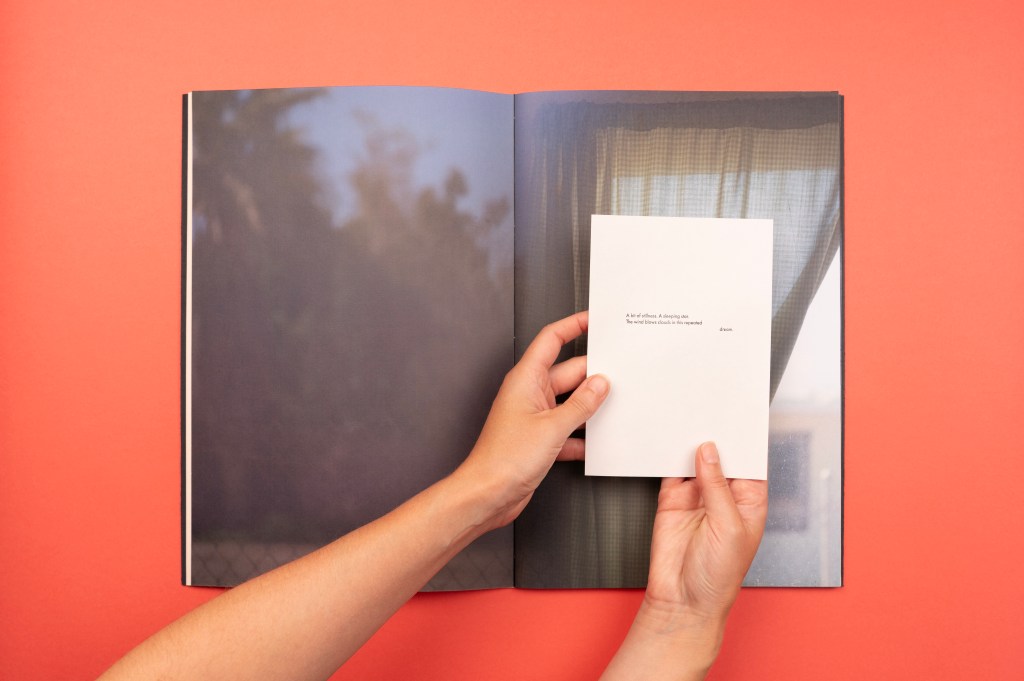
Because of the pandemic in 2020 my photography project came to an end. As I thought about the work I began to envision the photographs as a book that would also include poems that I had written at night in my motel room, irrespective of the photos I had taken during the day. I researched small photobook publishers and was lucky to find Emily Macaulay of Stanley James Press. Emily designed the book with me and she managed the photo printing. She created the letterpress printed text pages and hand stitched / bound this oversized book in an edition of 75 copies. I did not imagine, when the book was completed in October 2023, that I would turn this project into an exhibition.
Last year, however, I had the opportunity to submit a proposal to the Victoria Hall Gallery, in Westmount, Quebec, and this exhibition was the product: a photo installation with words and sound. It ran from April 11 until May 12.
The photographs in the main gallery space were printed on large sheets of paper (32.5″ x 43.5″ and 41.5″ x 78.5″), and tacked to the wall, unframed, in order to create a more bodily experience. Photographs in an auxiliary space were smaller, more documentary in nature and, framed. I recorded the sound environment around the Salton Sea because, to me, sound is an integral part of the landscape. Gisela Fulla Silvestre, a sound editor and re-recording mixer, let the natural sounds lift the emotional narrative for this exhibition. The poems and sound track in the main area were critical as different ways to enter, feel, and understand the installation. They added another dimension and layer to the work. Sound, words and photographs came together to help visitors become more immersed or absorbed in the work and world of the Salton Sea.
The town is in the middle of the desert.
The house is in the middle of town.
Its call is always the same,

"Come home. Come home."

It’s hot. It’s sunny.
Few clouds.
Bone and stone become one,
here.

A fragment of memory.
Familiar in this unexpected setting.
There is solace.

And now to toot my horn – here is a review in the Westmount Independent :

And here is (a poor) video of the exhibition but nonetheless a documentation of it :



 Tamar Granovsky | Wanderings Afar and Near