
Father and Daughter
How I Feel About Photography and How it is Evolving for Me
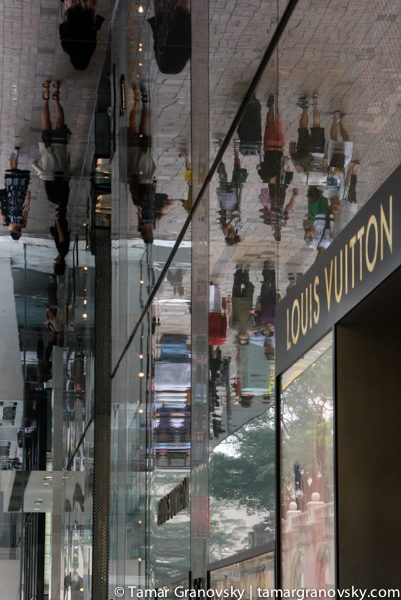
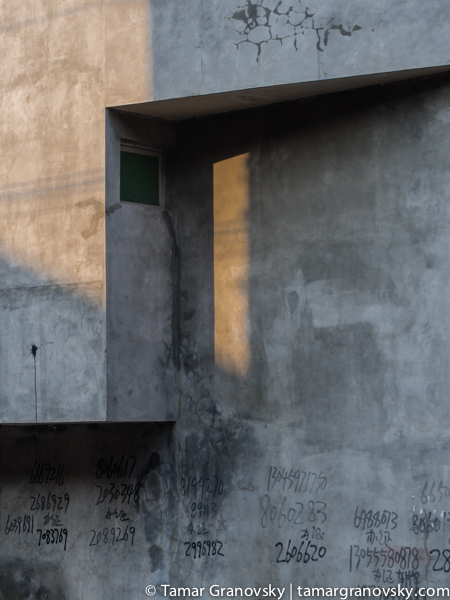
Slowly but surely, photography is becoming an ever more important part of my daily life. Initially, I used the camera as a tool when travelling, to fix a memory, in time and place; each moment was new and different and I wanted to take them all back home with me. As it happens, the type of photography that is typically associated with travel suited me well because I adore taking portrait, street, architectural, and (occasional) landscape shots; they work with my sensibility and inclination. I have learned that I am not a food, sports, studio, wildlife/nature, or wedding photographer. And, despite being a person who is keen to get out of the city and into the countryside, I am not even big on photographing natural landscapes. Because I have travelled so much in the last few years I gradually came to the realization that, l have begun to look at the world with with a photographer’s eye. I have also become aware that when I have camera in hand I am happy. As I take photographs I am happy. When I work on the images I am happy. Just knowing that I can wake up in the morning and go out to take photos or work on post-processing them makes me happy. I am one lucky woman. Photography is work but it is also fun. I am always watching people and thinking about how I would capture their faces, movements and postures. I am now attentive to space, form, composition, detail, and content as I look at the world around me.
How I Go About What I Do
In the past, I’d capture my subject, do some editing – which mostly consisted of deleting the obvious failures – work minimally on post-processing, and then show the finished product to others. I hoped to achieve a reaction that would stay with my audience – just as the memory of the time, place, and subject of the photograph would trigger the same feeling that made me take the shot in the first place.
Now, I take the photograph and always go through a first-run edit in camera, before I move the files to my hard drive and post-processing software. Are the photographs clearly out of focus (when they should not be) or incorrectly exposed? When I’ve taken multiple shots of the subject, which are truly the best? Are they compositionally what I expected? If not, can I redeem them or accomplish what I had initially envisioned, in the post-processing stage? Is the subject even still of interest to me? I immediately do my first round of culling and delete any images that do not work. Then, when I review the photographs on my computer and begin the post-processing stage, I continue to eliminate images since I can see them more clearly and answer these same questions definitively. What I want to end up with are stronger photographs. But what does this mean?
What I Have Learned Thus Far
As I go through the thousands of photographs I have taken I am slowly learning that the good ones are few and far between. I know this intellectually but am still somewhat obsessed with numbers and want MANY to be good. This is just is not possible. My father tried to teach me this when I dabbled in photography in art school, years ago. He was always passionate about his photography and generous in sharing images with others; he did not give a rat’s ass about being a photographer with an upper case “P” or showing his work at a gallery. He took pictures for the sheer pleasure it gave him, the love of the medium, and the joy he derived from sharing them with friends and family. Unfortunately, he has had a number of strokes in the last dozen years or so and many of the things that once excited him are no longer a part of his life. He doesn’t take pictures anymore but he still enjoys looking at them. I do not photograph for him but I think about him often as I work.
Inspecting the images I’ve taken I realise a few things:
- mistakes and “bad” photos are fine since I learn from them
- ambiguity can be positive
- it is great to get out of my comfort zone from time to time and take photos that I would not typically take – pan my subject, take nocturnal shots, attempt a photojournalistic style (often this includes the use of black and white, almost everything is in focus, and wide angle lenses are often used), etc.
- I need to explore and stumble more and not think so much
- waiting for the right moment can be crucial (my father had LOTS of patience when it came to photography – he, a man with very little of it and I, apparently, a chip off the old block)
- waking up at a god-awful hour is sometimes important to capture the light you want from a particular place
- going back to the same location, over and over again, can be a really good practice; it requires commitment and forces me to look at my surroundings differently, without preconceived ideas
My Strengths (or so I’d like to think…)
I have learned that part of what enables me to take some good and memorable photos is remaining receptive to my surroundings. I keep my eyes open for the bigger picture but also look at details, trying to see the world a little differently. This has become habit. I have, at times, forced photographs and most of those have not worked (to my great disappointment). In general, I have a good sense of composition. Also, I have a facility for getting people to agree to let me take photographs of them. Often I get uncomfortably close to their faces – I am an invader of their personal space and yet they permit me.
Areas I Need to Work on
What I realise now is that I need to go out with camera in hand every day, take photographs, and hone my skills. This comes with practice. As I venture out I must try to remain curious, interested, and observant. I have to:
- capture the feeling that pushes me to take a photograph in the first place
- keep my eyes open to the quality of light
- take my time, try my best to look for compositional balance and take shots as I want them framed so that I do not have to crop afterwards (conversely, bad framing, where something is missing in the image, is regrettably permanent)
- be open to spontaneity, be quick on the draw, and not miss the moment (which has happened often enough)
- look critically at my own photographs as well as others to develop both my eye and my judgment
- improve my technical skills — use, control, and knowledge of the camera and lenses and how they work in different circumstances
I have yet to master all of this and lots more.
Reflections on My Next Steps
I had started dreaming that I will become a “Photographer” one day but right now that is not as important as just becoming skilled in this medium and better understanding and defining my vision so that I can do what I want photographically. I’d like to have my work advance and I want to dig deeper into myself and the world so that the my images grab others. I have also found that photography is beginning to take up much of my thinking and is slowly becoming an obsessive part of my life. I am starting to take camera in hand, in my city, to shoot photos when I go out. This is a good thing! I am nearing “the zone” which means that my brain is “switched on” so that my eyes are open and receptive.
The bottom line is that I want to take photographs and have that finished shot be the one I imagined. It is as simple as that. I may travel to take photographs but I am going to also stick close to home and attempt to see something compelling right where I live.
I truly believe I am in the early stages of becoming a photographer. No longer do I take photos just to capture a moment/memory. I would love to be able to take exceptional photographs one day. I am proud of my work thus far but I know I have a long way to go – that I can do much better. I am hopeful that practice and a lot of hard work will get me there.

























 Tamar Granovsky | Wanderings Afar and Near