
The world is blue at its edges and in its depths. This blue is the light that got lost. Light at the blue end of the spectrum does not travel the whole distance from the sun to us. It disperses among the molecules of the air, it scatters in water. Water is colorless, shallow water appears to be the color of whatever lies underneath it, but deep water is full of this scattered light, the purer the water the deeper the blue. The sky is blue for the same reason, but the blue at the horizon, the blue of land that seems to be dissolving into the sky, is a deeper, dreamier, melancholy blue, the blue at the farthest reaches of the places where you see for miles, the blue of distance. This light that does not touch us, does not travel the whole distance, the light that gets lost, gives us the beauty of the world, so much of which is in the color blue.
From “A Field Guide to Getting Lost,” by Rebecca Solnit
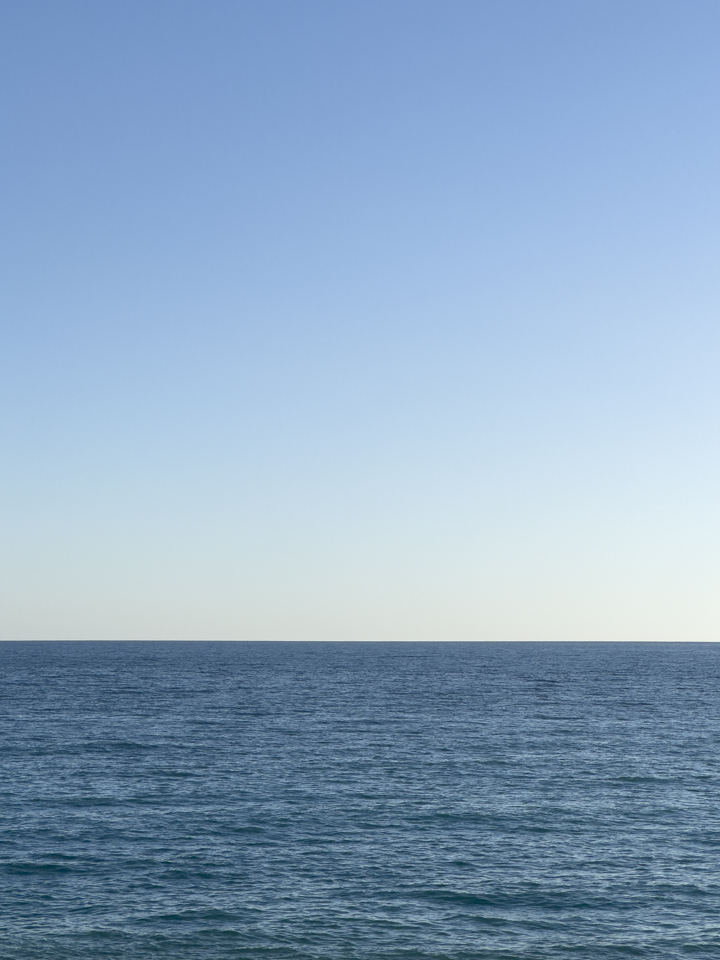
During a two month winter sojourn in Nice, France, I aggressively returned to life after a few months of winter in Montreal. The sun and sea woke me up. I had the opportunity to walk on the Promenades des Anglais, along the Mediterranean Sea, almost daily. The chance to easily walk or bike uninterrupted in a city is a rarity. Here, people can do that. I walked with great purpose or I strolled. I was able to lose myself in thought, listen to music or, listen to others’ conversations. I shared benches with strangers; I shared the deep blue water, too. I was outside and exposed, so to speak, to nature, the sun, to a space to move and think. Here was a place where, along with others, I surveyed the far away blue.
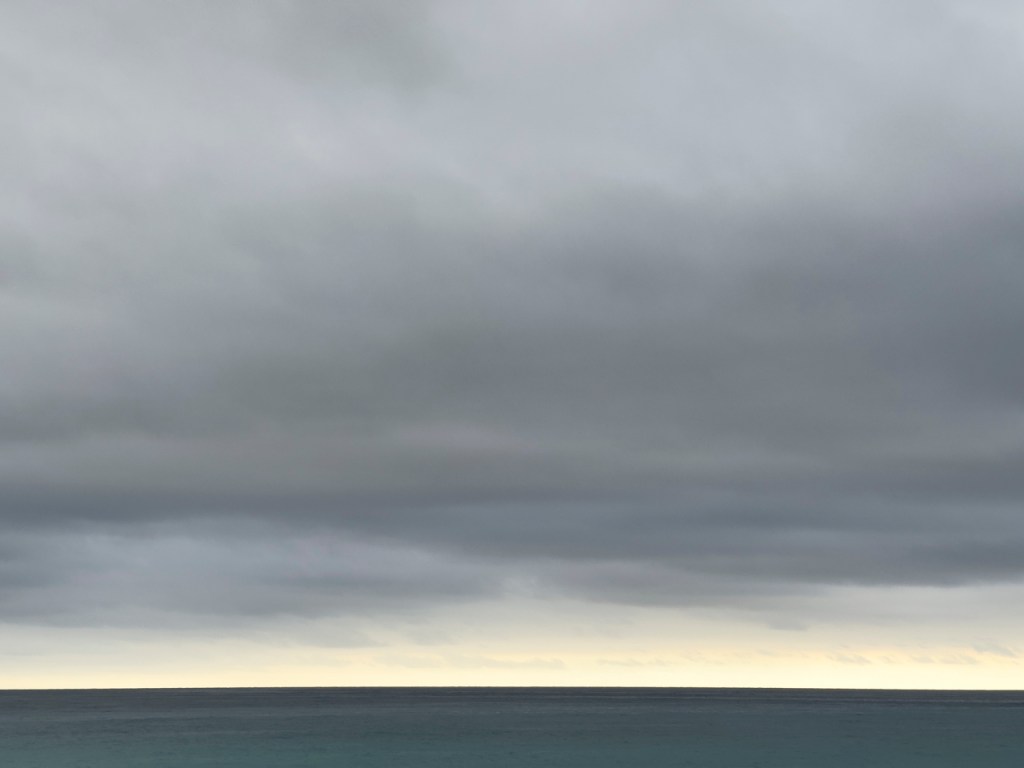
In the distance, the water defined the horizon as the sea reached the land’s rocky surface. Above it was blue sky. Sometimes, white cloud. Or blueish grey cloud. Also, blankets of dark cloud at times.

My father showed me how one can live one’s life. He was a dreamer. I suspect my desire to explore came from him. He and I were cut from part of the same cloth. But I found myself thinking about my mother. She was a believer in routine. I tend to want to break away from it. Yet, somehow, routine was what I found as I passed my days here. And, for the first time, I really wanted to share a place with her. This place. Nice.
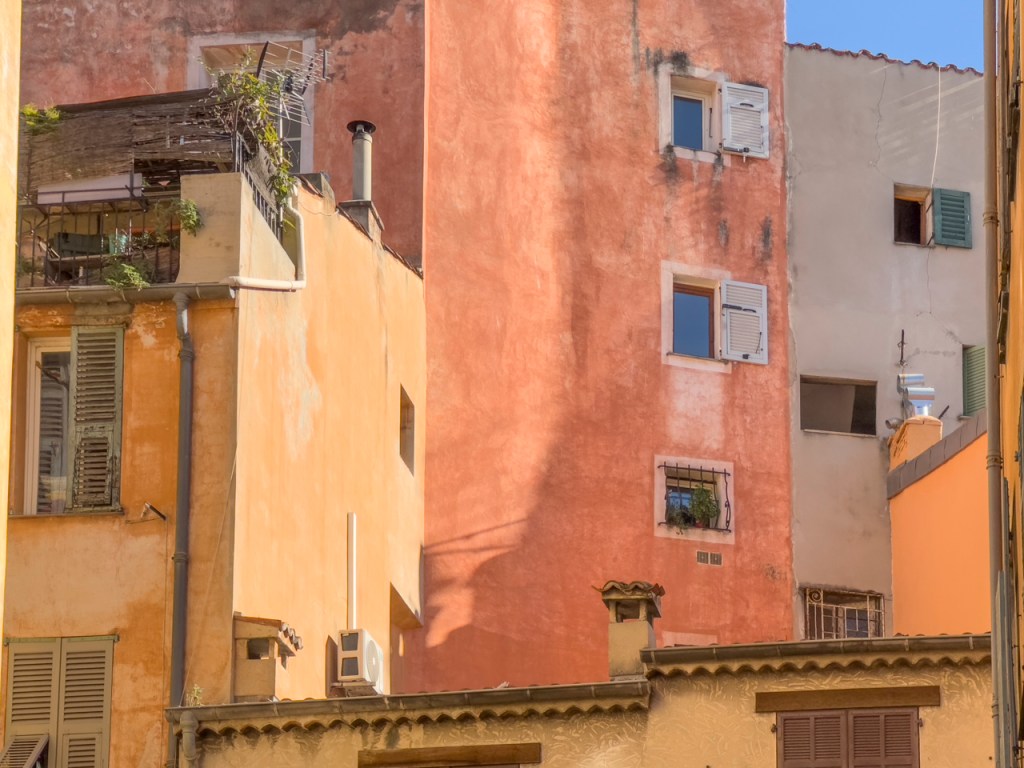
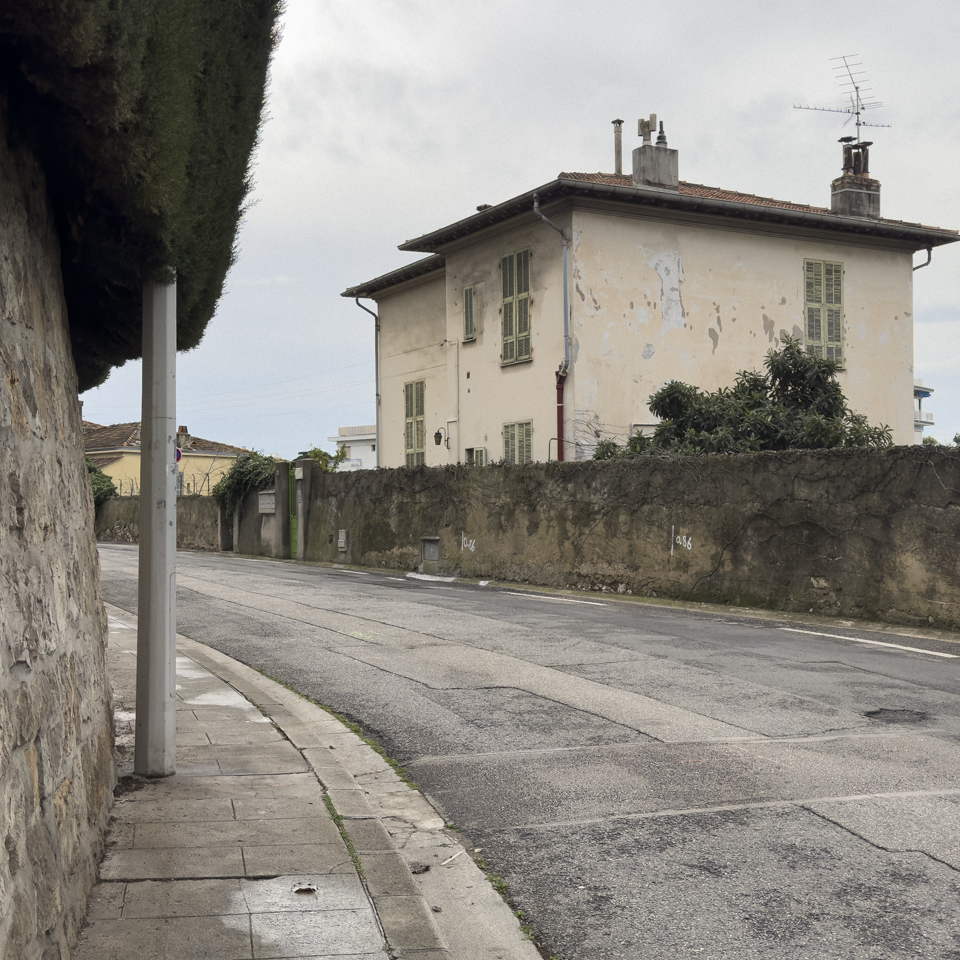
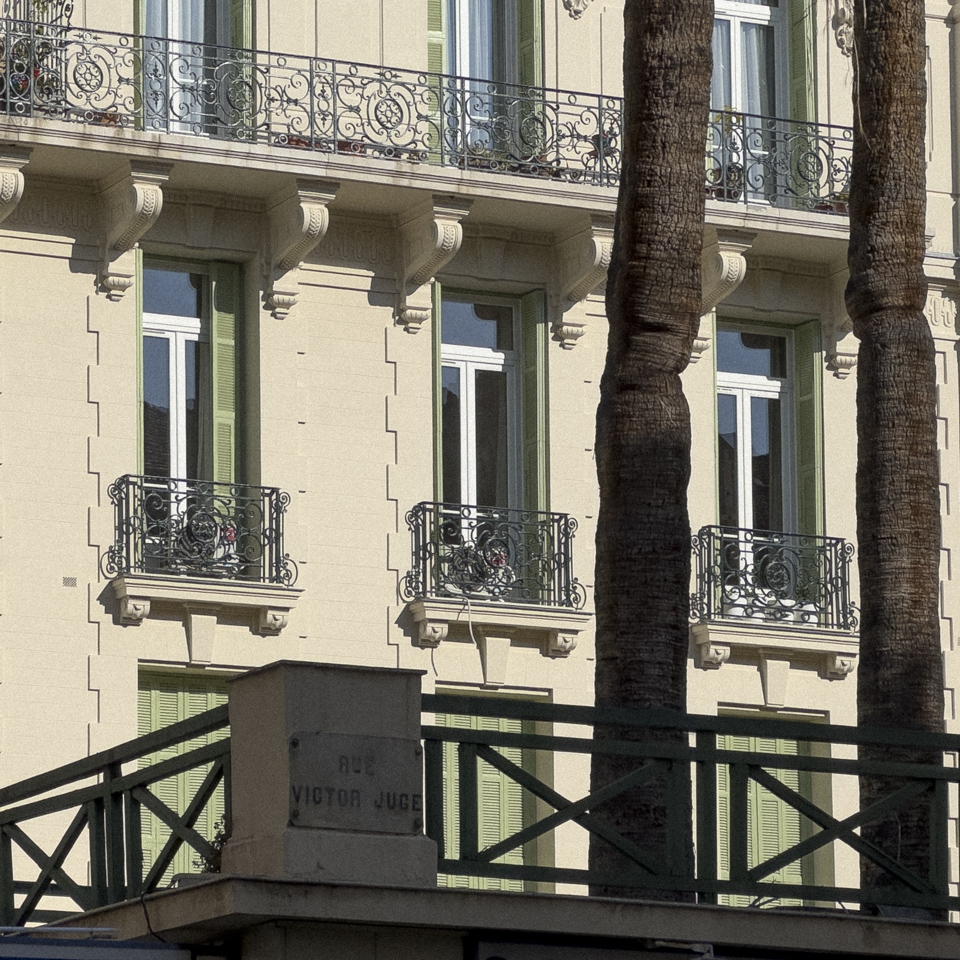
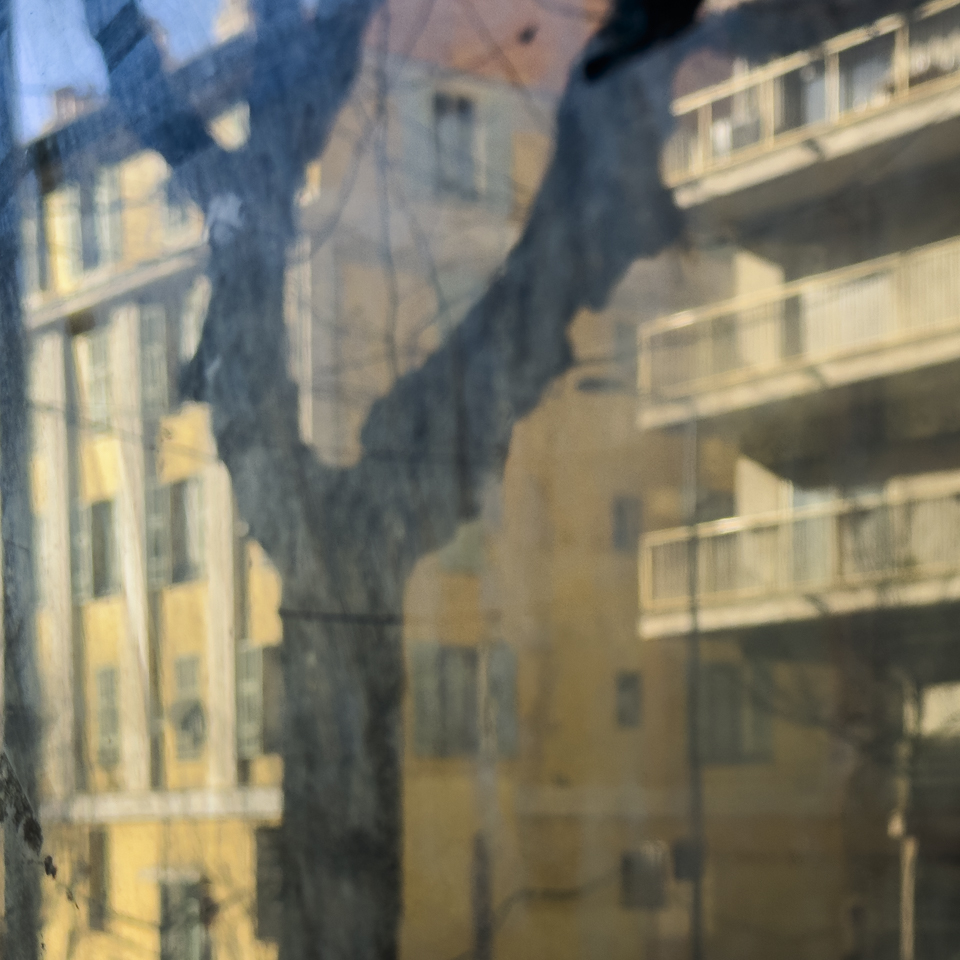

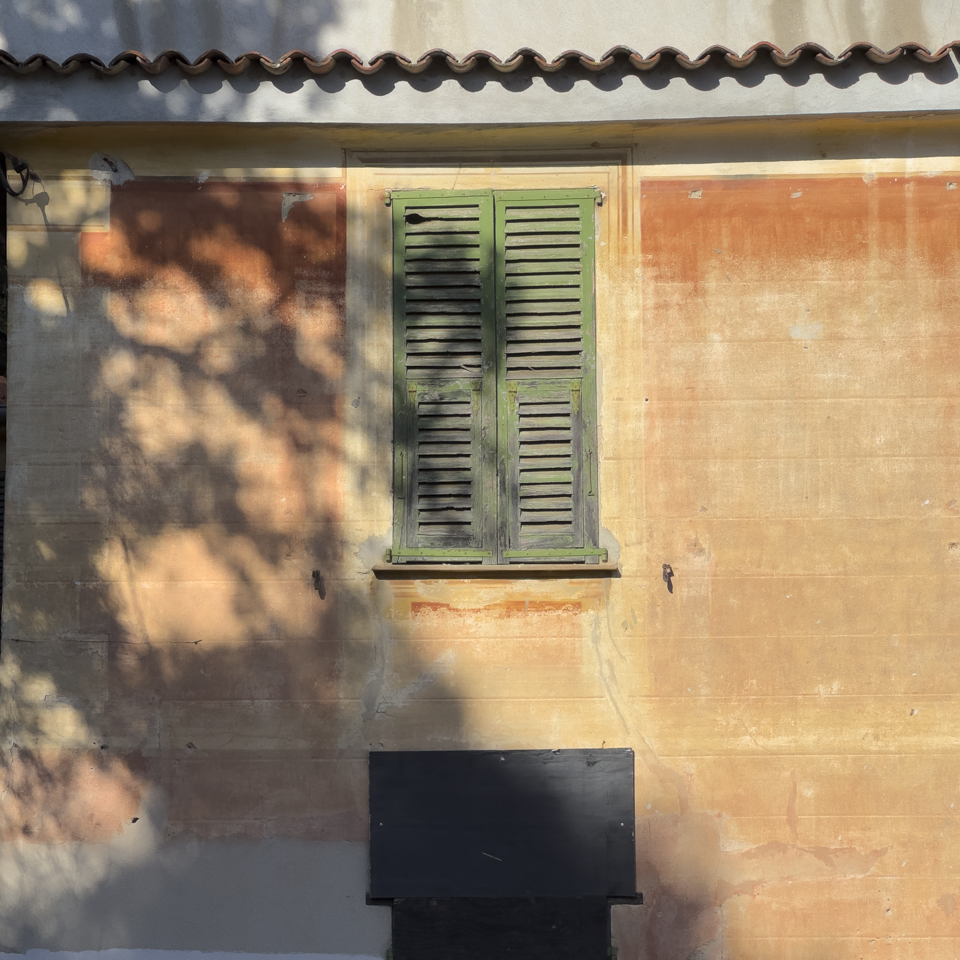
I wanted to describe the everyday to her : the streets, the cafés, the stores, and the people. For example, I wanted to tell her that in the still dark early morning hours, when I went out for a croissant or small loaf of bread, I would pass by the same sanitation worker who picked up garbage from the neighbourhood sidewalks with his spear tipped stick. The work he did was out of sight for most since, by the time the day began for them when the sun finally rose, he was gone.
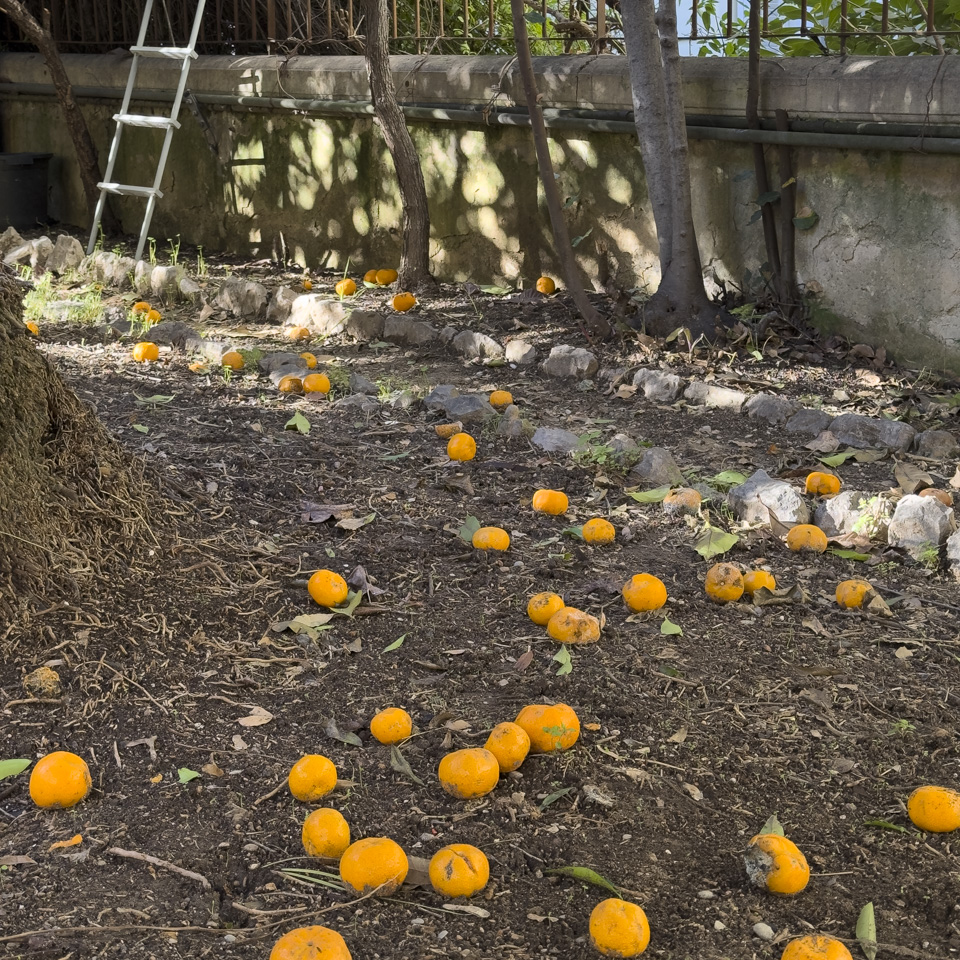
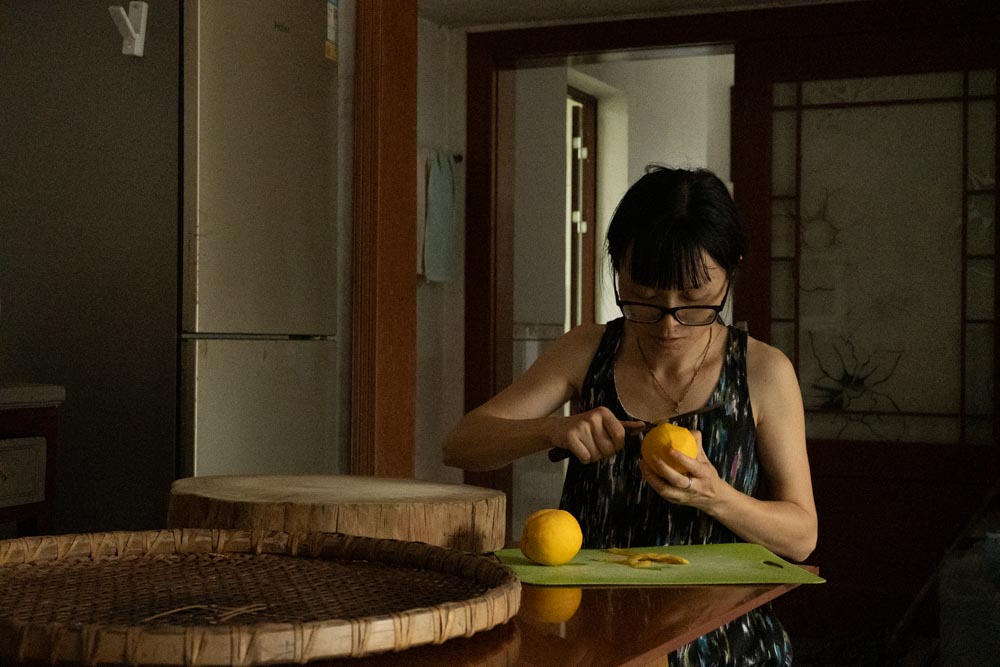
I would have liked to have told her about the orange bigarade trees. They were ubiquitous. Although I know I am exaggerating, it seemed these trees grew wherever there was a little green space by residential buildings. In the city, these trees are ornamental and are known for their hardiness; they do not produce the sweet fruit we eat but, instead, a bitter fruit known as bigarade. The scent of the flowers perfume the city air when these trees are in bloom. In the summer their canopies provide shade. I left just before the oranges began to truly fall. I never asked the question: if you do not pick and eat these fruit what do you do with them after they fall? I would like to believe that the city composts them. Perhaps people pick them from their gardens to make a bitter liqueur of one sort or another. Or jam. Or perfume. These products are what the bigarade is cultivated for outside of Nice.

Except for a quick and unexpected jaunt to visit Liya, in Portugal, I stayed in Nice. It was all that I needed. Like an explorer I was able to wander and discover. Like a child I found that everything about the city excited me. Once I mapped up my neighbourhood I felt at home. Home enabled me to then further survey the city as I experienced the pleasure of getting lost, discovering, and facing something new. I sat outside a multitude of cafes. There were so many green spaces. People took their leisure, alone or with others. I lived in a central district of Nice and was happy to learn that very nearby lived a population of North Africans from former French colonies like Tunisia, Algeria and Morocco. There were also religious Jews in the neighbourhood. These culturally diverse communities seemed strong although I know that French cities (and especially port cities, like Nice, where there is a sizeable immigrant population) have been areas of trouble with less harmony (particularly with the Muslim community), due to the rise of the Far Right.
I left home – Steve, Tuli, and Montreal – to go somewhere unfamiliar. I worried that I would not care for Nice, that it would be too big a city, and that it would feel alien. Nonetheless, I went with this uncertainty because I dreamed of more sun than cloud, a temperate climate, and the boardwalk. And in the end, the unfamiliar became familiar. My walks. The Mediterranean sea. The blue. The deep, bright, azure blue sea with a horizon far, far away helped me adapt easily so that by the time two months in Nice was over it was as if I was losing home again.
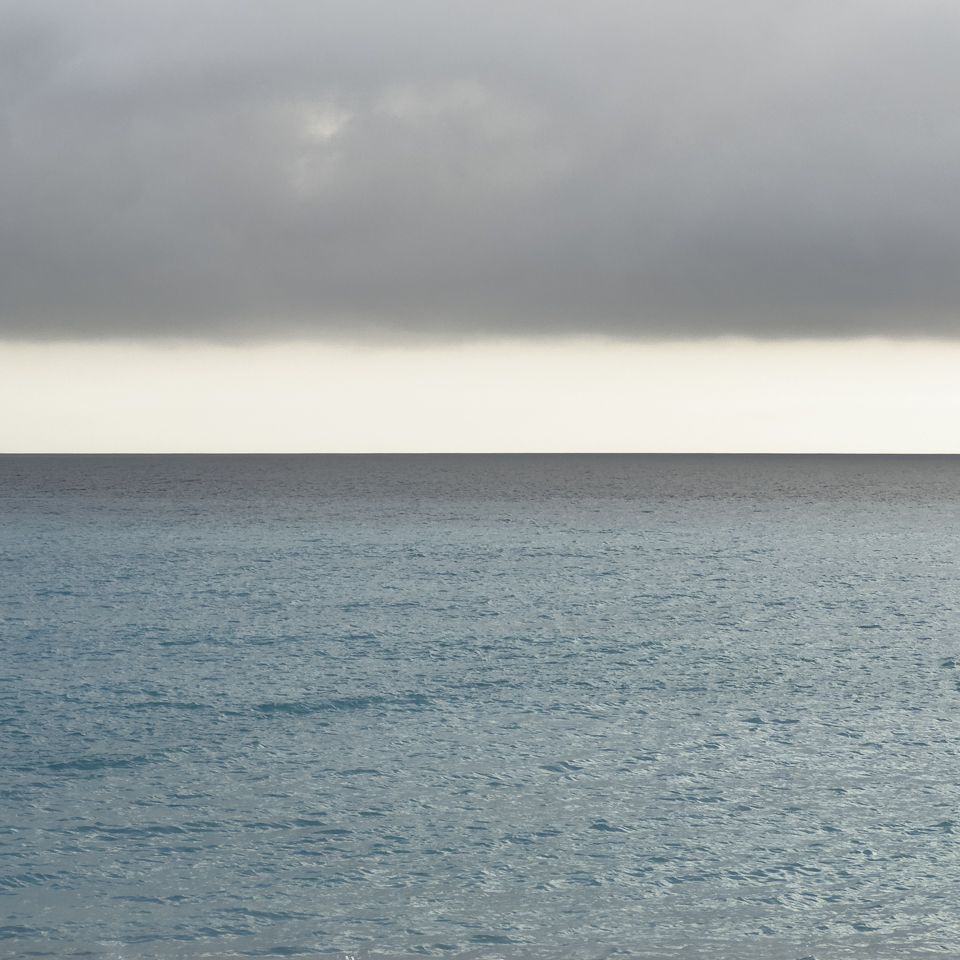
The Mediterranean Sea as seen from the Promenades des Anglais. Nice, France.
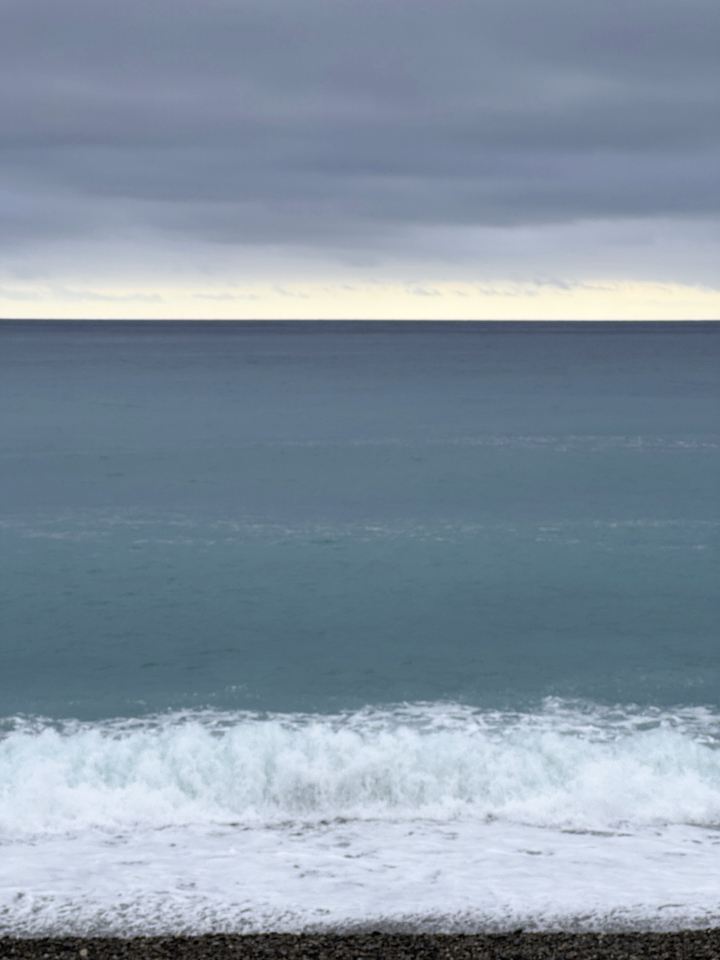
The Mediterranean Sea as seen from the Promenades des Anglais. Nice, France.









 Tamar Granovsky | Wanderings Afar and Near