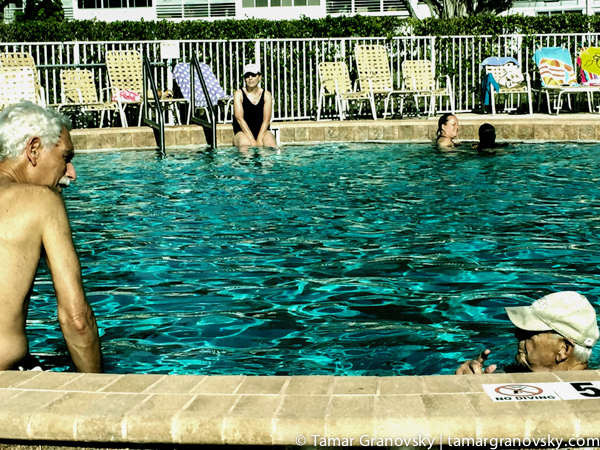
At the Pool
According to the 2014 U.S. Census Bureau, “[B]y adding an average of 803 new residents each day between July 1, 2013 and July 1, 2014, Florida passed New York to become the nation’s third most populous state.” This mirrors migration trends coming from Central and Latin America. Although, one could *almost* believe that part of the migration tendency is a result of retirees’ movement to the land of sun, oranges, and the beach.
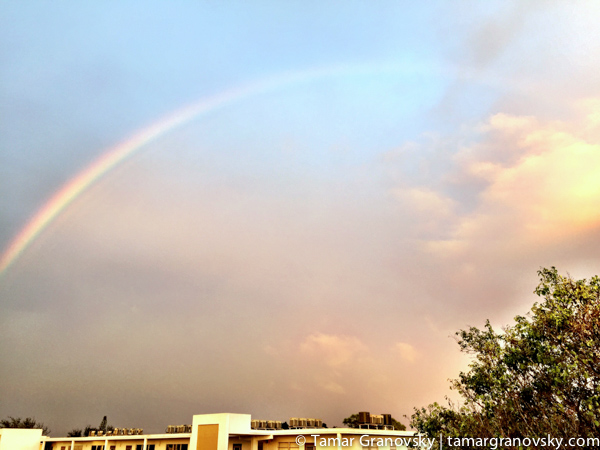
Over the Rainbow
There are four Century Village “retirement” communities (for people 55 years or older) in South Florida. Built in the 1980s, they are in Boca Raton, Deerfield Beach, Pembroke Pines, and West Palm Beach. The residents at Century Village are extremely homogeneous with a racial makeup of 98.41% White (95.6% Non-Hispanic White and most with English as their mother-tongue) according to the 2000 census. Demographics are clearly changing fourteen years later, though. For instance, there has been an influx of younger Quebecois with a population of over 2000, in Deerfield Beach. Those who live here feel safe. As I take my morning walk around this “village” where my parents are staying, I am surrounded by both vital seniors (some well into their late 80s and early 90s) as well as those who face physical or mental challenges. Many still live with their partners but others confront and struggle with loss and death.
My parents joined their friends in the Century Village, Deerfield Beach, in 2000. They are all over seventy years of age and most are “snowbirds” who are thrilled to get away from northern winters of snow, ice and freezing temperatures. They enjoy the warmth of the sun and go for daily walks around the grounds. There are pools, a community centre (with cultural and art activities and a gym), and opportunities to meet new people. The beach is a ten-minute car ride away. The community has just about everything those living here could want.
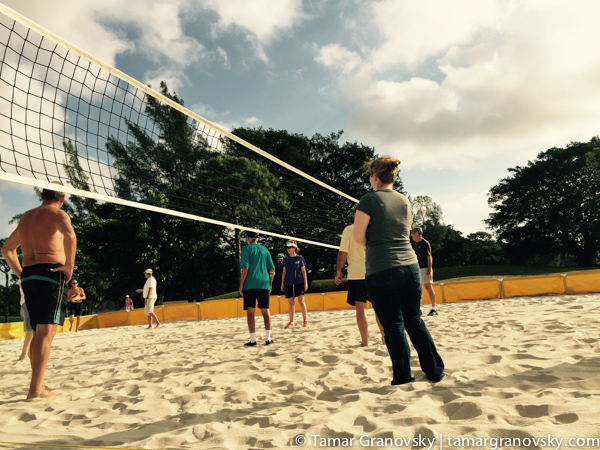
At the Volleyball Court
This coming February my mother will turn 86. My dad, who is 85, has had multiple small strokes which have led to a degree of dementia (he also is diabetic, has heart issues, and other ailments that are not unusual for a North American man of his age). My mom is his sole caregiver. At home in Montreal she can walk, take buses, the metro, or taxis to get around and my sister and her partner help her out as much as possible. In Florida, it is more difficult since she does not drive (it’s virtually impossible to get from place to place without a car in Florida). So, I volunteered to join her here for three months, to drive, cook, help clean, and keep my father occupied with walks and scrabble games, which he is still able to enjoy and even win on occasion.
My mother is in good health as are many of her friends. Together, they go to movies, the opera, and out to eat. However, the reality is that because of my father’s decline my parents are left out on occasion and are sometimes lonely as a result. My mother tries to get out with or without my dad. Friends seem to not call or drop by like they used to and I believe the reason for this is the fact that my father is not healthy, cannot hear well, cannot remember well, and cannot carry on a conversation. He is no longer the funny, smart, quick-tongued, articulate, and engaging man he once was. Plainly put, he is old and despite retaining a great sense of humour and good attitude, he can be difficult to be around when he is not silent and in his own world.
My father exhausts and worries my mother for obvious reasons. She has not only him to care for but herself and their household as well. He is dependent on her to give him his medication, take him to doctor appointments, keep his daily routine on track, give him his meals, monitor his extreme between-meal nibblings (one of many symptoms related to the dementia), take him for walks, take care of the bills, etc. None of this is atypical as we get older.
For better or worse, decrepitude is in the cards should we live to a ripe old age. My father’s movement toward infirmity means that during my sojourn in Century Village I must confront the process of aging and deterioration without averting my gaze. My goal, while here, is to get to know some of the residents, photograph them and their surroundings, and explore and tell the story of how they live here, learn about their community, and how they have come to grips with the process of aging and being at the edge of North American society.
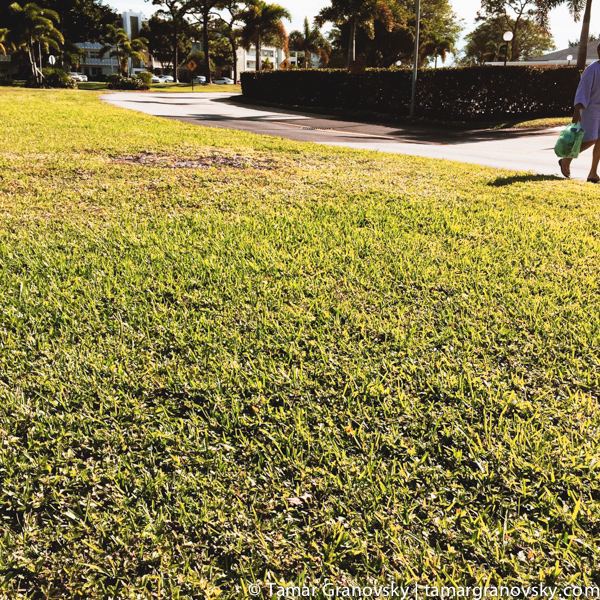
The Grounds

The Grounds
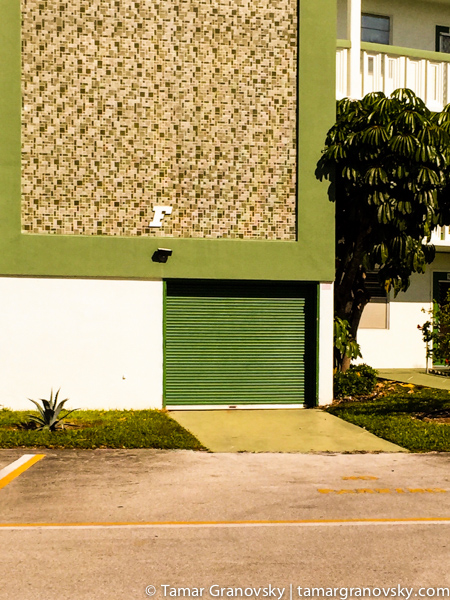
Grantham F

The Grounds

At the Pool




 Tamar Granovsky | Wanderings Afar and Near