

Outside Dali, Yunnan Province, China
The other day I stumbled upon the following statement by artist Chuck Close: “I think that while photography is the easiest medium in which to be competent it is probably the hardest one in which to develop an idiosyncratic personal vision. It is the hardest medium in which to separate yourself from all those other people who are doing reasonably good stuff and to find a personal voice, your own vision, and to make something that is truly, memorably yours and not someone else’s. A recognized signature style of photography is an incredibly difficult thing to achieve… Photography is not an easy medium. It is, finally, perhaps the hardest of them all.”
I cannot tell you how true the above words ring. I actually verbalized a very similar sentiment before I stumbled upon it: In the years that I worked on sculpture (I exhibited in a number of galleries in Canada) I had a voice that was clearly mine, spoke out, and was heard by others. I cannot find my voice in photography. So, I spend a lot of time looking at my work. I try to understand what it is I see in, and feel about, my immediate world, why I make images, what it is I am trying to communicate, and what it is that I cannot communicate. Where is my voice?

Cambridge, Massachusetts
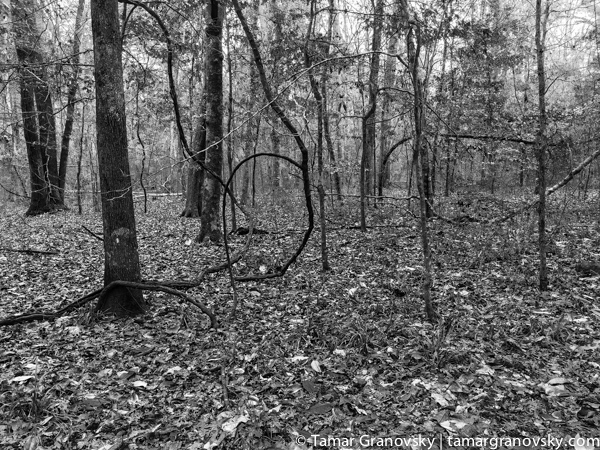
Up until recently my photographs were processed entirely in colour. The world, after all, is in colour. But, how often do we truly see colour? What is it that invites me to look at specific colours when I look around me? Is the answer conveyed in the photographs that I take? Does colour help the photos impart a mood or say something? Unless colour is integral to the subject of the photograph or pulls the framed subject together, it may cause certain details to go unnoticed or even make the photo seem too busy. Is colour the primary/core element of the composition? If not, is there a reason to keep it? These last few months I have wondered: can the use of black and white remove the possible distractions of colour? If I turn to black and white can I pull my pictures to such an extreme that reality starts to recede and just an impression or essence remains? I see my work differently when colour is eliminated. The photographs may be good or they may be poor but removing colour has helped develop my voice.

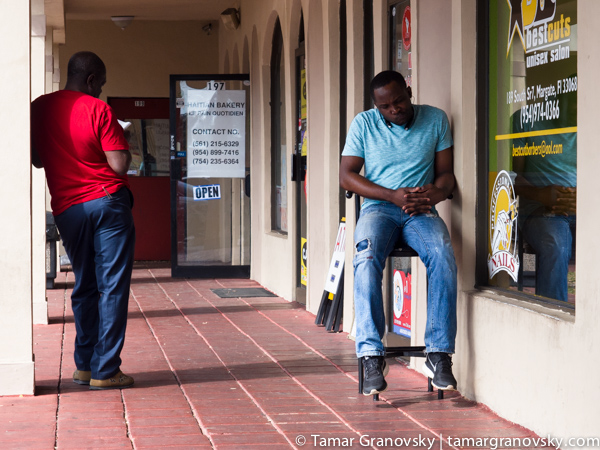
Century Village, Deerfield Beach, Florida
With black and white I tend to extract many shades of grey. As I shift to amplified black and white I am struck by lines, shapes, light, texture, and positive and negative spaces. Blown out black and white begins to move toward abstraction; photos of people or street shots retain a connection to the real world but are distilled down to an essence. By using high contrast the composition becomes minimal in a way that may be impossible with colour. Manipulating black and white in this manner comes to me instinctively. For me there is, in this, a sense of freedom. So, I push out and then pull back in.

Xingping, Guangxi Province, China
The more I shoot the more confused I am about my work. In my last blog posting I mention that I second guess myself, always. When I photograph or work on processing the images I am lost in the moment. Nevertheless, when I am not immersed in the work I question myself. I am trying to figure these things out – an exploratory journey of sorts. With black and white post-processing the pictures emerge toward the brink of abstraction and I feel that this is something I need to exaggerate or create with greater intention. Simply put, I need to work on what comes to me naturally. I’m excited about these reductive explorations; it’s important to keep growing and experimenting. My discovery of black and white and moving toward abstraction keeps me attuned and helps me see the world as I feel it. An impression and a move to something fundamental. There is no need to hurry. Finding one’s way and learning to speak takes time.

Tulou, Fujian Province, China
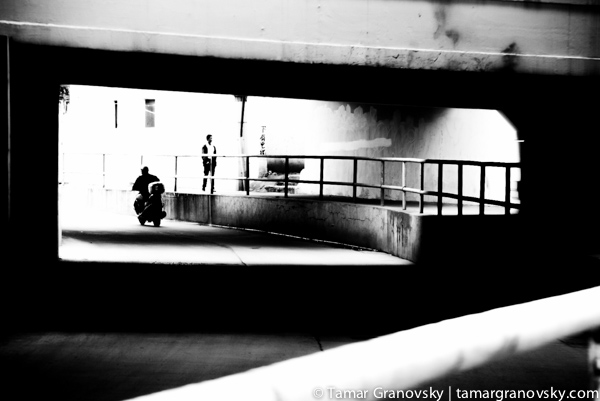
Shanghai, China

Hutong, Beijing, China
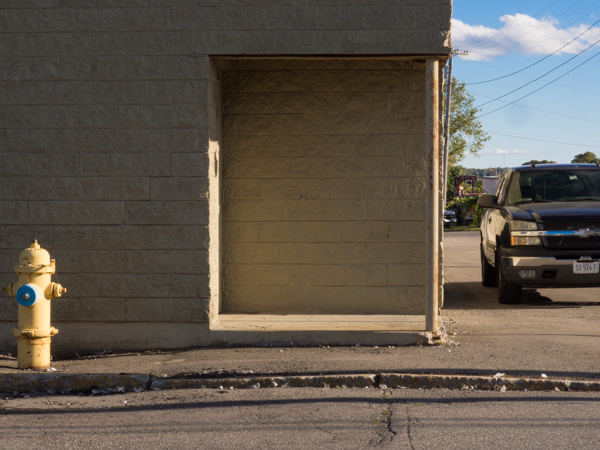
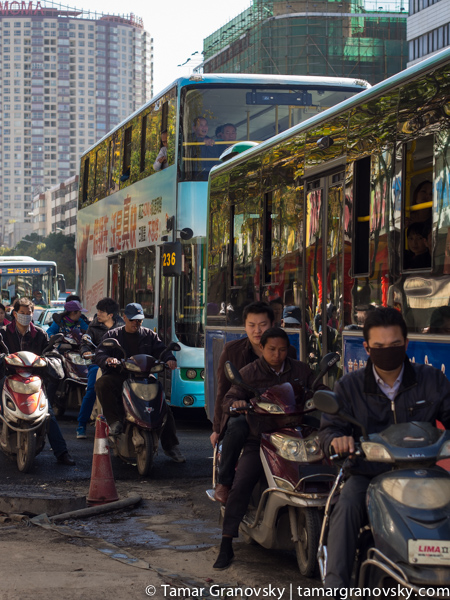
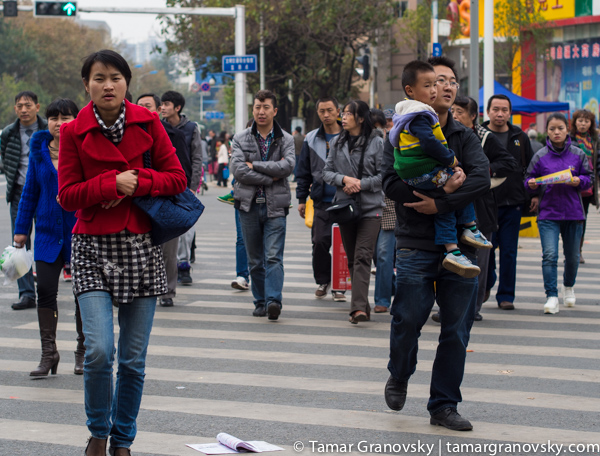
Below are some of the same photographs in colour.
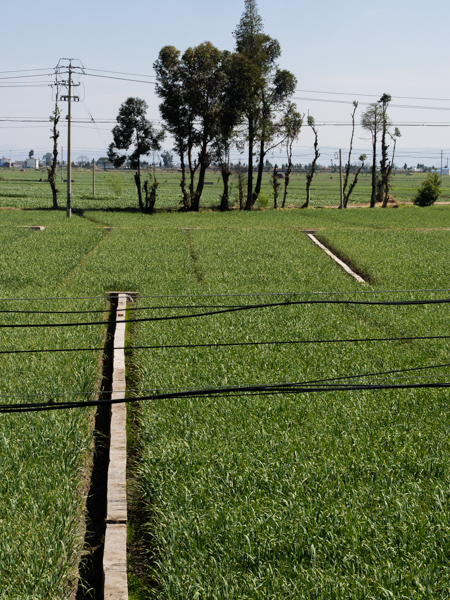
Dali, Yunnan Province, China

Cambridge, Massachusetts

Xingping, Guangxi Province, China

Tulou, Fujian Province, China

Shanghai, China
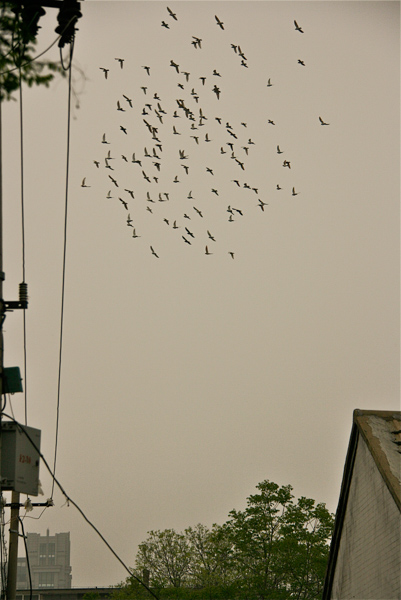
Beijing, China












 Tamar Granovsky | Wanderings Afar and Near