Author Archives: Tamar Granovsky

Unknown's avatar

About Tamar Granovsky

Tamar Granovsky began working in photography in Boston, Massachusetts. She is now based in Montreal, Quebec. In 2018 she was named LensCulture’s Top 50 Emerging Talents. She has been included in various juried group exhibitions including the 5th Biennial of Fine Art and Documentary Photography in Barcelona; Photography Now 2017, at the Center for Photography in Woodstock; and the 22nd Juried Show: Peter Urban Legacy Exhibition at the Griffin Museum. In 2020 her work appeared in Boston as part of 8th Edition Regional Photographers Showcase of The FENCE. Her first solo show was at Cambridge’s Multicultural Arts Center, in September / October 2019. Prior to her career as a photographer, Tamar had several solo and group exhibitions, in Canada, in mixed media sculpture installation and was a recipient of a Canada Council Exploration Program Grant. Her pursuit of photography follows a career in sculpture, with a 17-year hiatus from the arts, as an archivist. The reflective, evocative, and grounding properties of the medium feed Tamar’s love for photographic work.

China: Yunnan Province

Lijian and environs

Lijian and environs

Yunnan 2012

Twenty-five of China’s fifty-six ethnic groups live in Yunnan Province. Close to 40% of the province’s population are members of minorities, including: Yi, Bai, Hani, Tai, Dai, Miao, Naxi, Yao, Tibetan, Mongolian, and many more. I learned that there are some minority groups who do not live in separate settlements or do not even reach the required threshold of five thousand, in order to be given the official minority status in the province.

Yunnan’s landscape is beautiful. And the truth is it is almost completely landscaped. When you are not in a city or town but on the road you see some small towns or large factories but mostly completely landscaped land for farming – much of the land is terraced in Yunnan (at least until Lijian which is the furthest north I travelled). Even forests seem to have been burned so that trees can be planted.

I met mostly very sweet people. A few came up to speak with me in mixed English and Chinese so I had some very good conversations – or at least as best as we could manage. A few Chinese speak excellent English (there are 11 universities in Kunming, alone) although the majority of people in Yunnan and Kunming, so far, do not understand English at all – even in banks and hotels..

In this part of the country, I saw very few Western visitors. Most tourists are from China.
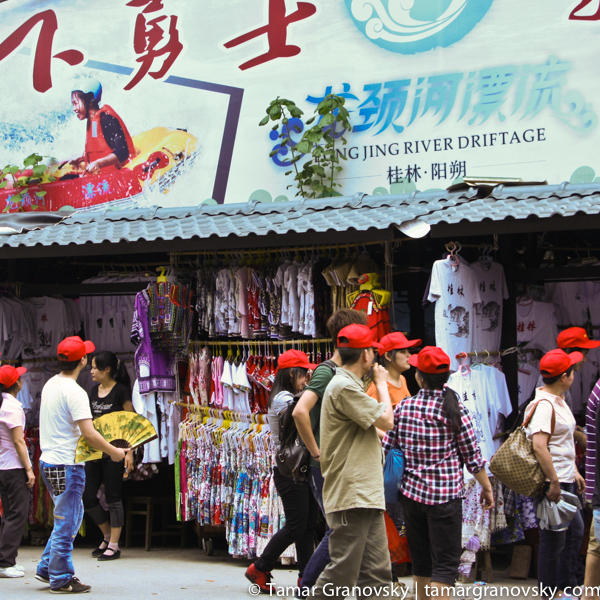
Chinese Tourists in Xingping

Chinese Tourists in Xingping (Guanxi Province)

Part of this, of course, has to do with the fact that there are so many people in China and everyone who can, travels. So, no matter how many Westerners may be travelling at any given time they are completely outnumbered. When I went to the Stone Forest — 1.5 hours south of Kunming – there were *throngs* of Chinese and I bumped into a very small handful of Westerners.

One thing I noticed is that many people speak VERYLOUDLY!!!
I have to admit it took some getting used to. However, it is simply a cultural difference and I learned to accept it.

The worst driver I have ever experienced was on my trip from Mohan to Jinghong. The driver of the bus looked everywhere but at the road, kept on grabbing this or that from under his seat, stuck his head out of the window to look behind him, smacked his hand o his head multiple times and kept on jerking his head as if he was dozing off and was trying to stay awake. Luckily that kind of driving was not the norm.

I stayed in Jinghong for two nights, enjoyed my 1.5 days ambling the city, and ate some excellent spicy Dai food.
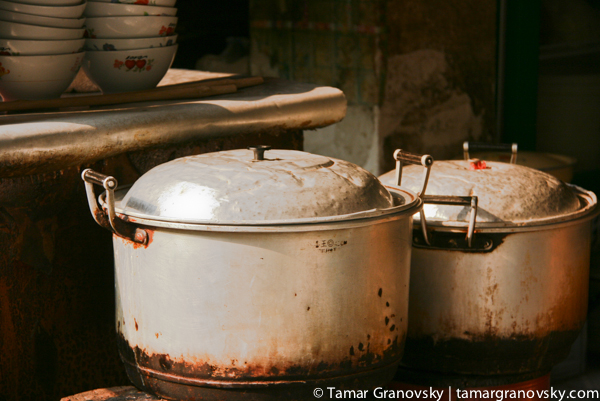
Dai Food Cooking, Jinhong

Dai Food Cooking, Jinhong

Dai Food Cooking, Jinhong

Dai Food Cooking, Jinhong

Dai people eat mostly plain rice often along with ground meat made into thin patties, grilled on sheets of metal, and then cut. They eat a lot of green seaweed which is found on rocks at the edge of rivers near their houses on stilts. The seaweed is roasted and wrapped in banana leaves. Many of their dishes are very spicy hot and/or sour and are filled with coriander, onion, sour pickled olives, VERY hot peppers, and pickled bamboo. Beef and fish are usually roasted. In Jinghong, on the streets, are a wide array of fruit and vegetable stalls selling among other produce: breadfruit, papaya, pomelo, dragon fruit, etc. As you can see I found Jinghong very food-centric (as is the whole country, actually) and happily ate a lot, there. Lastly, I discovered a stall (part of a food chain) where you could buy an amazingly fresh, hot, soybean drink. SOOOOOO delicious.

Leaving Jinghong, I took an 18-hour overnight, local bus, to Jianshui and then another three-hour bus ride to the Yuang Yang Rice Terraces. On the night bus to Jianshui I was seated next to a man who received telephone calls hourly, almost, and repeatedly lit up cigarettes. I was the only westerner on the bus and no one else seemed to mind/complain (despite the bus being a no-smoking bus) so I just said nothing and suffered, quietly.

I spent one full day in Yuan Yang Rice Terraces; I walked 18km and took photos of the land (the rice paddies were flooded so there were reflecting pools – spectacular to my eyes) and people (with whom I tried to talk – not easy since the majority of people there are of the Hani tribe).

Yuan Yang Rice Terraces

Yuan Yang Rice Terraces

Yuan Yang Rice Terraces

Yuan Yang Rice Terraces
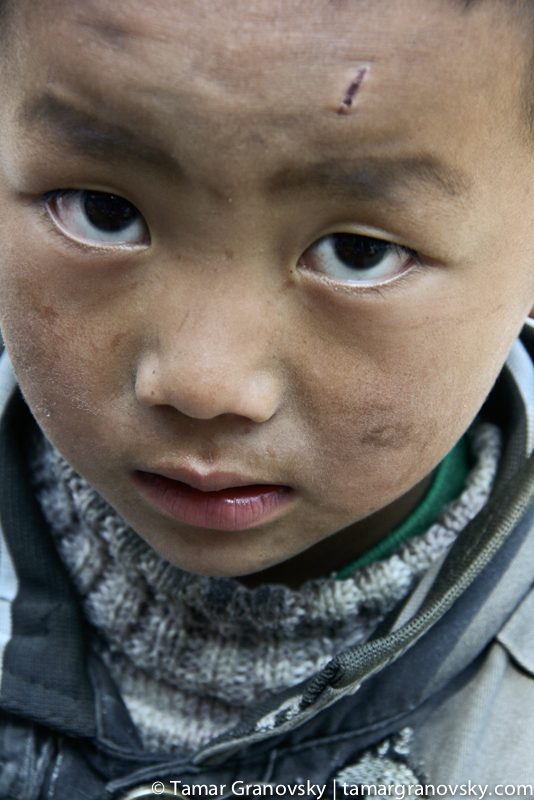
Yuan Yang Rice Terraces

Yuan Yang Rice Terraces

Yuan Yang Rice Terraces

Yuan Yang Rice Terraces

Yuan Yang Rice Terraces

Yuan Yang Rice Terraces

At the guesthouse, I met an Italian couple and their two children (ages 7.5 and 6). We ended up travelling together for a few days and I spent  my stay with them in Shanghai (Luca was teaching at the Jaio Tong University for 6 months).

The five of us travelled next to Jianshui together and met up each night for supper.  Jianshui is considered a state historic and cultural city. It is one of the earliest developed cities in south Yunnan. It was the political, cultural and communication center in south Yunnan for centuries. Because of the Jianshui Confucius Temple, the city has been called “the Cultural City” since the Ming Dynasty (1368-1644). The food in Jianshui was excellent – lots of grilled tofu and bamboo and marinated vegetables and meat. I also saw a stall selling, along with garlic, grilled beetles, larvae, grasshoppers, etc. As well, I spent time walking beyond the historic part of the city in alleyways and areas where the older buildings were in the process of being torn down.

Jianshui

Jianshui

Jianshui

Jianshui

Jianshui

Jianshui

Jianshui

Jianshui

Kunming is known as the “Spring City” because of its climate; temperatures, throughout the year, do not get much colder or warmer than a typical spring in places that have four seasons. It once was a laid-back place, so I was told by a retired Canadian now living in Australia – who I met at the youth hostel we were both staying at. He was last in Kunming five years ago and claimed the city hired a governor to turn it into a prime Chinese city. Kunming is clearly that, now.
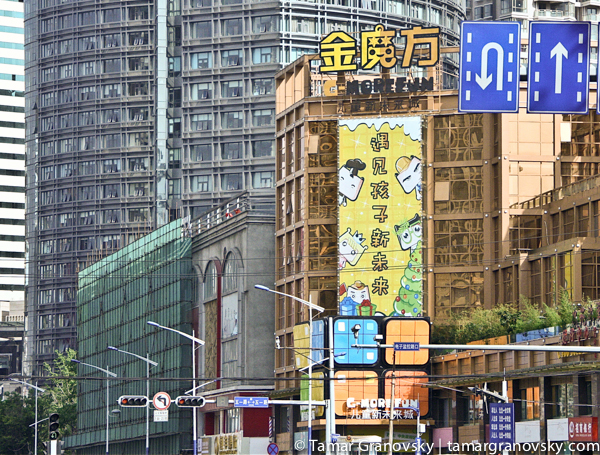
Kunming

Kunming

I found an excellent and cheap resto that I returned to a few times where I tried Kunming’s famous “across the bridge noodles.” This consists of a bowl of very hot soup  (stewed with chicken, duck, and ribs) on which a layer of oil floats. Alongside the broth: side dishes of raw pork, vegetables, an egg, and noodles are given to you and you put all these sides into the bowl of soup right away so that the ingredients cook quickly.

One day the project manager/coordinator of the hostel in Kunming invited me to join him for supper. He’s from Hong Kong, originally, and lived in Great Britian for many years while he worked at the International Youth Hostel headquarters in London. He was asked, ten years ago, to coordinate different youth hostels in China and is now based in Shenzhen and Kunming while travelling around the country. Here is what I learned from our conversation, in no particular order of importance:

  • Some Chinese speak loudly because they are from the north. Apparently it is considered macho/manly for men there to talk loudly. Others speak loudly because they are from small agricultural villages and are used to yelling at each other across the fields
  • Almost all motor bikes in China are electric
  • Chinese call the Chinese language Chinese (zhongwen)orPutonghua (the common language)whichis based on the Beijing dialect
    • Westerners called/call the Chinese language Mandarin because the upper classes and ministers during the Mandarin Dynasty in the 19th century were based in Beijing and this was the standard for the language in the country
  • China now has its goods manufactured in countries like Cambodia and Sri Lanka because labour is cheaper. Hmmm… sounds familiar!
  • Many cars and trucks madeinChinaare exported to Eastern European countries as well as some Latin and South American countries (and I ignorantly thought they were only sold in China since I have never seen a Chinese car elsewhere in my limited world travels!!)
    • What you also see:  a number of VWs, Mercedes Benzes, Suzukis, and some Fords and Buicks which are all manufactured in China

Lijiang (Shuhe) and Beyond

Lijiang

Lijiang

Lijiang

Lijiang

After a nine hour ride by bus to Lijiang I moved to the youth hostel in Shuhe which is about 4km away from Old Lijiang as well as the new city of Lijaing. The common areas as well as rooms allowed smoking which was the first time I experienced this at a Chinese youth hostel; this was disappointing but I simply had to adjust. Most tourists who go to the Lijiang area are from China so few people speak English which sometimes made it difficult for me. However I met a lovely young woman from Beijing who spoke English and was travelling on her own for the first time (I met up with her again in Beijing). We spent one afternoon cycling the countryside together. Another woman I met is part of the Naxi ethnic group. I ate a number of meals at her little resto and this helped me to feel at home. Strolling through both Shuhe and old Lijiang was very pleasant. They are quaint places with fantastic architecture, often made of mud bricks. However, because of tourism, both are also full of tacky shops with jewellery, clothing, trinkets, etc.

If you have looked at the links above, you will have have noticed that there are a couple of rivers running through Shuhe. In the “olden days” there were three wells — one was used for cleaning oneself, the 2nd for washing vegetables and dishes, and the 3rd for drinking water. I don’t know where the drinking water comes from today but the rivers are used by all the locals for washing oneself, washing food, and washing dishes. I also saw little boys pee in the rivers and, unfortunately, garbage is thrown into it too….

I met a Canadian man in Shuhe who had worked as a chemical engineer. Having worked and travelled in China he decided he wanted to start a new career. He and his Chinese girlfriend had taken a trip to Shuhe 2.5 years ago and fell in love with the place. He went back to Ontario to save up enough money to build a small hotel. When he returned, a year later, the place had almost tripled in size and had lost its quaint small village feel. Despite this they built the hotel: Lijiang Lazy Tiger Inn. The nearby town of Baisha which is 8km away is slowly growing, too; he (and I) believe the two towns will become one at some point soon. Both are officially part of the Unesco World Heritage Site — they used to be just off the radar but the Chinese government wants to increase tourism to these places.

When I returned to the youth hostel in Kunming it felt like returning home. I guess when you go from bed to bed you (or at least I) began to crave staying in one place.

First Impressions of China

Jianshu, Yunnan Province, China

Jianshu, Yunnan Province, China

It took me a while to decide how I felt about this country. It is so full of contradictions. It is clear that China is a communist country yet capitalism is everywhere. On the whole it is an impoverished nation – at least Yunnan is –but there is also apparent wealth and growth. Kunming, for example, is becoming a very large city and will have the 4th largest airport in a few years. They are building a metro system and in general this province is viewed as a gateway to many neighbouring countries: Vietnam, Laos, Myanmar, and Ruili. In any area, here, that is larger than a small town, growth is at work in a grand way. When I left Laos, I saw that in its border city, Boten, nearly the whole centre of town was torn down  – and surrounding it were humongous but still empty buildings. In Mohan, a Chinese town on the other side of the Laos border, it seemed as if perhaps the Chinese had joined Laos in turning Boten into a big town that could some day serve as a destination for tourists or even a place for Chinese citizens to move to – from the countryside. Meanwhile, Jinghong and Kunming, the two largest cities in Yunnan, are for their part very enjoyable centres and are growing and growing.

Everywhere else that I travelled to during the first 1.5 weeks in China it was clear that the people there are poor. I wondered about all the old being torn down – replaced by new, large, concrete buildings. Some of the work is done mechanically but much of it is achieved by manual labour. However, when I stop to think about it – despite the fact that tourists want to see the “old China” – no one wants to live in a home without plumbing and heat and with dirt floors. From what I understand as long as you stay in your own province then you obtain benefits from the government as compensation if your home has to be demolished. But (and I am not sure if I am correct — this information is all from my pidgin conversations), if you move to a different province then you do not receive these benefits.

Jianshui

Jianshui

SO!!!!! From the perspective of writing these posts over a year after my trip to China in 2012: China is neither a third nor first world country and is changing at tremendous speed; transportation is is fairly top notch, construction is faster than lightening, consumption is high, and it is hard to tell whether the infrastructure will be able to take all this rapid growth. China is truly a country of contradictions.

It seems to me from what I read in the news that, even though in the financial world China is still considered an emerging market, the power is shifting from the West (read: U.S.) to the East (read: China). It was clear to me during my six-week trip to China that the Chinese are undergoing the shift from a producing country (they, too, now outsource to other countries) to a society of consumers. Even in small towns and villages people have cell phones. The income gap in the west is growing but it is the same in China. So, for instance (and this may seem a little silly) many people still cook over a charcoal burning fire with their one pot or wok and not with a stove and oven.

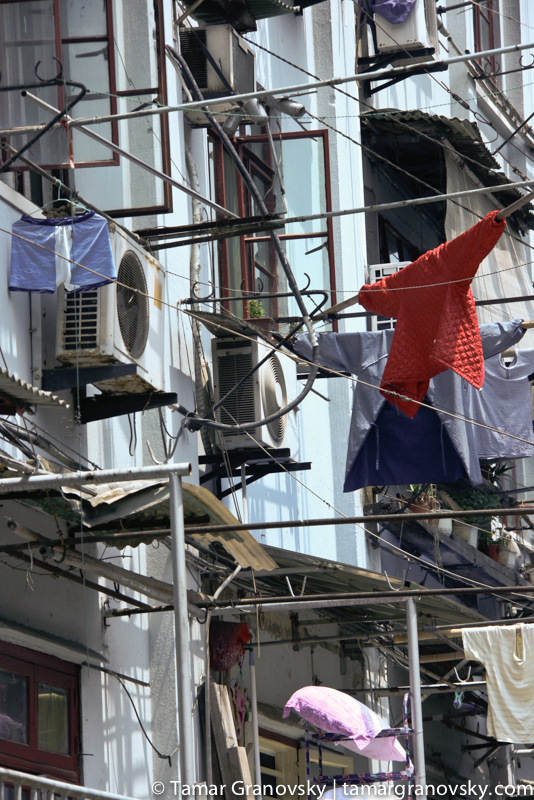
Clothing is hung up to dry since people do not have electric driers, typically, and many people do not have washing machines (those who do often have the type that was used decades ago in North America where you have to attach and detach the hose to the water tap).

Shanghai

Shanghai

From what I can tell, China is going to have to learn to have a smaller footprint as it grows at such an exponential rate. There is an unbelievable amount of garbage on the streets — especially in the smaller towns and villages.  Flying over Beijing the pollution is like a wall that you bump into.  The pollution is tragic but China does aim to reduce its pollution by 2017. Farmland and village homes are being razed while cities are being developed for the new migration from the countryside to the city. By learning the language and living in the country for a period of time, beginning this September, I hope to start to have a deeper understanding of the country and people than how I get information through the western media. And of course, this will give me an opportunity to speak to the people I meet in their language rather than in English – a language that currently is the lingua franca.

Thailand 2012

From Vientiane to Bangkok on a night train in a 2nd class car… Berths are not compartments as we know then in North America but arranged in an ‘open plan’ on each side of a central aisle.  During the earlier evening and later morning portions of the journey, pairs of seats face each other on each side of the aisle where you face your berth mate.  At night, each pair of seats pull together to form the bottom bunk and an upper bunk folds out from the wall.  An attendant makes up your bed with a proper mattress and fresh, crisp, clean bedding, and hooks curtains which are provided for each bunk to give you privacy. All bedding is stored on the upper bunk and comes down and turned into a bed for the person sleeping on top. Essentially, it is one whole train car that sleeps in the open, together, (save these “privacy curtains”). It was very comfortable and 12 hours later I arrived in Bangkok. I loved the train ride and the egalitarianism of the berths.

Bangkok

Bangkok

Bangkok was the largest city I’d been in, in a while. The traffic was seemingly non-stop. The “sky train” (MRT subway) is efficient and takes you everywhere you need to go. The Sunday I arrived I went to the Chatuchak weekend market. Stall after stall is filled with clothing, jewellery, trinkets, shoes, belts, or just about anything else you could want. There are food stalls by the dozen and I drank my first of several Thai iced teas at this market. I also ate the best coconut ice cream ever — in a coconut shell with shaved coconut on the bottom. No complaints!!!

Bangkok

Bangkok

My friend Michelle arrived in Bangkok from the U.S. the same day as I arrived from Vientiane — for a two-day business trip. We went out for supper the two nights she was there – for some of the best food I ate on this trip. It was soooooooooooooo nice to meet up with a friend. While she was at work on the Monday I toured the Jim Thompson House with two Canadian women who were staying at my guesthouse. The three of us had lunch then went our separate ways. That afternoon I went for a 2.5 hour massage (complete heaven)  then went to Michelle’s hotel to just hang out in her room and relax until she returned from work. We actually ate dinner at the Jim Thomspson House.

Bangkok

Bangkok

Bangkok

Bangkok

Bangkok

Bangkok

A funny thing happened to me on the way to Singapore… I went to the MBK Centre, a mall across the way from where I was staying, to get my legs waxed. The woman doing my legs wanted to give me a Brazilian bikini wax (i.e., wax away all of my pubic hairs) and I insisted that she not do this. All I wanted was a small bikini wax in anticipation of my beach trip in a few days, in Malaysia. The woman insisted I needed that Brazilian wax: “So sexy. So sexy.”  I mentioned that my husband wouldn’t agree and EVEN SHE admitted that her husband feels the same way.  No matter, she went ahead and a bit too far over my protestations. So there you have some nitty gritty and perhaps too much personal information but it is such funny story and cultural interchange.

One week later…. I returned from visiting friends in Singapore and a few days in Pulau Tioman in Malaysia. I couchsurfed during the second part of my trip in Bangkok where I stayed with a very lovely, warm, and intelligent woman of 36. Unlike Patrick, in Vientiane, Nuch and I clicked and spent our evenings together. During the day I wandered the streets of Bangkok’s old city centre. I did not go into any wats or the Grand Palace but did go to the Museum of Siam to see “The Two Planets Series.” I was told that exhibition was not open to the public until the next day; I explained it was advertised as opening that day and I had gone to the museum especially to see the videos. After a phone call I was let me in for free (i.e., waived the $10USD) and was able to see the whole museum as well as the four videos that were still closed to the public.  The videos are a humorous illustration of cultural differences between East and West, showing how  a group of villagers and farmers react to Western paintings of villagers and farmers in Europe. These “unsophisticated” villagers expressed their feelings with such extraordinary freedom that I could not help but smile. The artist was clearly not making fun of them but demonstrating the vast cultural differences and the fact that Westerners, or anyone with a higher education, may have lost innocence and spontaneity when it comes to art.

Bangkok

Bangkok

That afternoon I plan went to Galerie N, a contemporary art gallery, to see the show “Dwelling in a Space: Patoong Collage & Installation” by Gi-ok Jeon.  Following this excellent exhibition I explored Chinatown before meeting Nuch for supper.

Ayutthaya

I arrived by train (3rd class — 15 baht! — that’s 50 US cents — open windows and very hot) in the early afternoon. A German woman and American woman who were staying at the same guesthouse as me in Ayutthaya joined me for lunch at the day market and we then spent the afternoon and evening, including supper at the night market, with each other.  Ayutthaya is not a very beautiful area however the Historic City of Ayutthaya makes the visit worthwhile. Julie (the German woman) and I rented bikes and cycled the city and went to many wats and visited a market beside one of them. We had a wonderful day riding about, stopping and taking in the sites, and just enjoying the day.

So…. not to toot my own horn too… I have to admit that because I try so hard to speak in my pidgin Thai (or any other language, depending on the country I am in) I tend to have people open up to me. This was the case when I bought coffee and tea for the three of us one morning at the market and then later that day when I walked up to workers by a canal. One was resting so I asked him if he was the boss. He laughed so I proceeded to ask him if he was just resting. Yes! He then told me he and his friends were cutting weeds along the water (which was very clear to me but I was just trying to make conversation). They then all stopped to rest and one of them took out something that was clearly alcoholic and potent and put it in his gator-aide like bottle. Anyway, they let me take photos of them and we continued to talk about nothing in particular since none of us could truly communicate with each other. All of this with my very crappy Lonely Planet phrase book that never has the phrases you want but luckily has a dictionary in the back and some words in the phrase areas that helps me cobble stupid sentences together. I love this!! The people and food REALLY make travel. So does good scenery and the odd wat or two…

Sukhothai

I stayed at TR Guesthouse. Toh (the owner of the guesthouse) is so real, friendly, and helpful. At the market, close by, supper was 45B. Breakfast 30B. You can’t beat those prices. At breakfast at the market a man was curious about me so we talked about early retirement and working in a library. At lunch, men were laughing at my Thai. When cycling the route by one of the wats a man selling water was also very impressed and tickled by my Thai. In any case, I was having a great time trying… I spent the day riding a rented bicycle through the historical sites and the countryside and finally became watted out. In the countryside of Sukhothai – I partook in a wonderful cycling tour which was something I would not have easily figured out on my own two wheels. The tour consisted of six hours of cycling with a German couple who also took the tour. We cycled along rice paddy pathways and back country roads. We passed by a tobacco farm where a boy came running in costume, greeting us as we cycled by. Upon my return to the guesthouse I spent the rest of the day reading and drinking watermelon juice, ginger tea, and resting. A perfect day.

Sukhothai, Tobacco Boy!

Sukhothai, Tobacco Boy!

Chiang Mai

Three days in the small city Chiang Mai! My first impression was surprise that I did not fall in love with it — perhaps because the guesthouse is in a backpacking district, which I had been successful in avoiding thus far. In general, Thailand is not my favourite place in Southeast Asia. Perhaps if I travelled further north in Thailand I’d have felt differently. People ask me which country is my favourite. It is not easy to answer since I seem to adore Vietnam, Cambodia, and Lao — particularly the first two countries, But, I do know that Thailand is my least favourite. it just never got under my skin despite really liking the people and the food.

My first day in Chiang Mai I drifted in and out of the alleys after visiting the morning market and then ate a fantastic vegetarian breakfast and drank a very strong and excellent Thai coffee. Since I stayed in the old city – this is where I spent the day. I found a place for a full-body Thai and a foot massage. I then happened to bump into Liliane, the German woman, who I met in Sukhothai. We strolled together and went to SP Chicken  – a resto that we stumbled upon and where they roast lemongrass- and garlic-stuffed chickens out front on a vertical spit beside a wall of glowing charcoal. We sat beneath the restaurant’s aluminum awning on plastic chairs and ate sticky rice, papaya salad, and those flavour-packed birds, hacked into pieces and served with a sweet, spicy dipping sauce along with Singha beer with ice. Another perfect meal. In fact, it may have been the simplest and best meal I ate in Thailand.

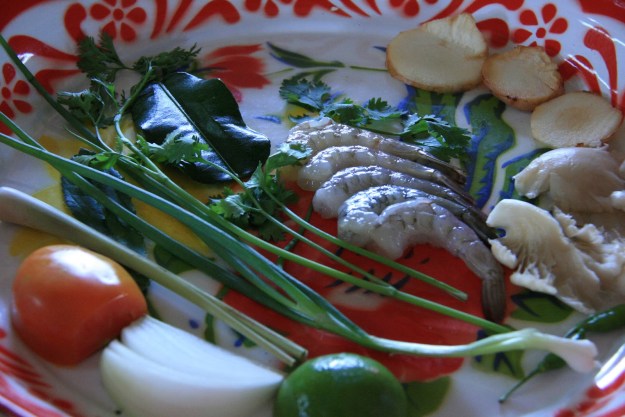
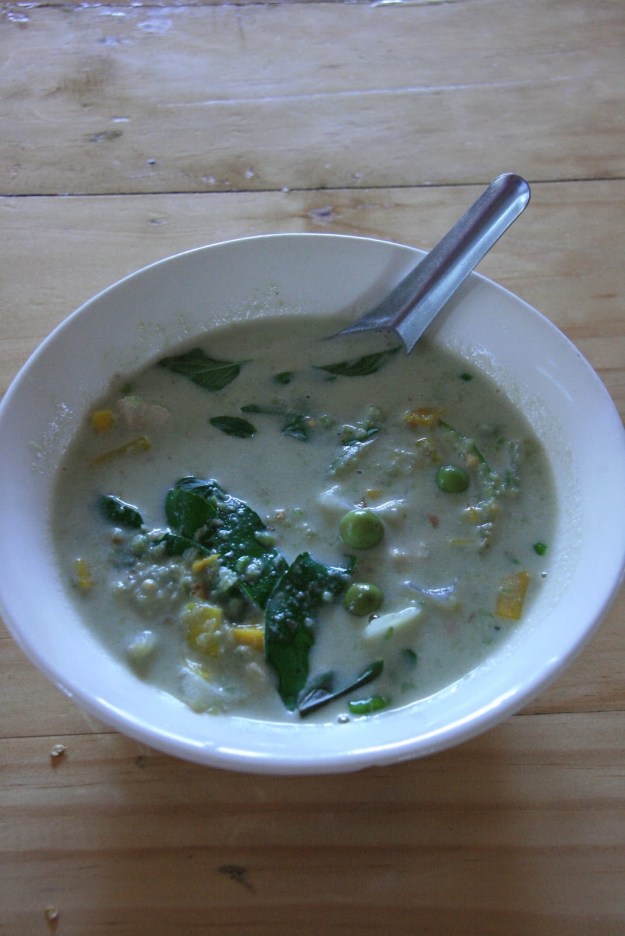
One of my days in Chiang Mai I was picked up by bus and taken to The Chiang Mai Thai Farm Cooking School where I learned how to make:  green curry and chicken, pad thai, chicken and basil, papaya salad, tom yum soup, sticky rice and mangoes (my favourite dessert in Thailand and Laos). For your quick perusal, here are a few photos of the preparation and final products as well as our enthusiastic instructor:

Some factoids:

  • Thailand is an emerging economy and considered a newly industrialized country. It had a high growth rate from 1985 to 1996 – averaging 12.4% annually
  • 85%  of pineapples in the world are exported from Thailand
  • 75% of rice exported throughout the world comes from Thailand
    • rice is Thailand’s most important crop
  • Many of the hard drives in computers come from Thailand
  • Exports account for more than two-thirds of Thailand’s GDP
  • 50% of the labour force is in agriculture
  • 1100B is the typical annual pay for a tobacco farmer and the whole family — all who usually work on the farm
  • Thai chilies are hottest when they are orange and less so when they are red or green
  • Finally, not a factoid, per se — but I’ve never seen so many 7-Eleven stores as I have in this country and most are overly air-conditioned and keep their doors open so that the air-conditioners have to work even harder!

Conclusions… I think if I went travelling north of here and into the countryside I’d enjoy Thailand more. Just being on a farm outside of Chiang Mai, for the cooking lessons, and having cycled in the countryside of Sukhothai and Ayutthaya proved to me that I could really enjoy myself in Thailand. I liked Bangkok very much but had enough after 5 days. And I just did not fall for Chiang Mai  – but so it goes. Travelling from Bangkok up to Chiang Mai the land was flat with lots of rice paddies, and factories on the side of the main roads. When I got closer to Chiang Mai the landscape slowly changed to small hills/mountains. When I left Chiang Mai to go to northeastern Laos the landscape changed again to more mountains and valleys filled with agriculture.

Cambodia

2010

Siem Reap

After a few long flights Steve and I made it to Siem Reap — home of Angkor Wat and Angkor beer. Immediately we discovered that the people are wonderful but the place is tourist central. We were lucky enough (and this was pure luck) to end up in a relatively quiet neighbourhood (Wat Bo) on a fairly quiet street. There were many guest houses but quiet, nonetheless. Siem Reap is filled with smoke from fires — we were being prepared for even more smoke, from slash and burn of brush in Laos in preparation of planting rice crops.

Tuk Tuk

Tuk Tuk

Gate

Gate

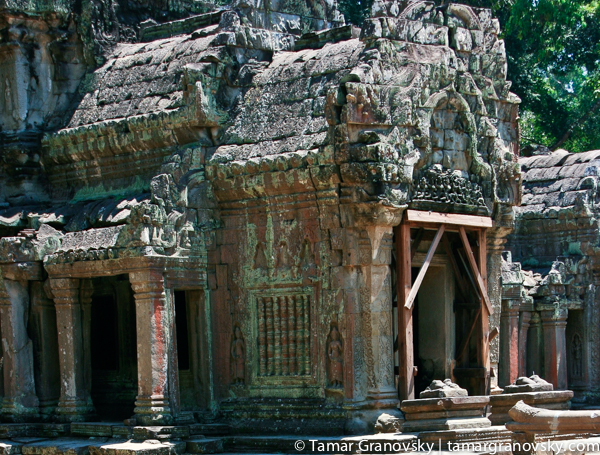
The first of our two days we rented bicycles and rode the grand tour of Angkor Wat – about 20km. Steve kept repeating that it was hot. Steve said the food can be pretty good. Steve said the ruins are cool. But, believe it or not, we missed the actual Angkor Wat completely. We planned on touring it at the end of the day but after meandering through wats (temples) off the beaten path it was very difficult to even look toward Angkor Wat – all we could see were busloads of tourists (droves and droves). What we did see was: Ta Prohm, Tam So and a few of others a well.

Ta Phrom

Ta Phrom

Ta Som

Ta Som

The day after our ring tour we took a tuk tuk (a motor bike with an attached carriage for people to sit in) to Bung Mealea (60km away). It is a striking place of mostly ruins. In fact every historical site we saw in the greater Angkor Wat complex was ruins and un-restored (natch!). The ride there was a good (though fast) way of seeing rural Cambodian life. We passed many shacks with people selling corn, petrol, or baguettes. Cows were utterly skin and bones. As in Vietnam, everyone works very hard; the Cambodian way of life is not easy and the people are very poor. However, they are very friendly, in a reserved kind of way.

Selling  Petrol

Selling Petrol

Children at Bung Melea

Children at Bung Melea

Bung Melea

Bung Melea

Bung Melea

Bung Melea

We discovered that there are a lot of cleared landmine signs throughout the countryside.

A good friend of mine who travelled Cambodia once said that everything in Cambodia is $1. Truer words could not have been spoken (almost). Everything, practically, costs a dollar. Water? $1. Caphe ta kwa (ice coffee)? $1. Children following you around? $1. Ten post cards? $1. Laundry? $1. The list goes on.

Our best meal in Cambodia was outside of Ta Prohm. We were the only falang (foreigners) there and had a great conversation with a tuk tuk driver eating there, too. We ate Khmer rice noodle and coconut soup with lots of chili peppers, green beans, and some unidentifiable green leaves. We had the most wonderful mango and coconut shakes to drink as well as coconut milk — a very common beverage in these parts. In contrast, in Siem Reap, itself, we had crappy Americanized fruit shakes that are watery and over-sweetened. And of course, in close to 100F heat we drank lots and lots of bottled water.

2012

Phnom Penh

Phnom Penh

Phnom Penh

I headed up the river to the Cambodian/Vietnamese border via slow boat; once in Cambodia I took a bus to Phnom Penh. Just as the first time in Cambodia, two years prior, it was amazing for me to see the countryside and the way people live.

My first impressions of Phnom Penh (PP) — I wanted out.

Why? I first landed at the wrong youth hostel which was not bad but was already full so I had to go to the one I booked which was very bad – for me. This second hostel was full of hipsters, mostly, and the room and bathroom they put me in I (50-something in age) was shared with 7 young men each somewhere between the ages of 25-30. I went to bed at 11pm but, slowly and surely, one after the other came in to take a shower, go out, and party. The last one left just as I lay down to sleep.

Then: That night I realised that my stomach was a little off and the next morning I still did not feel well and needed to stay close to a bed and bathroom. After much angst (since I was trying to travel frugally) Steve convinced me to treat myself to the Fancy Guest House where Elton John stayed the first week it was open! The stay here proved necessary the first few days and was a lovely splurge, afterwards. This guesthouse is splendidly situated and the owner and his brother are sweet, helpful, and accommodating (no pun intended!!).

Phnom Penh

Phnom Penh

Phnom Penh

Phnom Penh

The next day I felt a bit better but kept to rice for breakfast and baguette for lunch. I wandered the area and took photos for the first time since arriving in the city. I actually discovered a Bank of China and exchanged some US money into Chinese yuan. This was a fortuitous find since as I commented in my Vietnam (2012) post it is hard to cash for traveller’s cheques and I suspected that it might be even more difficult to exchange money at the small border crossing between rural Laos and rural China. Besides this bit of business I went to the National Museum, the Phnom Wat, and wandered into a few other wats – essentially walked in and out of wherever my feet and eyes took me.

The Tuol Sleng Genocide Museum and the Killing Fields: This was a sobering day, recalling (my very vague memory of) Cambodia’s fairly recent war-torn history. It is impossible to imagine the reality Cambodians lived through while under the four-year rule (1975-1979) of Pol Pot (nearly two million Cambodians  – about a fourth of the country’s population – were exterminated). S21 is a multi-building, three-story, compound that became one of the most notorious torture chamber before people were slaughtered in the Killing Fields. S21 was not the only facility of this sort but part of a larger organized system for killing. Approximately 17,000 prisoners were tortured at Tuol Sleng and died (or were executed in the Killing Fields). As it turned out many of those tortured and who died were actually Khmer Rouge themselves who were accused of betrayal. Most were ordinary Khmer citizens required to confess to crimes they did not know existed. Like the Nazis the Khmer Rouge documented everything. This similarity reminds us that we keep repeating history, not just Nazi Germany and Khmer Rouge Cambodia but more recently Rwanda, etc….

I can’t do justice trying to describe the horrific history so take a look at: Killing Fields Museum (in Seattle) and Tuol Sleng Photographs.

I haven’t mentioned it but PP is full of contradictions. There is incredible poverty here and yet you see people being driven and let out of their fancy SUV Lexus’ by guards. Apparently in the mid-2000s PP was one of the most corrupt cities in the world (perhaps the most corrupt? I cannot recall). There is a great deal of prostitution, many, if not most, children. Supposedly this is illegal but because of the corruption it is not surprising that it has not been eradicated. Women consist of 65% of the work force in all areas including construction but only 20% of women are literate. And there is lots of trafficking of women and children even though this, too, is now illegal. Perhaps of Interest: Banteay Srei.

Phnom Penh

Phnom Penh

Yet, despite all of this, the residents seem to put on happy faces and appear eager to talk to you (not just accost you – as do many very young children in the countryside who hang on to you trying to get money from you). The PP population is out and about and it appears as if everyone eats out rather than at home. But I don’t know if that is true; this was just an impression.

That same day I needed some relief, so I also went to the Russian Market and enjoyed just wandering around.

The next day my cooking class was cancelled due to the teacher/chef being sick. Instead, I wandered PP and spread my American wealth by buying presents for family and friends in the various NGOs that help street children, disabled persons, and children and girls who exposed to human trafficking.

Having walked through the old french quarter it was easy to imagine PP as it once was in its grander days, under colonization. Today, of course, the huge homes are behind locked (and incredibly gorgeous) gates. Some buildings, though, have become quite derelict.  In general, the city is dust-blown and except for the main roads, all roads are dirt and full of holes. There are throngs of motor bikes and some bicycles and certainly a fair share of cars trying to manoeuvre around. Yet the city works. I liked PP more than I cared for Ho Chi Minh City. In fact I actually learned to really like Phnom Penh.

But here is some sobering information on Cambodia – three excerpts from articles in Camnews.org:

  • Take Cambodia, which ranked at the bottom of a recent regional Transparency International corruption survey. Its government workers pad their paltry, sporadic pay by demanding bribes for everything from birth certificates to school grades. One oft-cited International Monetary Fund working paper argues that paying civil servants twice the wages of manufacturing workers is associated with a reduction in corruption. In Cambodia, civil servants make less than half what a garment worker makes.
  • Human rights in Cambodia have gone from bad to worse in January, prompting Human Rights Watch to issue a damning report on the Southeast Asian nation’s rights slide. The company eventually provided some former villagers with plots of land at relocation sites, but the desolate sites were 50 km from the capital, without bathrooms, schools, hygiene provisions or even buildings… The Borei Keila residents aren’t the only Cambodians who have felt the government’s wrath this month. Four protesters were shot and injured last week in the small town of Snoul, located on the way to Siem Reap during a land grab dispute.
  • The United Nations voiced concern Wednesday over Cambodia’s delay in appointing a foreign judge to the Khmer Rouge tribunal, paralyzing probes into two cases strongly opposed by the government. Swiss judge Laurent Kasper-Ansermet arrived in Phnom Penh last month as the UN’s choice to replace a German judge who abruptly quit in October over government opposition to further prosecutions linked to the 1975-1979 regime.

Siem Reap Revisited (2012)
I took the 7:30 boat up the Mekong River to Siem reap (a nice 6 hour trip) from Phnom Penh; at one point the river is so wide you cannot see anything but water

Boat Ride to Siem Reap

Boat Ride to Siem Reap

Siem Reap

Siem Reap

To quote from Unesco: Angkor Wat “is one of the most important archaeological sites in South-East Asia. It contains the magnificent remains of the different capitals of the Khmer Empire, from the 9th to the 15th centuries. The influence of Khmer art, as developed at Angkor, was a profound one over much of South-East Asia and played a fundamental role in its distinctive evolution. Khmer architecture evolved largely from that of the Indian subcontinent, from which it soon became clearly distinct as it developed its own special characteristics, some independently evolved and others acquired from neighbouring cultural traditions. The result was a new artistic horizon in oriental art and architecture.”

Siem Reap was as I recalled from my first trip: it has some beautiful areas, especially walking along the treed boulevard by the Siem Reap River. It also has some terribly poor areas on the outskirts of town. The people are friendly, especially the tuk tuk drivers who want your business, of course.  Siem Reap still has some charm, and like Phnom Penh you can tell it once had its hey day. Siem Reap is expanding quickly — already obviously more built up since my previous visit, two years earlier, so who knows as I write this post in 2013! There was construction everywhere — new houses and apartments, hotels and resorts sprouting like mushrooms in the surrounding countryside. The tourists are everywhere and I can only imagine that it will get worse over time. It’s good for the locals who have suffered so much over the years but of course many foreigners are taking advantage of the boom, too. As an example, the owners of the guest house I stayed in on this visit are Canadian and I went for dinner at a Khmer resto owned by a French couple.  But, for most visitors – I think they think that this is a pulsating place. But like Steve and I did two years ago, I cursed the fact that there were so may tourists; more than 1,000,000 tourists visit this area for Angkor Wat, each year!
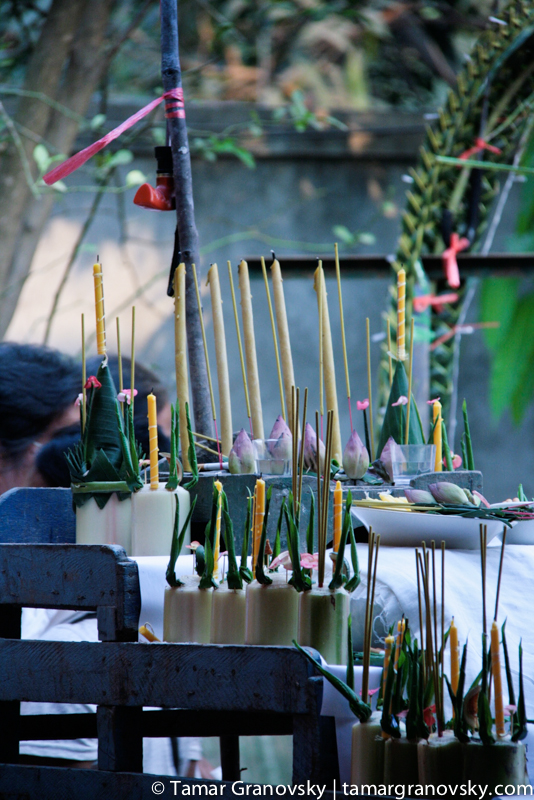
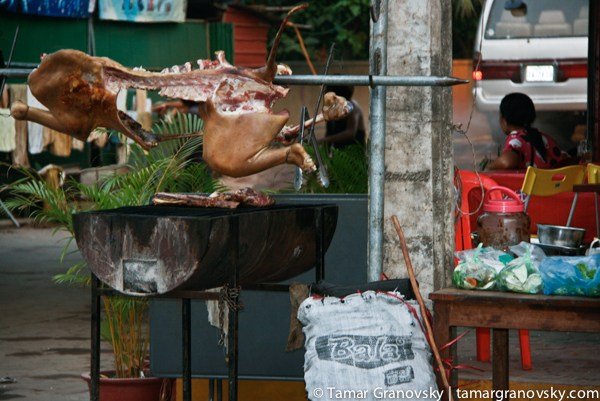
BBQ in Siem Reap

BBQ in Siem Reap

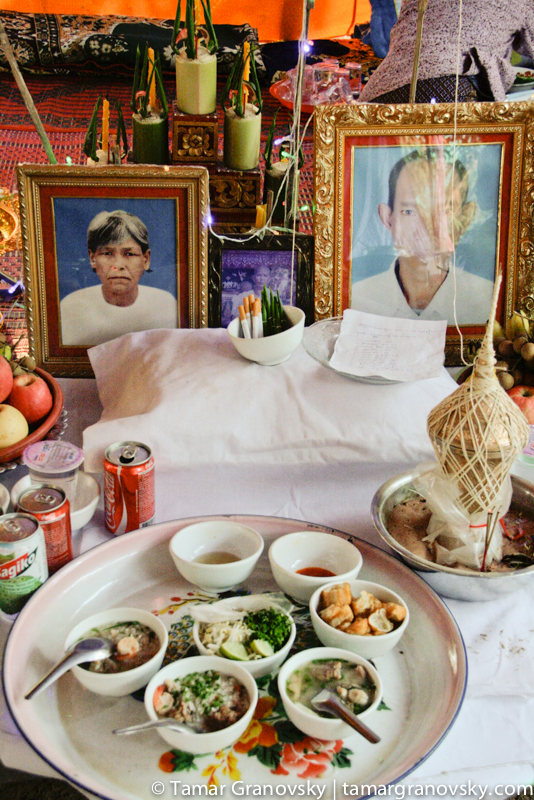
My third morning in Siem Reap I heard music in the distance which played all day long. I tried to see what was going on (my guesthouse hosts thought it was probably a wedding) but didn’t find much in the morning. However I stopped by in the late afternoon because clearly some type of event was taking place. I shyly took a couple of photos outside of a tent and then a young woman (30?) invited me to go in and take more. After a conversation with her I discovered that her uncle (age 55) had died and 100 days after the death there is a two-day supper celebration at the person’s home. This woman, Ekbanthida, introduced me to her mother, aunts, and cousins, and insisted that I continue to take photos. I gladly agreed. The celebration was in front of the uncle’s house. At the entrance a man was busy saying something on the microphone, and the tradition is that people donate money and get a little present in exchange. The money goes to the family/relatives of the deceased. I was invited to stay for supper and politely agreed to eat some soup but was actually not feeling well so I ate a bit, and then bowed out. Ekbanthida has her own business selling tourist trinkets at the market and said she is doing well for herself.

100 day celebration in hon

100 day celebration in honour of the dead

100 day celebration in honour of the dead

100 day celebration in honour of the dead

The following day I took a tuk tuk and did the outer reaches of Angkor Wat – areas that Steve and I did not make when we were there two years earlier. I went to Kbal Spean, Banteay Sreay, and Banteay Samre.

Kbal Spean

Kbal Spean

Banteay Srea

Banteay Srea

Banteay Samre

Banteay Samre

The last day in Siem Reap I cycled to Angkor Wat. I learned that the trick to avoiding the throngs of visitors is to go at breakfast time when all the bus tours have taken people back to their hotels for breakfast – this is after the tourists have seen their obligatory sunrise scene over Angkor Wat. I cycled to the wat, wandered for an hour and had the place almost completely to myself. As I left the crowds were beginning to arrive.

Kratie

Munney, one of the young men who worked at the guesthouse I stayed at, took me on a 7-hour long tour of the surrounding area of Kratie (he made more money this way – and I gave him a decent tip when I found out the guesthouse takes money from the $30 he/they charge; I treated him to lunch as well). I saw the fresh water Irrawaddy dolphins, a temple that was destroyed during the Khmer Rouge days and rebuilt in concrete rather than wood (the name has escaped me). I was taken to this ‘resort”– not the case at all but they call it that — where there are small white water rapids and is good for swimming (which I did not do). What really made this trip worthwhile was just driving through the countryside. It was a typical tour but Munney was SO sweet; he treated me to a fruit that is a relative to the coconut but has the texture of a lychee, is the size of a flat plum, and does not seem to have a pit. Best of all, this fruit is not too sweet and there is a lovely juice that you suck out first before eating the flesh. What the fruit is called is beyond me. I seemed to not write names down in my notebook…

Outside Kratie

Outside Kratie

Outside Kratie

Outside Kratie (the “resort”)

Outside Kratie

Outside Kratie

Munney promised to teach me how to drive a motor bike but 1.5 hours later after our return he was still napping. Instead, I walked through the town (full of colonial French-era architecture), spent time at the wet market, and met people on the street who gave me permission to photograph them. This was the beginning of my braving it and asking people directly if they would mind if I snapped some shots. I discovered that it was a nice way to start some conversations with the “locals.”

Kratie

Kratie

Kratie

Kratie

Kratie

Kratie

Kratie

Kratie

Kratie, I found, is a lively town (for being nowhere, really). It has a long riverfront with food stalls all along. The market is small but active. Too bad it seemed that Kratie was just a stop over for tourists who want to see the dolphins or are heading to/from Laos. I was tempted to stay another day and cycle on the island, Koh Trong, across the water from Kratie but the temperatures were very high as was the humidity and there was no expectation of it cooling down in the near future. I did not have energy for cycling. Unfortunately, in retrospect, I missed that opportunity since I was told that Koh Trong is extremely lush with vegetation and rice paddies, easy to cycle, and not developed – with only a few villages. So, in the end I was like all the other tourists who stay for one or two nights, only.

I was on my way from Cambodia to Laos, next.

Laos 2010 and 2012

2010

Luang Prabang

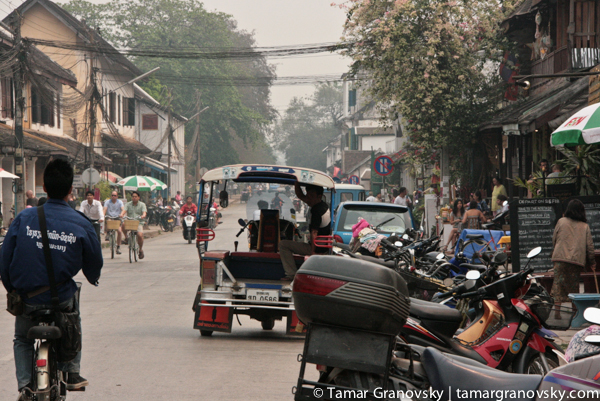
Luang Prabang, located on a peninsula, lies between the Nam Khan (nam means river and water in Lao) and the Mekong River. It is a charming, but touristy town and is a Heritage site filled with monks dressed in orange robes, golden wats (temples), and French influenced buildings from when the city was colonized. In March, the time of our visit, the city is surrounded by a smokey haze from slash and burn agriculture. Farmers burn brush off their land so that they can then plant rice and other crops at the start of May.

Steve and I walked the city our first day in Luang Prabang doing the tourist thing (taking photographs of monks, markets, and many other sites). We had two and a half days before our planned trip to Nong Kiau via slow boat up the Nam Ou.

A few observations:
— There is the smell of burning flesh (lots of meat grilling) in Luang Prabang
— Monks don’t stick around their respective wats for life. They come from poor or troubled families, typically, and leave after a few years to get married and go into the world again
— Our neighbour at our guest house in Luang Prabang bought a hard-boiled egg as part of her lunch, one day. She discovered after her first bite that eggs have three ratings: 1, 2, and 3. Number 1 (or 3?) has a little chicken in it, is commonly eaten by locals, and is considered the best egg to consume.

Monks

Monks

I steal the following from my friend LP’s walkabout in SE Asia:

Laos opened for tourism in 1989 and Luang Prabang was listed as a UNESCO World Heritage city in 1995. Although it’s definitely a stop on the tourist circuit, it hasn’t been scrubbed up too much, but has wonderful French colonial architecture with a sort of tropical touch to it. True, there are some chic chic restaurants with a lot of garden and sidewalk seating on the main street. But the city is still organized as villages around temples and there are SO many temples (wats) and monks! One of the first things you notice is all the orange from the robes. Most of them are young novice monks who come from rural areas, as the wats provide free education. There’s definitely a different energy to a place where so many people are meditating and praying.

Hazy Sisavangvong Rd. - the main drag

Hazy Sisavangvong Rd. – the Main Drag

Food:  We ate at: the night market food stalls where we found cheap and tasty food. One can find anything from noodle dishes to bbq pork and just about anything else the Lao cook; the Tamarind Restaurant (we discovered this resto through PBS’ and Gourmet Magazine’s “Diary of a Foodie”); and Cafe Lao (a hole in the wall that makes terrific Vietnamese pho, Chinese bread sticks, and cafe Lao for breakfast around the corner from our guesthouse). We also drank MANY fruit shakes. The local Starbucks equivalent, Joma Bakery, while highly rated in the guidebooks, held no appeal for us. We also walked to the river for a delicious Lao-style hot-pot at an open air restaurant overlooking the Mekong river, sharing the a picnic table with others and drinking Beer Lao.

Cafe Lao

Cafe Lao

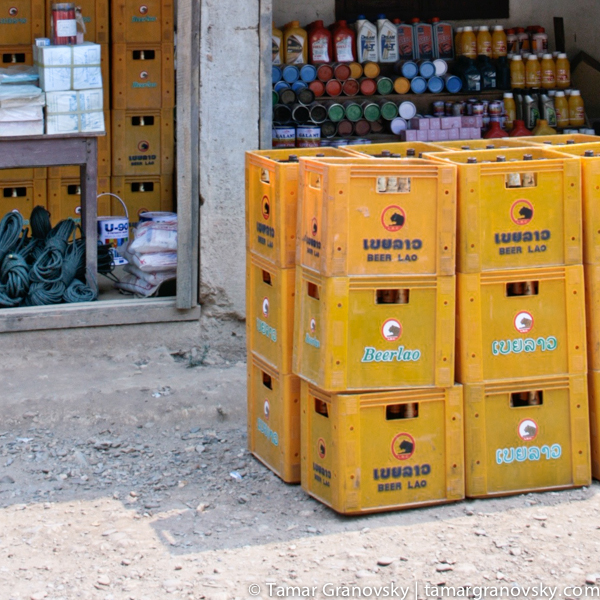
Beer Lao

Beer Lao

I have found that tourists who try to speak a word or two in the language of the country they visit are a real exception. It drives me crazy and gives tourists a bad name on tourism that more people do not attempt to do this. Both Steve and I have tried to learn basic vocabulary and phrases when we visit a place where English is not spoken. It is very easy to have conversations with almost anyone we have sat next to, done business with, etc., and is one of travelling’s pleasures. The people of Luang Prabang are lovely.

Cooking Lessons and the Morning  Market:  You want ant eggs? We got ’em. You want bee larvae, fresh and wriggling out of the honey comb? Got ya covered. Want a live, gasping fish in a half-inch of water, living out its last in a plastic bag? Nooooooo problem. Fresh lichen? Also not a problem. Steve and I went shopping at the local foods market with Madame Wandarra, our host and owner of the Vanvisa Guesthouse where we stayed. She showed us the ins and outs of buying local and in season vegetables at the morning wet market. That afternoon we cooked: ant egg soup; a dish called “soup” (really a cooked herb salad); stir fried wild morning glories and river spinach; kangaroo meat stir fried with lemon grass, garlic, chili peppers, mint, shallots, fish sauce, lime juice, and more!; sticky rice; coconut milk with apple meal and grass jelly. The kangaroo meat was brought home from Australia the previous week; Madame Wandarra was on vacation visiting a daughter who lives there.

Sukhothai, Market (Ant Eggs)

Ant Eggs

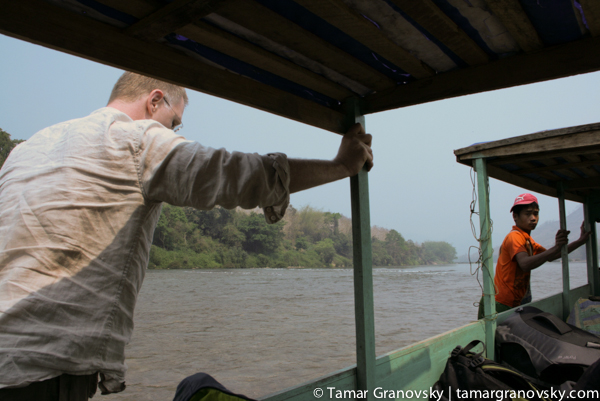
We took the slow boat up the Nam Ou toward Nong Kiau.  Because it was dry season the water was low with rocks jutting out and the captain navigated the river with great dexterity and knowledge of every rock position. At one point the men (not the dis-empowered women, sadly, myself included) got out to lift/push the boat past one particular dry spot. Shortly after, back on “the road” we hit a rock and the rudder broke. It was fixed by banging it with a stone (rock clearly beats steel).  Along the way children played in the water and waved and yelled to get our attention. This boat ride made it clear that people really live on the river. They fish, wash, swim, and travel in it. We entered Nong Kiau just before the sun went down.

Pushing the boat

Pushing the boat

Fixing the rudder

Fixing the rudder with Steve’s help

Nong Kiau ( and Ban Saphong) consists of a VERY small market, boat landing, and a few businesses and restaurants. It lies on the Nam Ou and is surrounded by blue-green limestone mountains that are climbed by those so inclined (no pun intended!). Both villages are laid back, though. Most visitors tend to leave the village during the day so it was a perfect place to spend our time watching the river from our private balconies. A large bridge between the river banks links the two villages: locals and falang (foreigners/Westerners) spend much time crossing from one side to the other. Nong Kiau is a small town where children ride bicycles everywhere. Girls carry their parasols to keep the sun off of them (and keep themselves pale???). Many houses dry river “seaweed.”

Seaweed, Nong Kiaow

Photo credit: The above image is from Travelfish.org’s photo gallery.

We stayed two nights at the fancy Nong Kiau Riverside Resort (with an ant colony below our bungalow that showed up in the bathroom at night along with a giant, fat, 4 inch spider). The view of the mountain across the water was spectacular and the food at the restaurant provided two of our best meals in Laos. The third night we stayed in the cheap, rustic, but lovely Sunrise Guesthouse on the other side of the river – also with an excellent restaurant attached to it and where we ate breakfasts, lunches and one supper. At each stay we had the end bungalow and did not see our neighbours. They were the perfect places to lay low and chill (or sweat/boil, as the case may be).

Phonsavan

We had an uneventful 8 hour local bus ride from Luang Prabang to Phonsavan where we were the only falang – everyone else was a local and seemed fascinated that we chose to take this mode of transportation. Bathroom stops were off the road and in the bushes – men run to one side and the woman to the other. It was kind of nice. The road up and over the mountains was bumpy, VERY windy, and with razor backs. Along the way we passed villages with thatched huts right on the side of the road. There were deep drops down the mountain. At every turn I expected us to hit a vehicle that the driver could not see coming from the other direction. Plastic bags are given to the locals in case anyone needed to vomit (and they did). I took Gravol; Steve is made of stern stuff and was fine.

Unlike the other quaint villages and towns we had experienced, Phonsavan seemed derelict. Except for the history (and what a history  – war ravaged and still full of unexploded ordinances/UXOs – cluster bombs – by which people are maimed by the hundreds, yearly) and the enigmatic Plain of Jars, there is no reason to go there. The town centre, though has an interesting exhibition at the local Mines Advisory Group (MAG) which carries out critical work deactivating the UXOs and educating and farmers, children, and those involved in the scrap metal trade about the risks of UXOs and mines and how to recognize a potential dangerous item, what to do in an emergency, and more.

Phonsavan is in the Xieng Khouang Province and was one of the most heavily bombed areas in Lao during the 1960s-1970s. Lao was the most heavily bombed country per capita in the world. The U.S. really did quite a number here which is nothing to be proud of.

Unfortunately, after a few short hours in Phonsavan our trip was aborted and we spent a hectic and whirlwind 45 hours travelling back to Boston — a week earlier than expected. After leaving Phonsavan to head home we made a quick stop-over in Nong Kai, Thailand, for a rabies shot. I had been bitten by a dog and all the guidebooks and the U.S embassy say to leave Laos if you need anything but very minor medical attention.

We tried the Phonsavan hospital first, despite the above advice, but they only had enough serum for a child; the hospital did not have the necessary immune globulin or antibiotics, either. We actually entered through the emergency room (as one does in North America) but quickly left to enter via the main entrance after we saw a family in a small room crying over a family member who had clearly just been hit by an exploded cluster bomb. My small bite no longer seemed emergency room worthy. Not in the least.

Phonsavan airstip - waiting for the first of many airplanes to take us back to Boston

Phonsavan airstip – waiting for the first of many airplanes to take us back to Boston

It was a shame to leave Lao early — the part of the trip we most looked forward to was this exploration around Phonsavan as well as a few days in Sam Nuea, the Hintang Archaeological Park , and Vieng Xai.

We had a fantastic time anyway, loved the people, the food, and the landscape. It is a very poor country — the poorest in the world – but the people are very, very sweet and do the most with what they have.

2012

Don Khong

Don Khong is a lovely and quiet island – the largest island in the Si Phan Don area. It is quiet and there are not too many tourists. It is also good place to learn how to ride a motorbike; once you leave the main drag in town (one dusty street long) the roads are open and sparsely populated with just a few small villages and temples around the island. All in all it is good place to walk, cycle, motor around, and rest and chill. Don Khong’s main agricultural growth is rice.

One day, while wandering on foot, I met some local people who were practicing music. I sat down to listen and they allowed me to take photos. It turns out they were to play for Laos during a boat festival in Cambodia. This is a yearly event toward the end of February – alternating between the two countries. The festival occurs along the Mekong.

Dong Khong

Dong Khong

Dong Khong

Dong Khong

Dong Khong

Dong Khong

Champasak and Tad Lo

I rode in my first sawngthaew (similar to pick-up truck with a top cover, benches on both sides and a third in the middle). I travelled from Don Khong with Steve (an Aussie) and Toru (from Japan) to spend a day and night in Champasak. We planned to cycle and see Wat Phou (pre-Angkor Wat). Two hours later we were at the ferry and crossed the Mekong to get to Champasak.

Champasak was clearly once a very lovely French colonial town where royalty once resided. The town is now run down but charming, nonetheless. Steve, Toru, and I took bikes (Toru’s chain came off every 10 minutes or so and my brakes did not work at all. Seriously.) and cycled the 8 km to Wat Phou.  We arrived at the VERY LARGE parking lot (which was clearly constructed to fit hundreds of cars). However, all that occupied it was a bus, 4 or 5 motorbikes, and our 3 bicycles!!

Champasak

Champasak

Champasak

Champasak

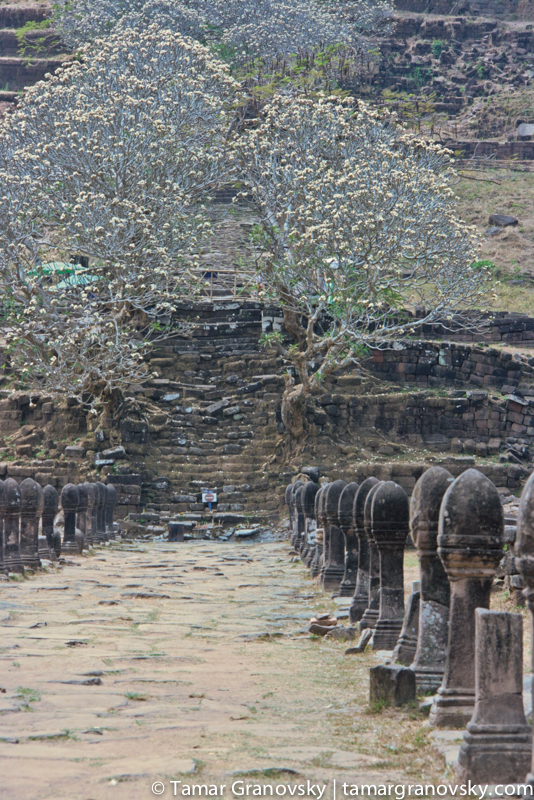
As I mentioned above, the main Wat Phou site predates the Angkor-period and was built in the 5th and 6th centuries; it was added onto in the 10th and 11th centuries. There is a ruined walkway that goes up the Phou Pasak mountain range. The site, so it is thought, was designed as a physical imitation of heaven and it was part of a larger city. The country is restoring this site which, while we were there, was not crowded. This provided us the opportunity to sit and contemplate the amazingly beautiful view of the valley.

What Phou - stairs toward the top

What Phou – stairs toward the top

Wat Phou - view from the top

Wat Phou – view from the top

What Phou - detail

What Phou – detail

The next morning, Steve, Toru, and I took another sawngthaew to Pakse (an hour’s drive). We treated Toru to breakfast at the market for his 25th birthday and then each went our separate ways. I grabbed a tuk tuk the 8 km to the “southern” bus station and made it there in time to take the local bus to Tad Lo. There were two seats available and I sat next to a young woman. Martina is from Norway (she is very beautiful– her dad is from Ethiopia and her mom is Norwegian) and we spent the next week or so travelling together). The aisle of the bus was filled with two sacks high of rice from the front to the back and to get to a seat you had to walk over these sacks. As we continued on our way we picked up more people and eventually the whole aisle was full with people one against the other sitting on the rice. Disembarking basically meant climbing over bodies.

Tad Lo is a fairly sleepy town filled with tourists; some passing by and others who stay for weeks or longer. Tad Lo is nestled in the Bolaven Plateau (famous for its coffee). In the centre of the village is a great waterfall where children jump 3 meters in the water to swim, play, and cool off. Others sit in the falls for hours with the water running over their bodies. With temperatures close to 40C the waterfalls are the best place to cool off. While I did exactly that, one day, there were young Thai tourists who took an interest in me and plopped themselves next to me in the water, one at a time, to have their photos taken with yours truly. Then there were three Lao girls who wanted to eat my mango that I left cooling in the water beside me; I let them eat it. They were surprised when I asked them, in Lao, if it was tasty. They were even more surprised when I asked them their names. After that they kept on giving me the thumbs up and giving me high-fives!!

Tad Lo -cooling off and washing in river

Tad Lo – Cooling Off and Washing in the River

In the hills outside of Tad Lo - coffee beans

In the Hills Outside of Tad Lo – Coffee Beans

Tad Lo - man picking coffee beans

Tad Lo – Man Picking Coffee Beans

One of our three days in Tad Lo we hiked on a day long trek with a guide. We stopped at a few local tribal villages, walked through a coffee plantation, and saw more waterfalls at the top of our mountain hike.

Mornings in Tad Lo –  5am: first the sound of the roosters, then cows, then the cicadas, then the children and geckos by 6… a lovely way to wake up. Around sundown, the cows (dozens and dozens of them) run into the field behind the hut Martina and I stayed in. They just run in, hang out, moo for 5 minutes, then run out.

Tad Lo - cows running amuck

Tad Lo – cows running amuck

Martina and I took a 9.5 hour bus ride to Thakhek and slept in a dingy guesthouse right by the bus station since we arrived there at 12:30am.  The following day we conducted some business and then hopped on another bus to Ban Nahin so that we could go to the Kong Lor Cave, 16km from that town.

Thakek bus station

Thakek bus station

We bumped into some friendly people who recommended their guesthouse in Ban Nahin which was perfect for us. The next day we went to the Kong Lor Cave. The main cavern reaches up to 90 meters wide and 100 meters high in places and the boat stopped along the way so that we could observe stalactites and other limestone formations as well as bats. In places the water is so shallow that we had to disembark while the two boatmen pushed the the boat to where they could put the motor back on and continue. The whole trip took about 3 hours and surprisingly there were not many boats with tourists – although there were many with men carrying many sacks of tobacco in and out of the cave. When we returned to the entry point they were loading a large truck with the tobacco.

Toward Kong Lor Cave

Toward Kong Lor Cave

Ban Nahin market

Ban Nahin market

Vientiane:

Martina and I took the bus from Ban Nahin to  the capital of Laos, Vientiane. Patrick (a New Zealander who teaches math at a private English high school in), picked us up at the bus station since we were couchsurfing with him. He took us  to a bar along the Mekong to watch the sun set then went to his favourite hang-out, Sticky Fingers (owned by two Australian women), for supper and more drinks. He ordered the Tom Yum martini for us which was fantastic!! I begged for the recipe and, being the stubborn person I am, continued asking all night. The co-owner, Marny, finally cracked and told one of the bartenders to give me the list of ingredients, only! He proceeded to give me the whole recipe and when she found out…..!!!!! Anyway, I have it and promised never to give it a to soul!!

The next morning Martina and I separated and Patrick dropped me off at Le Bananeton, a French bakery, where I ate two croissants, drank cafe au lait, and a freshly squeezed lemon juice. It was a sweet change from noodle soup which I had been eating regularly since the beginning of my 2012 Asia trip in January. I returned daily while in Vientiane.

When Steve and I were in Vientiane in 2010 the city was in the process of tearing the riverfront down (i.e., the land along the Mekong). There is now a walkway/promenade and park where the locals run, stroll, and exercise. The “old” riverfront drinking spots and cheap sidewalk restos disappeared and that, apparently, was part of what made the city quaint. Today, along the river, there is a greater wealth of hotels, bars, and restaurants. But it is still a slow-paced, lazy, “city” that is easily enjoyed.

During my stay in Vientiane I went to the wat Haw Phra Kaew  which now houses a museum and a small shop. I also visited the lovely Wat Sisaket that is the only wat not to have been destroyed during the Thai invasion in the early 1800s. It is the oldest surviving monastery and was built in 1818 in the Siamese style which could be why it was saved from the destruction. This wat was constructed with niches in the walls that are home to over 6000 Buddhas and was restored in the mid-1930s. That same afternoon I walked to the Thong Khan Kham Market.

Vientiane

Vientiane

Vientiane

Vientiane

Vientiane - Wat Sisaket

Vientiane – Wat Sisaket

On my final day in Vientiane I walked to the COPE centre. Like at MAG in Phonsvan, there was a display about the UXO problem in Lao PDR and the work undertaken by COPE and the PMRC to provide disability services for people affected by UXOs. Aside from that I meandered in and out of the streets, drank fresh lime, mango, and watermelon juices to cool off in the heat. That night I travelled by night train to Bangkok (please see my posting on Thailand).

Muang Sing

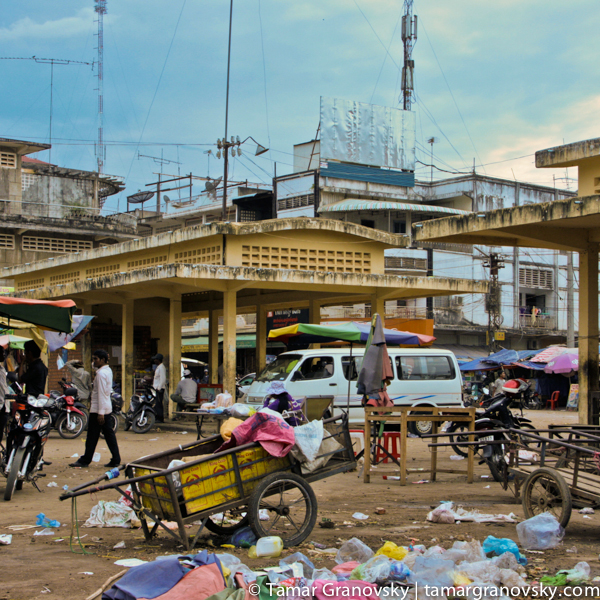
After a few weeks in Thailand I returned to the northeast of Laos as my entry way to China. I took advantage of my return and had a lay over in what was once a lazy village called Muang Sing. The Chinese have moved in and paved many of the dirt roads and started new construction in the village. They have their feet firmly planted in Muang SIng with a very obvious presence. Chinese tractors and trucks transport goods and are seen throughout the village. There are two border crossings between Laos and China; one crossing is for independent travellers between Boten and Mengla and the other is for Chinese and Lao people and used for local border trading only. Muang SIng is no longer the quaint, quiet place I was told it had been and that the guidebooks claim it is. And, unfortunately, there is garbage strewn everywhere.

Muang Sing

Muang Sing

Muang Sing - the outskirts

Muang Sing – the outskirts

Nonetheless, I spent a few days in the area. I took a tour with a British woman, Brenda, to tribal (Akha, Tai Dam, Yao, Tai Lo) villages. The women in these villages are persistent and try to sell their wares to tourists. Brenda and I considered cycling and walking but decided to give the local economy some business. We did, however, explore the area by bicycle the second day starting with the morning market opposite the bus station and then explored the quieter roads away from the main drag as well as visited a woman who makes noodles for the locals.

Muang Sing - Akha village

Muang Sing – Akha village

Muang Sing - Akha village

Muang Sing – Akha village

Muang Sing - Akha village

Muang Sing – Akha village

Muang Sing - Yao village

Muang Sing – Yao village

Muang Sing - Yao village

Muang Sing – Yao village

Vietnam 2009 and 2012

2009

I made my first visit to Vietnam in April 2009 when my friend LP generously invited me to join her on any part of her three-month trip to Cambodia, Laos, or Vietnam. I was able to take two weeks off and join her toward the end of her trip, into which we packed in as much as humanly possible.

The flight to Vietnam was long. I was lucky to travel in daylight from Boston all the way to the Incheon Airport, just outside of Seoul. It was a cloudless sky throughout the whole leg and as we flew over countries and continents I identified Ottawa, the Hudson Bay, the Arctic, Russia, and China.

Hanoi

I arrived in Hanoi, Vietnam, late at night but the next day, typical of Tamar Granovsky, my travel mode was “on” so I was able to hit the ground running. LP and I started the day with bun bo xao (beef noodle salad) and Vietnamese cafe sua da (iced drip coffee with condensed milk). We then went for more cafe sua da at a cafe on the fourth floor of a building that overlooks the Hoan Kiem Lake in the center of Hanoi as well as the circle of traffic and thousands of motor bikes.

Hanoi

Hanoi, Cafe by Hoan Kiem Lake

Hanoi traffic! Firstly, the noise is non-stop with vehicles honking; this is a sign that one motorist gives to the other to say that s/he is passing you, another motorist. How does a pedestrian cross the street? One walks across lanes of traffic where there are no lines (or rules), and as I said, seemingly thousands of motorbikes. Traffic lights appear to be a suggestion to help move traffic around in an orderly fashion – or so it seems. So… LP and I would grab each others’ arm or hand and together cross the street. The trick: first make eye contact with the closest or fastest motorist, keep moving,  and NEVER change your pace. The fact is they do not want to kill pedestrians. Just follow these rules and do not stop until you get to the other side of the street. Here are two videos  that demonstrate Vietnamese street traffic (take note of the pedestrians crossing in the first one. I crossed each of the intersections in these two cities multiple times.):

Hanoi Street Traffic and Ho Chi Minh City, Central Artery Street Traffic

Hanoi

Hanoi

Hanoi

Hanoi

We plodded through the Old Quarter (I had map in hand to orient myself yet relied heavily on LP’s experience of several days already spent acclimatizing herself to the city), rested and people-watched at cafes, and planned our trips to Sapa and Halong Bay.

At the end of the day, prior to supper of  grilled cha ca at the “famous” Cha Ca La Vong restaurant, we went for bia hoy (daily fresh kegged beer).  We sat on a roadside corner curb in small plastic chairs watching the rush hour traffic go by. A Japanese man, around 65, sat next to us and ordered dried fish smoked over a fire and then cut it up and put it in a small bowl with a hot dipping sauce. This gentleman insisted that we try it and as we ate he told us his story: he had left Japan forever, has been living in India for three years, and was in the middle of travelling southeast Asia for a few months. From his point of view Japan had become too expensive, years ago, with no job prospects for young people. He moved away from Japan twenty years earlier when he retired from his government job.
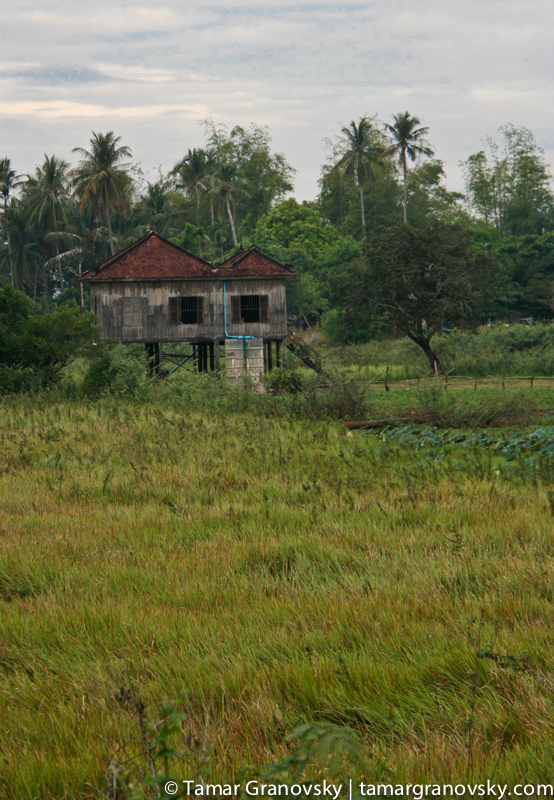
Breakfast in Hanoi

Breakfast in Hanoi

The second day we ate breakfast at the same little restaurant as the day before and ordered what seemed to be their specialty, bun bo xao – just as we had the prior morning.  Again we meandered the centre of Hanoi and this time snacked at a cafe along Hoan Kiam Lake where I discovered the world of Vietnamese shakes which began my love affair with both watermelon and mango shakes throughout my two weeks. That afternoon we had tickets for the water puppet theater. We ate dinner at the 69 Restaurant, recommended highly (at the time) by the Lonely Planet bible. This restaurant is situated in a century-old house in the Old Quarter and has a relaxing ambience.

Sapa and Surroundings

After an uneventful overnight train to Lao Cai and then a bus ride to Sapa we booked ourselves into the Family Guest House for a reasonable $8US. We then went to the local wet market for a pho and coffee breakfast, met up with a few Hmong women, and walked to the village of Cat Cat (3km south of Sapa). As we walked down the road the women told us that Cat Cat was created for tourists by the Vietnamese government about ten years earlier and, in order to enter, visitors must pay a nominal fee which goes to the government (not the villagers). So, to make money the village women put up stands to show off their handicrafts. The Hmong women, however, are not allowed to take their baskets into Cat Cat to sell their goods. Cat Cat and Sapa are surrounded by rice terraces and the walk through Cat Cat is via stone paths that wind around the village and up the mountain to the road leading back to Sapa.

Cat Cat

Cat Cat

Cat Cat

Cat Cat

The town of Sapa is situated in Northern Vietnam, is high in the mountains, and has an altitude over of 1600 meters. It is not a beautiful town but there are markets, opportunities for trekking, visiting local minority villages, and as I mentioned above is spectacularly landscaped with rice terraces. Among the many local tribal minorities are Red and Black Hmong, Dzao, Red Dao, Day, and Tay people.
When we returned to Sapa the women we walked with suggested that we go to the market for lunch. LP and I obliged and bought them their food: chicken pieces with bones and bowl of rice, with added hot water/broth. It was clear that all the Black Hmong women at the market were eating the same thing so we deduced that they eat this meal daily.

Sapa wet market

Sapa wet market

Sapa

Sapa

Sapa

Sapa

The Hmong women want sell their handicrafts to tourists. After lunch LP and I were surrounded by one, then two, then what seemed like dozens of women pressuring us to buy from them. The problem of course is that if you buy something from one woman the others appear jealous and urge you further (without relief) to buy from them, too. In fact, there were two women who attempted to sell me goods at lunch, unsuccessfully, and then followed me around town until I finally became outright rude and turned around and walked the other way — away from them. This was certainly not polite and I am embarrassed to admit to having done such a thing – but it worked. They were utterly taken aback and probably quite insulted (the latter was not my aim). And this is after I learned some Hmong phrases and words to help me out with communication in Sapa. Clearly that did not endear me to them or make them less relentless but I just couldn’t think of anything else to do.

But not everyone is like these two women. LP and I met two Black Hmong women who were genuinely curious about us. Hue and Zhoun, who were close friends with each other, walked with us through town asking questions about our lives. They offered us a homestay  (which we initially accepted but then had to forego because on our second day in Sapa they had a fight which we knew would have complicated a homestay). Here are two photos of me; the first is with Hue and the second is with Zhoun:


That afternoon and the next day we explored Sapa and environs and left in the evening back to Hanoi.

Halong Bay

Our trip back to Hanoi and then Cat Ba Island in Halong Bay was quick and efficient. We took a night train to Hanoi, a taxi to the bus station where we ate the worse bowl of pho EVER, and then took several buses and a ferry (each connection went like clockwork) to Cat Ba. We spent the day eating and relaxing before embarking on the obligatory Halong Bay tour. What else sends you to Cat Ba?

Cat Ba

Cat Ba

Cat Ba

Cat Ba

Four others joined us for our overnight boat tour: a German woman and her Eritrean friend living in Germany/Bulgaria as well as a French father and daughter who LP and I thought, by the way they were acting, were lovers until they actually told us otherwise!!!

This boat tour taught me an important lesson that was later confirmed: in Asia never assume the transportation you booked will be the same transportation for the whole trip or that it will be as efficient as my first few experiences, at the beginning of this trip in Vietnam. It is best to assume that there will be technical difficulties and if you are LUCKY you will be pointed to other transportation. On this particular trip we barely made it out of Cat Ba when the captain discovered that the rudder wasn’t working. We waited an hour for another boat without beds. We learned that a third boat would meet us later in the day with beds – although not quite enough for all of us. Somehow we arranged ourselves and made it work.

Halong Bay

Halong Bay

Halong Bay

Halong Bay

Via the tour we visited a fish farm, kayaked through limestone caves, swam, and went to a different and more tremendous limestone cave that was like being in Disneyland or a sci-fi movie set, all a-lit with colourful lamps.  We also stopped at Monkey Island, on our return to Cat Ba, for a little (what else?) monkey viewing and a walk to the top of a karst.

Hue and Hoi An

The evening we returned to Hanoi LP and I took an overnight  “double-decker” bus with reclining seats and a toilet, to the middle of the country – seated in the lap of luxury! We were on our way to Hoi An, and were fortunate to have to change buses in Hue which gave us a half-day of sightseeing, there. We started our morning with coffee and pain au chocolat at La Boulangerie Francaise, a business that teaches disadvantaged youth to become pastry chefs.

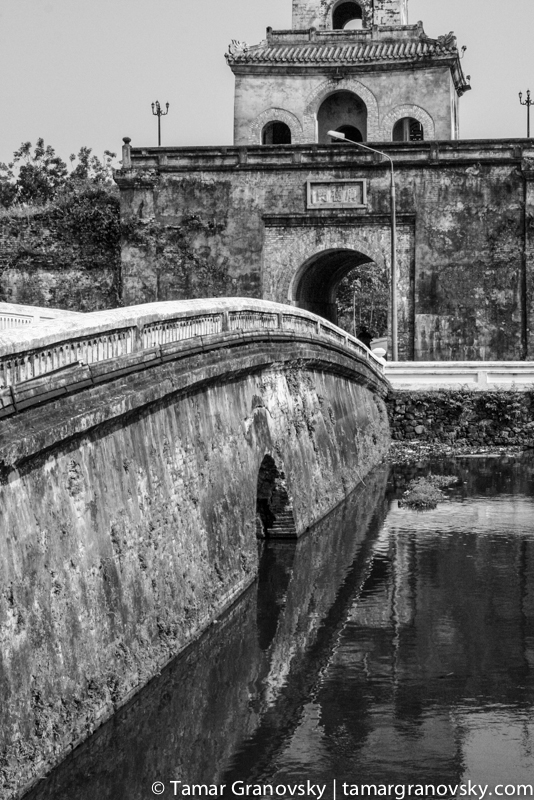
Hue lies on the banks of the Song Huong (Perfume) River.  Most of the historic sites are within the Citadel, built in 1804 by Emperor Gia Long (Nguyen Anh). He established Hue as the new capital and and began the Nguyen dynasty that united Vietnam for the first time in two centuries. The Nguyen dynasty ruled until 1945.

Hue, Imperial City

Hue, Imperial City

Hue, Imperial City

Hue, Imperial City

Hue, Imperial City

Hue, Imperial City

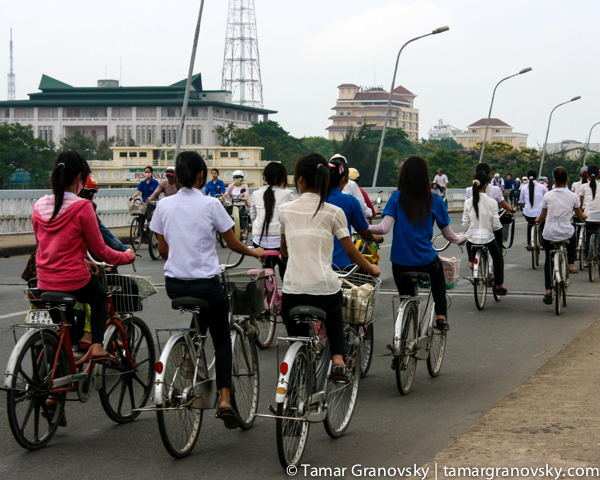
We spent most of the time in the Imperial Enclosure (within the citadel). After exploring this area we separated for a few hours each moving at her own pace around the city for photo ops, etc. The city seemed fairly empty (especially compared to the other places I had been to thus far). There were school children bicycling the streets in their uniforms and I was even knocked over by one boy while I was walking on the sidewalk.

Hue

Hue

We arrived in Hoi An in the late afternoon and found relatively fancy lodging (compared to the $8US lodging in Sapa and in Cat Ba) near Hoi An’s Old Quarter – Vinh Hung 2 Hotel.

Hoi An is a beautiful town; the historic section’s architecture is magnificent. Bougainvillea is everywhere and was in bloom and storefronts and the streets are alit with silk lanterns. The architecture is a mix of Vietnamese, Chinese, Japanese, as well as European styles; and I wandered that area a few times but also made sure that I explored the rest of Hoi An where it was clear that older homes are razed and rebuilt. I explored some newer sections of Hoi An, on my own,  before I met LP for lunch in the old part of town (the streets are closed to cars and thus fairly quiet despite tourists).

Hoi An

Hoi An

Hoi An

Hoi An

Hoi An

Hoi An

We ate lunch at Morning Glory Restaurant where we had: cau lau ; banh bao  and banh vac:  “white rose” rice flour dumplings; goi xoai xanh, green mango salad with shrimp and herbs; Vietnamese creme caramel ; and a banana shake with lime juice. Although the food we ate could be easily found in the markets and on the street this restaurant was a true find; we returned a second time for more of Morning Glory Restaurant’s subtle and delicious meals.

LP and I spent the next days apart and together. I explored markets and more of the new part of town, together we went to historic sites and we investigated the nearby country-side. And of course we ate and ate the excellent food to be had in Hoi An.

After a quick two weeks I parted ways with LP in Hoi An and took the bus to Danang which got me to the Hanoi airport and home. This was my first trip to Asia and the beginning of my love-affair with Southeast Asia which has made me fiercely determined to return.

2012

My return trip to SE Asia started with surviving the 25 hour travel to Ho Chi Minh City (HCMH) from Boston. The smell and sounds of Hanoi came right back to me the moment I stepped out of the airport. There is a smell of burned meat and the sound of motos and cars honking everywhere. I felt at home. The first thing I did when I arrived was wander the neighbourhood where I was staying and survived crossing the streets. My hotel, in District 1 at the Hotel Luan Vu is situated on a quiet lane (and therefore the hotel was quiet). District 1 is in the very centre of HCMH, is home to backpackers and is also both the central business and entertainment area. Many of the streets are narrow as are the houses whose architecture is a mix of colonial French and newer high rise buildings.  I got right into things and drank a bia 333 (beer 333) before heading off to bed. 

So began my 3.5 month adventure to Southeast Asia and China.

Ho Chi Minh CIty

Ho Chi Minh CIty

Since I was in travel mode, I woke up early and, not tired, went to the local market to eat a bowl of pho bo and drink cafe sua da (two in fact, one for me and one for Steve, as per my promise to him). The first day included a massage and booking a tour ticket of the Mekong Delta that would lead me to Cambodia via boat.

While taking care of business that first day I discovered that cashing traveller’s cheques in 2012 was not as easy as it had been when I travelled in S.E. Asia 2009 and 2010. I had to go to multiple banks before one finally let me cash the cheques. Clearly it will only get harder over the years.

Ho Chi Minh CIty

Ho Chi Minh CIty

Day two started off slowly. I walked around District 3  which is considered a part of the city centre. I took many photos as I strolled the streets then met Hanh who I was introduced to online through Couchsurfing. We had lunch together at Nam Loi  – a place I stumbled upon the night before and a restaurant that happened to be the place she took me to that day. After lunch we went to a smoke-filled coffee house for (what else?) cafe sua da. We talked about work and the role/expectations of men compared to women in Vietnam. We also discussed the fact that the country is communist and yet capitalism is creeping in, in a regimented way.

Ho Chi Minh CIty

Ho Chi Minh CIty

I continued my walk through District 3 and was stopped by 5 men drinking beer and eating in an empty lot. They invited me to join them, which i did. The bia 333 hit the spot given the heat. We tried to communicate with each other as best as we could and luckily I had my glossary of words and cheat sheet of phrases. Clinking glasses and cans to a happy new year continued for an hour. One man, whose wife joined us 15 minutes later, kept on telling me that I’m #1. I could only agree! Our conversation was very simple:  we exchanged names and ages. I learned that they had just finished their first day at work after time off because of Tet, the Vietnamese New year. As I got up to leave, after thanking them and saying goodbye, they told me I must be very careful with my camera and purse; it is not uncommon, it seems, to have purses snatched.

Ho Chi Minh City, Drinking with the Locals

Ho Chi Minh City, Drinking with the Locals

Ho Chi Minh CIty

Ho Chi Minh CIty

After showering back at the guesthouse, I went for a supper of salads, pork, and pigskin rolls as well as pig’s ear spring rolls. I also ate spicy ground beef wrapped in betel leaves at Hoang Yen buffet at the Zen mall.

The following day I went to a cooking lesson given by the Saigon Cooking Class. We began with a tour of the Ben Thanh market — the 2nd largest market in Asia – where we were introduced to various produce including about 10 different types of mint. We were informed that if we eat at a stall the first item listed on the board is usually the specialty of the stall (a very good tip!) and the dish to order since it will be the freshest. Ben Thanh Market caters to restaurants, wealthier Vietnamese, and tourists. Apparently it has the freshest meat, fish, vegetables, etc. After the tour and ingredient buying we proceeded to the school which is part of the Hoa Tuc resto. The cooking menu:

  • Fried Saigon spring roll with pork, carrot, mushroom and glass noodles. Traditional Nuoc Mam dipping sauce – Chảgiò Saigon
  • Fresh lotus stems salad with prawns, pork and Vietnamese herbs
  • with prawn cracker and a chili flower. Sweet and sour dressing – Gỏi Ngó sen
  • Sticky rice fritter stuffed with pork and carrot with soya sauce – Xôi nhân thịt chiên
  • Char-grilled beef wrapped in Betel leaves with lemongrass served with fresh rice noodles, rice paper and fresh leaves – Bò La Lot
  • Dessert

In the afternoon I visited the War Remnants Museum. It was a profound experience. The museum documents the “American War” – which it clearly was. The first floor covers all of the support against the war and includes, quite heavily, American resistance to the war, too. The second and third floors displayed photographs (including a large collection from the war correspondents), written histories of the war, statistics, and information about the use of the  herbicide agent orange dioxins – used as a defoliant. Today, two generations later, there are still birth defects linked to it. It was not an uncommon to see a person who had clearly been physically damaged by the war. The museum also has displays about the torture that went on during this time period –  including the torture of  women and children.  Finally, as an offering of hope, there is a display of photos of places throughout Vietnam that were destroyed by this war, and corresponding photographs of these places today. There has been an incredible amount of growth in this country which is inspiring. All in all, however, it is a very sad part of American history and kudos to the Vietnamese who welcome the Americans so openly, today.

Ho Chi Minh CIty, wet market

Ho Chi Minh CIty, Wet Market

Overall impressions: HCMC is a bustling city with people and motorbikes everywhere. I have never seen so many parking lots (xen gui) for the motorbikes (and many people hang out in them when they are not driving on the street). Men hang out drinking beer and coffee and playing games while women work (seemingly, more than men and confirmed by Hanh. LP and I noticed this when we were in Vietnam together in 2009). In fact, it seems that more women than men work in the public sector although it is the men who work as guards. Also, although there are propaganda posters they are not as evident as in other places I’ve been to in Vietnam. I do like this city but it has not gotten under my skin the way Hanoi, Hue, and Hoi An did.

The Mekong Delta

I spent two days of a three-day tour in the Mekong Delta before leaving Vietnam to Cambodia. As many as fifteen million people live in the Mekong Delta and most use the canals, rivulets, and rivers to survive, in one form or another. The delta, is the rice bowl of the country and yields enough rice to feed all of Vietnam and still have a surplus. Coconut palms and fruit orchards also are in abundance. We visited a coconut candy “factory” the size of the upper floor of my house (and I live in a modest-sized house), where everything is made by hand; spent time at a fruit orchard where a man-made pond was built from a bombed crater; and then spent the first night in My Tho. The following day we were taken to a brick factory and spent the night in Can Tho so that we could visit the floating market the next day. Three of us were then left in Chau Doc which was our gateway to Cambodia.

Mekong Delta, making coconut candy

Mekong Delta, Making Coconut Candy

Mekong Delta, drying fish

Mekong Delta, Drying Fish

Mekong Delta, floating market

Mekong Delta, Floating Market

The next time I am in Vietnam, if I do not go to Hanoi, I’d like to spend a few weeks, at the very least exploring the delta by bicycle.