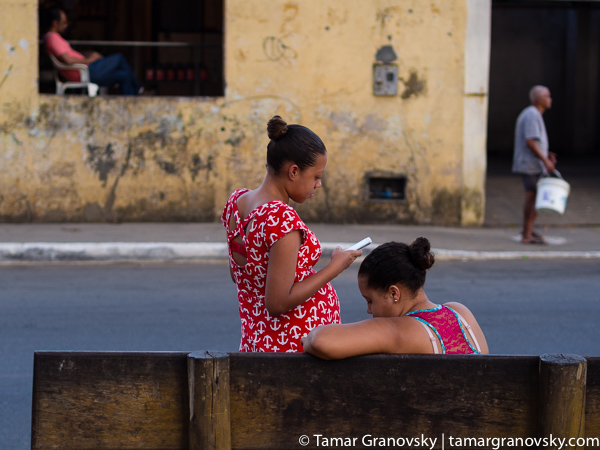
Author Archives: Tamar Granovsky

Unknown's avatar

About Tamar Granovsky

Tamar Granovsky began working in photography in Boston, Massachusetts. She is now based in Montreal, Quebec. In 2018 she was named LensCulture’s Top 50 Emerging Talents. She has been included in various juried group exhibitions including the 5th Biennial of Fine Art and Documentary Photography in Barcelona; Photography Now 2017, at the Center for Photography in Woodstock; and the 22nd Juried Show: Peter Urban Legacy Exhibition at the Griffin Museum. In 2020 her work appeared in Boston as part of 8th Edition Regional Photographers Showcase of The FENCE. Her first solo show was at Cambridge’s Multicultural Arts Center, in September / October 2019. Prior to her career as a photographer, Tamar had several solo and group exhibitions, in Canada, in mixed media sculpture installation and was a recipient of a Canada Council Exploration Program Grant. Her pursuit of photography follows a career in sculpture, with a 17-year hiatus from the arts, as an archivist. The reflective, evocative, and grounding properties of the medium feed Tamar’s love for photographic work.

Still in Brasil: A Slice of Bahia

Salvador, Brasil

Salvador, Brasil

I just finished a wonderful photography workshop in Bahia (a coastal region of central Brasil), with Ernesto Bazan. Ernesto is a terrific mentor and a man with the ability to explore new worlds, make connections with locals, and share his love of both a country and people with his students and friends.
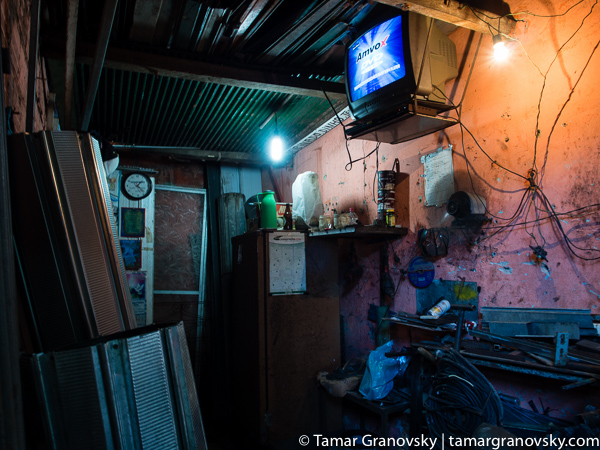
Stall at the Feira de Sao Joachim, Salvador, Brasil

Stall at the Feira de Sao Joachim, Salvador, Brasil

As happened with Cambodia, Vietnam, and parts of China, I have fallen in love with Bahia. For starters, people spend much of their day on the streets, eating, playing, catching up with friends, dancing, singing, and working. That is enough to win me over! At the risk of generalizing, people there are friendly, open to life, mostly live simply and honestly, and are a giving people who seem to expect nothing in return. Thanks to Ernesto, I was fortunate to encounter multiple small and intimate worlds. First in the midst of the hustle and bustle of the very lively city of Salvador de Bahia, then on the island of Itaparica (including the peaceful town of Itaparica itself, where Portuguese colonial buildings are abundant). And after, back on the mainland, in the lovely, historical town of Cachoeira (nestled in a river valley, Cachoeira once prospered with the sugar and tobacco industries,) and nearby fishing villages and quilombos – very small, extremely humble, hamlets founded by freed slaves. On both the island of Itaparica and the areas surrounding Cachoeira, I was struck by a world that moves to its own rhythm.
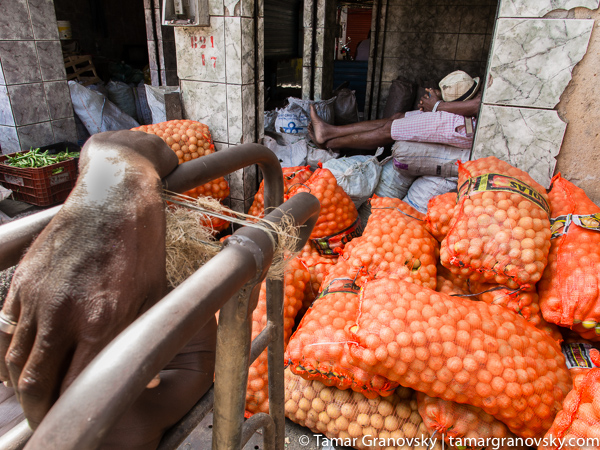
Feira de Sao Joachim, Salvador, Brasil
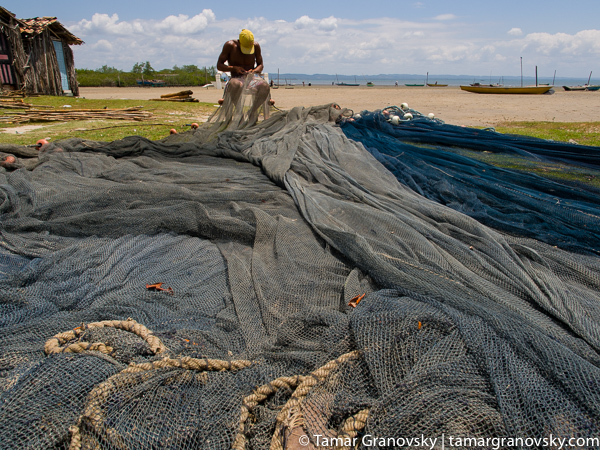
Feira de Sao Joachim, Salvador, Brasil

Fishing Village, Itaparica, Brasil

Baicu, Itaparica, Brasil

Most people I encountered were willing to share a moment of their day. Despite great poverty almost everywhere, I discovered that openness and an attempt at communication on my part would trigger a smile and a similar response. The people were warm, welcoming, and appeared undisturbed by us as we walked around with cameras. Throughout my short travels in Bahia it was clear that the people are not suspicious of strangers; rather, they are eager to talk to them. As Calvin Chen (who took the photography workshop with me and eight others) wrote on Facebook, “It’s been a lesson in humanity and humility. Imagine being in a completely foreign country, unable to speak their language… knocking on a stranger’s door… and not just be allowed to photograph, but to be welcomed into their lives. I’d call that nothing short of a miracle.”
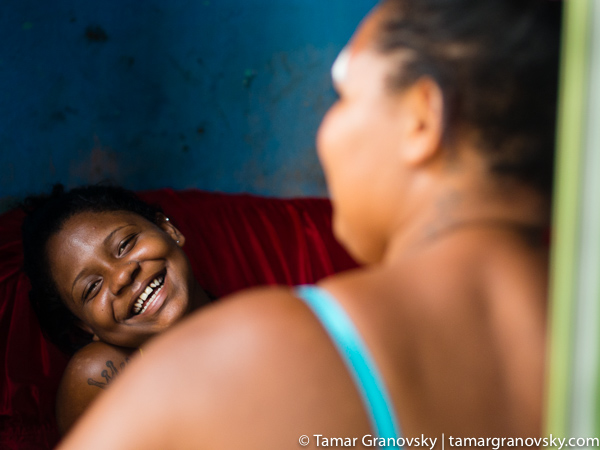
Fishing Village, Brasil

Coquiero, Brasil

Quilombo near Cachoeira, Brasil

Quilombo near Cachoeira, Brasil

Salvador, the oldest city in Brasil, was the first capital of the country, and is greatly influenced by African culture. In fact, throughout Bahia, Africa is present – from dance and carnival to food, music, and religion (The majority of African-heritage Brazilians were brought to Brasil beginning in the early 1500s by the Portuguese.  Brasil abolished the slave trade in 1888.).  Food-wise, coconut milk and dende (orange palm oil), and sweet tropical fruits such as mango, papaya, pineapple, caja, and pitanga, are ubiquitous. Many foods are sold on the streets including the delicious acarje which is a fried patty made of beans and sometimes okra, and dried shrimp which is served with a tomato salsa. It seemed that people congregate everywhere for drink, or food. I searched for the best moqueca (a fish stew) and ate as much mugunza as I could (a corn and coconut milk breakfast pudding).
Cachoeira, Brasil

Cachoeira, Brasil

Salvador is very large  – most tall buildings are actually not commercial spaces but apartment buildings. The downtown and historic centres are made up predominantly of colonial-era architecture which is mostly in disrepair.  It is a city with a population of over 2.5 million… edging toward the 3 million mark. The streets are crowded with people and cars (gridlock, although not as bad as in Sao Paulo, is an everyday reality).  Also like in Sao Paulo, motorcycles are everywhere. On the other hand, Itaparica and Cachoeira, are beautiful towns which have retained their colonial charm. Fishing villages appear sleepy but the people work hard, as do those who work in agriculture.
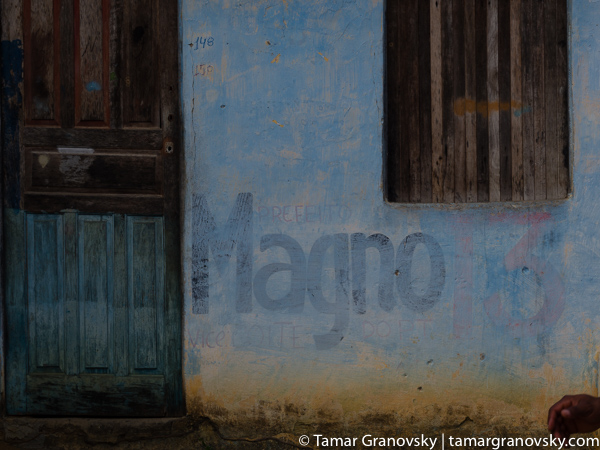
Fishing Village, Itaparica, Brasil

Baicu, Itaparica, Brasil

Brasil is not a European, North American, African, or East Asian country (although Bahia reminds me very much of Southeast Asia). Instead, it has a finger in each pot. It is a poor country that, over time, once amassed more than 40 million slaves (nearly 40% of its population). According to the article, Brazil and the Invention of Simulated Poverty,

Although the country is an important agricultural and industrial power, with the strongest economy in Latin America, poverty is widespread in Brazil. Despite recent improvements in income distribution, the issues of income inequality and social exclusion remain at the root of rural poverty. Brazil is a middle-income country and is rich in natural resources, but poverty levels and human development indicators in poor rural areas are comparable to those in the poorest countries of Latin America. In the country as a whole, about 35 per cent of the population lives in poverty, on less than two dollars a day. But in Brazil’s rural areas poverty affects about 51 per cent of the population.

Despite poverty and hardship, people in the countryside generally appeared to embrace life and live with satisfaction. As an outsider, it seemed to me that the Brazilians in Bahia choose to pull themselves out of their circumstances by trying to make the best of things and find as much joy as they can in the small pleasures of life. These pleasures are all too often ignored in the world I live in. I was struck by people who, at least on the surface, were thankful for the good in their lives, and celebrated accordingly.
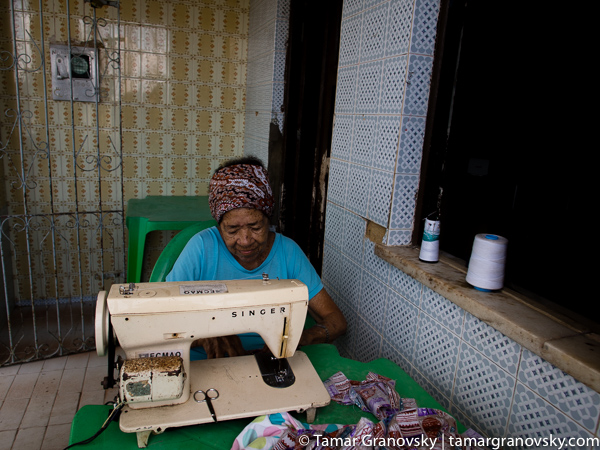
Fishing Village, Itaparica, Brasil

Baicu, Itaparica, Brasil

The bottom line is, Brasil has more than its share of issues: poverty, crime, poor education for most (just to name a few). It is a complex place with complex people – many of whom have burdensome lives. Yet, it is a beautiful country that is rich in its natural landscape, cultures, colours, food, and customs. I fell in love with Bahia, where the people, like those I’ve met in Southeast Asia and China, have great dignity, and reminded me that life is precious.
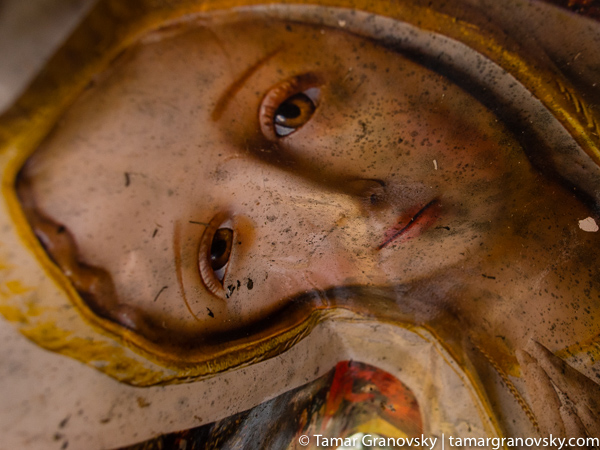
XXX, in an abandoned church in Itaparica, Brasil

In an abandoned church near the fishing village of Baicu, Itaparica, Brasil

Abandoned Jesuit Church outside of Rio de Igreja, Brasil

In an abandoned Jesuit Church near Rio de Igreja, Brasil
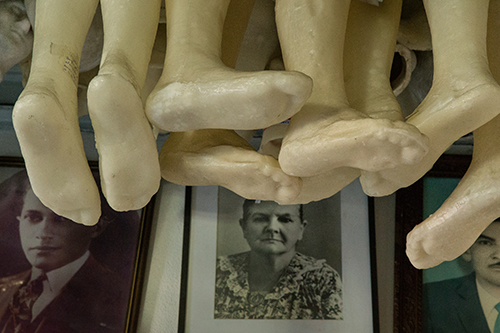
Igrecia de Bonhim, Salvador, Brasil

Above is a photograph taken in the Igreja de Nosso Senhor do Bonfim, Salvador, Brasil. This church is shaped by both Christian and native African religions. The patron saint, Oxalá, is known as the father of all the gods and goddesses in the Candomblé religion. Most wondrous to me was the room filled with photographs of loved ones, and personal belongings and votive offerings of  wax, wooden, and plaster replicas of body parts (hung from the ceiling) that were left behind by those who had prayed for cures. Salvador, Brasil. (photo courtesy of Mark Caceres)
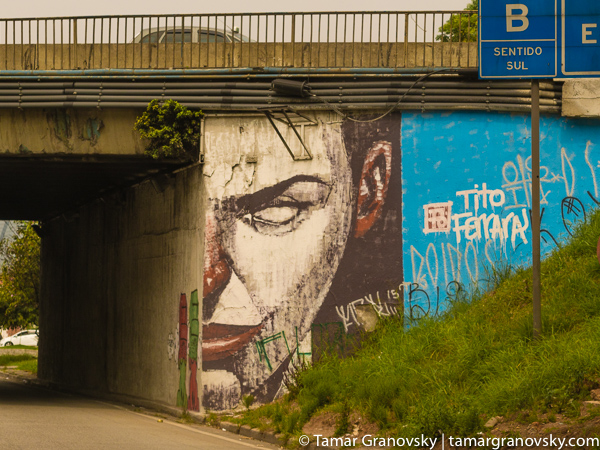
First Stop, Sao Paulo, Brasil

???, Sao Paulo, Brazil

Vinte e Tres de Maio Avenue,, Sao Paulo, Brazil

The Lonely Planet sums it up perfectly: “São Paulo is a monster. Enormous, intimidating and, at first glance at least, no great beauty.” People I know in Boston, who are originally from Brazil, warned me that I need to watch myself there at all times because I will clearly look like a foreigner and be an easy target for mugging. It is embarrassing to admit but… I initially wondered why I decided to stop here, on my way to Bahia province. I am staying with friends and am, as it turns out, glad I made this stop-over before heading east. They have graciously given me a small taste of this immense, sprawling, but likeable place.

Downtown, Sao Paulo, Brasil

Downtown, Sao Paulo, Brazil

Vila Madalena, Sao Paulo, Brazil

Vila Madalena, Sao Paulo, Brazil

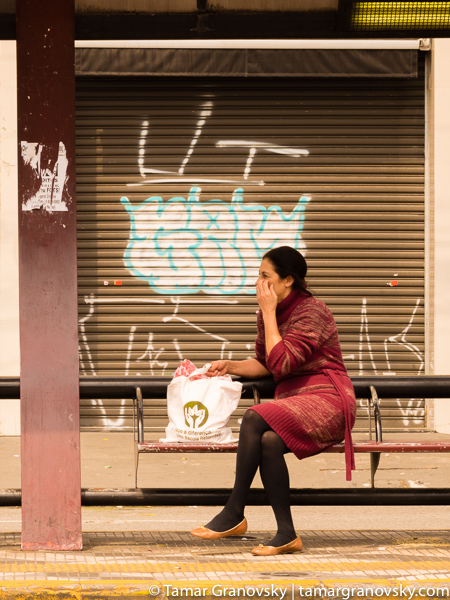
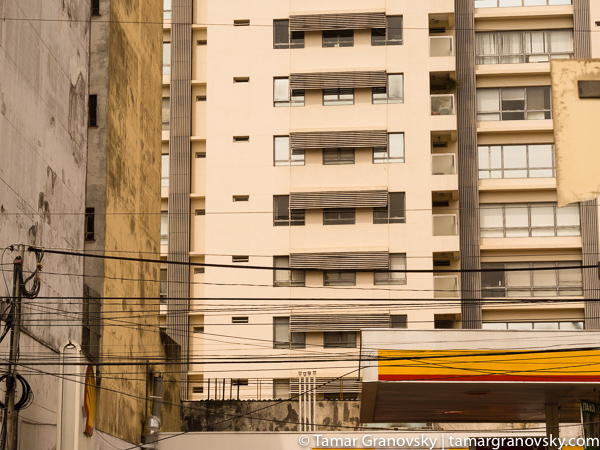
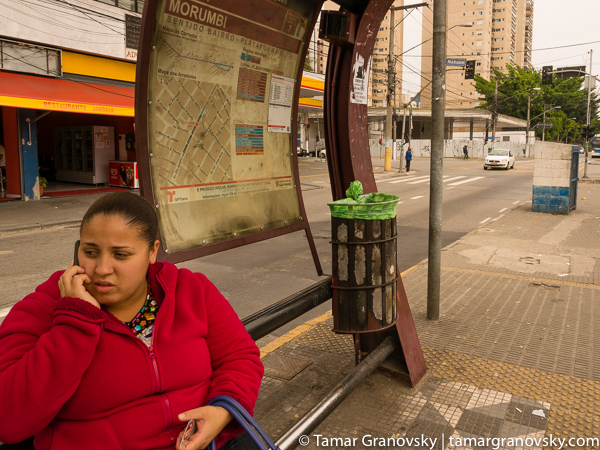
There are over twenty million people who live in the greater metropolitan area of Sao Paulo. The divide between the haves and the have-nots of this city is great; the inequality is blatant. Many people live on the street and the barbed wire industry clearly thrives. The government and private citizens do not invest in long-term programmes that will get people off the street and re-integrated into society; the payback probably seems to distant.

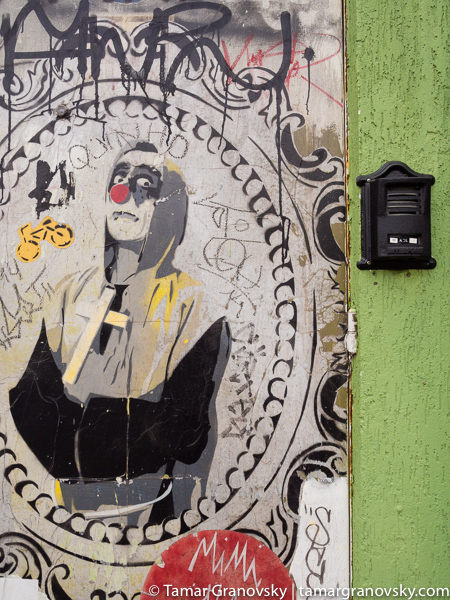
Beco do Batman (Batman's Alley), Sao Paulo, Brazil

Beco do Batman (Batman’s Alley), Sao Paulo, Brazil

Graffiti is everywhere (as it turns out, Sao Paulo is known for its graffiti artists). I have learned that, as the city developed there was little planning, zoning, and vision. It appears to be a hodgepodge of a metropolis. Vehicular traffic is nothing but one giant snarl. Despite all the concrete, however, lush green is everywhere and the songs of birds surround you all day long, giving a clear sense that rain forest cannot be far away. Trees line the streets and there are a number of large parks here. I have also discovered that Sao Paulo is a superb place for a “foodie” like me. There are hundreds of cafes, bistros, and good, cheap food joints. Since my time here is short I have barely scratched the surface and, uncharacteristically, I have hardly explored this city on foot. Nonetheless, it is clear to me that this is a sophisticated city full of culture, life, and history.

In just a few days, I warmed up to this city that, at first sight, appeared to be a grey, concrete jungle that I thought would hold no interest. Already I can say that Sao Paulo is a region that, had I more time, I might learn to appreciate.

Downtown, Sao Paulo, Brasil

Downtown, Sao Paulo, Brasil

Beco do Batman (Batman's Alley), Sao Paulo, Brazil

Vila Madalena, Sao Paulo, Brazil

Beco do Batman (Batman's Alley), Sao Paulo, Brazil

Vila Madalena, Sao Paulo, Brazil

???, Sao Paulo, Brazil

Santo Amaro Avenue Sao Paulo, Brazil

???, Sao Paulo, Brazil

Santa Amaro Avenue, Sao Paulo, Brazil

???, Sao Paulo, Brazil

Santa Amaro Avenue, Sao Paulo, Brazil

My Summer Vacation

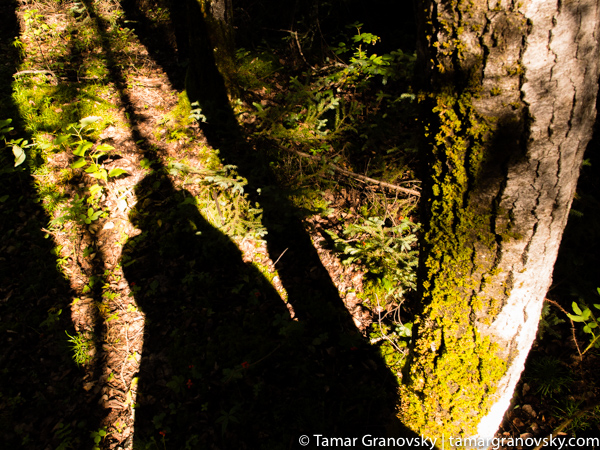
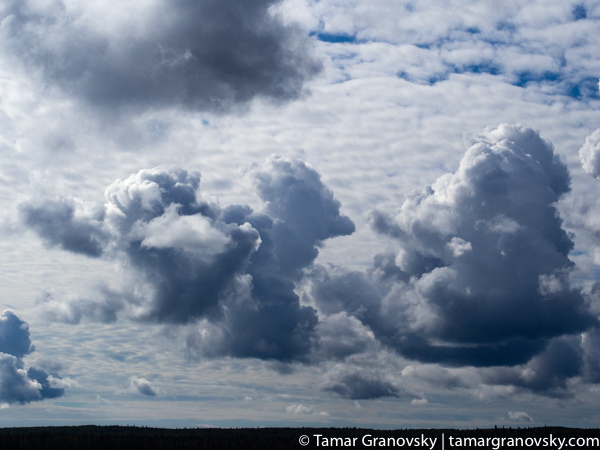
Prince Albert National Park, Saskatchewan, Canada

Prince Albert National Park, Saskatchewan, Canada

8 – 22 August, 2015  |   BOS – YUL – YOW – YXE – YOW – YUL – BOS

Cambridge, Massachusetts, United States

Cambridge, Massachusetts, United States

Montreal. Quebec, Canada

Montreal. Quebec, Canada

Ottawa, Ontario, Canada

Ottawa, Ontario, Canada

Steve in Waskesui, Saskatchewan, Canada

Steve in Waskesui, Saskatchewan, Canada

Prince Albert National Park, Saskatchewan, Canada

Prince Albert National Park, Saskatchewan, Canada

Prince Albert National Park, Saskatchewan, Canada

Prince Albert National Park, Saskatchewan, Canada

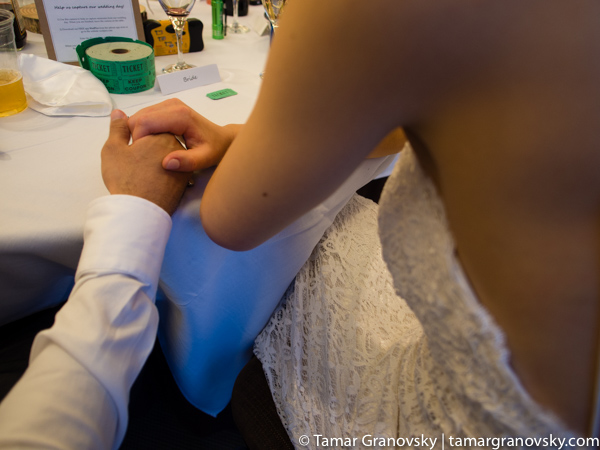
The Wedding, Saskatchewan, Canada

The Wedding, Saskatchewan, Canada

Montreal, Quebec, Canada

Montreal, Quebec, Canada

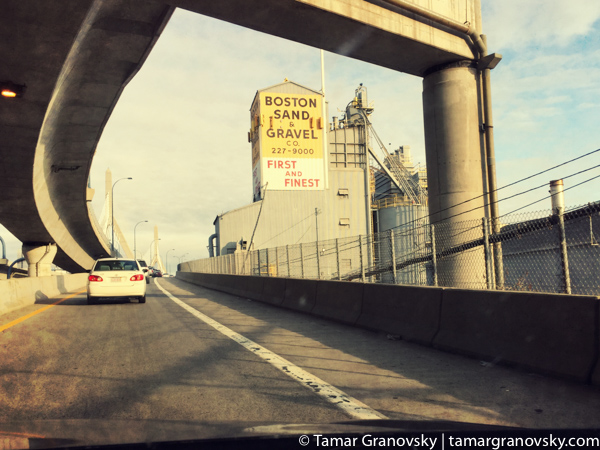
Boston, Massachusetts, United States

Boston, Massachusetts, United States


Out of Courtesy to the Other Passengers, We Ask that You Please Open Your Shades

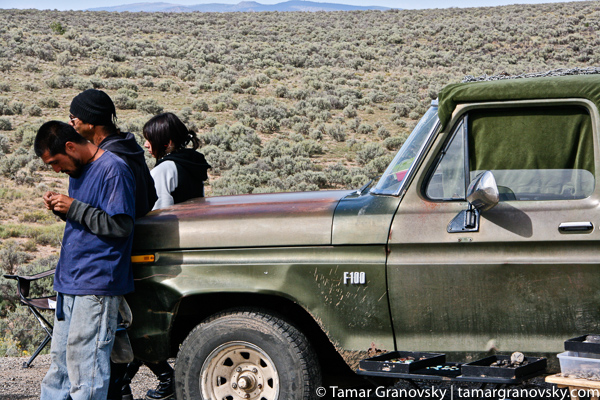
Near the Rio Grande, New Mexico, United States

Near the Rio Grande, New Mexico, United States

The other day I took the book, Landmark: The Fields of Landscape Photography by William A. Ewing, out of the library. In his preface the author says,

I am always amazed… how little interest is shown in what are now easily accessible landscapes – by train, plane, or car – places that most of our ancestors could never have dreamt of seeing first-hand. Recently I found my self looking down at the Northwest Passage from the comfort of a jumbo jet en route from Vancouver to London, arcing over the Pole. The scene was lit by moonlight and the landscape was vividly clear. Not much more than a hundred years ago, this passage was still elusive – one was known to exist, but not precisely where. Here we were floating right over it, feet up, drinks in hand. And yet my fellow passengers had their shades drawn, glued to the apparently far more alluring scenes on their screens in front of them. (I have noted how airlines routinely advertise travel by showing passengers sleeping blissfully – a promise of total sensory deprivation; traversing actual landscapes is seen as inconvenient, the less seen the better.)

How I wish planes did not have window shades, all together. People who prefer darkness could be given eye masks. The rest of us would happily look outside at the land- and cloud-scapes. There’s as much to see at 36,000 feet above ground as there is on terra firma. As for me, I just want to watch out the window as I cross the earth.

The Rio Grande, New Mexico, United States

The Rio Grande, New Mexico, United States

I have never considered landscape photography something I “do” nor a genre in which I am seriously interested. Yet, as I review my images of the last few years, I notice that I have taken my fair share of landscape photographs. Apparently, not only do I like “being” in the natural world, I like taking pictures of it from time to time. Looking through Ewing’s book, and other photography books I have, it is evident that the groundwork for landscape photography is as varied as the world itself and that imagery of landscape includes all forms of the man-made. Sometimes, my photographs are devoid of human figures but they are, nonetheless, often pregnant with human presence.

Kampot, Bokor Hill, Cambodia

Kampot, Bokor Hill, Cambodia

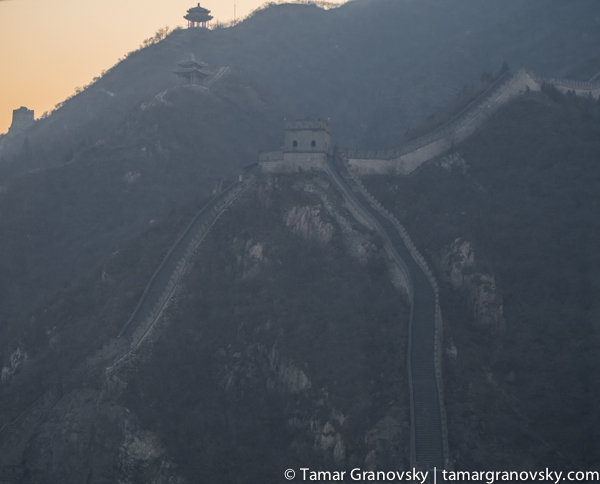
The Great Wall, China

The Great Wall, China

Route 1, Road to Vik, Iceland

Route 1, Road to Vik, Iceland

Kunming, Yunnan Province, China

Kunming, Yunnan Province, China

Salton Sea, California, United States

Salton Sea, California, United States

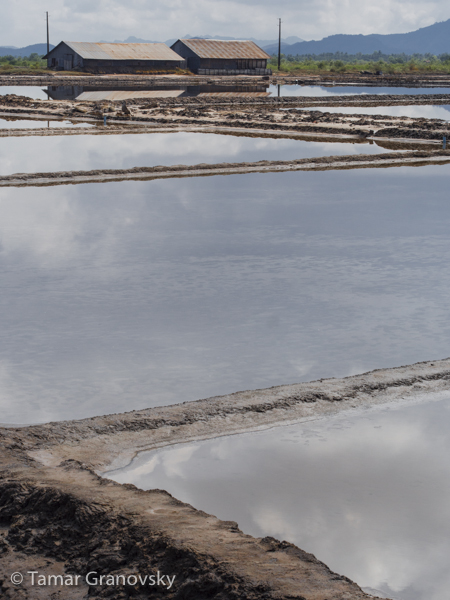
Salt Flats, Kampot, Cambodia

Salt Flats, Kampot, Cambodia


The Lovely Everyday

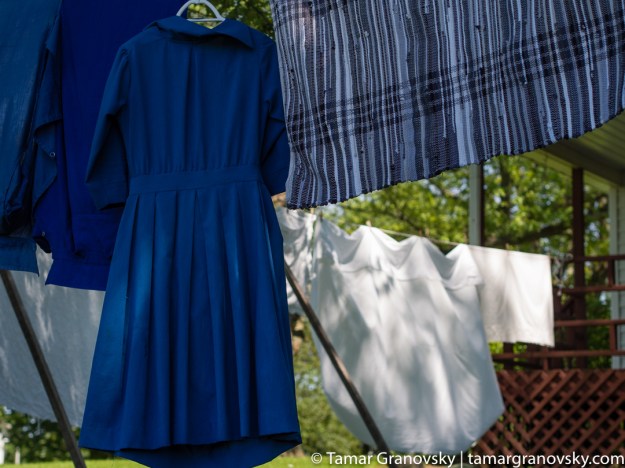
Laundry, Geauga County, Ohio

Geauga County, Ohio

I am voyeur and I LOVE watching people go about their daily business. At night, I adore looking through open windows into people’s homes. I feel as if I am there with them (at least, almost). And this is why I keep my own shades down!

Perhaps this is why i am so taken by photography; photography is, after all, a voyeuristic medium. I like to look and am terribly curious. The origin of “voyeur” comes from the french, VOIR: to see. In fact, I have found myself looking so hard at both people and the environment around me that sometime I imagine others think I am staring. A spy or stalker I am not. If I were to be allowed in – into a home, into a soul – I would go. I want to open myself up so that I may dig deep inside, look, see, understand, and feel.

Charles Harbutt wrote in Travelog, “I became a photographer because photographers did have to be wherever they wanted to take pictures… And because there was some connection, inherent in the nature of the medium, between that place and its picture. And the viewers, despite any pitfalls or roadblocks put in their way, could still to some extent be there too. This has always struck me as somewhat amazing. That magic little black box enables one to leave, in a small way and for a short while, one’s own time and space and to occupy, maybe only superficially, another time and space: a then and there that really existed as well as a here and now. Photographs are both real images and imaged realities.”

Laundry, Geauga County, Ohio

Geauga County, Ohio

Photographs permit us to “get in.” As a photographer I get a glimpse of the world as it presents itself. I allow my surroundings to wash over me; I stay as open and observant as I can – feeling with my heart and responding with my eye to the camera. I have only just begun to internalize this and thus believe that I am at a critical transition point. I concentrate on that which truly grabs me. This may seem obvious but really only comes to me when I do not give my attention to it. It is not easily put into practise; and it is a complete liberation. To have figured out that some of my “stronger” images (and the subjects which attract me), are of ordinary, everyday life, is a complete revelation. The details of the mundane call to me. They always have, in fact. I used to want to run away from it. Now I need to get close to the places and way people live.


Street Life: Living Outside the Box

Xingping, Guangxi Province, China

Xingping, Guangxi Province, China

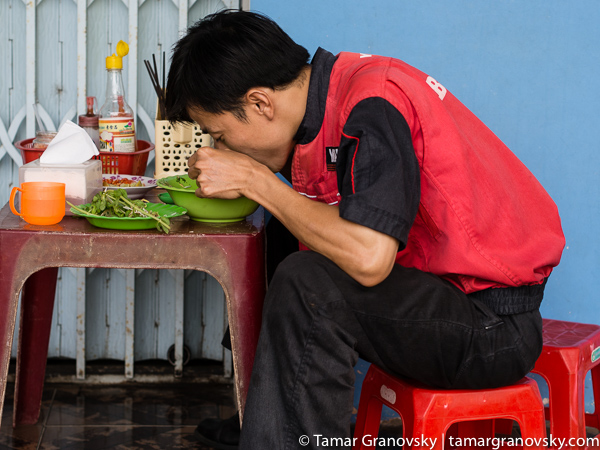
While watching a video clip from Cuba Feliz (a film of Cuban street musician Miguel Del Morales – known as El Gallo > The Rooster in English) I had a revelation. One of the reasons I absolutely adore countries such as Vietnam and Cambodia (or cities like Paris, Florence and, Montreal) is that people there live in the streets – almost literally. They spend much of their time in public spaces rather than inside their homes. They socialize, play, walk, eat, and drink together on the streets despite the hubbub of automobiles, bicycles, scooters, and other vehicles. The street is where it all happens!

Kunming, Yunnan Province, China

Kunming, Yunnan Province, China

Paris, France

Paris, France

In places like Vietnam and Cambodia, not only are dwelling spaces small, but the kitchens are particularly cramped and often poorly equipped. Additionally, everyday meals are inexpensive and readily available at any number of street vendors, cafes, and small semi-permanent food stalls. So, even though there are those who do have modern conveniences like stove-tops, washing machines, or televisions the tradition remains to gather with friends outside of the home. Western cities like Paris and Florence do not have the same street culture as Southeast Asia but, there too, just about everyone walks along the crowded streets, shops at outdoor markets, and rests or plays in public parks. Food vendors/hawkers are not as a common a sight there but open-air cafes, trattoria, tapas bars, etc. definitely are.

Chau Doc, Mekong Delta, Vietnam

Chau Doc, Mekong Delta, Vietnam

Chau Doc, Mekong Delta, Vietnam

Chau Doc, Mekong Delta, Vietnam

Streets are meant for people. This is eroding worldwide because of the ubiquitous car and streets that are getting wider to make room for these automobiles. Because of car traffic one rarely sees, in North American cities for example, children playing ball hockey, or hide and seek, jumping rope, or simply making up their own games on the street. Stoop or porch sitting is not a common site either. Spending time on our streets is no longer integrated into our daily lives and is rapidly becoming a thing of the past – so it seems to me. The social lives of city dwellers appear to be increasingly isolated. If I did not live directly next door to a community garden and park, or sit on the stoop of my house (which is facing our dead-end street), I would not know the people in my neighbourhood or have impromptu chats with complete strangers who walk by.

My neighbourhood is changing for the better. When I moved here 13 years ago there wasn’t much to do nearby. Today, there are a growing number of shops, restaurants, cultural centres, and parks which are within walking distance. There are even two farmers’ markets. The quality of life is better, street life is beginning to thrive, and there is little need to drive because this community has almost everything I need within walking distance or on the subway lines right nearby. It is a livable locale where neighbours run into each other on the street as they go about their daily business.

As I have mentioned multiple times in this blog, I am from Montreal. Despite it being a Northern city known for its very cold winters it somehow balances the frigid months with a French/Southern European mentality. Street life is substantial during the summer; people sit on their front stoops or balconies and are thus able to see and catch up with their neighbours. They eat in parks with omnipresent wine or beer so that public spaces become an extension of the private. Life, overall, takes to the streets and parks; the city pulsates with energy and activity.

Atwater Market, Montreal, Quebec, Canada

Atwater Market, Montreal, Quebec, Canada

 Vibrant streets call to me. Who wants to be cooped up indoors when there’s food, drink, fun, and people to meet or just watch? Healthy street culture abounds with respect for the other. In many quarters in Montreal or Paris, for instance, children come home from school and almost immediately go outdoors, on their own or with their parents, to play on the streets or on the playgrounds. In Italy, piazzas (squares) are the main gathering areas. During La Passeggiata, which is the time before dinner (around 5:30-8:30), people stroll about the central piazza or main drag of a town (in fact, La Passeggiata comes from the verb ‘to walk’).  This traditional daily ritual is more common in small towns but can also be seen in cities; it is a way for Italians to connect. During passeggiata many people hang-out in the piazzas or surrounding outdoor bars to have an aperitivo. It is a time when you see a mix of age and class. Children flock together yet are within shouting distance of their parents. Likewise, many Asian countries’ city and town residents still work within a block or two of their homes (often, in fact, the front of the home is the place of business). Thus, city blocks are like little villages.

Street life gives one the opportunity for chance encounters. Life outside our boxes and on the street is like being in an outdoor living room where everyone congregates and the community is the pulse of it all. The bottom line, it is good for the heart and soul.

Dancing in a Park, Beijing, China

Dancing in a Park, Beijing, China

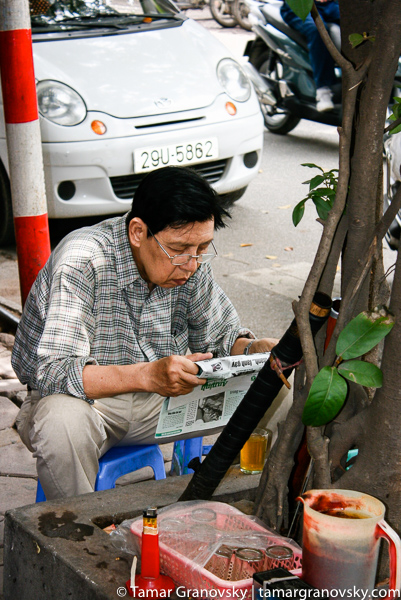
Hanoi, Vietnam

Hanoi, Vietnam

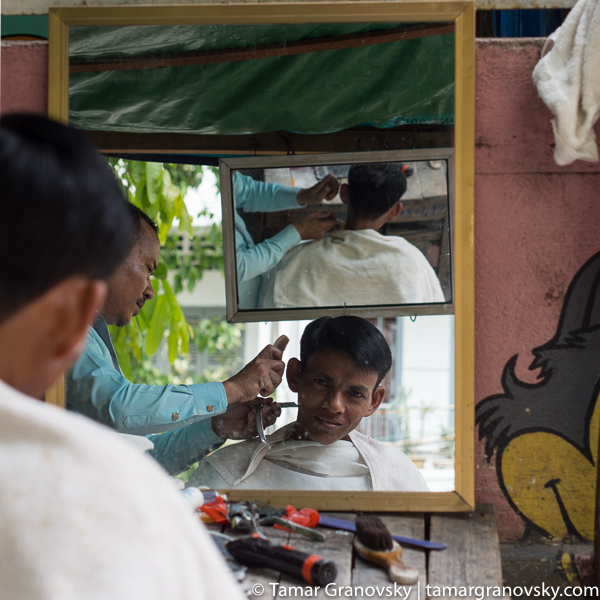
Open Street Barber, Phnom Penh, Cambodia

Open Street Barber Stall, Phnom Penh, Cambodia

Cahors, France

Cahors, France

Mexico City, Mexico

Mexico City, Mexico

Apologies for no photos of the streets of Italy. Our camera was lost…