Soursdei Chnam Thmei (“Happy New Year”) to You: Cambodia April 2014

Phnom Phenh

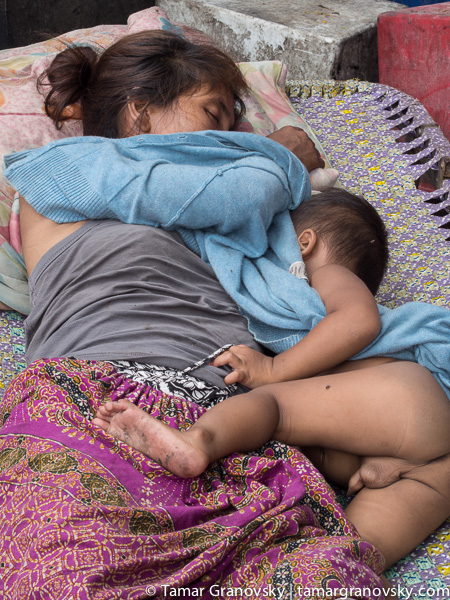
Phnom Phenh, Mother and Son

This year I travelled through Phnom Penh, Koh Kong, Kampot, and Kampong Cham, Cambodia during the festive three-day Cambodian New Year (Chaul Chnam Thmei). As with many cultures around the world, holiday preparations begin a few days in advance. Family and friends visit and wish each other good fortune and health. Every household, restaurant, and store has an offering table covered with fruit, drinks, flowers, snacks, and incense. Traditionally, on the eve of the holiday, people eat lavish meals and burn incense and candles to welcome a new god and say farewell to the old god. Families take food to monks on the first day, children give money or clothing to their parents on the second day, and everyone takes rice offerings to their respective temples. On the third day and night, it is common to go to the temple to douse and bathe Buddha statues and each other; gifts,along with the fragrant water, are also offered to these Buddhas. Many Khmer return to their home provinces to celebrate and it is common for family and friends to gather and play traditional Khmer games. 

Kampot Countryside

Kampot Countryside

I found that Cambodia was fairly tranquil during this period, since most businesses and markets are closed for nearly a week (and sometimes even beyond). On my way to Kampot I experienced first-hand, from the front seat I shared with a driver and two other passengers, the phenomenon of jam-packed vans full of homeward-bound travellers who are squashed into the seats, riding on the roof, or literally hanging out the open back doors.

Cambodia’s landscape is beautiful, there are many magnificent temples and monuments to visit, and the people are warm and welcoming but it is still a country in the throes of development and recovery from the Khmer Rouge atrocities of the 1970s to 1990s (1999 is officially considered the end of the Khmer Rouge despite the fact that Pol Pot ruled and committed genocide in his country from 1975-1979). In fact, Cambodia is one of the poorest countries in the world which means life is difficult for the majority of Khmer. It can be emotionally difficult for a traveller to witness the level of poverty in this country. Yet tourism and the many foreign expats who live and work here give the country a much-needed boost.

Phnom Phenh

Phnom Phenh

I believe that the money a tourist spends is very important at the individual community level in Cambodia. I can only hope that international aid allocates funding to local NGOs to help empower them to raise their own money and  become self-sufficient. This seems to be the best way to help struggling and impoverished countries dig their way out from under. Sustainability should be the goal of any NGO, but apparently this is not always the case at the local level, where it counts. But there is an alternative – the social enterprise.  According to the Social Enterprise Alliance:

Three characteristics distinguish a social enterprise from other types of businesses, nonprofits and government agencies:

  • It directly addresses an intractable social need and serves the common good, either through its products and services or through the number of disadvantaged people it employs.
  • Its commercial activity is a strong revenue driver, whether a significant earned income stream within a nonprofit’s mixed revenue portfolio, or a for profit enterprise.
  • The common good is its primary purpose, literally “baked into” the organization’s DNA, and trumping all others.

One example of a social enterprise that you can find in a number of places including the Phnom Penh and Siem Reap airports, is the long-established Artisans d’Angkor. Initially, it was was created with the assistance of the European Union. Its goal is to revive and promote into Cambodian craft by providing training to young people thereby improving their lives.

With all this said….

Phnom Penh:

Phnom Phenh

Phnom Phenh

More than two years have passed since I was last Phnom Penh (PP) and it appears that little there has changed. Yes, prices have gone up, so I spent $5 more for the guesthouse I stayed in last time, and perhaps $0.50 -$1.00 more for other things. Wifi is everywhere – no more internet cafe for me. There are new high-rises and corporate buildings and more roads are paved. Despite the many motor bikes, tuk tuks, and bicycles on the streets, cars and trucks are now ubiquitous; there was actually traffic congestion when I left for Koh Kong at 8 a.m. and when I returned to PP after the holiday, midday traffic throughout the city was almost at a standstill.

Phnom Penh, Royal Palace

Phnom Penh, Royal Palace

Despite being the capital city of Cambodia, PP has a frontier feel to it – it has a sense of both old and new. The streets are numbered but not necessarily in order, despite the fact that its roads are arranged predominantly in a grid system. Some buildings on streets lack numbers and others have the same number just half a block away (street names/numbers tend to jump about). PP is grungy in some areas, with just a few unpaved roads. Garbage abounds (in fact there is more on the street than two years ago; apparently, garbage pick-up is now the responsibility of a private company and they are not doing a very good job). The smaller markets are dark, maze-like, and teeming with life. Throngs of people sit on chairs, tables, or on the ground, and sell their produce at markets like the wet market near my hotel. The food literally spills onto the street and buyers and insects alike swarm the stalls. And yet… there are stylish hotels, shops, and restos just around the corner from these grittier areas. Corruption is still rampant in Cambodia as I’ve written in my post on Phnom Penh in 2012. Fortunately, there are many organisations trying to help eliminate this. 

Phnom Phenh

Phnom Phenh

I spent one day with a friend of a friend in PP; she picked me up and gave me a private tour of the city, taking me to some places I had seen before and many others (like Diamond Island, which appeared deserted but, I was told, livens up at night), I had not seen nor would have, had I not met her.

Phnom Phenh

Phnom Phenh

PP is rougher around the edges than neighbouring countries/cities. Vietnam, Laos, China, and elsewhere have also all experienced ugly histories in the recent past. Yet here, like in Laos and Vietnam, people are resolute and are attempting to bounce back. Almost everyone is friendly. They try to eke out their living, although life is not easy. PP is a diamond in the rough. Compared to two years ago, there appears to now be an even richer appreciation, among the people of this city, of its cultural heritage. There is the contemporary dance theatre – New Cambodian Artists – that incorporates traditional aspects into its performances, and Java Arts, which exhibits contemporary visual arts. Theirs is a strong and complex culture that has experienced so much sorrow and yet has survived. It seems that PP is in transition (and has been for a number of years). I enjoy PP very much because it is so multifaceted; the people, for the most part, are amiable and admirable. The city has an intense pace yet is completely laid-back, is both contemporary and traditional, rural and urban.

Accommodation:

  • Fancy Guesthouse: This is a family-run and very simple guesthouse that is central to everything. The price has gone up since I last stayed here but I blame myself for writing such a rave review on Trip Advisor!
  • Tattoo Guesthouse: This is another family-run, simple guesthouse, for those on a tight budget. It is farther away from the centre of town but the prices can’t be beat and the staff are known to be helpful and friendly.

Places to Eat:

  • K’nyay (Suramarit Blvd between Sothearos Blvd. and Street 19)
  • Malis (136 Norodom Blvd.)
  • Sugar Palm (19 Street 240)

Street Food (everywhere):

  • Kuy teav: A noodle soup with pork or beef, and rice vermicelli. It is topped with fried shallots, green onions, greens, and bean sprouts.
  • Bai sach chrouk: This is a typical pork and rice dish eaten for breakfast. The pork – sometimes marinated in garlic or coconut milk is grilled slowly over charcoal. Fried scallion and/or green tomatoes and/or fresh cucumbers and/or a fried egg are served on top, along with a small plate of spicy pickled cucumbers and carrots. The typical way to eat it is with a spoonful of each, at the same time. The best place I have found is at the corner of streets 15 and 136.
  • Nom plae ai: These little glutinous(?) rice dumplings are filled with liquid caramelized palm sugar and covered with fresh coconut shavings. Simply delicious.
  • Cheik chien : Deep fried bananas that are utterly scrumptious.  You often see them flattened and dipped in a batter with black sesame seeds.

Dance:

Tip: As I mention above, there are many NGOs and social enterprises. Check online and in the guide books and support those that have cafes and restaurants, or goods to sell; your money can go a long way to help the people of this country.

Tatai River (Koh Kong)

Koh Kong, Taitai River

Koh Kong, Taitai River

Koh Kong is the southwestern-most province of Cambodia, with a long, mostly undeveloped, coastline. The Cardamom mountains and rain forests cover this province, which makes the interior largely inaccessible. The main town is also named Koh Kong and is situated near the Thai border. It is small, with not much to attract people to it, but there are white sand beaches and opportunities for jungle treks nearby. I did not stay in Koh Kong. Instead, by chance and, as it happens, good fortune, I ended up at a costlier guesthouse than my allotted budget should have allowed, that was aptly named Tatai Riverfront Resort (note: do not consider staying at the Neptune Lodge– you can see my review on Trip Advisor under the title “First Bad Review.”). After one night at this lodge I was hooked. The staff was wonderful, the food excellent, and the world there, peaceful.

The Tatai River is clear and warm. The tidal waterway is a few hundred metres wide in most places and can go as deep as 20 metres. Where I stayed, the water is shallow with a very calm current and there was an island 30 metres or so away. The river alternates between salt and fresh water through the course of each day and season. Among the mangroves are little inlets which lead to the Cardamom mountains.
Koh Kong, Market

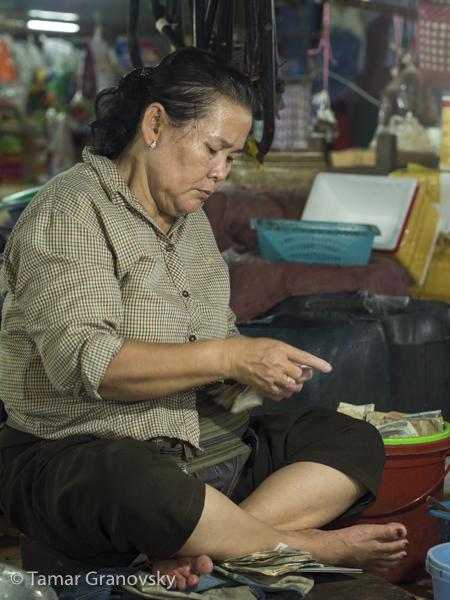
Koh Kong, Market

Koh Kong province is less developed than much of the rest of the country. I had the opportunity to visit the Tatai waterfall, where the water is very clear since the source is the Cardamom mountains. At night, fireflies gravitate to the star fruit (caramboia) trees in this area along the river to eat and do their thing – glow in the dark. It was the most beautiful sight as they flashed on and off, almost in unison. It actually felt as if I was watching a Disney movie, though Disney artists may well have gotten their glittery ideas from male fireflies who, according to the Huffington Post:

“show off” for the ladies of their own species. There are more than 2,000 species of firefly. A male firefly will light up its abdomen at a particular rate or wavelength, and when a female firefly sees a male from her own species shining in that particular way, she’ll respond with her own light. Hence baby fireflies are conceived.

Another reason fireflies glow (and this one not quite as romantic) is to lure prey. Some females will glow to lure a male to her and then — chomp! — he becomes dinner.

There was swimming and kayaking on the river, as well as jungle trekking opportunities. Each night at dusk, the sound and sight of fish leaping up out of the water entertained me. The din of frogs and cicadas was the first of many lovely sounds I heard at night. In the morning I woke up to the calls of birds, roosters, and geckos. Paradise, perhaps? Without mosquitoes, yes!

Accommodation:

Kampot:
Kampot, Wall Art

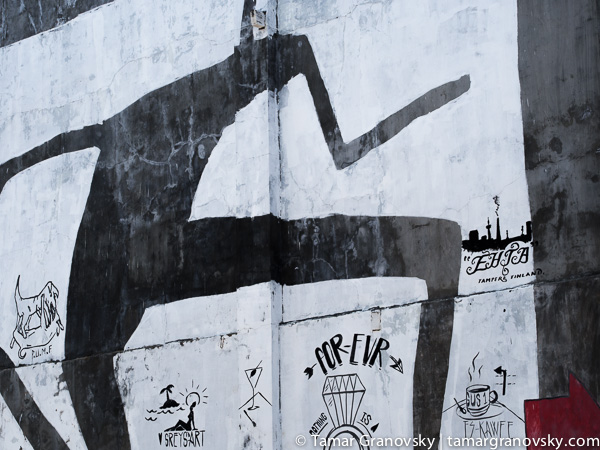
Kampot, Wall Art

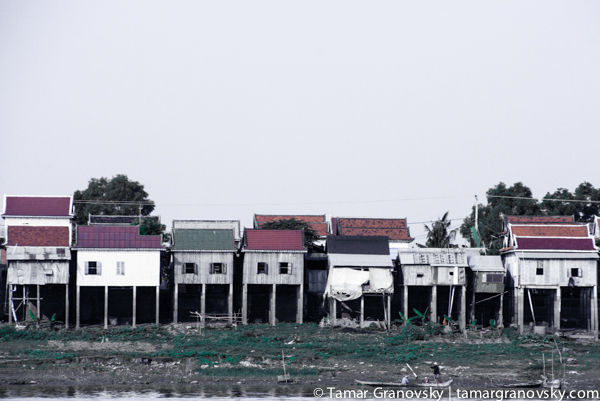
Kampot sits on the banks of the broad Preak Kampong Bay River and is surrounded by fishing villages, salt flats (once rice paddies), mountains, and tropical forests. Kampot pepper farms also skirt the town; this was once one of the biggest pepper-growing regions in the world, until the Khmer Rouge arrived. The pepper business is slowly rebuilding itself. Kampot is also the durian capital of Cambodia – a fruit many people are turned off by because of it’s turpentine smell. But oh! How heavenly the taste is – best described as a combination of banana and mango with the consistency of pastry cream.

Kampot is a fairly quiet city – especially during the Khmer New Year – with many run-down French colonial-era buildings, and a charm I cannot explain. There are a few bridges that cross the river including “The Old Bridge,” which is actually built of multiple styles/sections and has a very rusty, hole-y, metal road, so only motor bikes, cyclists, and pedestrians are allowed to cross it. I was told that it was destroyed by the Khmer Rouge and when it was rebuilt, well…. the varying styles came into play for some odd reason. Kampot is a good place to walk, go for coffee, wander through the market (an ordinary, cramped, indoor place for the locals to buy anything from clothing and food, to household goods, beauty products, and more – these markets, like all I have experienced in this part of the world, are an onslaught to the senses), or simply hang out by the river. On the surface, Kampot feels like a place one quickly stops through on the way to elsewhere, but after a few days you realise that it is somewhere you can really relax. The main thing that disquieted me about it was that people are not as friendly here as in other places I have visited in Cambodia. I do not know why this is and if any of you know (or have experienced this impression) – please comment. 
Kampot

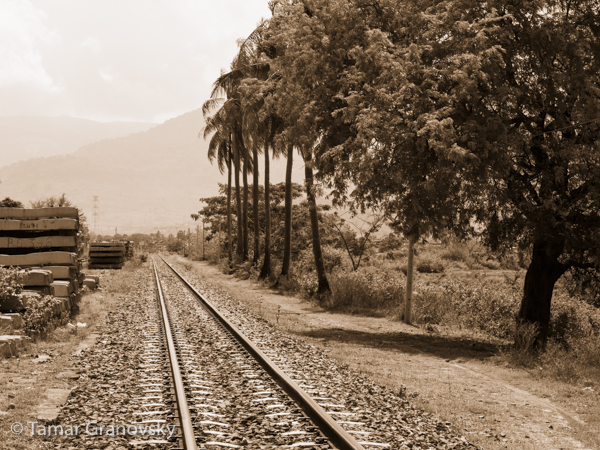
Kampot, City Outskirts

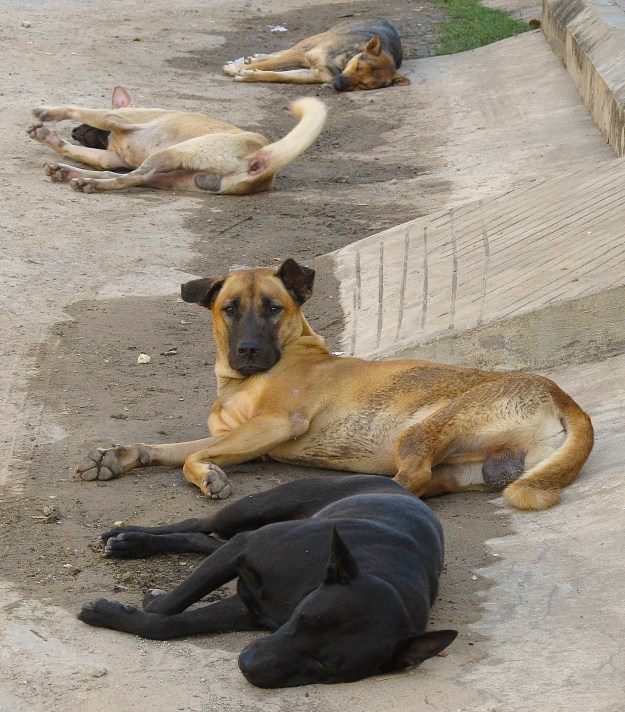
Kampot Dogs at Rest: A Rare Site (Photograph courtesy of Stefan Baldesberger)

Kampot Dogs at Rest: A Rare Site (Photograph courtesy of Stefan Baldesberger)

Kampot seems to have an inordinate number of foreign expats – particularly males, many who appeared to be in a stoned haze. Yet I did meet two lovely expat women – one teaches art at the Epic Arts Centre and the other is a psychiatrist and administrator at the Sonja Kill Memorial Hospital for Children. It was good to meet these two women since my feelings about the expats I saw hanging out were not positive.

I spent three days in Kampot. I wandered the area, taking photographs of some of the architectural “ruins;” wandering the outskirts of the city, along the railway and through countryside (warding off the notorious dog packs that initially made me freeze, until I found the courage to ignore them and just keep walking with conviction); visited the market, and more.

Kampot, Market

Kampot, Market

On one of these days I went up the winding, foggy road in Bokor Mountain National Park by motorbike, with a fellow traveller staying at my guesthouse. We wanted to see the new casino/hotel and the c1920 French ruins. Bokor Hill Station is a vestige of the past. It was originally built by the French, as a holiday resort, but was abandoned in the 1940s during the Indochine War. This building still stands empty (with many Khmer picnicking on the grounds and children running about inside). Solimex Group, the largest Cambodian real estate company, built the new casino and hotel nearby and is in the process of constructing luxury housing as well. They have also cleaned the exterior and interior of Bokor Hill Station so this once completely abandoned place no longer shows signs of the lichen and moss that covered it not long ago. I have read Somilex is planning to turn this building into a museum but that remains to be seen.

File:Bokor casino.jpg

Kampot, The Old Bokor Hill Casino  (Photograph courtesy of Nicolas Pascarel)

Kampot, Bokor Hill

Kampot, The Old Bokor Hill Casino

Kampot, Bokor Hill

Kampot, Bokor Hill

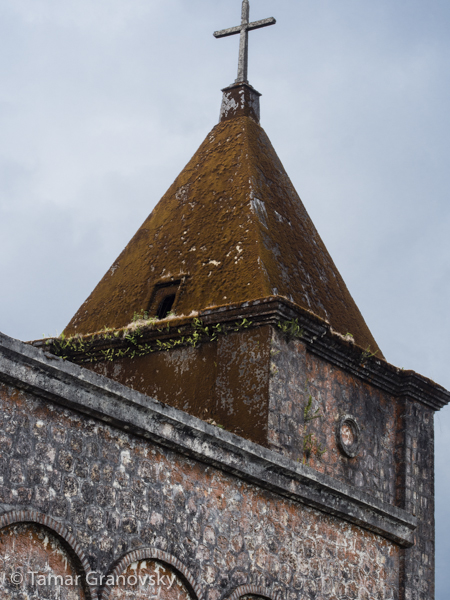
On this same road there is an abandoned, lichen covered, Romanesque-style Catholic church with its rusty cross standing tall. The inside is covered with both Khmer and English graffiti and religious artifacts have been added recently. Bullet holes are also visible (the story goes that the Vietnamese fought with the Khmer Rouge at this spot).
Kampot, Bokor Hill

Kampot, Bokor Hill

Kampot, Bokor Hill

Kampot, Bokor Hill

The road up/down the mountain gives you a chance to see the grand vista of the plateau and the Gulf of Thailand below. This park is a popular place among the Khmer, who often visit during the New Year to picnic, go to the temple at the top, to give their offerings, and listen to Buddhist sermons, and to just get away from the high temperatures and breathe cooler, moving air.

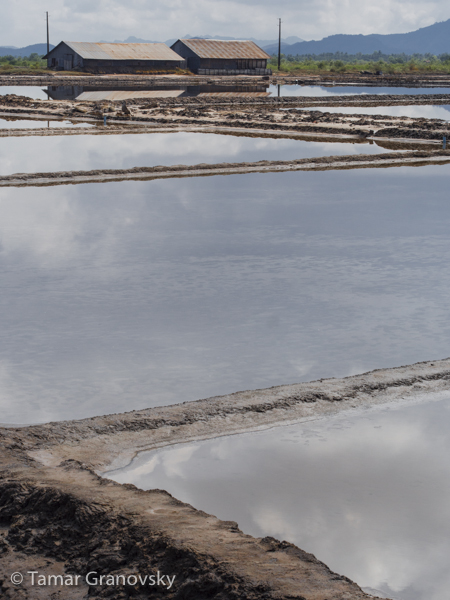
One morning I visited the salt flats just outside of Kampot but was not lucky enough to see anyone at work, since it was the holiday season. The flats were completely devoid of people and quite serene.
Kampot, Salt Flats

Kampot, Salt Flats

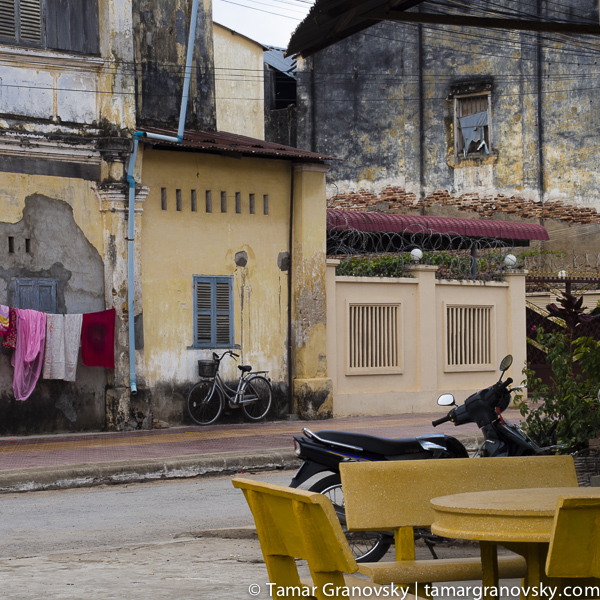
What I particularly liked about Kampot – what turned me on the most – was the run-down facade of the citys colonial architecture left by the French. The photos below say it all. This city of many decaying, formerly grand, buildings gives visitors a small window into what once must have been a flourishing colonial power. Kampot was one of the last regions for Khmer Rouge forces to take over because the Bokor Mountain stood in its way. And as it so happens, the Khmer Rouge did not leave Kampot until the late 1990s, after the rest of the country had already moved on.
Kampot

Kampot

Kampot

Kampot

Accommodation:

  • Auberge du Soleil: This is a new guesthouse, only open a couple of months, and run by a Swiss man who is in the process of turning the place around. He hopes it will be up to snuff by the next high season. He is very accommodating and is really trying to keep his handful of guesthouse clients, happy, as he does his resto/bar clients. At the moment he is juggling a lot but if his vision comes to fruition it will be a fantastic place.
  • Les Manguiers: I did not stay here because I wanted to be in the town of Kampot but this place was recommended and is not far outside the town.

Places to Eat:

  • Auberge du Soleil (at the corner of streets 728 and 710)
  • Sisters II Bakery and Cafe (Street 726 near 2000 Roundabout )
  • Epic Arts Centre (at the corner of streets 731 and 724)
  • Ta Oav (JUST south of the New Bridge)
  • Street Food – everywhere

Epic Arts Dance Videos:

Kampong Cham

Kampong Cham, Boy

Kampong Cham (I noticed this boy sitting in the hammock in the distance. I walked up to him and fell in love with his face. Here he looks so sad. I was so busy concentrating on getting a good shot of his face and the angles of the walls/hammock/floor that I did not notice his missing foot. After taking the photographs and showing them to him he became a happy kid. Every time I passed by his home, which was about 10-15 metre away from the road, he would jump up and down with such pleasure at seeing me and yell “hellooooooooo!!!!!” I would echo the same hello back and blow him a kiss with my hands. He responded accordingly. I had made a friend.)

Kampong Cham is a relatively small place that most visitors to this country tend to overlook. It is a fairly well-kept, tranquil town with few large, new, buildings. It houses a couple of markets, a few hotels, a small derelict fairground, and some restos, food stalls, and stands along the Mekong where locals gather in droves at night. There are many French colonial buildings and is a lovely place to explore as is the surrounding area. It is a large Buddhist centre as well as a Muslim one (the largest Muslim community in Cambodia lives here and the word “Cham” is the name of Cambodia’s Muslim minority group).

Kampong Cham, Woman

Kampong Cham, Woman

What I did in my 1.5 days in Kampong Cham:

  • Wandered the streets enjoying the town in 37C heat that finally got to me after three weeks of similar temperatures.
  • Traversed the Bamboo Bridge and explored Koh Paen Island: The bridge crosses the Mekong river to an island where there are many small Cham and Khmer villages with houses, typical of Cambodian countryside architecture, mounted on stilts. Crossing the bridge is thrilling because it gives the impression of being rickety and wobbly yet is sturdy enough to endure throngs of people, tuk tuks, and large motor vehicles. I can only imagine the rush of experience going over the bridge by bicycle…  Every year this bridge is washed away during the rainy season and is rebuilt during the dry one.
Kampong Cham, Bamboo Bridge to Koh Paen Island

Kampong Cham, Bamboo Bridge to Koh Paen Island

  • Nokor Wat: Remnants of this 11th century temple has Angkorian-like architecture. The more recent shrine is a Theravada Buddhist pagoda that is squeezed in between the oldest shrines. The original killing field in this area was between Phnom Proh and Phnom Sray (see below), just beyond Nokor Wat. Monks collected the bones after the Khmer Rouge regime and placed them in a building here. I read that there are wall paintings depicting torture and executions and, on another series of walls, scenes of the afterlife. Unfortunately I could not get into this building. There were no monks around and I barely saw a soul while I was there.
Kampong Cham, Nokor Wat

Kampong Cham, Nokor Wat

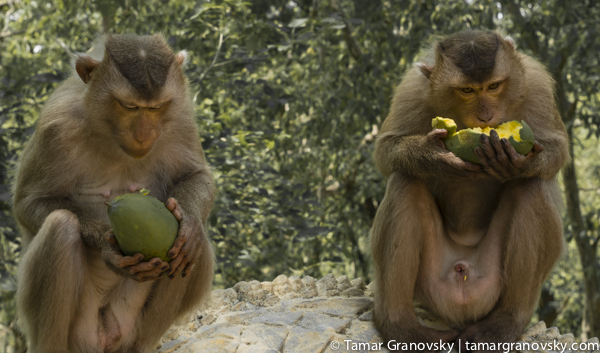
  • Phnom Pros and Phnom Sray: The names of these two temples translate to: “Man Hill’” and “Woman Hill.” Each has a pagoda and panoramic views of the countryside. Phnom Pros is filled with monkeys who, unfortunately, eat much of the garbage left by visitors. There is a memorial site for the victims of the Pol Pot regime, at Phnom Sray. A legend was recounted to me : A man and a woman were in a competition to build the tallest mountain at night before sunrise. They were doing this because, as is the Khmer custom, men must ask the parents for the hand in marriage of the woman he loves. Apparently one particular man wanted to challenge this tradition so suggested that he gather a team of men to build a mountain. The woman gathered together to build another. Whichever team built the tallest mountain would win. If the men won, he would not have to ask her parents for their daughter; if he lost, he would. While they worked into the night, the women built a fire with flames high enough for the men to see. Since these flames reached the sky the men thought it was sunrise and put their tools down to rest. While they stopped working the women continued working and won the competition. To this day, a man must still ask a woman’s parents for permission to marry her.
Kampong Cham, Phnom Pros

Kampong Cham, Phnom Pros

Kampong Cham, Phnom Sray

Kampong Cham, Phnom Sray

Kampong Cham, Phnom Pros (Baby on Board)

Kampong Cham, Phnom Pros (Baby on Board)

Except for the dogs that tend to know I am afraid of them (I was bitten by one in Laos), Kampong Cham is full of charm with seemingly very happy people who neither hassle nor ignore you. It was a very good way to end my travels in Cambodia.

Accommodation:

  • Leap Mong Kol Hotel (Kampuchea Krom Street. Very basic rooms and off the radar because it is “out of town” which means it is all of five minutes to the centre. Staff do not speak English.

Places to Eat:

  • Street Food everywhere
  • Smile Cafe (along the Mekong – this resto is run by a local NGO, Buddhism and Society Development Association (BSDA), and is “a training restaurant for orphans and vulnerable youth”)
  • Samaki Restaurant (right next to the Mekong and opened up by two graduates of the Smile Program. This resto supports local vocational training.
Kampong Cham, Phnom Pros (Monkey See, Monkey Do)

Kampong Cham, Phnom Pros (Monkey See, Monkey Do)
A Short Jaunt in Vietnam in March/April 2014

Hanoi (woman on street)

Hanoi (woman on street)

One day in Hanoi (and an unexpected overnight stay in Kowloon):

Unfortunately, because of a missed flight and some other factors beyond my control, my hoped-for week in Hanoi turned into a one-day trip.

My flight from Xiamen, China to Hanoi, via Hong Kong (HKG) was 5.5 hours behind schedule, due to poor weather conditions in HKG, and five of those hours were spent sitting in the airplane before it finally took off. I therefore missed my connecting flight and any opportunity to get to Hanoi that night. When we finally did arrive at the HKG airport my luggage was lost/misplaced – and found only 3 hours later. Dragon Air arranged an overnight stay for me in a five star hotel. I discovered, the following morning, that my room had one of the “stunning” views advertised on the website. I had the luxury of enjoying an all-you-can-eat breakfast (congee, dim sum, fresh fruit, and pain au chocolat) and then spent the rest of my time in my room, catching up with family and friends online before leaving at 11am for the airport and, finally, Hanoi. My long, tiring day of not getting where I was going did have a bit of a pay-off in the end!!

Hanoi is as I remember it from 2009 except that there are billboards all along the road from the airport to the city centre, and in the distance you can now see a few high-rises.  It seems as if the city has grown exponentially over these few years; even a new airport is being built. I was glad to see though, that the motor bike still rules the road, although there are now, more cars as well. I guess this is to be expected, in a “developing” country.  It also seems that there are more karaoke bars than there used to be. I learned that in Vietnam, karaoke is a favourite, family, after-dinner pastime.

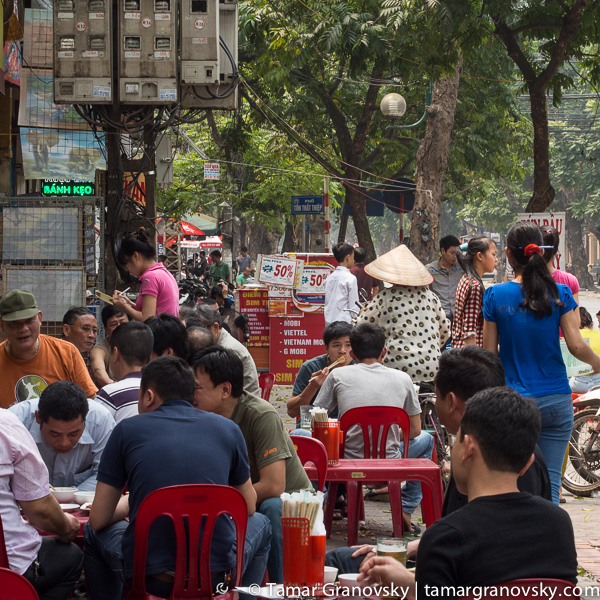
Hanoi (one of many food stands on the streets of Hanoi)

Hanoi (one of many food stands on the streets of Hanoi)

The old quarter is the compact centre of the city and is where I stayed. It is still the same crowded, disorderly place but now seems to have a more self-assured air about it. The wafting smell of meat cooking hasn’t changed, the streets abound with people and motorbikes, and it retains the vibrancy I remember. I love it! The old part of the city is still full of winding, narrow alleys, and the boulevards are tree-lined. The lake in the middle of town is still a place for locals to hang out and French colonial architecture makes its presence felt; both new and old buildings envelope you. All of these elements, combined with the proud and resilient spirit of the Vietnamese people, produce a lively city. After spending seven months in China, I had almost forgotten how amazingly friendly, open, spirited, and determined the people of Southeast Asia are. I was reminded of this both in Hanoi and in the Mekong Delta, on this trip.

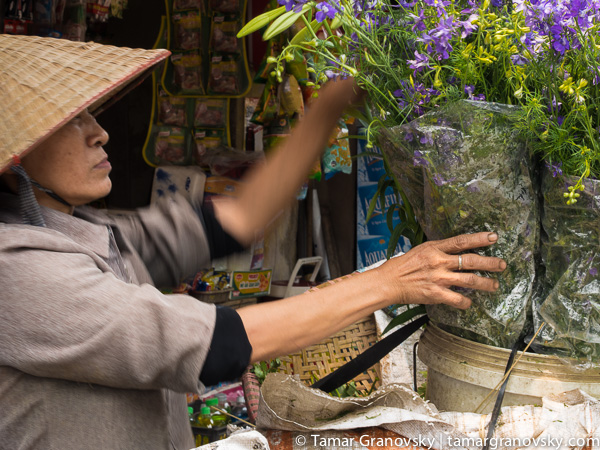
Hanoi (woman selling flowers)

Hanoi (woman selling flowers)

Hanoi is a fantastically frenetic city where people work hard but know how to relax. I quickly discovered that I had not lost the knack for crossing the busy streets – even Dinh Tien Hoang Boulevard. I was in Hanoi for a little over 39 hours, so this time I was just wandering through, but I sat on small plastic chairs, ate street food, and felt comfortable and at home. The first night, I wandered into a resto stall – Bun Bi Nam Bo (for bun bo) – and, as I was eating, I suddenly realised that it had been my daily go-to breakfast place when I was here  with my friend LP, in 2009. Talk about weird. I had no idea when I first entered but it looked strangely familiar. I later checked my  photos from that trip and my hunch was proven right.
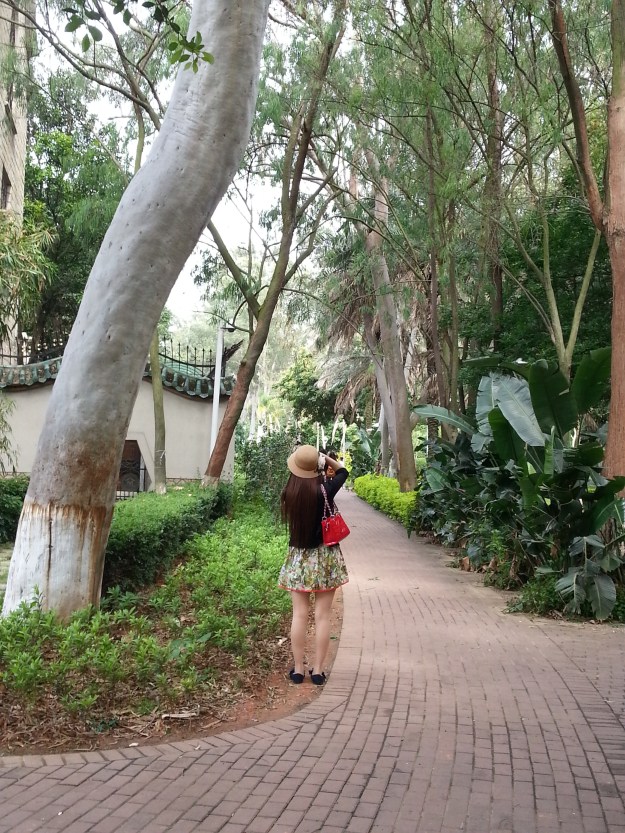
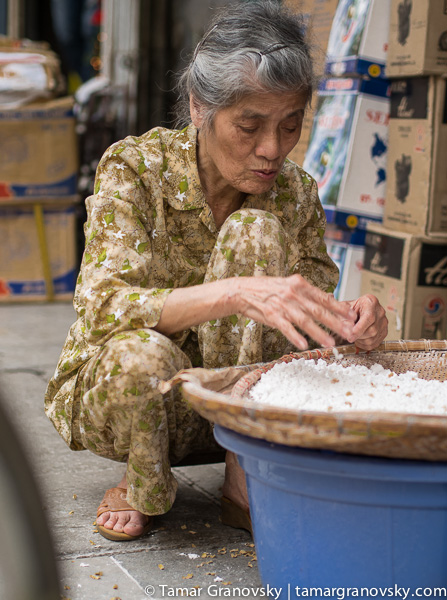
Hanoi (woman sorting through rice)

Hanoi (woman sorting through rice)

Eating Pho in Hanoi was a must, as was drinking ca phe sua da, and a mango shake (made of pure mango juice and nothing else). This is a city with a passion for food; the sound of people cooking and getting ready for a day of selling food starts early in the morning – before 6 a.m. – and ends late at night. Anywhere you stroll you will pass vendors on the side of road, in storefronts, or on their bicycles, offering fruit and vegetables, soups, baguettes, and more. Hanoi is also a cafe culture, whether you sit in a coffee shop or enjoy a cup with others, sitting on low, plastic seats on the sidewalk. I will never be able to do Vietnamese/Hanoi food justice so I urge you to look at the websites below to get a sense of what and where to eat.

Hanoi (mannequin shops are a common site)

Hanoi (mannequin shops are a common site)

Of course if you want to, you may also eat at one of the many KFC’s, or MacDonald’s. You may also buy shoes at well-known Western stores such as Aldo and Bata. There is probably more of America here now than when I last visited and that, to me, is a shame. Nonetheless, Hanoi, once again, left only a good taste in my mouth and I cannot wait to return.

Accommodations:

  • Hanoi Elegance. This little (but growing)  chain of boutique hotels in Hanoi is very comfortable. The staff is marvellous, and I have no complaints. My stay was at the cheapest of the properties and was a real treat for me. A friend from Montreal told me it was a great stay and I’m glad he did!! I highly recommend it.

Places to Eat:

  • Pho Gia Truyen (49P Bat Dan)
  • Bun Bo Nam Bo (67P Hang Dieu)

Check Out:

Less than 24 Hours in Saigon / Ho Chi Minh City (HCMC):

Saigon

Saigon

Saigon

Saigon

After another delayed flight, this time with 1.5 hours waiting on the plane at the gate, I finally arrived in HCMC  (commonly known as Saigon by locals) at 4:30 p.m., in time to meet my friend Nuc, a fellow CouchSurfer, for supper. My hotel received good reviews on Trip Advisor but I stayed in a windowless room (not for the first time in Vietnam) and, though it was comparatively clean, it was also more expensive than other places.

Nuc and I went for supper at Quan Dat –  a restaurant that specializes in south central Vietnamese food. We ate Banh Can (rice cakes with eggs, pork, shrimp and squid, that you wrap in fresh greens, then add cucumbers and green papaya, and dip in a variety of sauces (fermented fish; peanut; or fish and chili). Here is how you make Banh Can:

Accommodation:

Places to Eat:

  • Quan Dat – (106 Truong Dinh, P.9, Q3, District 10)

Mekong Delta:

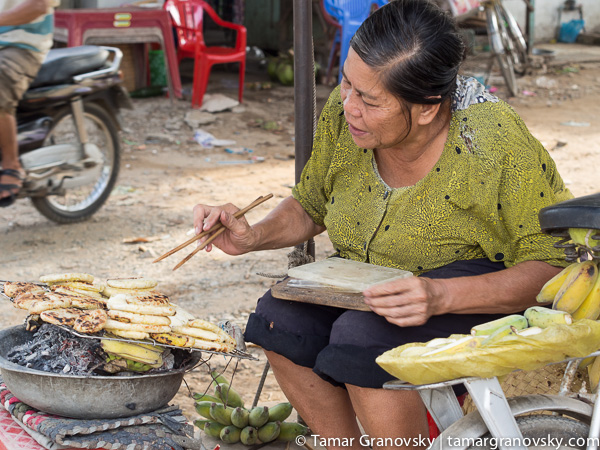
Mekong Delta (woman roasting glutinous rice covered bananas)

Mekong Delta (woman roasting glutinous rice covered bananas)

Why did the chicken cross the road? The real answer is – to get out of the way of motorbikes and bicycles. Apparently chickens do not care which side of the street they are on. They like to hang out wherever they feel like it  – even on the narrow concrete or dirt pathways all along the Mekong Delta. This is what I discovered after a few days of cycling these back routes with Vietnam Backroads.

Mekong Delta (one of the many bridges we went over on our trip)

Mekong Delta (one of the many bridges we went over on our trip)

This small company runs various cycling trips across the delta. Our group consisted of me, two brothers, originally from the UK, (who hadn’t seen each other for five years), and our tour leader. We cycled mostly back roads, passing coconut groves, fruit trees of all sorts (pomelo, banana, mango, guava, sapota, and more),  palm trees, and rice paddies.  We rode up and then down, over many short, steep bridges that cross the myriad of waterways in this area, and rode on some small ferries as well, to travel across the water.  The three of us had the opportunity to speak with a monk at a Buddhist Theravada temple, and went to the Cai Rang floating market outside of Ca Tho. We visited the Bang Lang stork sanctuary, where we saw what must have been thousands of both black and white storks, as well as the spectacular Tra Su Melaleuca Forest Nature Reserve.  Each day, as we cycled, we were greeted, seemingly out of nowhere, with a chorus of loud, happy “hellos” from hundreds of people we passed. Our guide, Dat, was stupendous; he is originally from a farm in the Mekong Delta, but because he is the youngest in his family, he got to go to school rather than work on the farm. He had studied tourism and because of his education and connection to this area, he was able to provide us with an abundance of interesting and detailed information.

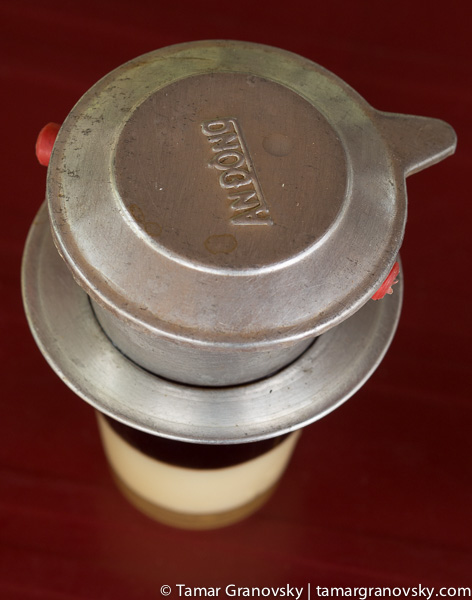
Mekong Delta (ka phe sua da in the making)

Mekong Delta (ka phe sua da in the making)

All along the way, we saw men drinking coffee or tea together under the corrugated rooves of little shops. I asked Dat about this and he said that men in Vietnam tend to drink together, to talk about business and exchange farming tips. After I prodded and joked with him a bit, he admitted that business probably accounts for only about 60% of the conversations.

Mekong Delta (drying rice along the rice paddies_

Mekong Delta (drying rice along the rice paddies_

On one of the days, we passed by a home that was preparing for a funeral. We were invited to sit down for tea and pay our respects by burning incense at the alter. Typically, people are not invited to visit a house of mourning; they just drop by. In Vietnam, when someone dies, the surviving family stays at home for five or six days.  The body is washed and dressed, a chopstick is laid between the teeth, and rice and three coins are placed in the mouth to show that the person did not die of hunger or want. The whole body is covered with white cloth. The Khmer, who predominantly occupy the Mekong Delta, practice the tradition of cremation, whereas the Vietnamese bury family members who have died.

Mekong Delta (picking hot peppers)

Mekong Delta (picking hot peppers)

Mekong Delta (woman in Can Tho who was at first very sheepish about having her photograph taken and then let me take MANY)

Mekong Delta (woman in Can Tho who was at first very sheepish about having her photograph taken and then let me take MANY)

Mekong Delta (selling soup in Can Tho)

Mekong Delta (selling soup in Can Tho)
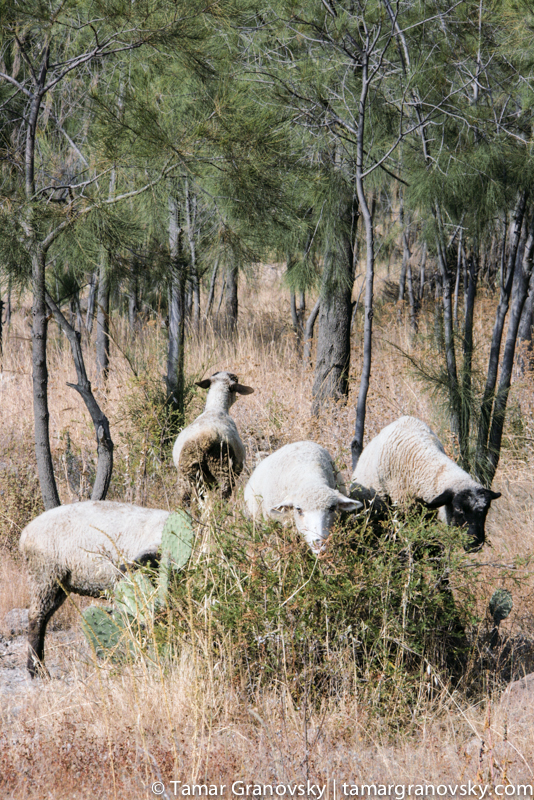
This trip did not afford me the time to take many photographs since I was too busy biking but I will end here by saying that the scenery was absolutely spectacular and I would both recommend and repeat this trip in a heartbeat.

Final Weeks in China: Fujian Province’s Fishing Villages, Xiamen, and Tulou

Fujian, Fishermen

Fujian, Fishermen

Xiapu / Sanshazhen Areas

After a flight from Kunming to Fuzhou, a night’s stay there, and a quick one-hour ride on China’s Shenzhen to Shanghai fast train line, I reached Xiapu. From there, I took a taxi to Sanshazhen – a fishing town that is about a 40-minute drive northeast of Xiapu. Once you get off the main autoroute, the winding road leading to Sanshazhen passes by many villages; on either side you can see the nets and bamboo poles of the fishermen preparing for their outings at sea. I did not know where I was going and thought I’d just wing it; this was the place that was recommended to me by multiple people I’d spoken with after getting off the train. It is a grungy village but is surrounded by beautiful landscape and has its own unique charm and culture.

Sansazhen, Fujian

Sanshazhen, Fujian

SanSaZhen, Fujian

Sanshazhen, Fujian

SanSaZhen, Fujian

Sanshazhen, Fujian

SanSaZhen, Fujian

Sanshazhen, Fujian

SanSaZhen, Fujian

Sanshazhen, Fujian (scraping the husk off sugar cane)

SanSaZhen, Fujian

Sanshazhen, Fujian

SanSaZhen, Fujian

Sanshazhen, Fujian

Through sheer luck (and again, by speaking with people who knew people – when I arrived in Sanshazhen) I found a very sweet man, He Kai, who is a photographer in this town (and whose photos appear on the local where-to-take-the-best-photos-of-fishing-villages map). I met him over tea at his home and after an hour we agreed that I would spend the next two days on a photography tour with him – leaving at 5:20 a.m. and 4 a.m. for the best photo ops on our two morning outings and going out, as well, for late afternoon shooting! As we travelled together, I realized that finding the places I wanted to photograph would not have been an easy feat on my own. I’d highly recommend taking a tour if you wish to visit these parts!

As I’ve described, I generally try to avoid tours. But, this was not a typical tour. Since I was the only person joining He Kai, I paid as much as a larger group would have. The upside of this was that I was given lots of attention and got to spend extra time with him both at his home and on site. I received the added benefit of some photography instruction and post-photography processing tips from He Kai. I was reminded, once again, that Chinese sensibility is very different from that of the West. The Chinese believe that landscape shots should display the vastness of nature: humans are small in comparison, and should be seen accordingly in photographs. We (and other avid photographers we encountered on our outings) focused on our subjects from high vantage points.

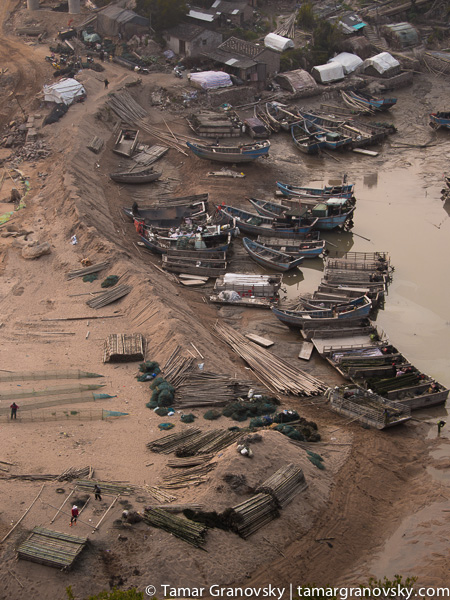
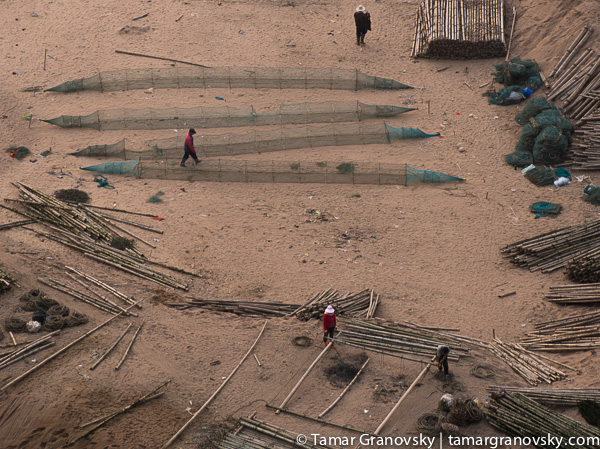
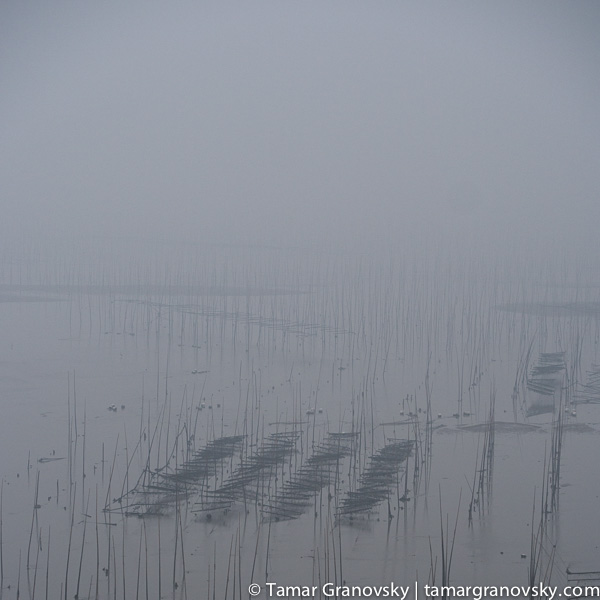
He Kai is a well-read man, has travelled Fujian extensively, and enjoys imparting his knowledge and thoughts on life. From him I learned that Xiapu is part of the municipal Ningde region and stretches ~400km along the East China Sea coast. Much of the shore and inlet areas are surrounded by mountains.  Bamboo structures and poles jutting out of the water, fishing nets, and vessels in the mudflats during low tide, provide human scale counterpoints to the area’s vast natural beauty. The coastline is well known for its fishing and seaweed harvesting. The coastline is decorated with the intricate patterns created by these bamboo poles and mudflats at low tide. With the right light, photographs taken here can turn out amazing. The distant mountains were enveloped in fog, which moved even closer during the two days I was there. I considered a third day with He Kai but decided against it; as luck would have it, that third day was rainy, extremely windy, AND foggy. The weather does what it pleases! Despite the fog-limited visibility, I was able to get a few decent shots. Timing is key; if there are boats in view and fishermen doing their thing, that’s a perfect moment to capture. Shadows on the water are also worth paying attention to; they can enhance a beautiful shot.


Fisherman, Fujian

Fisherman, Fujian

Fishermen, Fujian

Fishermen, Fujian

Fishermen. Fujian

Fishermen. Fujian

Bamboo Poles. Near Sanshazhen, Fujian

Bamboo Poles. Near Sanshazhen, Fujian

Bamboo Poles. Near Sanshazhen, Fujian

Bamboo Poles. Near Sanshazhen, Fujian

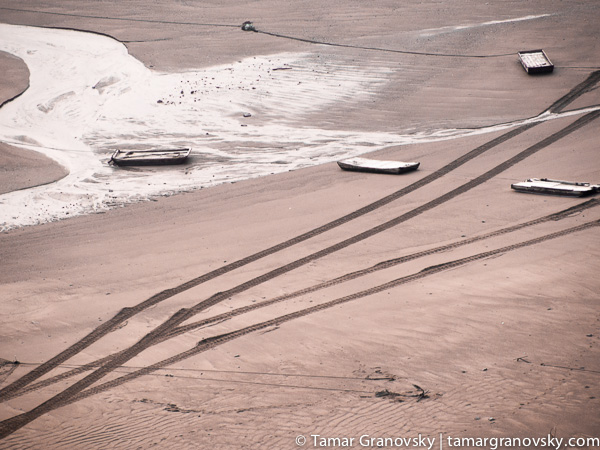
Mudflats, Nets, Bamboo Poles. Near Sanshazhen, Fujian

Mudflats, Nets, Bamboo Poles. Near Sanshazhen, Fujian

Fishing, Fujian

Fishing, Fujian

Muflats. Near Sanshazhen, Fujian

Mudflats. Near Sanshazhen, Fujian

Photography Tours:

Unfortunately Sanshanzhen is not known for its cuisine or accommodation. There are a few places that sell soup but other resto stalls only offer buffets of lukewarm, pre-made food consisting of preserved and fresh vegetables cooked in lots of oil, meat, and fish. But!! If you want a great photography contact there, He Kai is your man. Here is his website: http://xphxs.cn/ (tel: (011 +86) +139 5937 1505). I highly recommend him. His price is 1000RMB/day but you may be able to join a group so the cost will be divided by the number of participants. He Kai also does tours of Tulou. I have heard very good things about Vicky Yeow’s tours as well: http://www.vickyphotographyworkshops.com/

Xiamen

The small, coastal city/island of Xiamen is surrounded by beaches and mountains. Jimei and Haicang, are both just across bridges, on the mainland, and Gulangyu island (a large tourist attraction), is a five-minute ferry ride from Xiamen; it is administratively part of the same city. Xiamen has been an important port for centuries, and is a gateway to China. In fact, the cargo ship that brought me to to this part of the world from the U.S., stopped in Xiamen, although I debarked in Hong Kong!

The first night, I stayed at the wonderfully comfortable and quirky Yoga Village Guesthouse. This guesthouse is centrally located and the perfect place to chill should you desire to do so – somewhere to get away from the hustle and bustle of the central part of the city. It was exactly what I needed that first twenty-four hours, and I barely left my room, though they have a lovely courtyard for relaxation too. To boot, the guesthouse has best shower I’ve come across in my seven months in China. What a pleasure! The rest of my time I couchsurfed with a welcoming, interesting, and fun Israeli couple in Jimei.

Xiamen, Zhongshang Lu (downtown pedestrian walkway), Fujian

Xiamen, Fujian, (Zhongshang Lu – downtown pedestrian walkway)

I spent my days in Xiamen strolling through alleyways, the Bai Lu Zhou and Zongshang Parks, and winding my way to Nan Putuo Temple (a Buddhist temple that is considered a pilgrimage site and thus full of worshippers and monks). It is a stone’s throw from Xiamen University campus, (known by locals as Xia Da) via Siming Nan Lu and back streets. Many of the streets in Xiamen are tree-lined.  Xiamen University is a spectacularly landscaped campus and close to the botanical gardens, but could itself be considered a botanical garden. It has a park and large pond in the middle of the campus and is green throughout. I was initially skeptical about wandering XiaDa but it is definitely worth a stroll. The city’s waterfront was full of people out enjoying the spectacular weather. I was lucky to experience Xiamen’s mild spring temperatures and bright sunshine.

Xiamen, is probably not known for its food – there are many street stalls and vendors and so much of the food appears to be made of pure oil. BUT!! on my second night I feasted with a group of CouchSurfers at the Da Fang Vegetarian Restaurant, not far from the Nan Putuo Temple. Here the meal was excellent; I highly recommend this resto. Not only is the food terrific, but the restaurant itself happens to be in a very convenient location, near other sites you’d want to visit. I spent my remaining days in Xiamen babying a cold and resting up so that I would be ready for an almost-week-long trip along the Mekong Delta during the first week of April.

Xiamen, Nan Putuo Temple, Fujian

Xiamen, Fuujian (worhshipper at Nan Putuo Temple)

Xiamen, Baichang Beach, Fujian

Xiamen, Fujian (Baichang Beach)

Xiamen, Alleyway, Fujian

Xiamen, Fujian

Xiamen, Alleyway, Fujian

Xiamen,Fujian (alleyway)

Xiamen, Zhongshan Park, Fujian

Xiamen, Fujian (Zhongshan Park)

Xiamen, Near Zhongshan Park, Fujian

Xiamen, Fujian (small side street near Zhongshan Park)

Xiamen Park

Xiamenn, Fujian (Bai Lu Zhou Park) (photograph courtesy of Ruth Sheffer)

Accommodation:

Places to Eat:

Fujian Tulou

Much has been written on the Fujian Tulou. Please take a look at the link at the Unsesco website for all the the vital information. You can also watch the CCTV English series, ” Secrets of the Fujian Tulou”  I will therefore keep the writing here brief and let the photographs speak for themselves.

Fujian Tulou, Yongding County's Earth Building Cultural Village

Fujian Tulou, Yongding County’s Earth Building Cultural Village

Fujian Tulou, Yongding County's Earth Building Cultural Village

Fujian Tulou, Yongding County’s Earth Building Cultural Village

Fujian Tulou, Yongding County's Earth Building Cultural Village

Fujian Tulou, Yongding County’s Earth Building Cultural Village

Fujian Tulou, Yongding County's Earth Building Cultural Village

Fujian Tulou, Yongding County’s Earth Building Cultural Village

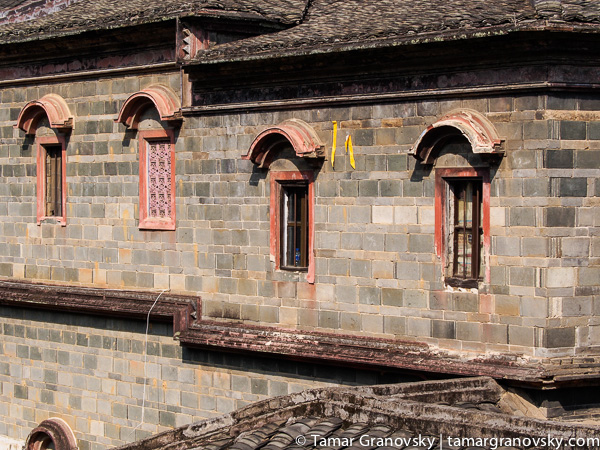
There are many Tulou houses (also called roundhouses — although some are square) throughout the region and one can either take a tour, or rent a driver and car, or motorbike to see the various tulou in various condition, with many near collapse. Tourism is growing here and these buildings are gradually becoming reminders of a communal way of life that is disappearing. I had the opportunity to learn about both culture and architecture at the Earth Building Cultural Village; Nanxi Tulou; and Chuxi Tulou.

Fujian, Chuxi Tulou Clusters

Fujian, Chuxi Tulou Clusters

Fujian, Chuxi Tulou Clusters

Fujian, Chuxi Tulou Clusters

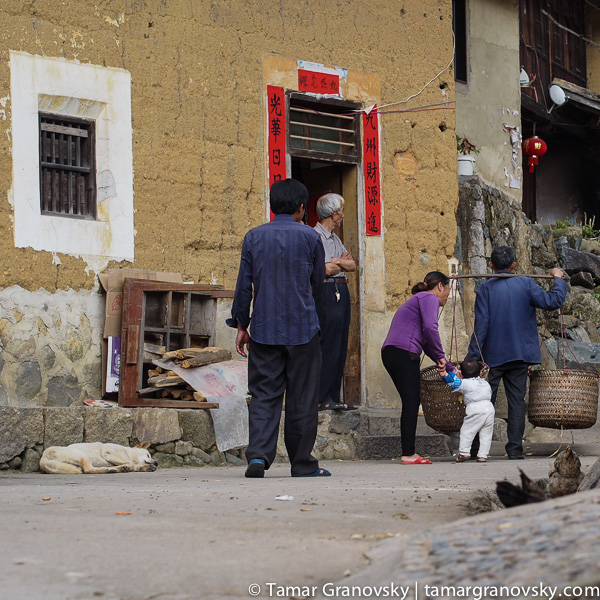
Fujian, Chuxi, Street Scene

Fujian, Chuxi, Street Scene

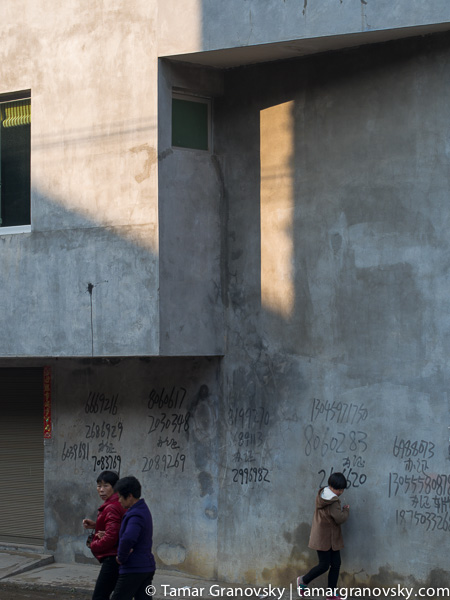
Fujian, Chuxi Child's Drawing on a Outside Wall

Fujian, Chuxi (child’s drawing on an outside wall of home)

Some sites have entrance fees; both the Earth Building Cultural Village and Chuxi are Unesco sites. One of the five tulou in Chuxi acts as museum of the Hakka People, who still live in the area and occupy many of the Fujian Tulou villages. Admission fees allow you to meander through the area, where you will see dogs lazing in the sun, farmers working their land, many people selling tea, the elderly sitting and talking with each other, mothers or grandmothers carrying their babies on their backs, and vegetables and leaves drying in the open air.

Fujian, Chuxi (drying mustard greens for pickling)

Fujian, Chuxi (drying mustard greens for pickling)

The Hakka, who occupy this whole area, were originally part of the Han Chinese until they migrated to the southern region of China because of an infusion of minority groups into the region. Originally the Hakka were not an ethnic group unto themselves. “Hakka” first appeared in registries during the Song Dynasty; it was used to indicate “guests” who had left their homelands to settle  in other parts of the country. The Hakka religion is a blend of Buddhism, Confucianism, Daoism and ancestor worship; they are believers in warding off bad luck to improve their lives.

Fujian, Chuxi, Temple Artifact

Fujian, Chuxi (temple artifact)

My couchsurfing hosts recommended that I stay in Yongding County’s Earth Building Cultural Village at the Fuyulou Changdi Inn. This square Tulou house was built over 130 years ago and the Inn portion was added about 110 years ago; it has belonged to the same family for four generations. The accommodation is a basic (and musty) room with a shared bathroom (squat toilets) and shower on each floor. The owner is friendly, helpful, and quite the businessman. The meals (and coffee) are excellent – unlike the other food I ate during my short travels across the Fujian coast. It is heavy on meat (predominantly pork), but there is a good variety of local vegetable dishes, too – many of which are pickled.

Fujian Tulou, Yongding County's Earth Building Cultural Village (pig)

Fujian Tulou, Yongding County’s Earth Building Cultural Village (pig)

Fujian, Yongding County's Earth Building Cultural Village - Fuyulou Changdi Inn.

Fujian, Yongding County’s Earth Building Cultural Village (Fuyulou Changdi Inn)

Accommodation:

Shaxi, Yunnan


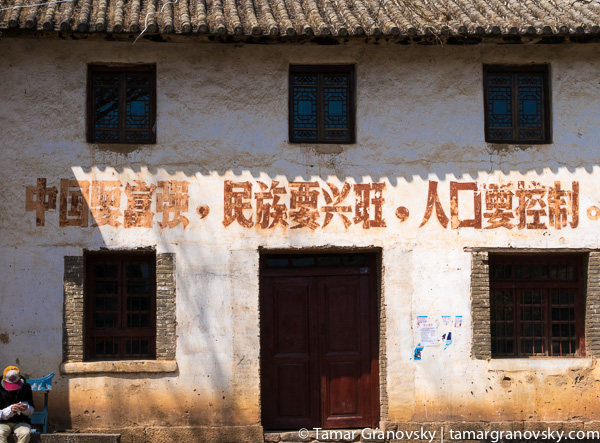
Shaxi Cultural Revolution Maoist Headquarters (

Shaxi, Cultural Revolution Maoist Headquarters (“If the country wants to prosper and become strong then follow the birth plan” — jie hua shen yu : one child one couple)

Shaxi, Yunnan Province:

Shaxi is a small, quiet, even sleepy village, situated in a fertile valley surrounded by mountains, a three-hour bus ride northwest from Dali. As you walk about, you see locals labouring in construction, working in small shops, or selling food or vegetables on the street.  The fields are tended mostly by women, while the men herd goats. The Bai are very industrious but also seem to take their time as they work. It appears that they embrace their traditional lives. It is a friendly village and Yulan (a friend from Kunming) and I were able to strike up a number of conversations with the minority villagers. Shaxi is beginning to see its share of tourists, and the stores, cafes, and hostels/hotels designed for people like us, yet it is still primarily a town of locals, and many of these sites are mostly empty. At the moment, its interest in outsiders is only secondary – although this will almost certainly change in the next few years.

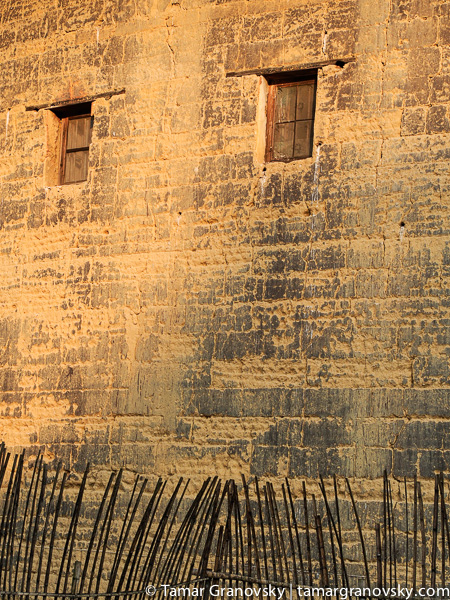
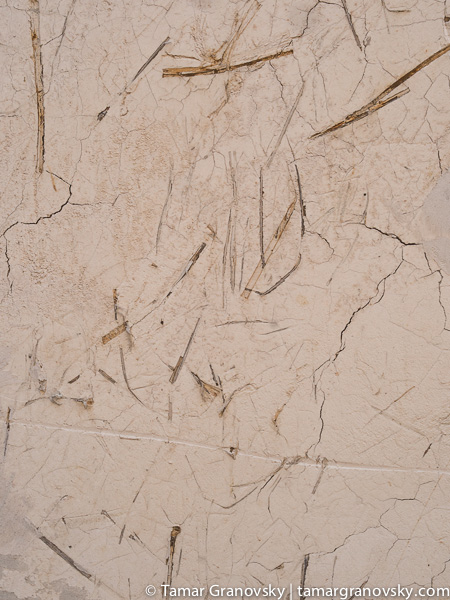
Buildings in Shaxi (and Dali) are made of a foundation of locally quarried stone and the walls are constructed with rammed-earth, covered by slaked lime and decorated on the outside with grey or blue ink-and-wash paintings. I have been told that nails are not used and instead, a system of double brackets supports the roof atop thick wood pillars. Like elsewhere in Yunnan, and the rest of China, the rooves are covered in round roof edge tiles. These tiles are used for decoration or for very specific symbolism (represented in the colours of the eaves, the specific roofing materials, and, finally, the roof top decorations). Old Town Shaxi is a maze of criss-crossing narrow alleyways, with one main street leading in and out of the village and a second, narrower street (filled with tourist shops, cafes, etc.) that leads to the old village square. A Friday market is held each week, as it has been for many, many years!

Shaxi, Building a House

Shaxi, Building a House

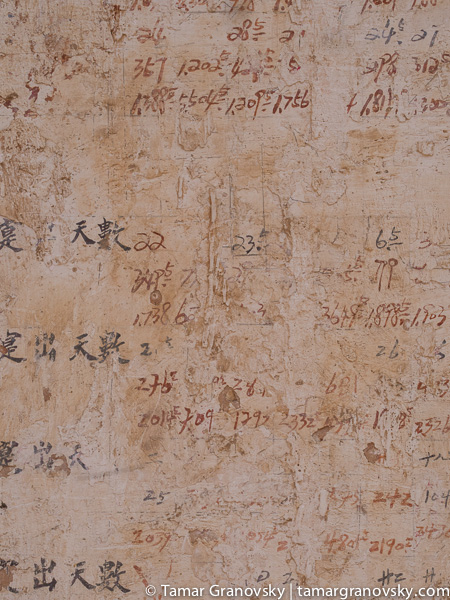
Shaxi, the Writing is on the Wall (pay up time to landowners of yesteryear?)

Shaxi, the Writing’s on the Wall (c.1940s? perhaps record-keeping when landlords collected rent from peasants who used their land, or, harvest records? – we were not able to get an answer for these calculations. if anyone knows what these numbers actually refer to please let me know. thank you!)

Saxi, Lime Wall with Horse Hairs and Straw

Shaxi, Lime Wall with Animal Hairs and Straw

On our first day in Shaxi, Yulan and I saw a few men leading donkeys with rattan baskets filled to the brim strapped to their backs. Women, both young and old, carry their produce and goods on their backs, hunching over to steady themselves and balance the baskets, whose straps stretch across their foreheads and are held onto on either side of their heads.

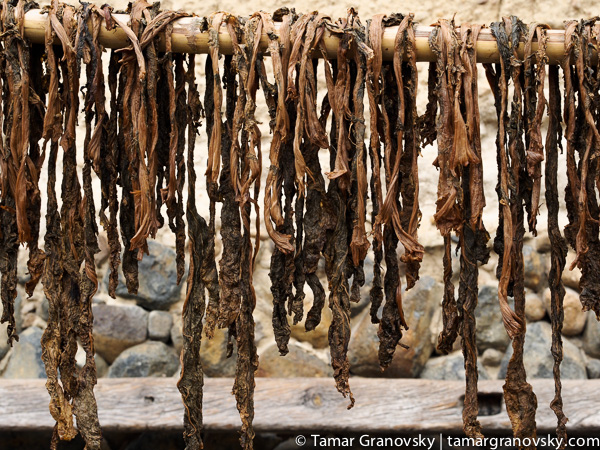
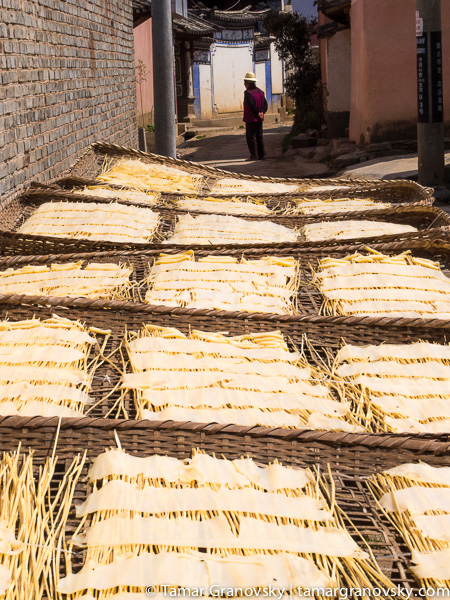
Shaxi Alley, (soy bean curd sheets drying in the sun)

Shaxi Alley, (soybean curd sheets drying in the sun)

Our second day in Shaxi was spent wandering the alleyways, speaking with more locals, and having breakfast and supper at the Long Feng Muslim Restaurant. The women who work there are welcoming and talkative, and laugh a lot!. The food is excellent, and the place is impeccably clean. At the front of the restaurant is the kitchen – open to the street. Behind this area and the main eating area is a small courtyard where the vegetables are prepared. Aging beef hangs from beams throughout the restaurant and courtyard. Breakfast consisted of a bowl of noodles in a spicy beef broth, with pieces of beef and vegetables. As is common, one can add extra condiments such as garlic, Sichuan pepper, pickled vegetables, hot pepper, etc. I think this soup may have been the best I have eaten in China. At supper we ordered a bowl of vegetable stew, as delicious as was the morning’s soup.

Shaxi, Long Feng Muslim Restaurant

Shaxi, Long Feng Muslim Restaurant

Lunch took us to Ben Tu Ren Jia, where we had two local dishes: zha ru bing (fried goat cheese sprinkled with sugar) and fen pi chao jidan (broad rice sheets mixed with egg and spices). Excellent food, again.

The streets of Shaxi are a pleasure to meander through and the countryside is perfect for walking in the fields and exploring the many nearby villages via bicycle.

Shaxi, Grandmother and Grandchild out for a Stroll

Shaxi, Grandmother and Grandchild out for a Stroll

Shaxi Doorway

Shaxi Doorway

Shaxi Doorway (detail)

Shaxi Doorway (detail)

We stayed at the local International Youth Hostel, which was inexpensive but very nondescript and dingy and dark. However, if you are on a budget this is a good enough choice. It is just not a place where you will want to chill (in fact, it was freezing there since its outer walls are literally made of plywood). I have been told that if you want to treat yourself,  a nice place to stay is the Old Theatre Inn — about a 15-minute bicycle ride from Shaxi. Breakfast is included and apparently the rooms are extremely comfortable, with all the amenities and a great view of the expansive farmland just beyond its doors, nestled among the villages and surrounding mountains.

Accommodation:

Places to Eat:

  • Ben Tu Ren Jia on the cobblestoned main street leading to the Town centre.
  • Long Feng Muslim Restaurant on Shaxi’s main road


Dali, Yunnan

Woman Resting, Dali, Yunnan, China

Dali, Yunnan Province:

Yulan (one of my four teachers at Keats School in Kunming – and now a friend) and I travelled by overnight train (on a hard sleeper) to Dali, at the beginning of its Spring season. The capital of the Bai Autonomous Region, Dali is rich and fertile, and full of villages and farmland in the valley that surrounds the banks of the 40 km long Erhai Lake (洱海) (“er” = see; “hai” = lake or sea); the lake is shaped like an ear which is called “er” although the character “er” is written differently: 耳. The Bai heavily populate this area, and their traditions flourish despite the many tourists. There are also many expats who run a number of places in the town, including the guesthouse where we stayed. Older women dress in their traditional blue scarves and jackets. While we were there, the Bai community was celebrating the March Fair, which is held from March 15th to 21st of the lunar calendar, and, we were told, celebrates peace with traditional music, burned incense, and foods offered in sacrifice.

Bai Holiday, Dali, Yunnan
Bai Woman, Dali
Bai Woman, Dali

On our first day, we cycled 65 km., exploring the countryside and small villages in the greater Dali area. The local farmers were busy in their fields and children were fishing, with nets in hand and wearing only underwear. In one of these villages we found a lovely couple who makes bing (bread pockets which can be filled with many things, (we tried them with onions).

Man in Village Near Dali
Woman in Village Near Dali
Onion Bing, Dali, Yunnan, China
Onion Bing, (in village outside of Dali)

We stayed at a quiet guesthouse, Sleepy Fish, just inside the new east gate of the old town, and awoke to the sound of roosters crowing in the morning. At the start of each day, we went around the corner to eat shao er kuai (roasted rice flour cakes). This is a common Yunnanese dish; a roasted, thin, round, pancake-like er kuai, that is usually brushed with a peanut-sesame sauce and/or chile sauce (tian de / la de –> sweet and spicy), and wrapped around youtiao (deep-fried bread sticks), hotdogs, julliened potatoes, or other ingredients, depending on the vendor.

On day two we walked around the old town, where the main roads are overrun by tourists. Dali is known to have been “discovered” by backpackers and is still inundated with them, as well a new generation of young hippies. On these streets one sees small stores full of artisanal goods (including coffee shops), people doing bead-work on the streets, and others selling mass-produced embroidered fabrics, jewellery, etc. Dali is a town for tourists, but if you can get off the beaten path, you can still catch a glimpse of the daily lives of the people who live here, such as the farmers who sell their produce on the street. People still work their plots in the farmland that borders the old town. Some corners of Dali are real surprises – just by turning onto a side street you can happen upon a wide variety of glorious flowers and trees growing in small courtyards. This reminded Yulan of the poem written by the Song Dynasty Poet Ye Shao Weng’s poem Failure in Visiting the Garden:  “Spring air’s too overfull to be shut in the garden, Over the wall one red apricot-twig had to crane.”Spring in Dali really was in bloom; pear and apricot trees were flowering and outside town golden fields of rapeseed flowers, which bloom annually, were in striking abundance. 

 Dali, Apricot Tree in Bloom


Dali, Apricot Tree in Bloom (photograph courtesy of Hou Yulan)

Fields of Rapeseed (with old town Dali in the background)

Fields of Rapeseed (with old town Dali in the background)

Dali Street Scene

Dali Street Scene

Dali Street Scene, Renmin Lu

Dali Street Scene, Renmin Lu

Dali (Renmin Lu)

Dali Street Scene, Renmin Lu

Dali Alley

Dali Alley

Dali is full of excellent food (both on the street and in restaurants). For lunch on our second day we ate at Zai Hui Shou. Their specialty is lian ji mixian (cold rice noodle w/chicken, greens, peanuts, and a mix of a sweet and spicy sauce) and wan dou lian fen (cold yellow pea doufu – topped with peanuts, green onions, and a similar but slightly different sweet and spicy sauce). Suppertime took us to the four-generation-run restaurant,  Zhen Hua Fandian, where we ate: suan la yu – sour and spicy fish with an extremely flavourful and complicated broth; tang cou pai gu – sweet and sour pork ribs; and cha shou gu – mushroom with hot peppers). The third night in Dali we dined on braised pork, lotus root, and bamboo shoots  – at another highly recommended local restaurant, Xiao Duan Chu Fang. The atmosphere was pleasant in this spacious restaurant and the food was excellent (although more expensive than the two other somewhat simpler restaurants).

Wan Dou Lian Fen (cold yellow pea doufu)

Wan Dou Lian Fen (cold yellow pea doufu)

Accommodation:

Places to Eat:

  • Xiao Duan Chu Fang (Duan’s Kitchen) – 12 Renmin Lu
  • Zhen Hua Fandian – 181 Renmin Lu
  • Zai Hui Shou on Renmin Lu — 135 Renmin Lu

Why I Travel

During a Walk in the Alleyways of Kunming

During a Walk in the Alleyways of Kunming, Yunnan, China (that’s me on the right!)

For me, it is all about culture, landscape, food, architecture, and people – although not necessarily in that order. When I travel, my priorities change from day to day. But this is exactly why I travel. It puts me in situations I may never have imagined and spurs me to do things I thought I never could. It also provides me with new perspective on life. Most importantly, I suppose, through travel I have learned that people are generally kind and – despite its many pitfalls – the world is a fairly safe and basically good place. I never cease to be impressed by the kindness of strangers.” Many have become friends. China is a country that has never really gotten under my skin and yet it has begun to touch me. I am very aware that it is the people I have befriended who have made this happen. In the end, one of the most central aspects of travel is learning to connect with people. 

Weekly Traditional Chinese Music in a Pagoda at Daguan Park

Weekly Traditional Chinese Music Performance in a Pagoda at Daguan Park, Kunming, China

Weekly Traditional Chinese Music in a Pagoda at Daguan Park, Kunming, China

Weekly Traditional Chinese Music Performance in a Pagoda at Daguan Park, Kunming, China

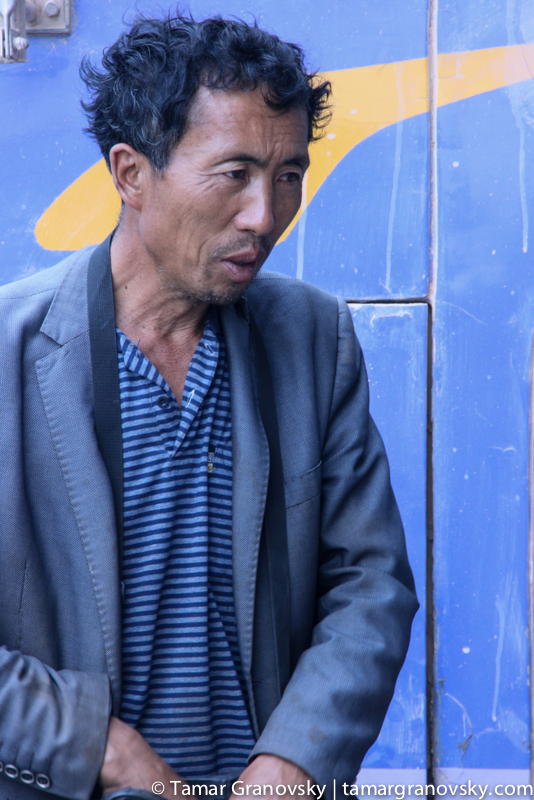
Man on the Street, Jianshui, China

Man on the Street, Jianshui, China

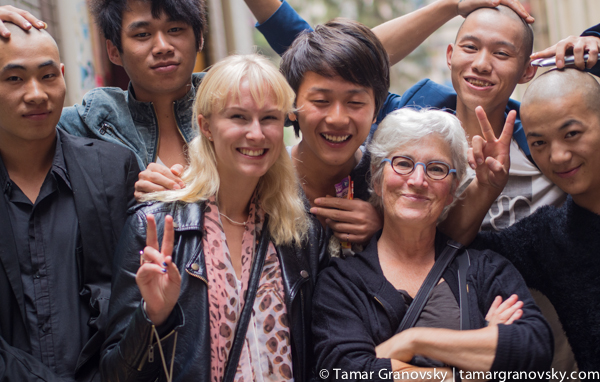
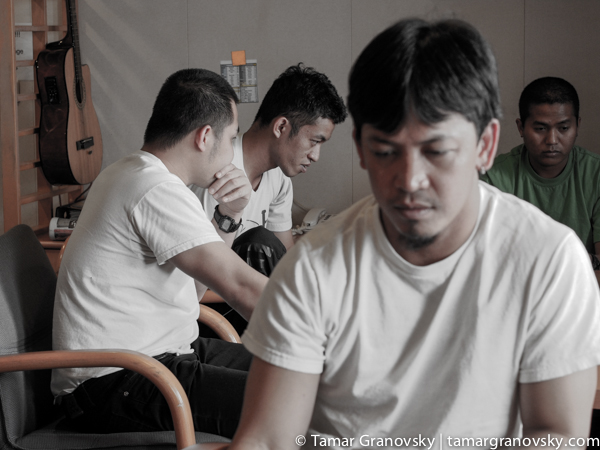
Some of the Crew on the Cargo Ship from Oakland, CA to Hong Kong

Some of the Crew on the Cargo Ship from Oakland, CA to Hong Kong

We all learn about other countries through films, media coverage, books, etc., but actually experiencing new places and people first-hand is a very different thing. Stereotypes and expectations have to be set aside. I find that the best way to get a good sense of a country is by adapting to its culture, pace, language, etc. As soon as I started travelling, I realised that I needed to learn at least the very basics about the cultures of the countries I was going to visit. I always make sure that I have key words and phrases to use – however poorly I may pronounce them. It is easy, and a very good idea, to laugh and smile a lot; this usually goes a long way in winning people over. And, of course, I always try to show great respect to people I meet. All of these small efforts ultimately enhance my experience and help me connect with those I encounter.

I enjoy being an explorer. I have travelled to few places (and yet, more than most people – I am fantastically fortunate) and feel compelled to return to almost every country I have visited, so that I can delve further in. The first time I go somewhere, I tend to do too much, afraid that I may not have a chance to return. When I am, fortuitously, able to visit again, I attempt to cover less ground and probe more deeply. Slowly, all too slowly, I am learning to experience new places by taking the time to just be. Travel is a voyage of discovery – not only of the unknown but of oneself. This voyage has become an inevitable and inseparable part of my life.

Street Scene, Kunming

Street Scene, Kunming

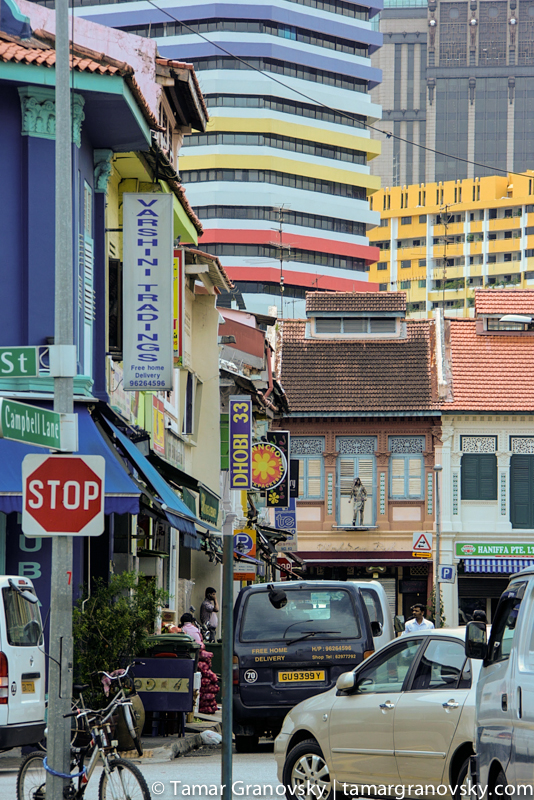
Singapore

Singapore

Coney Island, NY

Coney Island, NY

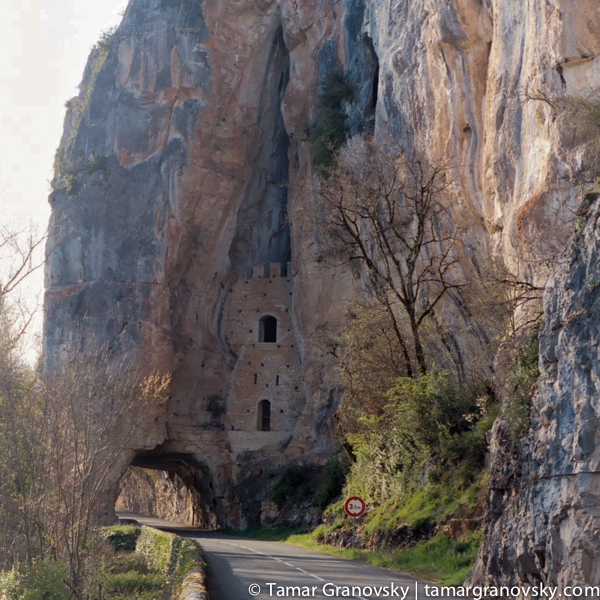
Outside of Cahors, France

Outside of Cahors, France

Luang Prabang, Laos

Luang Prabang, Laos

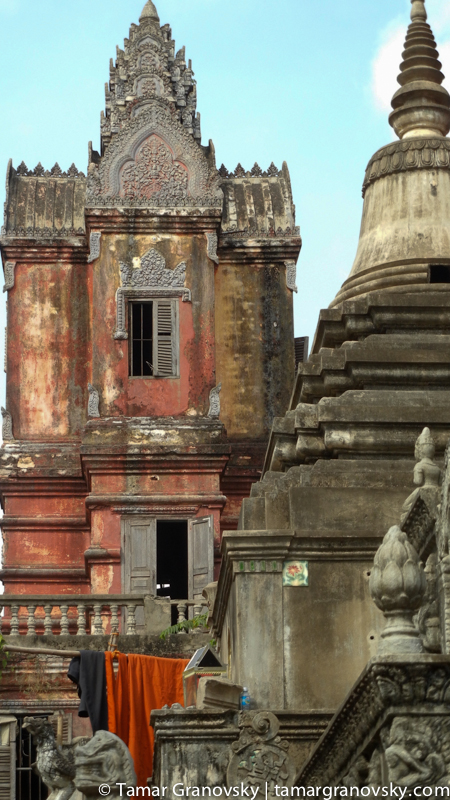
Phnom Penh, Cambodia

Phnom Penh, Cambodia

What I most savour is wandering, getting (a little) lost, and exploring neighbourhoods that are off the beaten path, so that I can get a sense of how people live. At times I feel as if I must look like a gawker to those who inhabit these communities. However, it is my endless curiosity about people that leads me there; I look for differences from, and similarities to, my own life experiences. I’ve been to Paris three times but have only visited museums there twice. There are so many districts, streets, parks and gardens, restaurants, cafes, markets, etc. to explore. It’s certainly not that I avoid museums, but in new cities I venture in only if there is something that I really want to see. At heart, I would rather spend my time meandering and observing, interacting with and learning about other people.

100 Days After Death Celebration (where I was invited to join, off the street, as I peaked in), Siem Reap, Cambodia

100 Days After Death Celebration (where I was invited to join, off the street, as I peeked in), Siem Reap, Cambodia

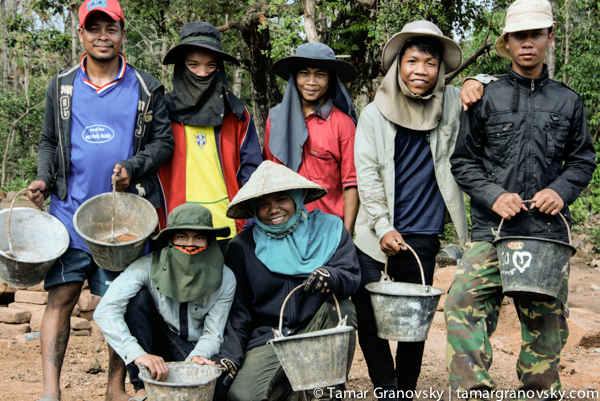
Workers at What Phou , Champasak, Laos

Workers at What Phou , Champasak, Laos

Naxi Woman with Daughter, Lijiang, China (I ate at her restaurant regularly, that week)

Naxi Woman with Daughter, Lijiang, China (I ate at her restaurant regularly, that week)

I have learned that travel can ground you in the present, if you are able to immerse yourself in each moment of your day-to-day experiences. These experiences can take you outside your comfort zone but they also make you face yourself – both your strengths and your weaknesses – and push you to adapt and to manage all manner of new exploit.

Fixing a Broken Rudder, Luang Prabang to Nong Kiau, Laos

Fixing a Broken Rudder on an 8-Hour Slow Boat Trip from Luang Prabang to Nong Kiau, Laos

Of course, one of the best ways to get to know a new place is by eating there. Food. Glorious food. I adore it. I am almost always willing to try new and different flavours, textures, meats, vegetables. I like to eat and I like to eat well. I am always in search of the best local food. But enjoying a cuisine is not the same as understanding the customs of a country with regard to its food. I have learned not just about different dishes, but also ways to order and eat them. In restaurants in China, for instance, at first I would shyly try to catch the attention of the wait person but eventually I adopted the body language and tone of voice of the local customers and I too, brazenly and loudly call out “fuwuyuan!” (waiter!).  

When ordering from street-food carts and small stalls, which in China and Southeast Asia are often devoted to one type of food, one has no choice but to order what they make. When I go into a restaurant with a menu, only to find that it has no English translation or photographs (menus with photographs are actually common) I’ve learned just to look at what others are eating and point – I want this, I want that. I always try to learn the rules of eating in the countries I visit, by either asking people I have befriended or watching others. In China, for example, only a foreigner uses a spoon to scoop up food from a communal dish and put it on his/her own. The Chinese just take their chopsticks and eat directly from the central dish, with little ceremony. If there are bones, they are discarded (or sometimes spat) on the table beside the individual’s plate.

The Outside Ring, Angkor Wat, Cambodia

The Outside Ring, Angkor Wat, Cambodia

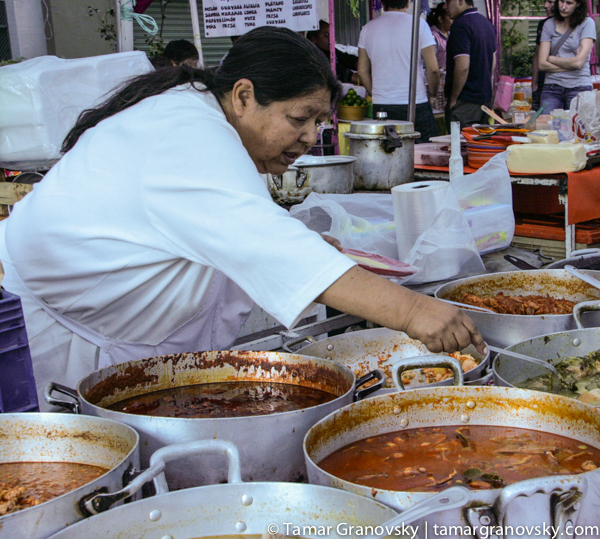
Street Food, Mexico City, Mexico

Street Food, Mexico City, Mexico

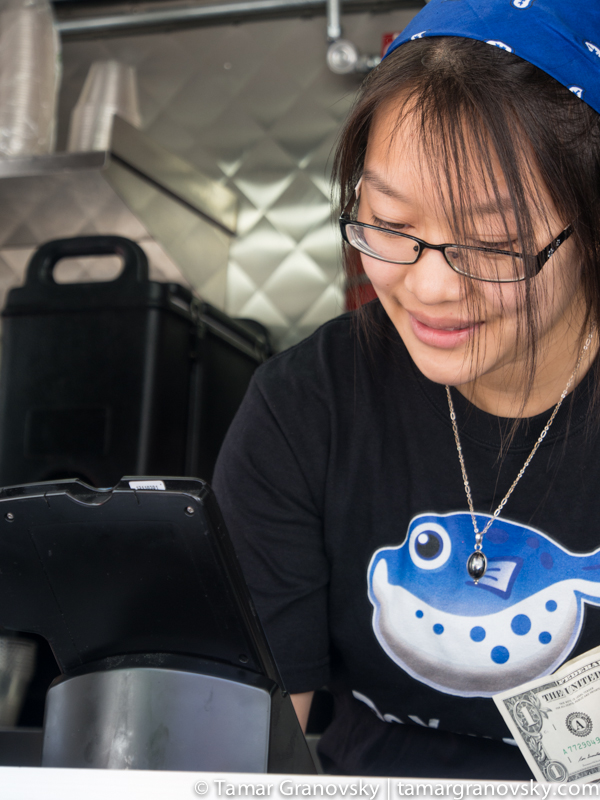
Food Truck, Cambridge, MA, U.S.A

Food Truck, Cambridge, MA, U.S.A

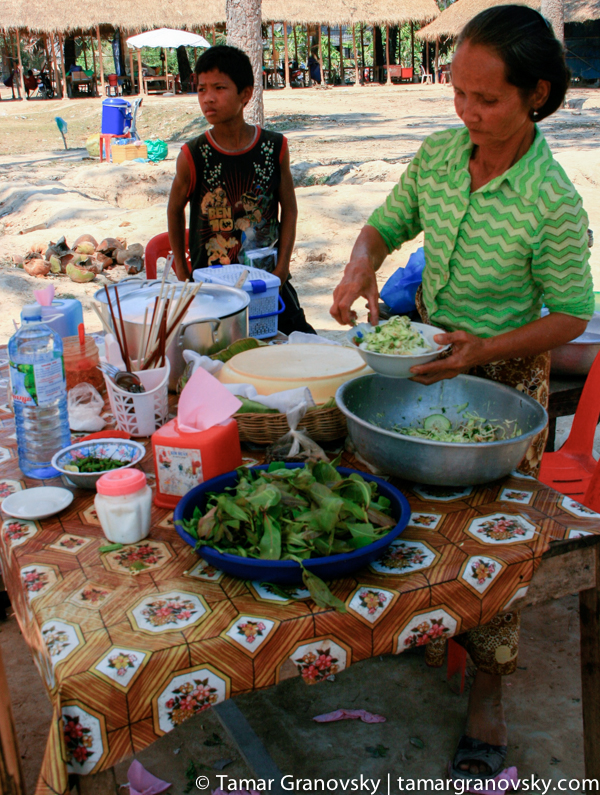
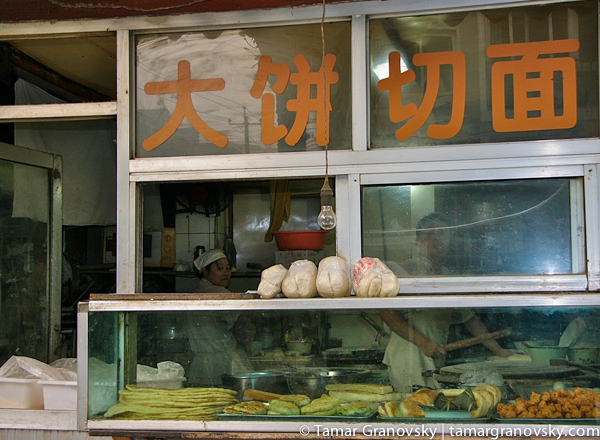
Food Stall, in a Beijing Hutong, Beijing, China

Food Stall, in a Beijing Hutong, Beijing, China

I am always on the lookout for the new, and the familiar, in this vast landscape of food. But natural landscapes spur me on too. As much as I adore city life, and am a city girl by nature, I also have a strong urge at times, to get away from it – often far away – from people, from concrete and glass, from the confines of our man-made world. The arts have always been part of the inspiration for my globe-trotting. As I have had the luxury to travel, I have learned that whether it’s the craggy and volcanic terrain of Iceland; the karst mountains and river-ways in Guangxi Province, China; the wats that are slowly being enveloped by Cambodia’s natural landscape; the Canadian prairies; or the desert of the American Southwest, the natural world is a stunning place and it calls out to the artist in me. My favourite way to see the world is with my camera in hand, so that I can capture both the vast views and the smallest details of my surroundings. These often magnificent landscapes are impossible to describe in words. Therefore, I will let the following photographs say it all:

Near Pas de Calais, France

Bray Dunes near Pas de Calais, France

Countryside in Normandy, France

Countryside in Normandy, France

Along the Mekong, Phnom Penh to Siem Reap, Cambodia

Along the Mekong, Phnom Penh to Siem Reap, Cambodia

Toward Kong Lor Cave, Outside of Ban Nahin, Laos

Toward Kong Lor Cave, Outside of Ban Nahin, Laos

Off of Victoria Island, Vancouver, Canada

Off of Vancouver Island, British Columbia, Canada

Outside of La Purificacion, Mexico

Outside of La Purificacion, Mexico

Bandelier National Monument, New Mexico, U.S.A

Bandelier National Monument, New Mexico, U.S.A

The Pacific Ocean Somewhere Between Oakland, CA, U.S.A. and Hong Kong

The Pacific Ocean Somewhere Between Oakland, CA, U.S.A. and Hong Kong

There is also a darker side to travelling in developing countries (something I never considered until I visited Southeast Asia); one encounters quite a bit of poverty. How do I deal with poverty and other tragedies I witness in some of the places I have travelled to? I have seen people on the street (often missing limbs) begging. Sometime they are with their young children – or they just send their children out for the day to do the begging themselves. Do I ignore all of this? Acknowledge those on the streets who beg, with a nod of my head? Volunteer briefly somewhere? I have done the first two. I’m ashamed to say I have not done the latter, although I have thought about it, often. I feel I have no choice but to try to shut it out and make an effort, instead, to buy as locally as possible, in shops where I know people work extraordinarily hard, long hours. I also visit NGOs. Still, I cannot forgive myself for remaining outwardly indifferent to those in need. As a Westerner and a First World traveller I have faced this often in China and Southeast Asia. It is worth noting, though, that I’ve also had the same experience in North America.

But both in my own country and while travelling, I have, on occasion, attempted to engage, and even bought a meal for, some of the impoverished people whom I’ve met on the street. I have been glad when I did so, that I did not simply turn my head, and instead chose to connect, however briefly. Confronting these issues and our own discomfort with them is not easy; it takes time and effort. I now feel compelled to volunteer in a community in need, when I return home, and may consider joining a service-based trip to an impoverished region somewhere in the world, in my future travels.

Everywhere I go, I have had to learn to embrace the differences and the cultures and not feel guilty about being an outsider who clearly comes from a wealthy country. However much I have learned in seven months in China, or three weeks in Italy, as a visitor I will never do more than scratch the surface. The truth of the matter is that despite having made friends who live in Beijing, Xingping, or Kunming, or befriended the people who sell me baozi or coffee daily, I am and always will simply be a tourist. I attempt to connect, but the cultural and linguistic differences often make it difficult to truly do so.

San Francisco, CA, U.S.A

San Francisco, CA, U.S.A

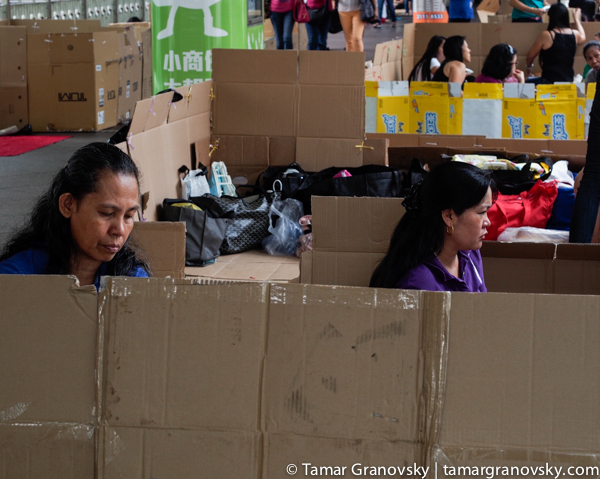
Sunday in Central, Hong Kong, Filipino Women on their Day Off Gathering Together

Sunday in Central, Hong Kong, Filipino Women on their Day Off Gathering Together

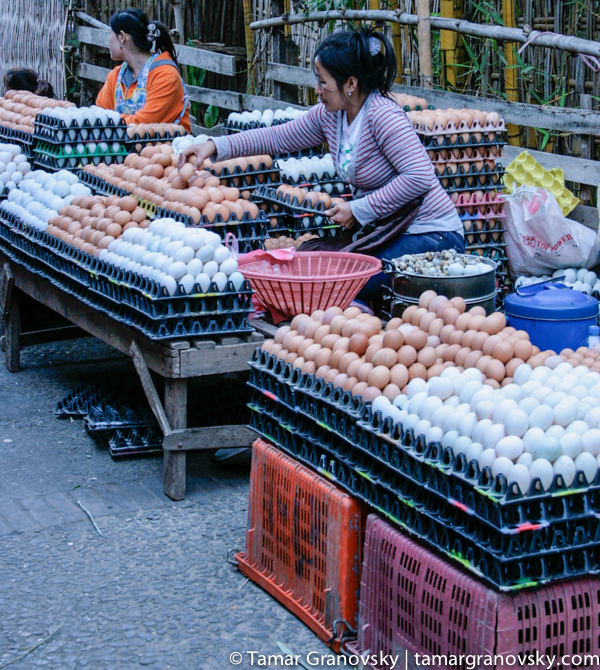
Market, Luang Prabang, Laos

Market, Luang Prabang, Laos

Tombstones in the Countryside, Xingping, Guangxi Province, China

Tombstones in the Countryside, Xingping, Guangxi Province, China

I have a friend who takes tours when she travels. She has asked me several times to join her, and says that tours take you to places you might not otherwise easily see. I enjoy travelling on my own for the very same reason. There are many benefits to independent travel. I set my own pace, schedule, and itinerary. I eat what I want, whenever and wherever I feel like it. I decide my daily activities and go with the flow as each day unfolds. I can stick to my plan for a particular day, but I may just as easily deviate from it and do something different. I choose whether to take a day or night train, or bus, or whether, instead, I want to fly somewhere. Although I’ve never gone on a tour, I suspect that I have more opportunities on my own, to chat with locals and even other travellers, than do people on tours. Guided groups may be logistically easier, but really they are just another, and to my mind more limited, way of seeing the world. The fact remains that however one travels, solo or with a group, we are all tourists. 

Many friends and family members tell me I am brave to travel solo in places that are so foreign to my Western cultural upbringing. I don’t think I am particularly brave; this is simply what I want to do. And by travelling on my own, I have learned some important things about myself.

My voyage of discovery has led me to many places and has changed me in a number of ways. I have learned to manage with less and laugh more. By travelling on my own, I have had to become more outgoing and sociable, and my many adventures (and even misadventures) have left me feeling confident and adaptable. In essence, learning more about the world and how other people live, makes me feel like my own world has expanded. I would like to think that I am more easy-going now, although I don’t know if family and friends would completely agree with this: after all, I am who I am…. But having survived my many travel mistakes, from being bitten by a dog in Laos, to several brushes with travel scams, I now feel that I’m just not as troubled when things go wrong. I have learned that there is no point in being stressed out; when you go with the flow, things have a way of working out perfectly fine.

Me! at the Great Wall, China

Me! at the Great Wall, China

For those of you who are beginning to feel your wanderlust grow beyond being satisfied by a long weekend here, or a two-week vacation there, I offer just a few tips that have helped me in my travels.

  • Plan, but also try to go with the flow: When I plan a short vacation overseas, I tend to over-schedule. Create a skeleton of a strategy first, and firm up the more important logistical details before you leave on your voyage, but always make sure you allow for flexibility. You will discover, by speaking with locals or fellow travellers, that your expectations and goals may change.
  • Set your budget: You do not need infinite funds to see the world but you do need to know what you can afford. Your money will carry you farther if you travel in places like Southeast Asia. It will, of course, run out much more quickly in North America or Europe.
  • Pack lightly: I travel with very little – I have been away from home since the beginning of August and travel with a carry-on bag and a day pack, and this includes a camera with three lenses and a travel tripod. Washing items by hand is a simple endeavour and, depending on where you find yourself, it costs very little to have your clothes cleaned for you. Remember, if you need anything else, you can always buy it.
  • Be adaptable: Travelling for a longer period of time can really take you outside your comfort zone. Depending on where you travel, chances are transportation will not run like clock-work. Each new environment provides different challenges and no two places are exactly alike. Consider the situation, stay calm, and adapt accordingly.
  • Eat well and remain open-minded: In most of the world, food is a central link to culture, tradition and family. Do not be afraid to try food that may be utterly foreign to you. Ask locals, such as guesthouse employees, taxi or tuk tuk drivers, where they eat. Consider taking a cooking class. I have done so in the past, have learned a lot about why a cuisine uses particular ingredients, and have thoroughly enjoyed myself.
  • Do not be afraid to venture off the beaten path: But also, don’t ignore more heavily explored areas. There is good in both, and keeping your eyes and heart open to each will allow you to connect to a place and people.
  • Respect the local culture.
  • Learn a few words of the language of the country you are travelling in. This will carry you a long way! Ask questions of locals and other travellers. When given the chance, most people will be glad to have a conversation with you – even if you end up using a sign language of sorts to communicate.
  • Establish a routine: Visit the same restaurant, cafe, fruit stand as often as you can – even daily, if possible. You’ll get to know the people there. It is always a pleasure to become an honourary part of the community, if only for a short while.
  • Stay connected with friends and family. It will make travel easier for you. Today, long distance communication is easier than ever, via email and Skype. At times these modes of communication are a life-saver! 
  • Trust your gut.
  • Pace yourself and allow for downtime. It has taken me years to figure this one out.
  • Have fun! Learn! Maybe you can even blog about it!
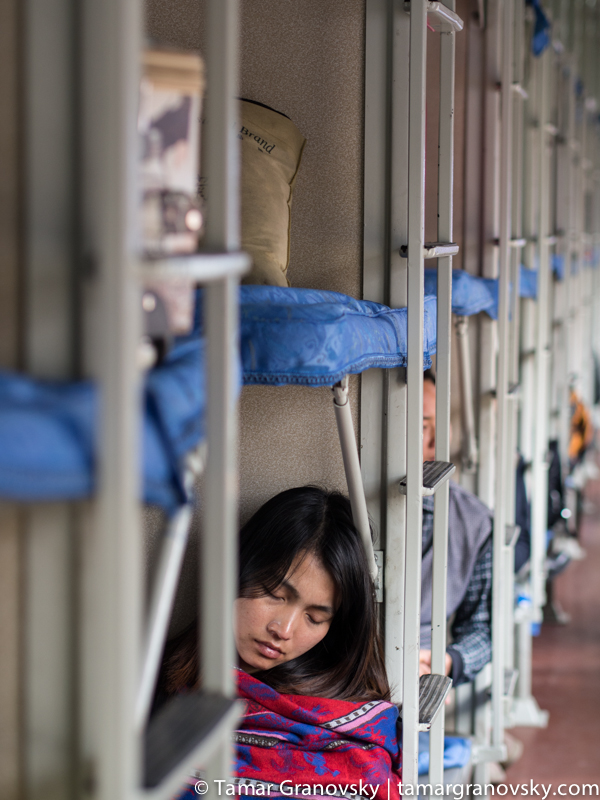
Dali to Kunming by Train, Yunnan, China

Dali to Kunming by Train, 3-Level Hard Sleepers During Day-time Travel, Yunnan, China