Category Archives: Photography, Reflections

Calipatria: Low Down City, 184 Feet Below Sea Level

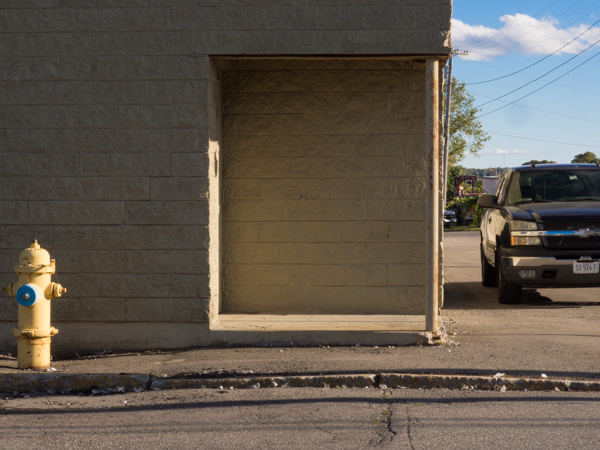
Calipatria, California

Calipatria, California

Very recently I had the pleasure of taking a photography workshop with Gerd Ludwig, on the art of storytelling. In just 5.5 days we six students were taught to develop our eye and came out better photographers because of this. We first met at Gerd’s home to review each other’s portfolios. This was followed by learning about the theory behind photographic story-telling, and then instruction/theory on the importance of light (including strobe). Afterwards, we headed out for three days of shooting at the Salton Sea, which ended with a full day of editing and sequencing and a final slide show of our work from “the sea.”

Gerd demanded much but in return gave us his all (as did his assistant, Molly Peters – thank you both so much!). He was a tough task master (with a terrific sense of humour, thankfully!) who was very generous with his knowledge. He is equally genuine with his compliments and his criticism. He pushed each of us a notch or two beyond where we, as photographers, had been before we met him. He astutely took note of our strengths and weaknesses, pressing us to make the best use of those strengths and acknowledge but then set aside the weaknesses. I was able to build on the lessons I learned from Ernesto Bazan’s workshop a few weeks ago and am grateful to both men for being brilliant teachers (and marvellous photographers).

Calipatria, California

Calipatria, California

The following may appear obvious but is not something most people think about: it is easy to take one only shot of something or just keep clicking away and not work the scene by moving about one’s subject from different perspectives, so that one shoots with intention. Both teachers reminded us to take various shots of the subject so that alternative angles/contexts are shown (it will be fairly obvious when you really “capture” the essence). As both Gerd and Ernesto stressed, it is more difficult to photograph with purpose. It is critical to pay attention to the complete frame (so that the photograph is self-contained and conveys a story and/or feeling with consistency, and is composed so that all elements in the image play a role). We were reminded that when something catches our eye we need to move beyond eye-level and change perspective by walking around the subject, getting low, climbing high, pointing up or down. Simply put, don’t wait for your subject to move – instead, move yourself. Shoot from the feet, so to speak.

Insightfully, Gerd noted that I tend to not consider the role of colour – critical to colour photography (perhaps this is why I have recently started experimenting with black and white and why it feels good. With black and white I do not worry about one colour or shade overtaking another and I can focus on the subject). So, during the three days of shooting I tried hard not to have tunnel vision as I concentrated on composition and subject. Colour became an important element rather than something that is there by chance (whether I can keep this up is another story but I shall work on it – along with black and white).

Now on to Calipatria…

It turns out that we did not actually stay by the Salton Sea but rather in Calipatria, California. As much as I fell in love with the landscape of the Salton Sea I realised that it was Calipatria that really held me captive. Located in the Imperial Valley (and, if you have not caught on yet, near the Salton Sea), this semi-rural “city” is 3.7 square miles, with farming as its main industry. According to Wikipedia, “Calipatria is one of the state’s poorest cities in income per capita due to agricultural paychecks and a declined economy in the 1990s.”

California has been in a state of drought for several years now and, so far, most farmers have not been targeted for their water usage – but now there is some discussion about water being redirected to more populous areas like San Diego. This does not bode well for the environment nor for an economy that is already in decline and people whose health is suffering because of heat and drought.

Calipatria, California

Calipatria, California

The desert, fiery weather, and lack of rain do not bode well for people who rely on farming for their livelihood. Yet the people of Calipatria (and Imperial County) are used to working hard despite adversity. Country Singer Justin Moore says it all in his song “Small Town, USA” :

A lot of people called it prison when I was growin’ up
But these are my roots and this is what I love
Cause everybody knows me and I know them
And I believe that’s the way we were supposed to live…

…Around here we break our backs just to earn a buck
We never get ahead but we have enough

Calipatria, at most, is 10 square blocks; “downtown” is a mere two short ones. It comprises a post office, library, city hall, police/fire department, elementary/middle/high schools, a supermarket, a convenience store, two small restaurants and a doughnut shop, a laundromat, a liquor store, and not much else. There are three churches. The inn is at the end of town (most visitors to Calipatria are family members or friends of those in the prison at the edge of the city). If residents need to shop they travel to nearby Brawley. Children attend school during the week, adults work. The streets of Calipatria were desolate on both weekdays and weekend. Possibly the time of year had had something to do with this: temperatures were over 100F.  No matter, there is little in the way of amenities, thus there’s nothing to do but stay indoors, behind closed blinds that keep out the searing heat and bright sun. I saw only a few residents hanging out in the shade of their yards. Even the park was deserted. This left Calipatria silent – aurally and visually.
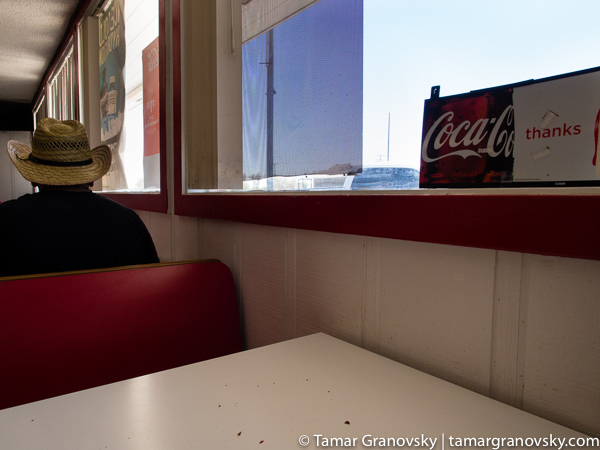
Calipatria, California

Calipatria, California

At first glance, Calipatria appears an ordinary, homogeneous, suburban terrain. Some homes are dilapidated and protected by dogs and chain link fences – the people who live inside have precious little. However, just as many of the humble homes I saw are obviously lovingly maintained. It was the everyday things, the small moments, the details of this place that first struck me and the details that I sought out: tilted telephone poles mirroring palm trees, neat lawns and fences, debris, rusted vintage automobiles, a lone person in the landscape. The sprinkling of people I spoke with grew up in or near Calipatria and chose to stay; each one was fiercely proud of place. Perhaps this is, in part, what had captivated me about the setting of this city, and which I, in turn, tried to capture in photos.

For three days I walked quietly up and down the streets, trying to immerse myself in and find the beauty of the City of Calipatria – 184 feet below sea level. It was another opportunity to learn to be true to myself and my voice, which my workshops with both Gerd and Ernesto had supported. Through all of this, I have figured out that I do not have an interest in telling narratives. Instead, I prefer to create images that hint at memory, emotion, or understanding.

Calipatria, California

Calipatria, California

Calipatria, California
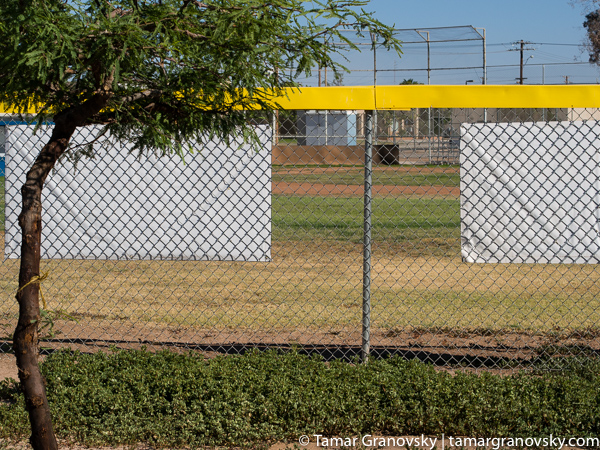
Calipatria, California
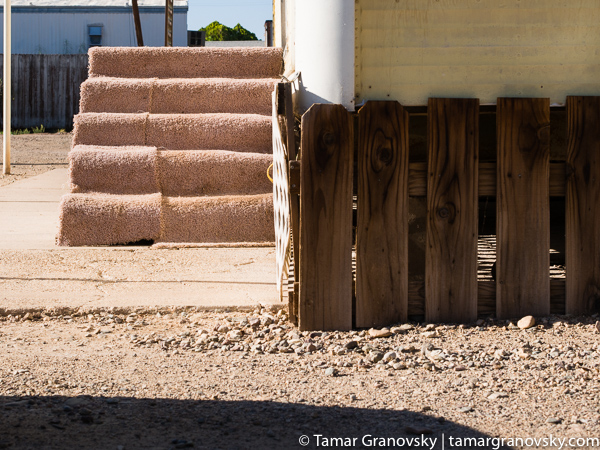
Calipatria, California

Calipatria, California

Calipatria, California

Calipatria, California

Calipatria, California
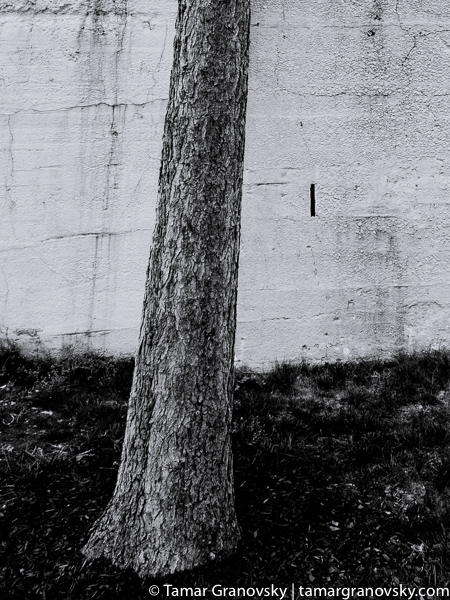
Calipatria, California

Calipatria, California

Calipatria, California

A Little Photo Workshop in Brooklyn

Brooklyn Window

Window, Carroll Garden, Brooklyn

Last weekend I was fortunate enough to take part in a photo workshop offered by Ernesto Bazan. Ernesto claims to be a harsh task master, but in truth he is a rigorous, competent, insightful, and generous man with high standards for his students; he knows they can reach greater levels by the time they leave him. After I adjusted to his leadership it became clear that I would come out thinking about photography in a new light. He offers constructive critiques emphasizing form, content, and avoidance of distraction (his mantra), so that one element does not overcome the other; it is not just about tightening composition, or simply showing something, but adding a human/emotive element to the photograph even if a person is nary to be seen. We were working to improve our photographic skills beyond the strictly technical issues – we were encouraged to develop our own photographic language.

I came upon Ernesto by chance when I saw a set of photographs, online, by one of his student’s. His name is Colin Steel and I contacted him because I loved his work and had wanted to know where he took the images. One thing led to another and eventually I came in touch with Ernesto Bazan. Seeing the strength of the work of Bazan’s students, besides Colin, I realised that I was sold – as if it was meant to be.

Girl with Mother at Food Stand, Williamsburg Smorgasburg

Girl with Mother at Food Stand, Williamsburg Smorgasburg, Brooklyn

My workshop was in Brooklyn and was made up of first-timers (despite the fact that many students return again and again). We melded into a cohesive and supportive group learning much from each other. Our lives/backgrounds and photographic experiences varied; many were generating work of a high calibre which pushed me to do my damnedest to work toward their level.

The most important thing that I learned last week was how to see with my camera, as if it is an appendage and a part of my soul. As a visual artist I know how to see but I did not take note of every detailed element framed by the camera (i.e., I am not always aware of things that may be a distraction — what seized me is not conveyed, because the diversion(s) leads the viewer’s eye astray from the subject). The workshop was only 2.5 days but already I have developed new habits  – how to look through the lense when something grabs my heart so that I can get to the core of it and keep a keen eye out for extraneous elements.

Food Stand, Williamsburg Smorgasburg

Food Stand, Williamsburg Smorgasburg, Brooklyn

I began this workshop photographing what I thought I “should” photograph rather than allow myself to have something touch me and guide my instincts.  A fellow student mentioned to me that Ernesto had said, in conversation with her, that she should work with her natural inclination and photograph what talks to her heart. Upon hearing this I started listening to mine. It became clear that my best images came from freeing my mind so that I was guided by my feelings or first impulse, if you will.

Church Yard, Carroll Garden, Brooklyn

Church Yard, Carroll Garden, Brooklyn

Park Tree, Williamsburg, Brooklyn

Park Tree, Williamsburg, Brooklyn

Toward the Limit of Abstraction: An Impression

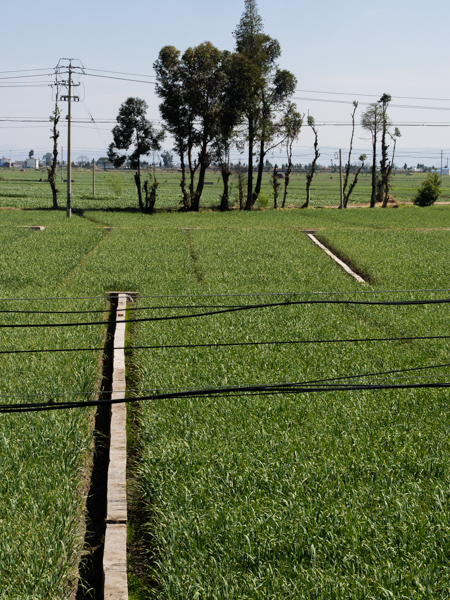
Outside Dali, Yunnan Province, China

Outside Dali, Yunnan Province, China

The other day I stumbled upon the following statement by artist Chuck Close: “I think that while photography is the easiest medium in which to be competent it is probably the hardest one in which to develop an idiosyncratic personal vision. It is the hardest medium in which to separate yourself from all those other people who are doing reasonably good stuff and to find a personal voice, your own vision, and to make something that is truly, memorably yours and not someone else’s. A recognized signature style of photography is an incredibly difficult thing to achieve… Photography is not an easy medium. It is, finally, perhaps the hardest of them all.”

I cannot tell you how true the above words ring. I actually verbalized a very similar sentiment before I stumbled upon it: In the years that I worked on sculpture (I exhibited in a number of galleries in Canada) I had a voice that was clearly mine, spoke out, and was heard by others. I cannot find my voice in photography. So, I spend a lot of time looking at my work. I try to understand what it is I see in, and feel about, my immediate world, why I make images, what it is I am trying to communicate, and what it is that I cannot communicate. Where is my voice?

Cambridge, Massachusetts

Cambridge, Massachusetts

Up until recently my photographs were processed entirely in colour. The world, after all, is in colour. But, how often do we truly see colour? What is it that invites me to look at specific colours when I look around me? Is the answer conveyed in the photographs that I take? Does colour help the photos impart a mood or say something? Unless colour is integral to the subject of the photograph or pulls the framed subject together, it may cause certain details to go unnoticed or even make the photo seem too busy. Is colour the primary/core element of the composition? If not, is there a reason to keep it? These last few months I have wondered: can the use of black and white remove the possible distractions of colour? If I turn to black and white can I pull my pictures to such an extreme that reality starts to recede and just an impression or essence remains? I see my work differently when colour is eliminated. The photographs may be good or they may be poor but removing colour has helped develop my voice.

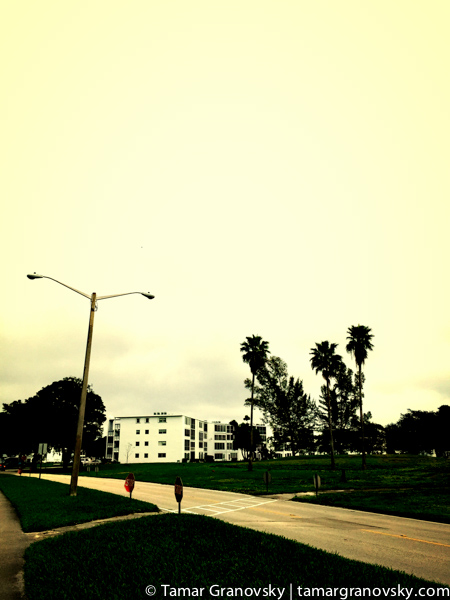
Century Village, Florida

Century Village, Deerfield Beach, Florida

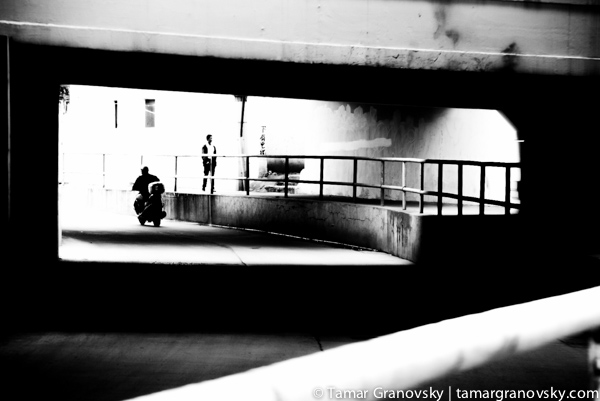
With black and white I tend to extract many shades of grey. As I shift to amplified black and white I am struck by lines, shapes, light, texture, and positive and negative spaces. Blown out black and white begins to move toward abstraction; photos of people or street shots retain a connection to the real world but are distilled down to an essence. By using high contrast the composition becomes minimal in a way that may be impossible with colour. Manipulating black and white in this manner comes to me instinctively. For me there is, in this, a sense of freedom. So, I push out and then pull back in.

Xingping, Guangxi Province, China

Xingping, Guangxi Province, China

The more I shoot the more confused I am about my work. In my last blog posting I mention that I second guess myself, always. When I photograph or work on processing the images I am lost in the moment. Nevertheless, when I am not immersed in the work I question myself. I am trying to figure these things out – an exploratory journey of sorts. With black and white post-processing the pictures emerge toward the brink of abstraction and I feel that this is something I need to exaggerate or create with greater intention. Simply put, I need to work on what comes to me naturally. I’m excited about these reductive explorations; it’s important to keep growing and experimenting. My discovery of black and white and moving toward abstraction keeps me attuned and helps me see the world as I feel it. An impression and a move to something fundamental. There is no need to hurry. Finding one’s way and learning to speak takes time.

Tulou, Fujian, China

Tulou, Fujian Province, China

Shanghai, China

Shanghai, China

Hutong, Beijing, China

Hutong, Beijing, China

Below are some of the same photographs in colour.

Dali, Yunnan Province, China

Dali, Yunnan Province, China

Cambridge, Massachusetts

Cambridge, Massachusetts

Xingping, Yunnan Province, China

Xingping, Guangxi Province, China

Tulou, Fujian, China

Tulou, Fujian Province, China

Shanghai, China

Shanghai, China

Beijing, China

Beijing, China

A Camera is a Fine Tool, but What is it that I am Trying to Say?

Century Village, Florida

Century Village (Deerfield Beach, Florida)

In my recent post, Finger Painting; or, Why I Fell in Love with My iPhone I wrote:

I still use the Olympus OMD-EM5. I love it because I can choose the lens I want to use (although I typically head out with only one lens so that I am not encumbered and I can just go with the flow based on the one option I give myself), manipulate the ISO, aperture, and shutter speed; the images are of a higher quality and the higher control and resolution add a whole layer of beauty and precision. Nevertheless, I find myself predominantly utilizing the iPhone.

The truth of the matter is that even though I LOVE my “real” camera I simply adore the hands-on-ness of the iPhone and the post-processing applications (apps) I use to create the final images. It provides a direct way of looking at and capturing the subject and light, moving the image into a creative idea through the apps, and then sharing it with others through social media. I no longer think that taking a photograph with a small mobile device (that happens to be a telephone among other things) is not photography. It is, as I’ve said, simply another camera.

Having said the above, and with more thinking since, I looked at photographs I’ve taken in the last year with each camera. When I use the iPhone camera the results are definitely “looser” (this begins with how I hold the instrument). However, it appears that I sometimes use the Olympus with the same freedom. This typically happens when the camera is set on auto, aperture, or shutter mode as appropriate, rather than using the camera manually.

MBTA (Cambridge, MA)

MBTA (Cambridge, Massachusetts)

During my many years of creating sculptural installations, drawings, and mono-prints, I rarely second guessed myself. In photography I do. Always. This medium is not second nature to me, as yet. To swim upstream against that somewhat, I trust that a more casual approach to photography will help me capture the immediate visceral reaction to the subject that instigated my desire to take the shot in the first place — rather than force the image. While the subjects of my photographs are part of the physical world the photographic product is an interpretation of how I see it. I seek for something that cannot be touched; my desire is to make one feel. My aesthetic, I hope, shifts the viewer’s impressions of the visual (rather than material) in an emotive fashion (rather than that of the intellect). My aim is to get to an essence. Whether I *ever* get there is another story…

Clouds (Cambridge, MA)

Clouds (Cambridge, Massachusetts)

My eyes catch light, colour, patterns, shapes, and people – often as details, but sometimes as part of a larger environment. I’ve been told that street photography is about telling an open-ended story; it may be expressed through a “decisive moment” that translates into many possibilities (i.e., in that one moment, every element in the frame helps to tell the story). Typically the storytelling element is provided by the presence of people.

I am trying hard to figure this genre out. Does a human subject always need to be in the image? May I not take a photograph of a detail? Does it matter how much I cut part of a person out of the frame? Stepping back, I see that I have a tendency to focus on abstractions, angles, lines, parts of the human body. I often focus on detail and leave a lot out of the shot. If I decide a photograph should be converted to black and white extreme contrast is the way I typically go; it speaks to and from my gut. I am learning to manipulate colour so that it does the same thing to me.

Rockport, Maine

Rockport, Maine

After School (Maine)

After School (Maine)

One telling difference between the iPhone and the Olympus is that the phone does not have a viewfinder. I am inclined to frame the world carefully but find that when I am more casual with my tool I connect more closely with the subject.

East Cambridge, MA

East Cambridge, Massachusetts

Perhaps my photography is all over the place. I walk the streets a lot – in both cities and small towns. I have a weakness for architecture; I look at the detail around me; I look up a lot; I crouch low and see what the world looks like from that position. If I see someone on the street who catches my eye I go up to her/him and ask to take a photograph. I like to get up close and personal with people (almost invasive).  I don’t know exactly why I do this. I see the world differently. I see things better. It seems to me that the narrative content is not as important as the emotional matter.

Rockland, Maine

Rockland, Maine

Karen, Century Village (Florida)

Century Village (Deerfield Beach, Florida)

Why I Fell in Love with My iPhone

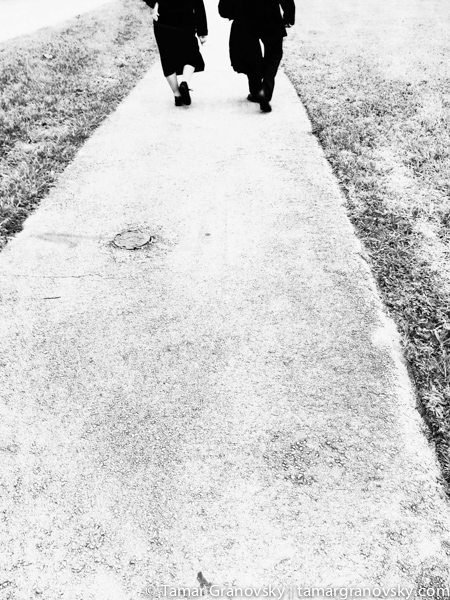
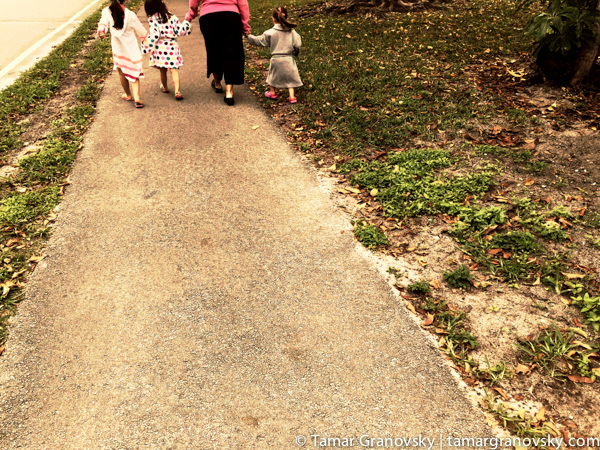
Century Village Saturday Morning Walk to Schule

Century Village Saturday Morning Walk to Schule

Lately, I rarely *purposely* head out to take photographs. Instead, they are mostly products of the rhythm of my life as I go about my day. I am working on two projects but besides these, all other photographs are taken as something catches my eye. Diagonal lines, that is my position to the subject, play a greater part in the photographs. My eyes and heart are always on the look out, now. The radar is on and I am on alert. I now push the story-telling aspect of photography thus, I try to trigger questions rather than simply tell. This is slow to come but it is coming. I think about it constantly.

I have learned that it is incredibly important to photograph, first, for myself. Doing this allows me to follow my instincts, play, explore, and create images that are personal. I want to share my work with others, mind you, and clearly do so via this blog, my website, and Instagram. Since I bought my iPhone I take it out to shoot, often, and have worked particularly hard and long, after, when I post-process the picture.
Here

Here

There

There

I still use the Olympus OMD-EM5. I love it because I can choose the lens I want to use (although I typically head out with only one lens so that I am not encumbered and I can just go with the flow based on the one option I give myself), manipulate the ISO, aperture, and shutter speed; the images are of a higher quality and the higher control and resolution add a whole layer of beauty and precision. Nevertheless, I find myself predominantly utilizing the iPhone.

The truth of the matter is that even though I LOVE my “real” camera I simply adore the hands-on-ness of the iPhone and the post-processing applications (apps) I use to create the final images. It provides a direct way of looking at and capturing the subject and light, moving the image into a creative idea through the apps, and then sharing it with others through social media. I no longer think that taking a photograph with a small mobile device (that happens to be a telephone among other things) is not photography. It is, as I’ve said, simply another camera.

Those of you who have followed my blog know that I was a sculptor, once upon a time. The work I created was very hands-on. Tactility was critical to me. When I drew, I used my fingers. It turns out this is the same with photography. I fell in love with the act of photography a few years ago but am discovering my voice now that I clasp a “smart” phone in my hands. It is my primary capture tool through which I have the opportunity to finger-paint a body of work. Snapping the subject is the starting point. I am interested in what I can do, creatively, afterward. I have become quite manipulative with my “darkroom” apps on the computer – more so than with Adobe products such as Lightroom and Photoshop. Images are slowly developing into works that are abundant in content and expression. Imagine: a camera and a darkroom all in one. I have fully embraced this process and have gone from taking a photograph to making one. The potential is great and it is all done with my fingers.

Century Village Bus Depot

Century Village Bus Depot

I still attempt to do things precisely when I compose “in-camera.” Before I shoot I make sure to get the exposure set properly and place the focus point, manually, as well. To do this, I tap the screen of the iPhone (a lot) to indicate where to focus and adjust the exposure. It is more difficult to keep the iPhone camera still so I use a tripod more often and also accept blur as a happy accident, occasionally. Though I get the camera set correctly as best as I can when I take a shot, I enjoy using many of the post-processing apps available to me and with which I go wild; they help shape and push my work further. However, it is important that the end result look like a photograph and NOT a drawing or painting.

I tend to use two to five apps as I edit. My goal is to find a balance between adding layers of complexity to the the original subject and keeping the vision uncomplicated and coherent. The end result has to be fairly simple and (I can only hope) strong – so that someone looking at a photograph of mine responds to it, emotionally. I am experimenting with both colour and black and white and pushing light and shadow to the extreme for high contrast. Colours are processed so that they are washed out (“bleached”), pushed further (typically by warming saturation, adding “filters,” etc.), or have all of the saturation removed so that the picture becomes black and white. Manipulating the photographs in my Century Village, Florida series encourages a timeless feeling that conjures up memories for the viewer and each photograph is tailored to help convey the story.

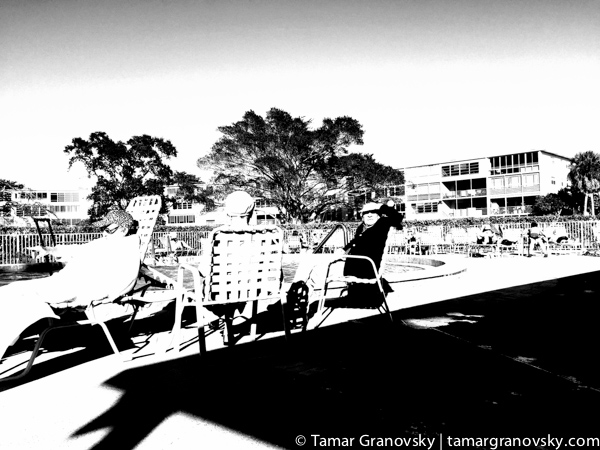
At the Pool

At the Pool

The principal apps I use are: Camera+; ProCamera; Pure; Filterstorm Neue; Afterlight; Picfx; Photo fx; Mextures; and Bleach Bypass and/or SkipBleach.

I am drawn to the immediacy of using my iPhone as a camera and I can edit on the go. That is, when I have a moment, at any time of the day, I take my phone out and use my fingers to manipulate and “paint” the photograph.  I spend hours on my work and stop the editing process when my inner voice says, “that’s it!”

Intersection

Intersection

Shuffle Board

Shuffle Board

Flag

Flag