Category Archives: Travel (in general)

Where Land and Water Meet

Man on Bench by the The Mediterranean Sea .Nice, France.

The world is blue at its edges and in its depths. This blue is the light that got lost. Light at the blue end of the spectrum does not travel the whole distance from the sun to us. It disperses among the molecules of the air, it scatters in water. Water is colorless, shallow water appears to be the color of whatever lies underneath it, but deep water is full of this scattered light, the purer the water the deeper the blue. The sky is blue for the same reason, but the blue at the horizon, the blue of land that seems to be dissolving into the sky, is a deeper, dreamier, melancholy blue, the blue at the farthest reaches of the places where you see for miles, the blue of distance. This light that does not touch us, does not travel the whole distance, the light that gets lost, gives us the beauty of the world, so much of which is in the color blue.

From “A Field Guide to Getting Lost,” by Rebecca Solnit

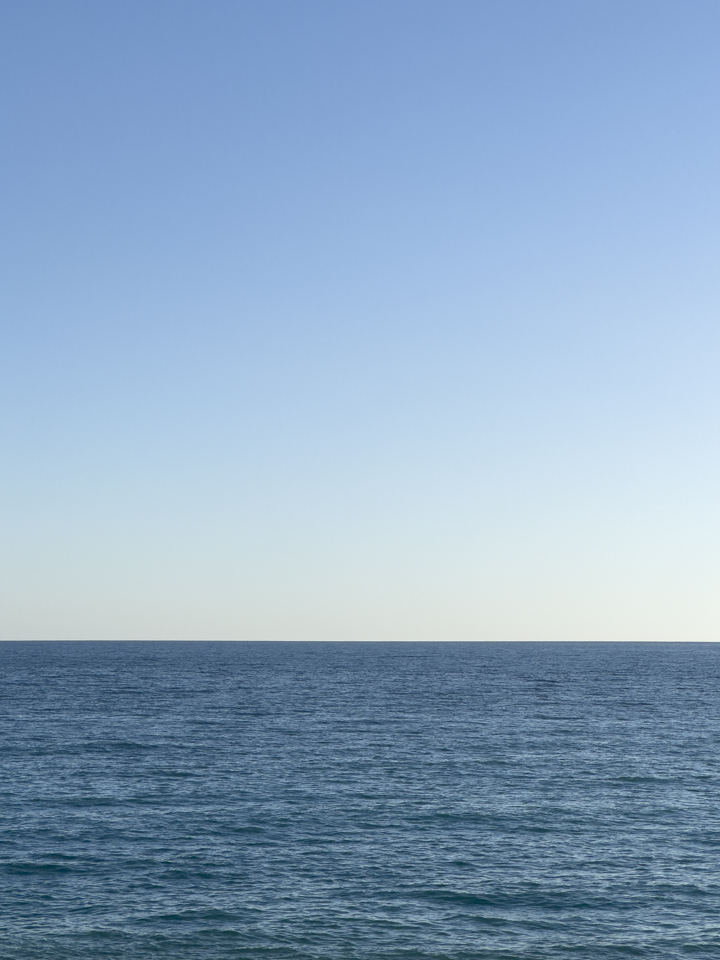
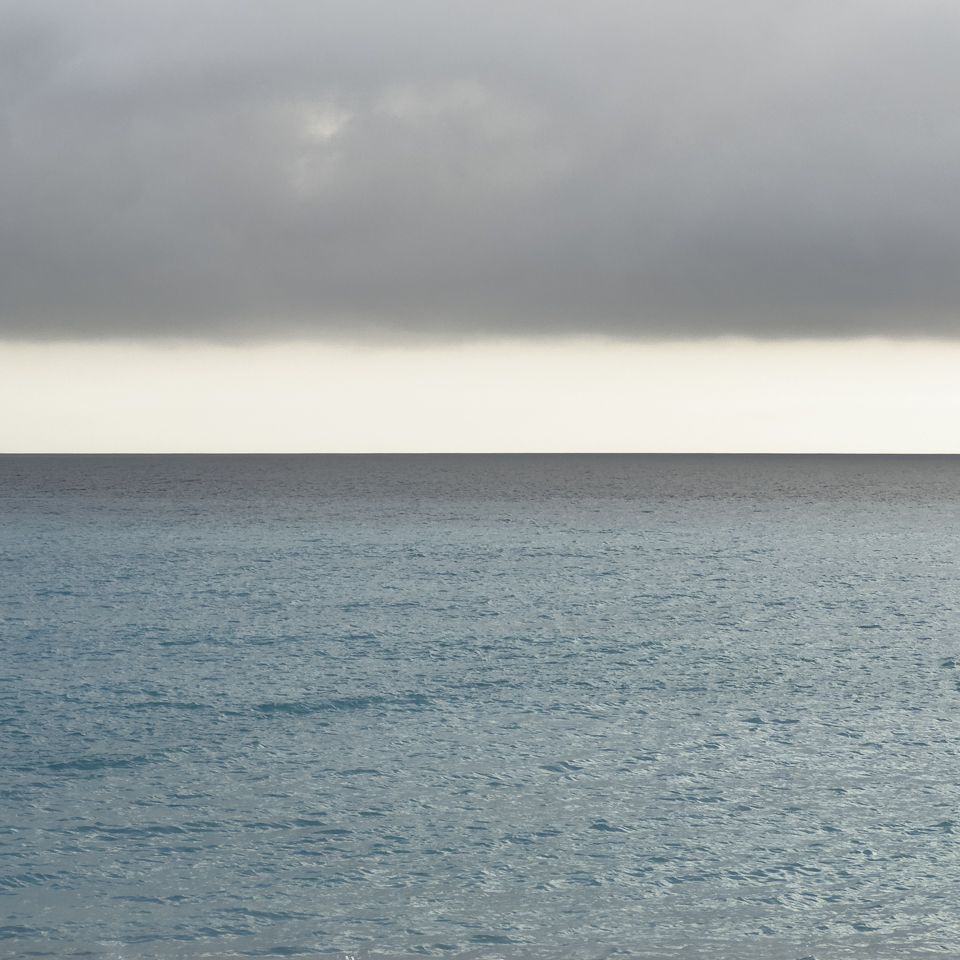
The Mediterranean Sea as seen from the Promenades des Anglais. Nice, France.

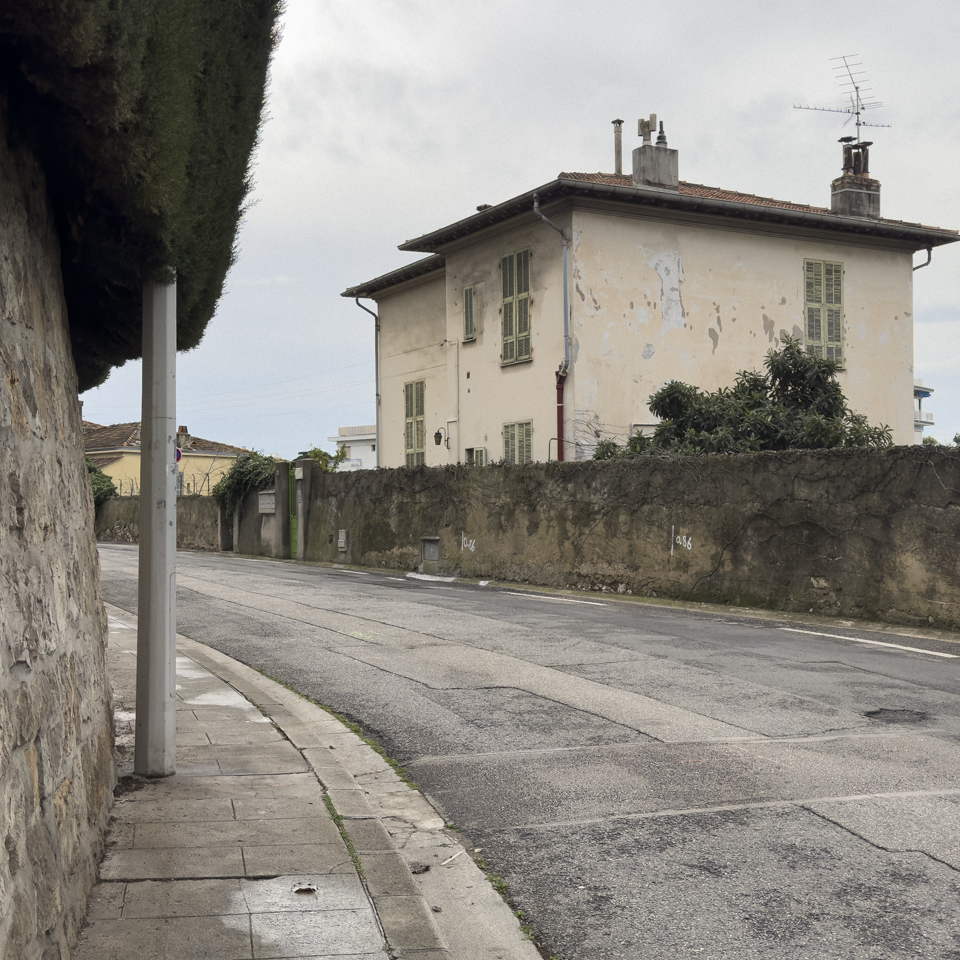
During a two month winter sojourn in Nice, France, I aggressively returned to life after a few months of winter in Montreal. The sun and sea woke me up. I had the opportunity to walk on the Promenades des Anglais, along the Mediterranean Sea, almost daily. The chance to easily walk or bike uninterrupted in a city is a rarity. Here, people can do that. I walked with great purpose or I strolled. I was able to lose myself in thought, listen to music or, listen to others’ conversations. I shared benches with strangers; I shared the deep blue water, too. I was outside and exposed, so to speak, to nature, the sun, to a space to move and think. Here was a place where, along with others, I surveyed the far away blue.

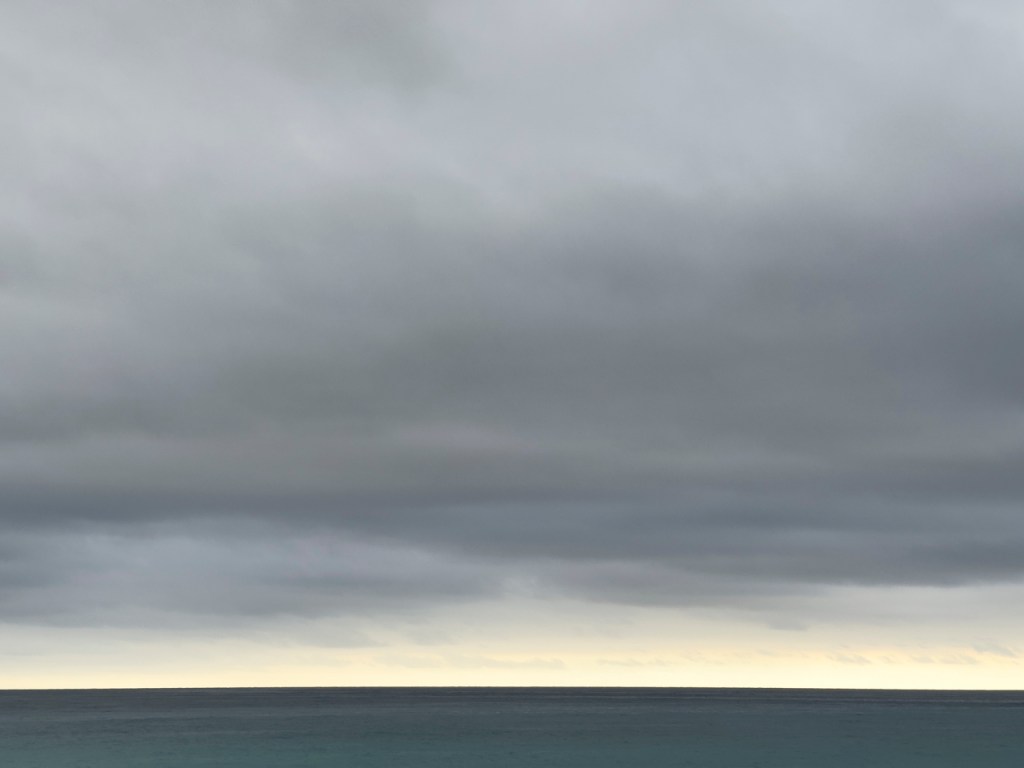
In the distance, the water defined the horizon as the sea reached the land’s rocky surface. Above it was blue sky. Sometimes, white cloud. Or blueish grey cloud. Also, blankets of dark cloud at times.

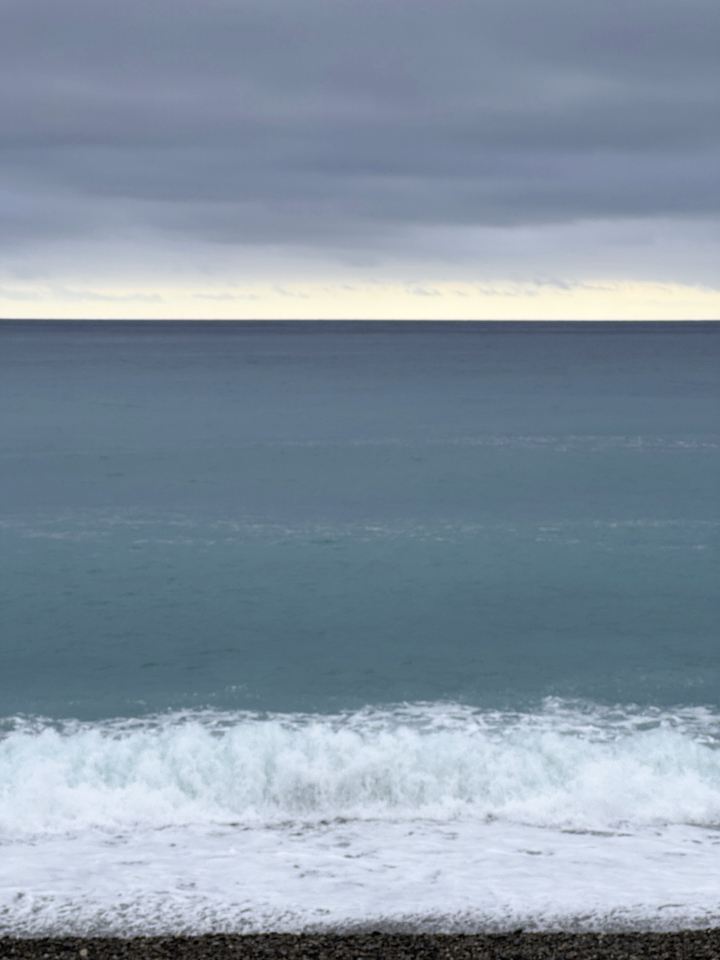
The Mediterranean Sea as seen from the Promenades des Anglais. Nice, France.

My father showed me how one can live one’s life. He was a dreamer. I suspect my desire to explore came from him. He and I were cut from part of the same cloth. But I found myself thinking about my mother. She was a believer in routine. I tend to want to break away from it. Yet, somehow, routine was what I found as I passed my days here. And, for the first time, I really wanted to share a place with her. This place. Nice.

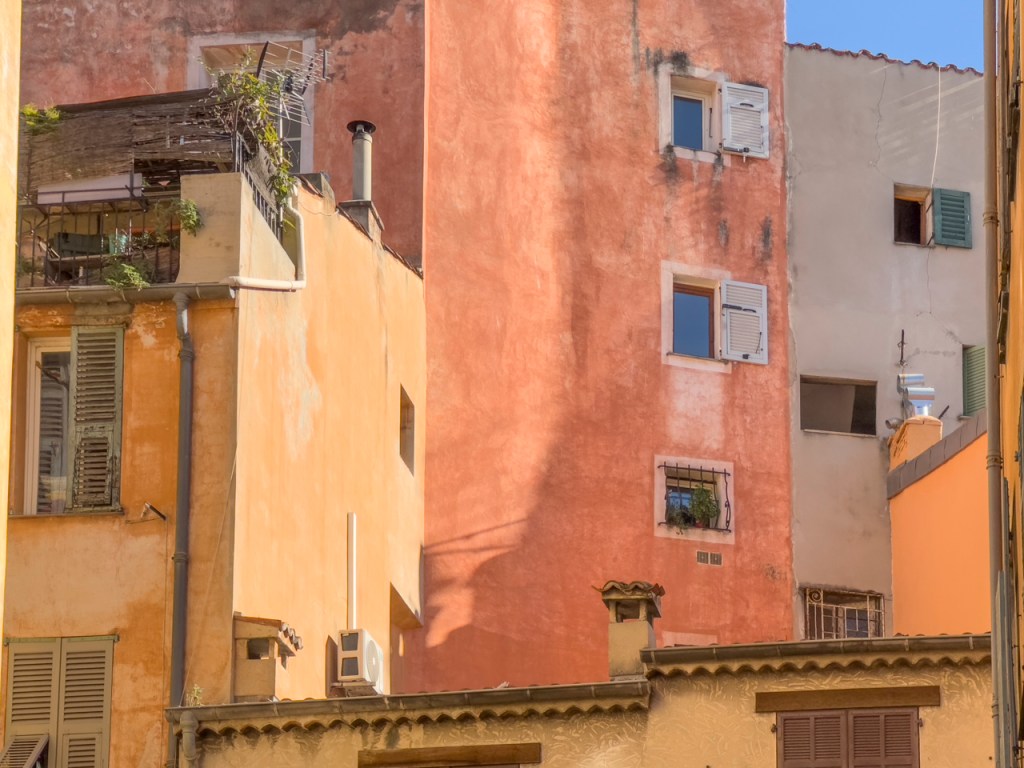
Le Vieux-Nice
Avenue des Baumettes
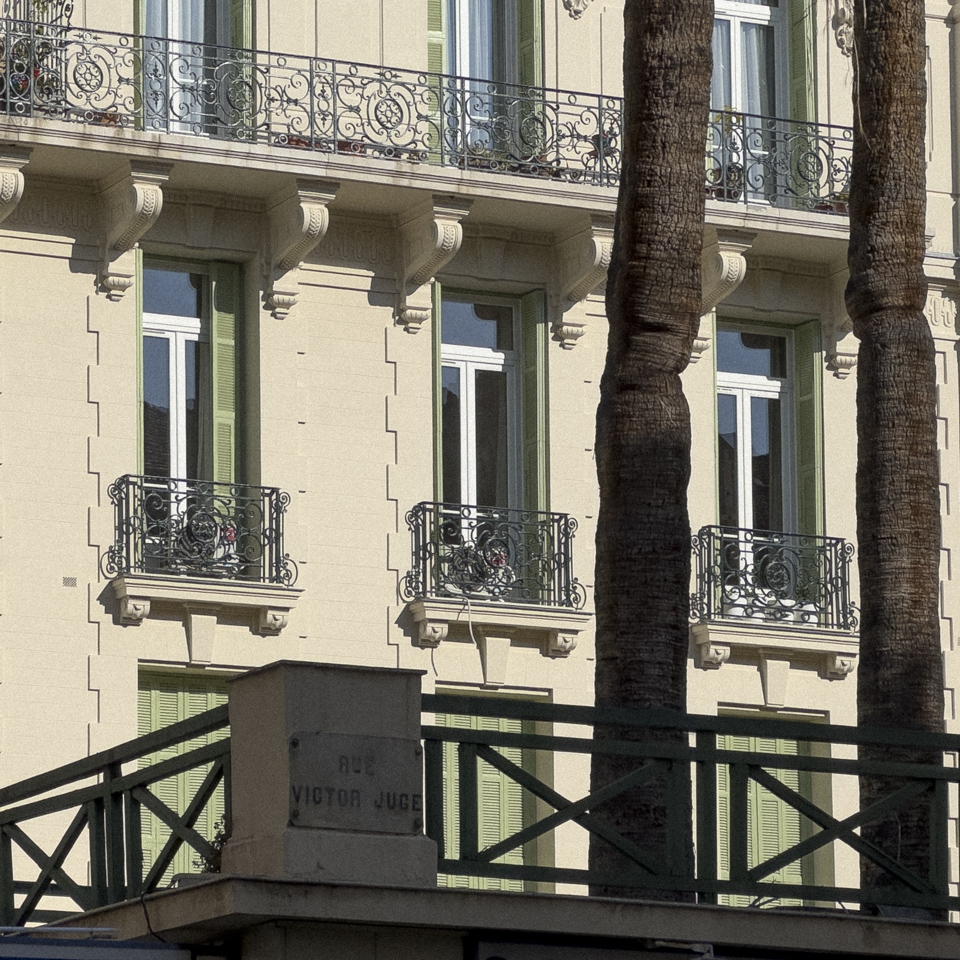
Rue Victor Juge
Boulevard François Grosso
Avenue Auber
Parc Honoré d’Estienne d’Orves

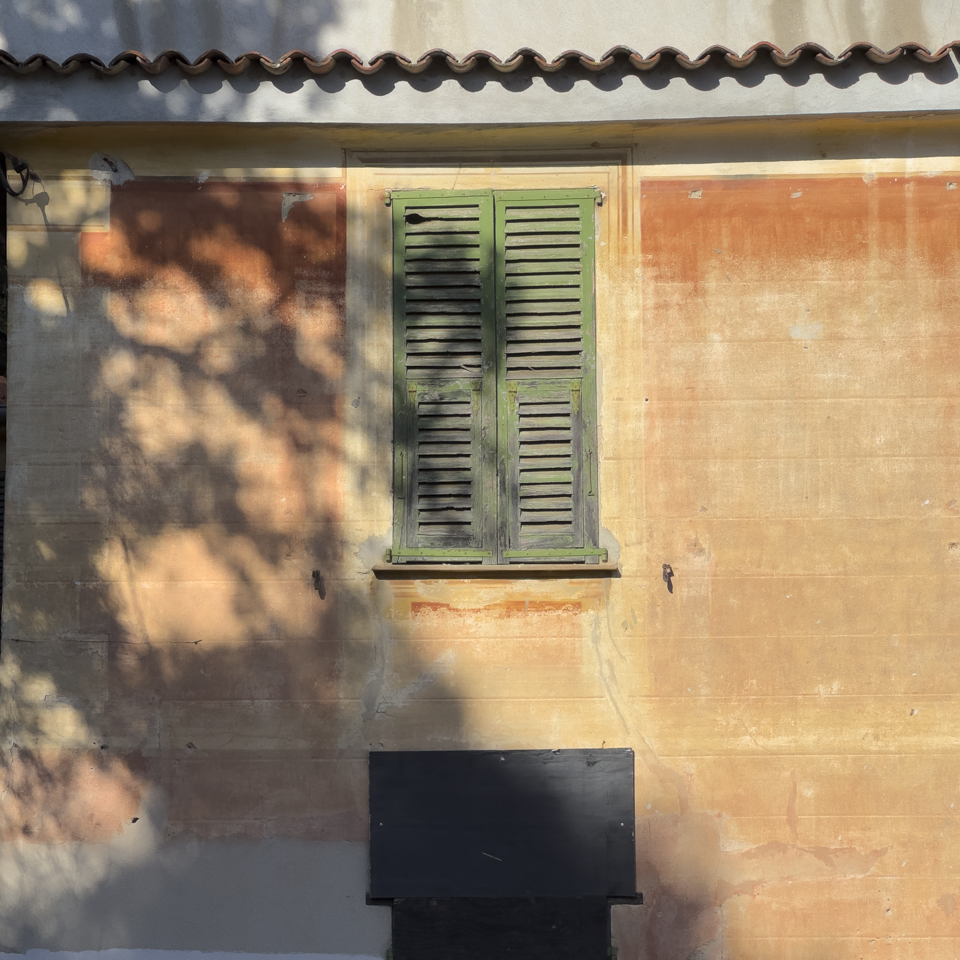
I wanted to describe the everyday to her : the streets, the cafés, the stores, and the people. For example, I wanted to tell her that in the still dark early morning hours, when I went out for a croissant or small loaf of bread, I would pass by the same sanitation worker who picked up garbage from the neighbourhood sidewalks with his spear tipped stick. The work he did was out of sight for most since, by the time the day began for them when the sun finally rose, he was gone.

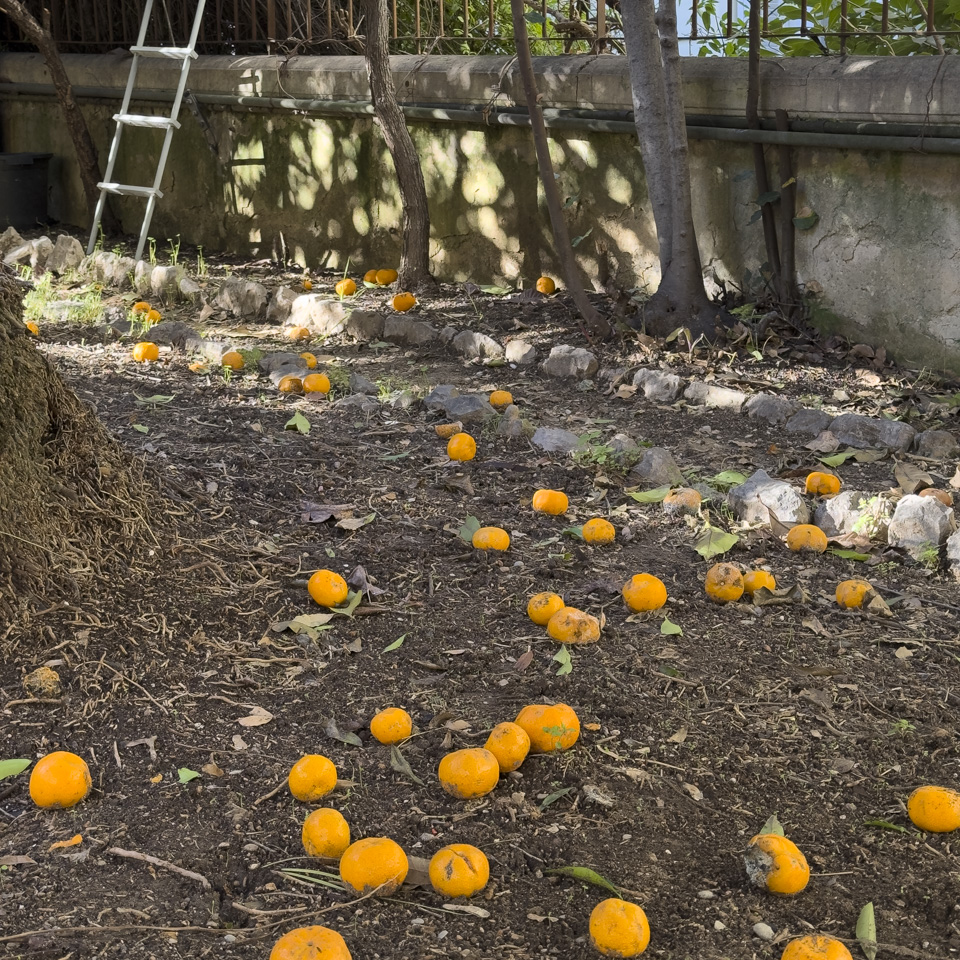
I would have liked to have told her about the orange bigarade trees. They were ubiquitous. Although I know I am exaggerating, it seemed these trees grew wherever there was a little green space by residential buildings. In the city, these trees are ornamental and are known for their hardiness; they do not produce the sweet fruit we eat but, instead, a bitter fruit known as bigarade. The scent of the flowers perfume the city air when these trees are in bloom. In the summer their canopies provide shade. I left just before the oranges began to truly fall. I never asked the question: if you do not pick and eat these fruit what do you do with them after they fall? I would like to believe that the city composts them. Perhaps people pick them from their gardens to make a bitter liqueur of one sort or another. Or jam. Or perfume. These products are what the bigarade is cultivated for outside of Nice.

Orange tree. Avenue Auber, Nice. France.
Fallen oranges. Rue Jean-Baptiste Spinetta. Nice, France.

Except for a quick and unexpected jaunt to visit Liya, in Portugal, I stayed in Nice. It was all that I needed. Like an explorer I was able to wander and discover. Like a child I found that everything about the city excited me. Once I mapped up my neighbourhood I felt at home. Home enabled me to then further survey the city as I experienced the pleasure of getting lost, discovering, and facing something new. I sat outside a multitude of cafes. There were so many green spaces. People took their leisure, alone or with others. I lived in a central district of Nice and was happy to learn that very nearby lived a population of North Africans from former French colonies like Tunisia, Algeria and Morocco. There were also religious Jews in the neighbourhood. These culturally diverse communities seemed strong although I know that French cities (and especially port cities, like Nice, where there is a sizeable immigrant population) have been areas of trouble with less harmony (particularly with the Muslim community), due to the rise of the Far Right.

I left home – Steve, Tuli, and Montreal – to go somewhere unfamiliar. I worried that I would not care for Nice, that it would be too big a city, and that it would feel alien. Nonetheless, I went with this uncertainty because I dreamed of more sun than cloud, a temperate climate, and the boardwalk. And in the end, the unfamiliar became familiar. My walks. The Mediterranean sea. The blue. The deep, bright, azure blue sea with a horizon far, far away helped me adapt easily so that by the time two months in Nice was over it was as if I was losing home again.


The Mediterranean Sea as seen from the Promenades des Anglais. Nice, France.

The Mediterranean Sea as seen from the Promenades des Anglais. Nice, France.

A Need to Know

Near Cachoiera. Bahia, Brasil.

Near Cachoiera. Bahia, Brasil.

Over the years there have been several elements that have consistently played important roles in how my life and my art have unfolded. I grew up immersed in art; my parents took me to museums and encouraged me to be creative – to use my hands by drawing, building, and photographing. Unwittingly, they also taught me to enjoy solitude. Beyond this though, throughout my university pursuit in the visual arts and to this day, I have always craved movement and change (I moved sixteen times in twenty-two years). I have also always felt strongly compelled to learn about and understand other people and cultures – so much so that as a teenager I considered anthropology as a career.

Once I settled into nesting by making my home with Steve, while continuing to dabble in art, the urge to address all of these interests led to my leaving my all-consuming day job as an archivist and setting out to travel on my own for several months. If I hadn’t done so I would not have realized that travel and photography are my true passions.

I have come to understand that both these pursuits have everything to do with the need to know. When I travel, I am completely open to discovery. I want not just to set foot in other lands but to become a part of them, however briefly. I want to see and experience that which is different about other cultures and, dispelling all assumptions, learn about what we all have in common.

Cachoeira, Bahia, Brasil.

Cachoeira, Bahia, Brasil.

In her New Yorker article this past July, Loneliness Belongs to the Photographer, Hanya Yanagihara wrote:

…the person with the camera is not hiding but receding. She is willfully removing herself from the slipstream of life; she is making herself into a constant witness, someone who lives to see the lives of others… the photographer moves through the world, our world, hoping for anonymity, hoping she is able to humble herself enough to see and record what the rest of us—in our noisy perambulations, in our requests to be heard—are too present to our own selves to ever see. To practice this art requires first a commitment to self-erasure…

…The annals of photography contain many extraordinary portraits, but the ones we linger on longest achieve something exceptional: they suggest that in the microsecond it takes for the shutter to blink, some communion has been found, that an unseen life has become a seen one, that attention has been paid, that an act of witness has been accomplished. They remind us how much we want to be seen, and also how infrequently we practice the skill of seeing others. But if there is a cure for the invisibility of loneliness, it is this. It is why, depending on who you are, that click of the camera’s shutter is a sound that evokes either anxiety or relief. Click: I see you. Click: I see you. Click: I see you. You are not alone.

The camera is the instrument through which I observe, discover, and learn as I travel. Although I am behind it, it connects me to others at the same time. It starts the conversation – be it through simple eye contact with the person I am photographing or, sometimes, a profound sense that the person I am photographing understands she has my complete attention and respect. It is when I travel and photograph that I can truly see.

Near Cachoeria, Bahia, Brasil.

Near Cachoeria, Bahia, Brasil.

I am attentive to my environment; I am constantly framing moments in my mind’s eye as it sweeps the landscape around me. I try to capture the feel of things with my photographs – of people, of spaces, and of objects. Although I have begun to work on photographic projects in the last year, my pictures are first and foremost about the subject in each individual image and about the impression it made on me. I work toward getting at what lies beneath the surface. Through photography I collect experiences, remember, learn, and share what I have felt and seen. To quote Yanagihara again, “The lens may distance the photographer from the rest of humanity, but with that distance comes an enhanced ability to see what is overlooked.” I would also venture to say that wandering with my camera brings this photographer closer to intimate exchanges and humanity. It is my propensity for travelling alone that, perhaps ironically, enables this.

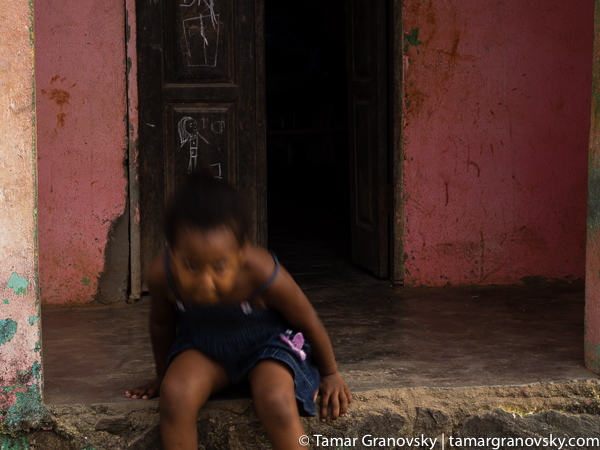
Quilombo near Cachoeira. Bahia, Brasil.

Quilombo near Cachoeira. Bahia, Brasil.

Quilombo near Cachoeira. Bahia, Brasil.

Quilombo near Cachoeira. Bahia, Brasil.

Revisiting the Hanjin Lisbon Container Ship through Photographs

Cargo Ship, Life Boat

Hanjin Lisbon Container Ship, Life Boat

It has been more than eight months since I stepped off the container ship, that transported me to Hong Kong, en route to China. Time has passed and so much has happened since that journey. For one thing, I lived in a foreign city for six months where I learned a new language; I can now speak and understand Chinese. Well… a little, anyway.

Now I am back home in my own neighbourhood, in Cambridge, Massachusetts, where I have been surprised to discover that a number of new buildings and restaurants have popped up in my absence. It seems to have happened so fast; there were only holes in the ground when I left. It appears that time and life keep moving on.

This has prompted me, in the last few postings since my return, to reflect on the months that have gone by. As mentioned at the beginning of this post, my long journey began on a container ship. Here is a link to the blog posting covering my three weeks on that ship.

Was I Truly There??? China? Vietnam? Cambodia?

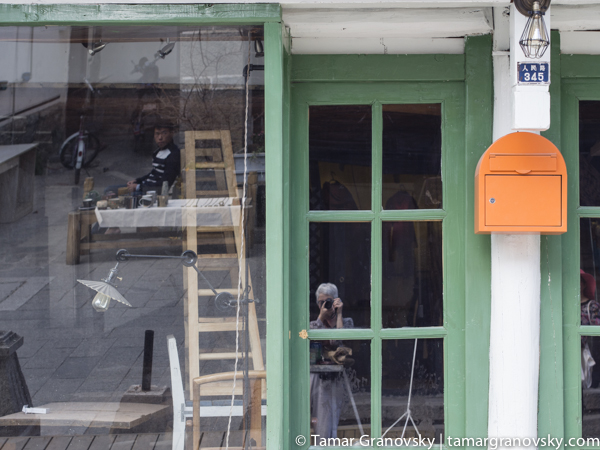
Me in Front of Storefront, Dali, Yunnan, China

Here I am in Front of a Storefront in Dali, Yunnan, China

It is hard to believe that only a few weeks have gone by since my return from Asia; I am so completely into the swing of things at home in the Boston area. It is ALMOST as if I never left. I can just barely “touch” China (where I lived and travelled from September 2013 until the end of March 2014) and Vietnam and Cambodia (where I travelled afterwards). They are elusive memories. And yet, profoundly, as I was out and about yesterday a large group of Chinese walked past me. Suddenly, a familiar feeling marked me and tied me to my time in China – I had a pleasantly warm and physical sensation throughout my body. My brain reminded me that I did, in fact, have particular experiences at particular times.

I left China feeling indifferent to the place, or so I thought. Now, I find that I miss it. I never thought I would and yet I do… I cannot figure out what it is that I miss; it is completely intangible – especially since while I was there I had mixed feelings about the country itself. But I realise there is something intangible about life there that I wish I could put my finger on. No matter. China did get under my skin and into my heart. I may not recall all of it, and certainly not necessarily on demand, but my past makes me who I am, now. The reality is, I truly was there.

Below is a small sampling of the photographs I took during my final three weeks in China: Shaxi, Dali, Fujian Province.

Shaxi, Yunnan Province China:

Grandmother and Grandchild out for a Stroll, Shaxi, Yunnan, China

Grandmother and Grandchild out for a Stroll, Shaxi, Yunnan, China

Shaxi Cultural Revolution Maoist Headquarters ("If the country wants to prosper and become strong then follow the birth plan" -- jie hua shen yu : one child one couple)

Shaxi Cultural Revolution Maoist Headquarters (“If the country wants to prosper and become strong then follow the birth plan” — jie hua shen yu : one child one couple)

Doorway (detail), Shaxi, Yunnan, China

Doorway (detail), Shaxi, Yunnan, China

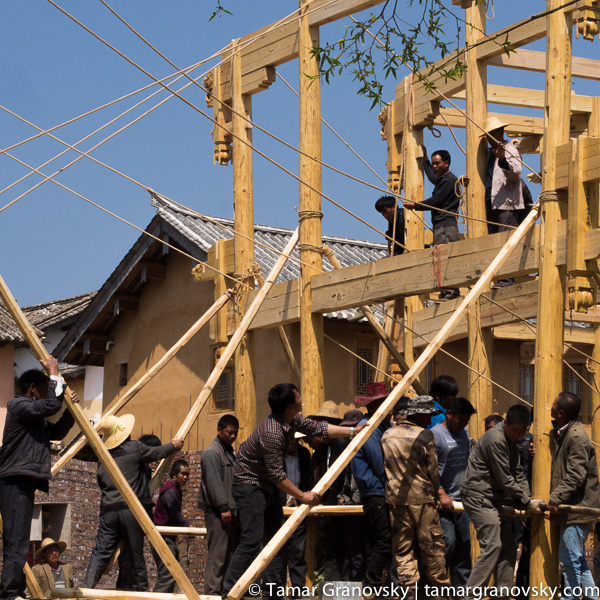
Building a House, Shaxi, Yunnan, China

Building a House, Shaxi, Yunnan, China

Dali, Yunnan Province, China:

Street Scene, Renmin Lu, Dali, Yunnan, China

Street Scene, Renmin Lu, Dali, Yunnan, China

Bai Woman, Dali, Yunnan, China

Bai Woman, Dali, Yunnan, China

Woman, Dali, Yunnan, China

Woman, Dali, Yunnan, China

Alley, Dali, Yunnan, China

Alley, Dali, Yunnan, China

Fujian Province, China:

Fisherman, Fujian, China

Fisherman, Fujian, China

Sansazhen, Fujian, China

Sansazhen, Fujian, China

Fishermen. Near Sanshazhen, Fujian, China

Fishermen. Near Sanshazhen, Fujian, China

Sansazhen, Fujian, China

Sansazhen, Fujian, China

Xiamen, Zhongshan Park, Fujian

Xiamen, Zhongshan Park, Fujian

Xiamen, Nan Putuo Temple, Fujian

Xiamen, Nan Putuo Temple, Fujian

Xiamen, Near Zhongshan Park, Fujian

Xiamen, Near Zhongshan Park, Fujian

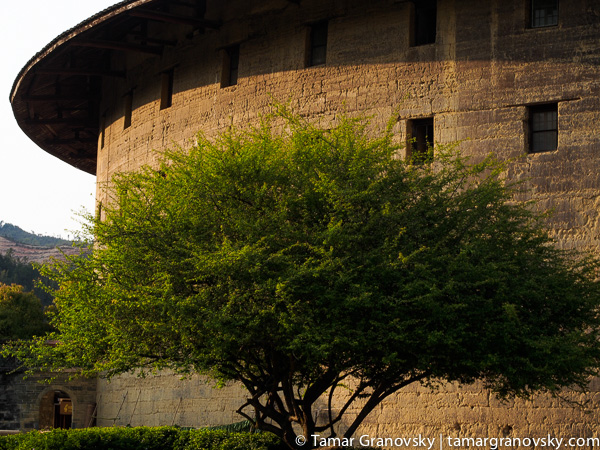
Yongding County's Earth Building Cultural Village, Fujian Tulou, Fujian, China

Yongding County’s Earth Building Cultural Village, Fujian Tulou, Fujian, China

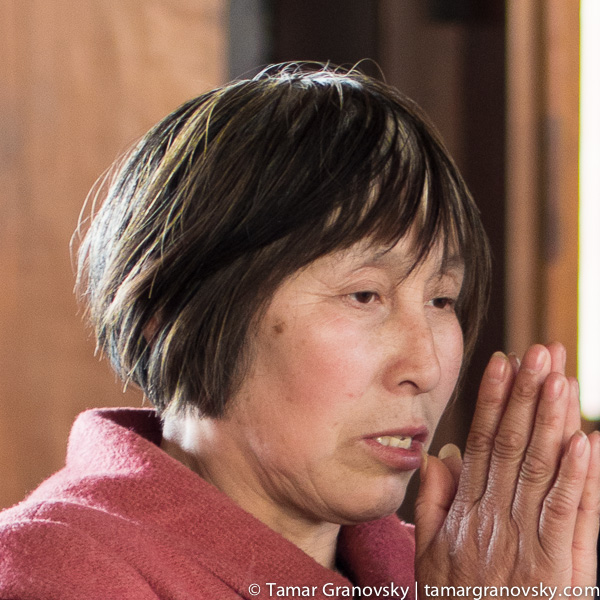
Woman, Nanxi, Fujian Tulou, Fujian, China

Woman, Nanxi, Fujian Tulou, Fujian, China

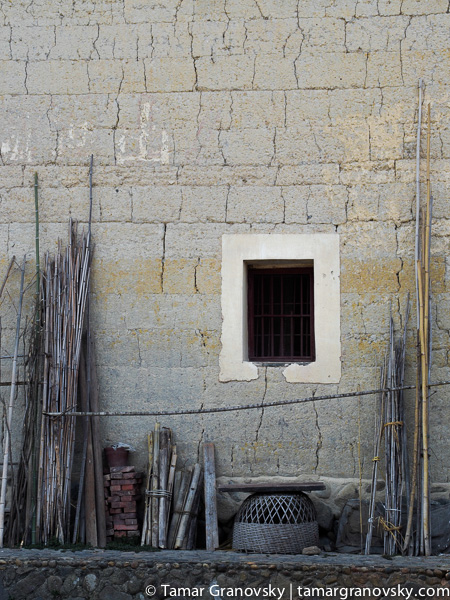
Yongding County's Earth Building Cultural Village, Fujian Tulou, Fujian, China

Yongding County’s Earth Building Cultural Village, Fujian Tulou, Fujian, China

Yongding County's Earth Building Cultural Village, Fujian Tulou, Fujian, China

Yongding County’s Earth Building Cultural Village, Fujian Tulou, Fujian, China

Back in the U.S.A.


Last Night in Kunming (I look so happy since I was amongst friends but it was sad to leave them. Photograph courtesy of Klaus Hornetz)

Last Night in Kunming. I look so happy since I was amongst friends but it was sad to leave them. (Photograph courtesy of Klaus Hornetz)

I arrived home two weeks ago today, almost to the minute, as I start to write this post. I am delighted to be with my husband and cat and all the other things that give me a great sense of place and contentment. BUT! I know soon my feet will begin to itch and I will want the road again. It is just my nature. Steve has asked several times, jokingly, “Now where is your passport?” He knows me.

A friend who also knows me sent me the following excerpt which is from the German philosopher Herman Hesse‘s book, “Wandering”, (Triad/Panther Books, 1985)

“Once again I love deeply everything at home, because I have to leave it. Tomorrow I will love other roofs, other cottages. I won’t leave my heart behind me, as they say in love letters. No, I am going to carry it with me over the mountains, because I need it, always. I am a nomad not a farmer. I am an adorer of the unfaithful, the changing, the fantastic. I don’t care to secure my love to one bare place on this earth. I believe that what we love is only a symbol. Whenever our love becomes too attached to one thing, one faith, one virtue, then I become suspicious. Good luck to the farmer! Good luck to the man who owns this place, the man who works it, the faithful, the virtuous! I can love him, I can revere him, I can envy him. But I have wasted half my life trying to live his life. I wanted to be something that I was not. I even wanted to be a poet and a middle class person at the same time. I wanted to be an artist and a man of fantasy, but I also wanted to be a good man, a man at home. It all went on for a long time, till I knew that a man cannot be both and have both, that I am a nomad and not a farmer, a man who searches and not a man who keeps.”

“… I am condemned to be untrue. I belong to those windy voices, who don’t love women, who love only love. All of us wanderers are made like this. A good part of our wandering and homelessness is love, eroticism. The romanticism of wandering, at least half of it, is nothing else but a kind of eagerness for adventure. But the other half is another eagerness – an unconscious drive to transfigure and dissolve the erotic. We wanderers are very cunning – we develop those feelings that are impossible to fulfill; and the love which actually should belong to a woman, we lightly scatter among small towns and mountains, lakes and valleys, children by the side of the road, beggars on the bridge, cows in the pasture, birds and butterflies. We separate love from its object, love alone is enough for us, in the same way that, in wandering, we don’t look for a goal, we look only for the happiness of wandering, only the wandering.”

“There is no escape. You can’t be a vagabond and an artist and still be a solid citizen, a wholesome, upstanding man. You want to get drunk, so you have to accept the hangover. You say yes to the sunlight and your pure fantasies, so you have to say yes to the filth and the nausea. Everything is within you, gold and mud, happiness and pain, the laughter of childhood and the apprehension of death. Say yes to everything, shirk nothing, don’t try to lie to yourself. You are not a solid citizen, you are not a Greek, you are not harmonious, or the master of yourself, you are a bird of the storm. Let it storm! Let it drive you! How much you have lied! A thousand times, even in your poems and books, you have played the harmonious man, the wise man, the happy, the enlightened man. In the same way, men attacking in war have played heroes, while their bowels twitched. My God, what a poor ape, what a fencer in the mirror, man is – particularly the artist – particularly the poet – particularly myself!”

I am part farmer. I need to set roots into the ground. However, I have discovered over the years that I am a nomad who is able to set my feet firmly on the ground wherever I go; my drive to move on is strong as is my ability to make myself feel at home almost anywhere.


Why I Travel

During a Walk in the Alleyways of Kunming

During a Walk in the Alleyways of Kunming, Yunnan, China (that’s me on the right!)

For me, it is all about culture, landscape, food, architecture, and people – although not necessarily in that order. When I travel, my priorities change from day to day. But this is exactly why I travel. It puts me in situations I may never have imagined and spurs me to do things I thought I never could. It also provides me with new perspective on life. Most importantly, I suppose, through travel I have learned that people are generally kind and – despite its many pitfalls – the world is a fairly safe and basically good place. I never cease to be impressed by the kindness of strangers.” Many have become friends. China is a country that has never really gotten under my skin and yet it has begun to touch me. I am very aware that it is the people I have befriended who have made this happen. In the end, one of the most central aspects of travel is learning to connect with people. 
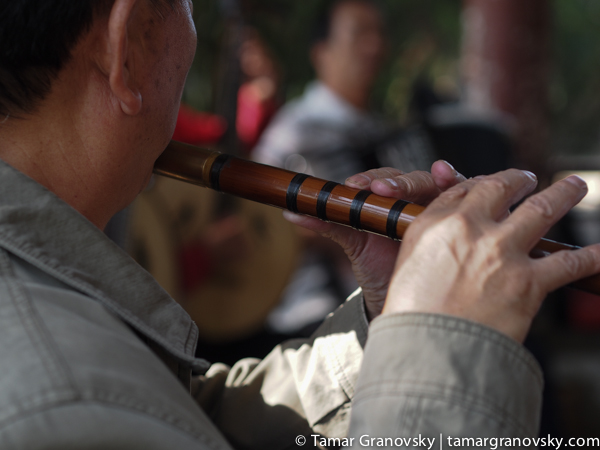
Weekly Traditional Chinese Music in a Pagoda at Daguan Park

Weekly Traditional Chinese Music Performance in a Pagoda at Daguan Park, Kunming, China
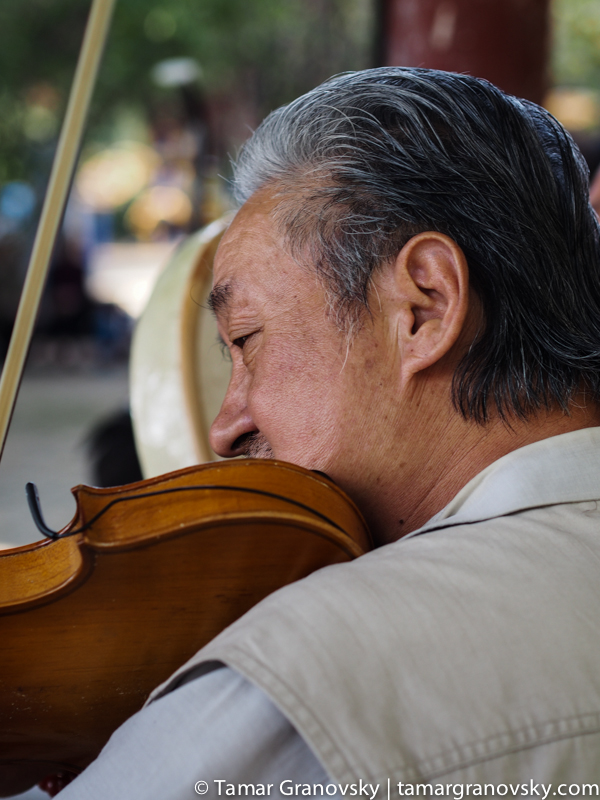
Weekly Traditional Chinese Music in a Pagoda at Daguan Park, Kunming, China

Weekly Traditional Chinese Music Performance in a Pagoda at Daguan Park, Kunming, China
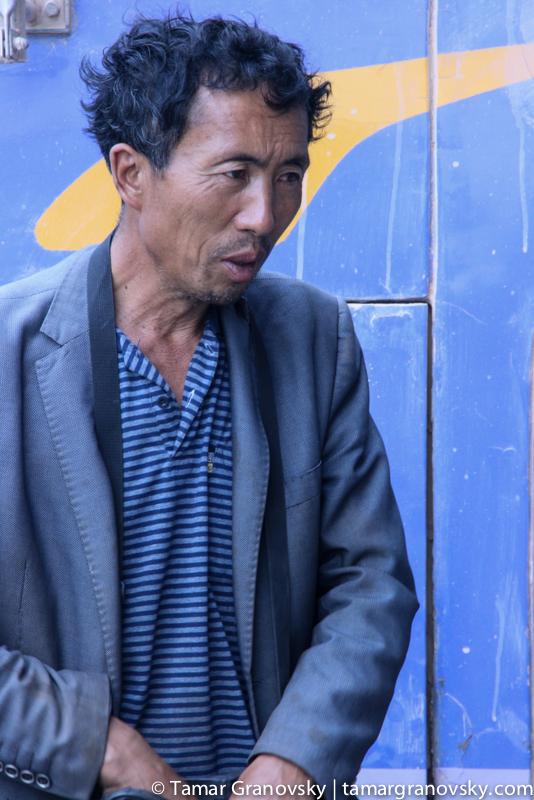
Man on the Street, Jianshui, China
Man on the Street, Jianshui, China

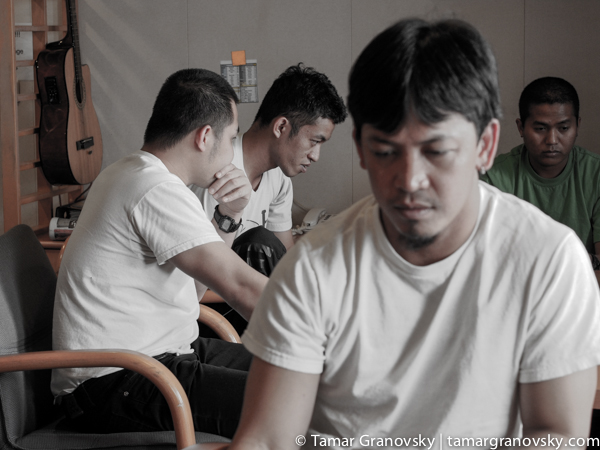
Some of the Crew on the Cargo Ship from Oakland, CA to Hong Kong

Some of the Crew on the Cargo Ship from Oakland, CA to Hong Kong

We all learn about other countries through films, media coverage, books, etc., but actually experiencing new places and people first-hand is a very different thing. Stereotypes and expectations have to be set aside. I find that the best way to get a good sense of a country is by adapting to its culture, pace, language, etc. As soon as I started travelling, I realised that I needed to learn at least the very basics about the cultures of the countries I was going to visit. I always make sure that I have key words and phrases to use – however poorly I may pronounce them. It is easy, and a very good idea, to laugh and smile a lot; this usually goes a long way in winning people over. And, of course, I always try to show great respect to people I meet. All of these small efforts ultimately enhance my experience and help me connect with those I encounter.

I enjoy being an explorer. I have travelled to few places (and yet, more than most people – I am fantastically fortunate) and feel compelled to return to almost every country I have visited, so that I can delve further in. The first time I go somewhere, I tend to do too much, afraid that I may not have a chance to return. When I am, fortuitously, able to visit again, I attempt to cover less ground and probe more deeply. Slowly, all too slowly, I am learning to experience new places by taking the time to just be. Travel is a voyage of discovery – not only of the unknown but of oneself. This voyage has become an inevitable and inseparable part of my life.
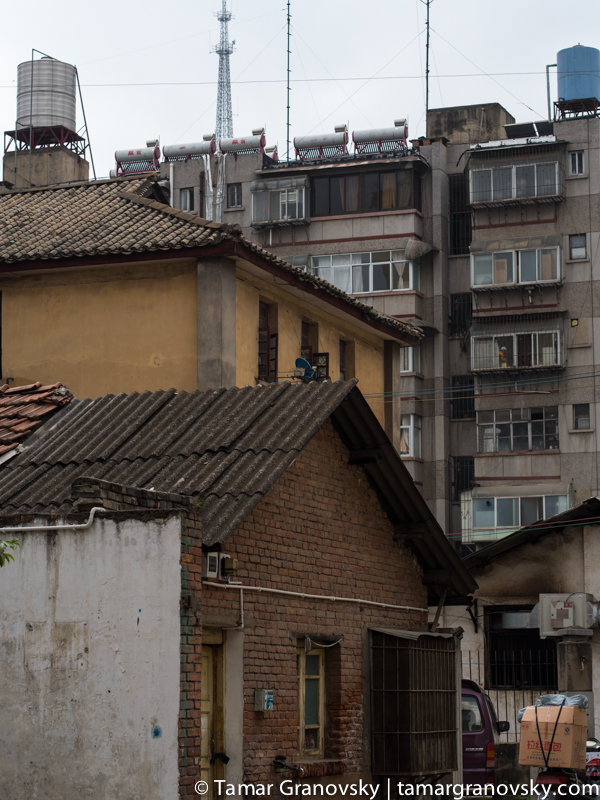
Street Scene, Kunming
Street Scene, Kunming

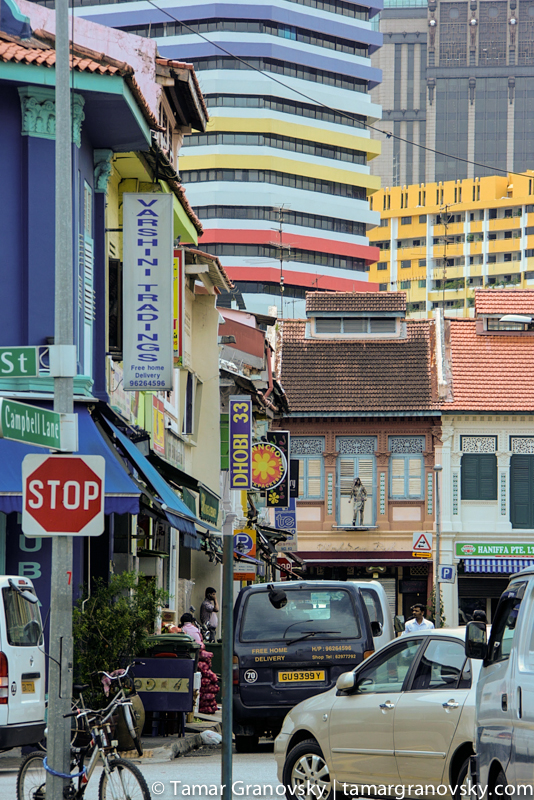
Singapore

Singapore

Coney Island, NY

Coney Island, NY

Outside of Cahors, France
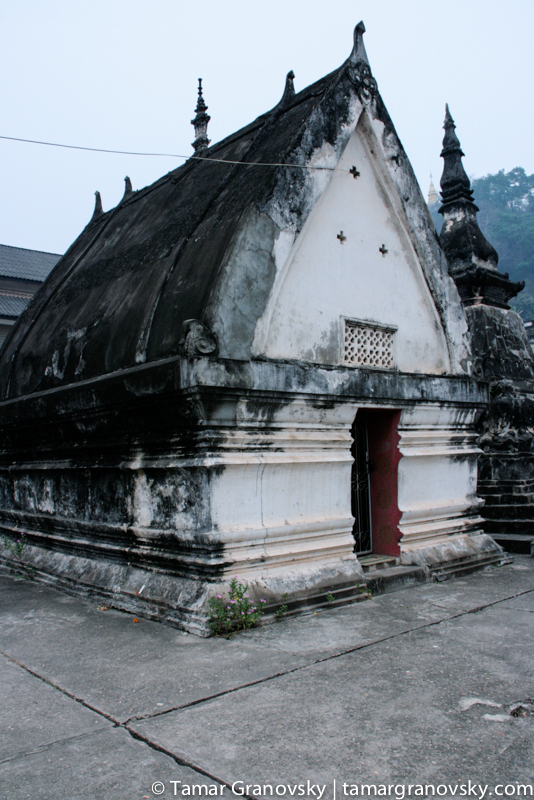
Outside of Cahors, France

Luang Prabang, Laos

Luang Prabang, Laos

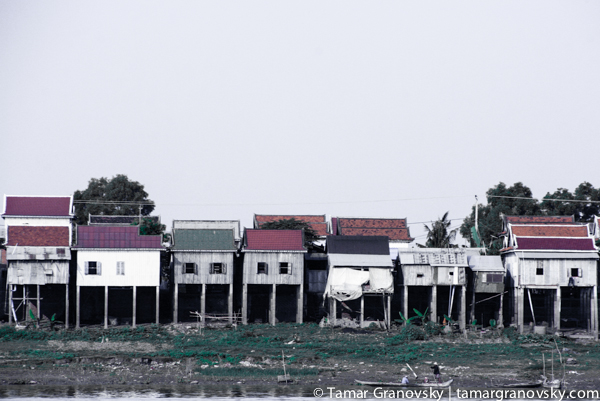
Phnom Penh, Cambodia

Phnom Penh, Cambodia

What I most savour is wandering, getting (a little) lost, and exploring neighbourhoods that are off the beaten path, so that I can get a sense of how people live. At times I feel as if I must look like a gawker to those who inhabit these communities. However, it is my endless curiosity about people that leads me there; I look for differences from, and similarities to, my own life experiences. I’ve been to Paris three times but have only visited museums there twice. There are so many districts, streets, parks and gardens, restaurants, cafes, markets, etc. to explore. It’s certainly not that I avoid museums, but in new cities I venture in only if there is something that I really want to see. At heart, I would rather spend my time meandering and observing, interacting with and learning about other people.
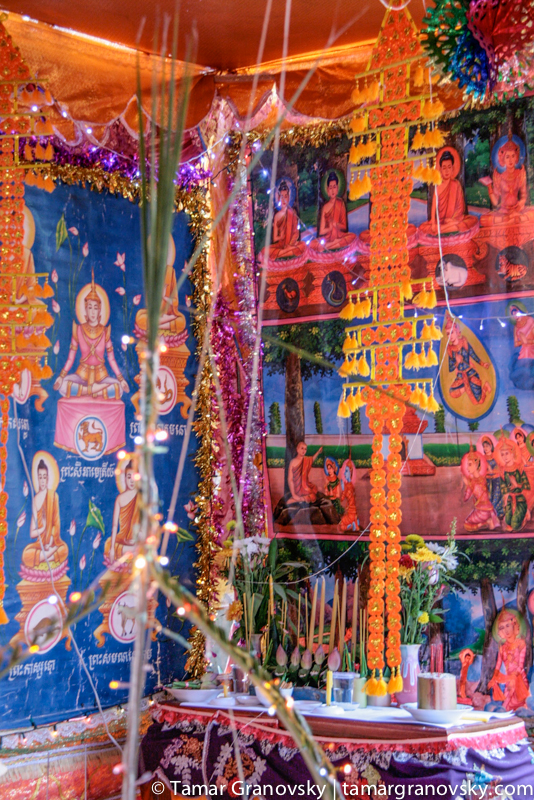
100 Days After Death Celebration (where I was invited to join, off the street, as I peaked in), Siem Reap, Cambodia

100 Days After Death Celebration (where I was invited to join, off the street, as I peeked in), Siem Reap, Cambodia
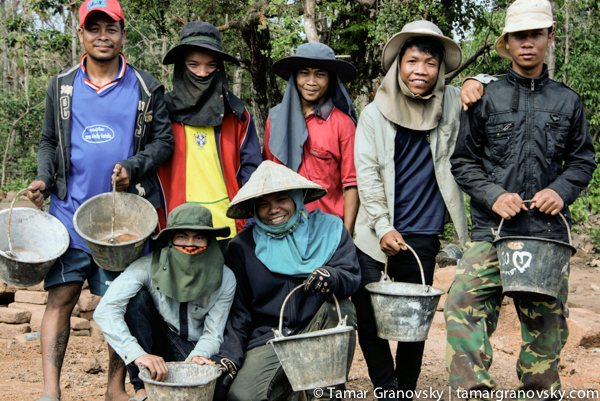
Workers at What Phou , Champasak, Laos

Workers at What Phou , Champasak, Laos

Naxi Woman with Daughter, Lijiang, China (I ate at her restaurant regularly, that week)

Naxi Woman with Daughter, Lijiang, China (I ate at her restaurant regularly, that week)

I have learned that travel can ground you in the present, if you are able to immerse yourself in each moment of your day-to-day experiences. These experiences can take you outside your comfort zone but they also make you face yourself – both your strengths and your weaknesses – and push you to adapt and to manage all manner of new exploit.
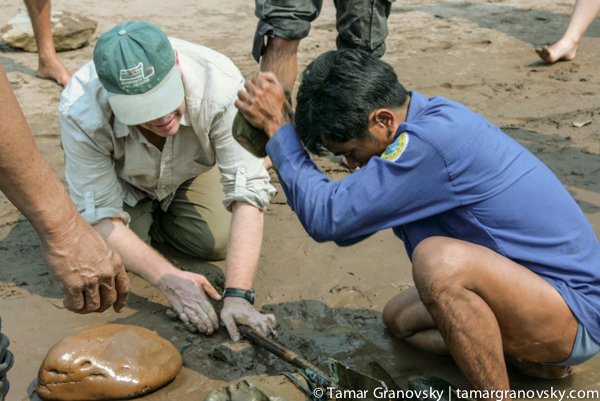
Fixing a Broken Rudder, Luang Prabang to Nong Kiau, Laos

Fixing a Broken Rudder on an 8-Hour Slow Boat Trip from Luang Prabang to Nong Kiau, Laos

Of course, one of the best ways to get to know a new place is by eating there. Food. Glorious food. I adore it. I am almost always willing to try new and different flavours, textures, meats, vegetables. I like to eat and I like to eat well. I am always in search of the best local food. But enjoying a cuisine is not the same as understanding the customs of a country with regard to its food. I have learned not just about different dishes, but also ways to order and eat them. In restaurants in China, for instance, at first I would shyly try to catch the attention of the wait person but eventually I adopted the body language and tone of voice of the local customers and I too, brazenly and loudly call out “fuwuyuan!” (waiter!).  

When ordering from street-food carts and small stalls, which in China and Southeast Asia are often devoted to one type of food, one has no choice but to order what they make. When I go into a restaurant with a menu, only to find that it has no English translation or photographs (menus with photographs are actually common) I’ve learned just to look at what others are eating and point – I want this, I want that. I always try to learn the rules of eating in the countries I visit, by either asking people I have befriended or watching others. In China, for example, only a foreigner uses a spoon to scoop up food from a communal dish and put it on his/her own. The Chinese just take their chopsticks and eat directly from the central dish, with little ceremony. If there are bones, they are discarded (or sometimes spat) on the table beside the individual’s plate.
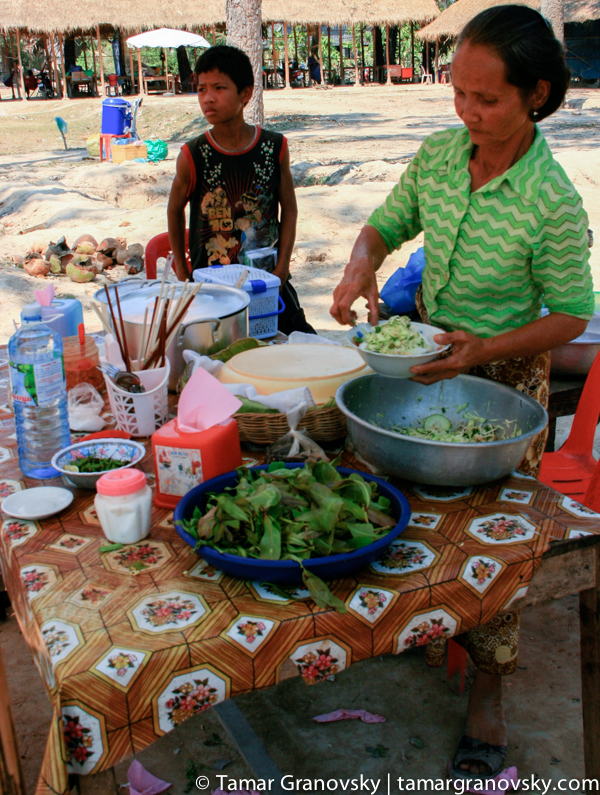
The Outside Ring, Angkor Wat, Cambodia

The Outside Ring, Angkor Wat, Cambodia

Street Food, Mexico City, Mexico
Street Food, Mexico City, Mexico

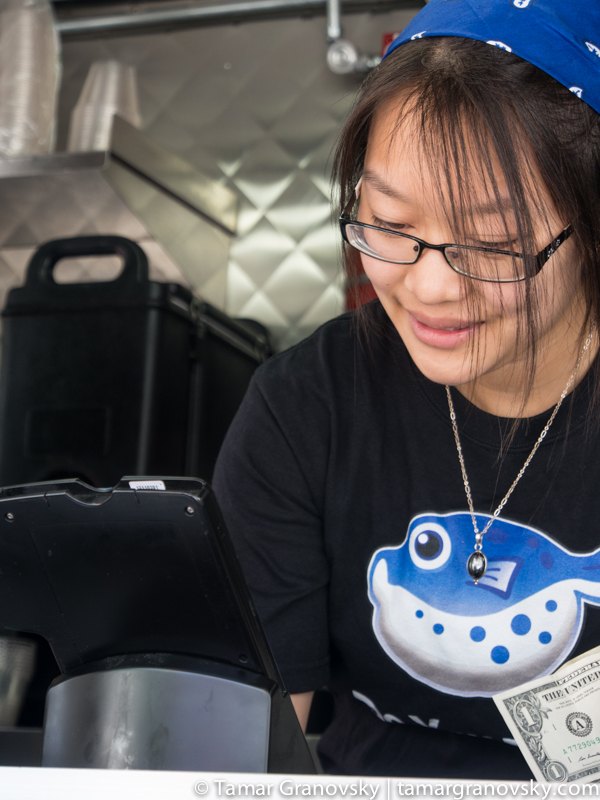
Food Truck, Cambridge, MA, U.S.A
Food Truck, Cambridge, MA, U.S.A

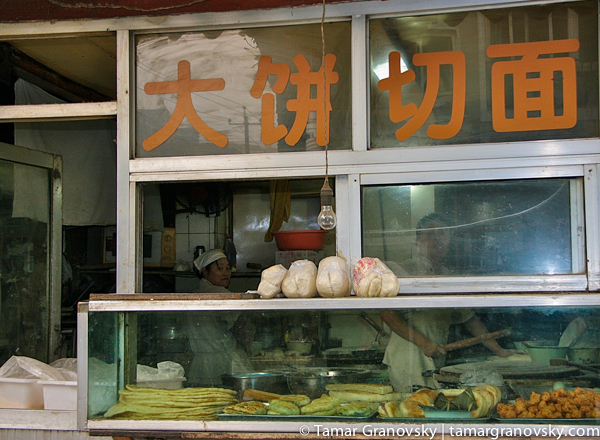
Food Stall, in a Beijing Hutong, Beijing, China

Food Stall, in a Beijing Hutong, Beijing, China

I am always on the lookout for the new, and the familiar, in this vast landscape of food. But natural landscapes spur me on too. As much as I adore city life, and am a city girl by nature, I also have a strong urge at times, to get away from it – often far away – from people, from concrete and glass, from the confines of our man-made world. The arts have always been part of the inspiration for my globe-trotting. As I have had the luxury to travel, I have learned that whether it’s the craggy and volcanic terrain of Iceland; the karst mountains and river-ways in Guangxi Province, China; the wats that are slowly being enveloped by Cambodia’s natural landscape; the Canadian prairies; or the desert of the American Southwest, the natural world is a stunning place and it calls out to the artist in me. My favourite way to see the world is with my camera in hand, so that I can capture both the vast views and the smallest details of my surroundings. These often magnificent landscapes are impossible to describe in words. Therefore, I will let the following photographs say it all:
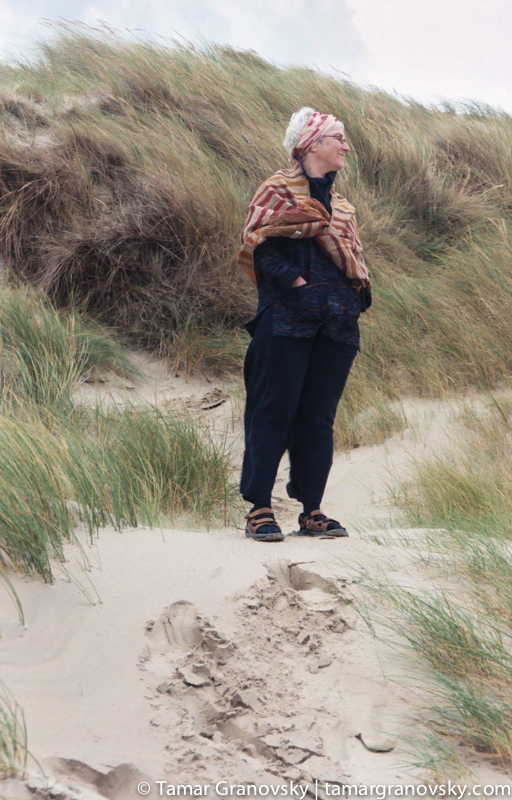
Near Pas de Calais, France

Bray Dunes near Pas de Calais, France
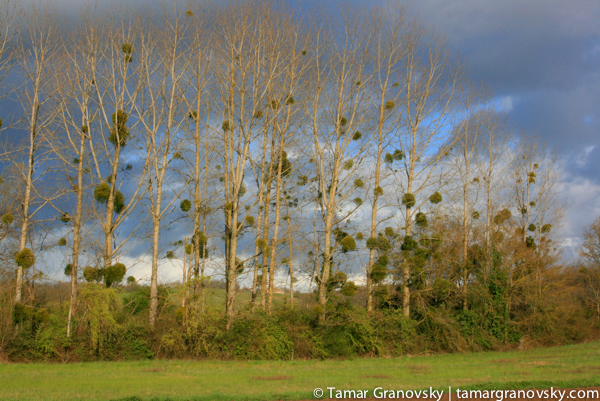
Countryside in Normandy, France
Countryside in Normandy, France

Along the Mekong, Phnom Penh to Siem Reap, Cambodia
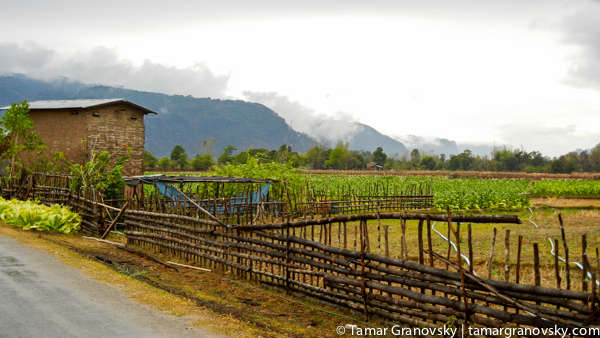
Along the Mekong, Phnom Penh to Siem Reap, Cambodia

Toward Kong Lor Cave, Outside of Ban Nahin, Laos

Toward Kong Lor Cave, Outside of Ban Nahin, Laos

Off of Victoria Island, Vancouver, Canada

Off of Vancouver Island, British Columbia, Canada
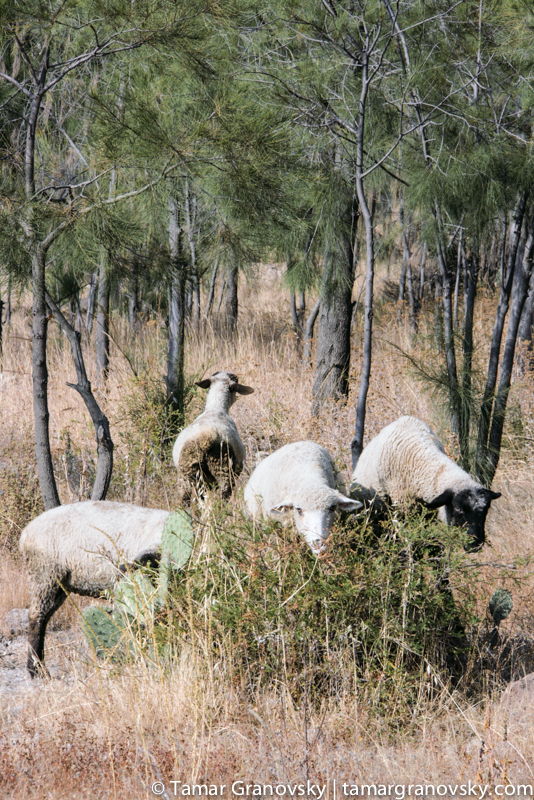
Outside of La Purificacion, Mexico
Outside of La Purificacion, Mexico

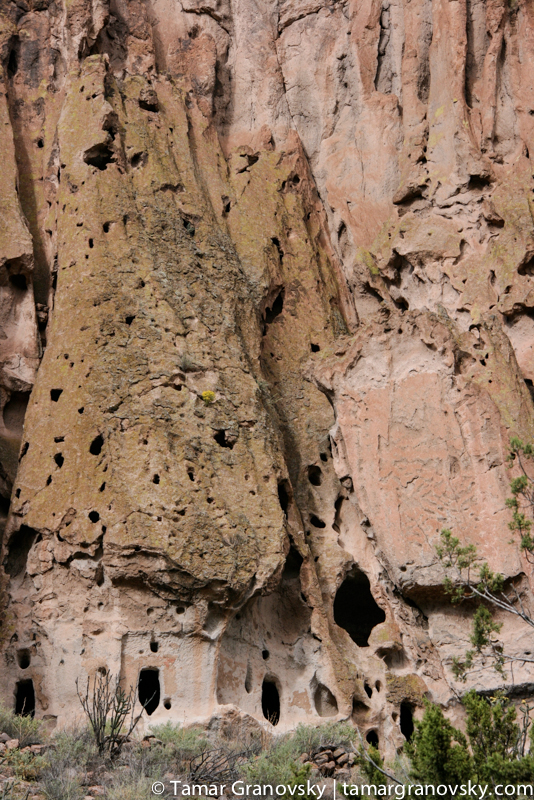
Bandelier National Monument, New Mexico, U.S.A
Bandelier National Monument, New Mexico, U.S.A

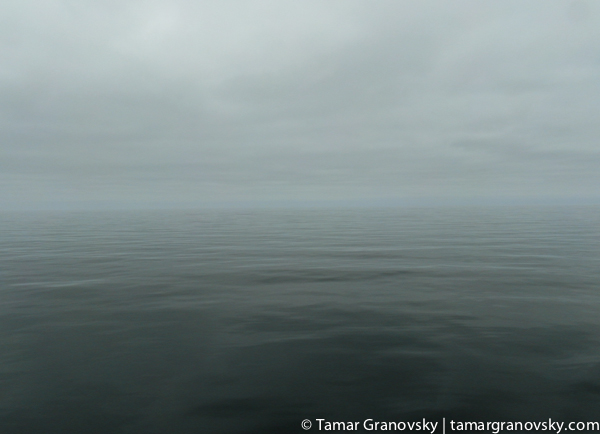
The Pacific Ocean Somewhere Between Oakland, CA, U.S.A. and Hong Kong

The Pacific Ocean Somewhere Between Oakland, CA, U.S.A. and Hong Kong

There is also a darker side to travelling in developing countries (something I never considered until I visited Southeast Asia); one encounters quite a bit of poverty. How do I deal with poverty and other tragedies I witness in some of the places I have travelled to? I have seen people on the street (often missing limbs) begging. Sometime they are with their young children – or they just send their children out for the day to do the begging themselves. Do I ignore all of this? Acknowledge those on the streets who beg, with a nod of my head? Volunteer briefly somewhere? I have done the first two. I’m ashamed to say I have not done the latter, although I have thought about it, often. I feel I have no choice but to try to shut it out and make an effort, instead, to buy as locally as possible, in shops where I know people work extraordinarily hard, long hours. I also visit NGOs. Still, I cannot forgive myself for remaining outwardly indifferent to those in need. As a Westerner and a First World traveller I have faced this often in China and Southeast Asia. It is worth noting, though, that I’ve also had the same experience in North America.

But both in my own country and while travelling, I have, on occasion, attempted to engage, and even bought a meal for, some of the impoverished people whom I’ve met on the street. I have been glad when I did so, that I did not simply turn my head, and instead chose to connect, however briefly. Confronting these issues and our own discomfort with them is not easy; it takes time and effort. I now feel compelled to volunteer in a community in need, when I return home, and may consider joining a service-based trip to an impoverished region somewhere in the world, in my future travels.

Everywhere I go, I have had to learn to embrace the differences and the cultures and not feel guilty about being an outsider who clearly comes from a wealthy country. However much I have learned in seven months in China, or three weeks in Italy, as a visitor I will never do more than scratch the surface. The truth of the matter is that despite having made friends who live in Beijing, Xingping, or Kunming, or befriended the people who sell me baozi or coffee daily, I am and always will simply be a tourist. I attempt to connect, but the cultural and linguistic differences often make it difficult to truly do so.
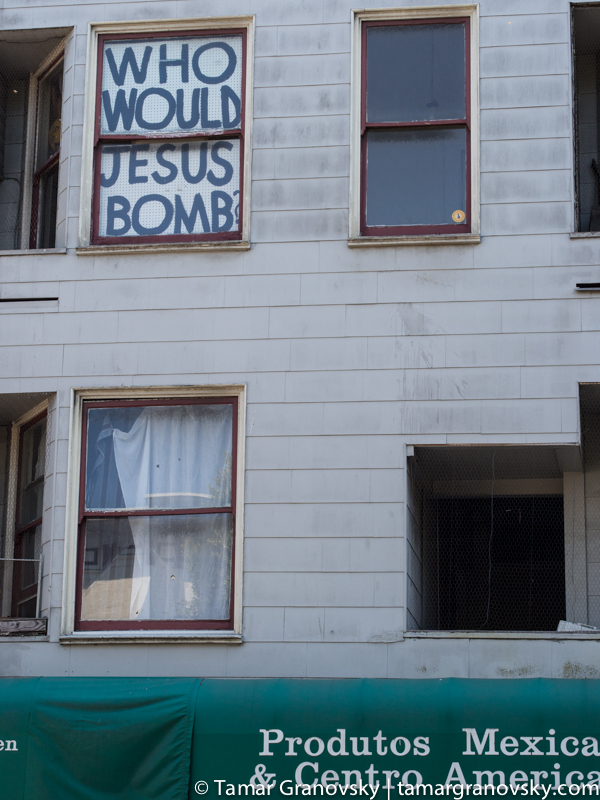
San Francisco, CA, U.S.A
San Francisco, CA, U.S.A

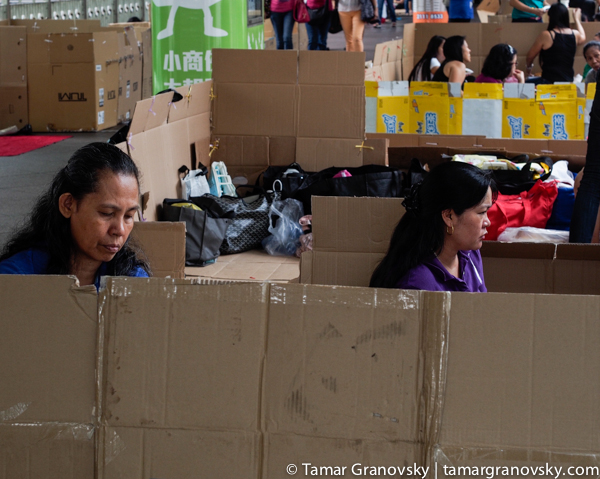
Sunday in Central, Hong Kong, Filipino Women on their Day Off Gathering Together
Sunday in Central, Hong Kong, Filipino Women on their Day Off Gathering Together

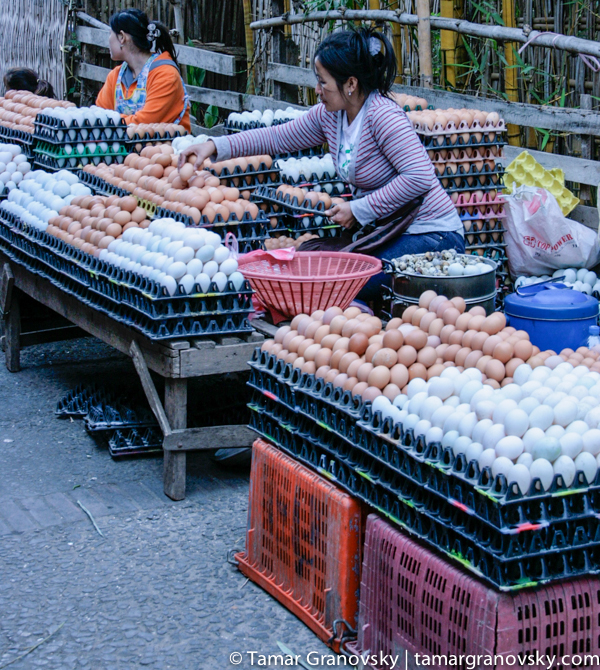
Market, Luang Prabang, Laos
Market, Luang Prabang, Laos

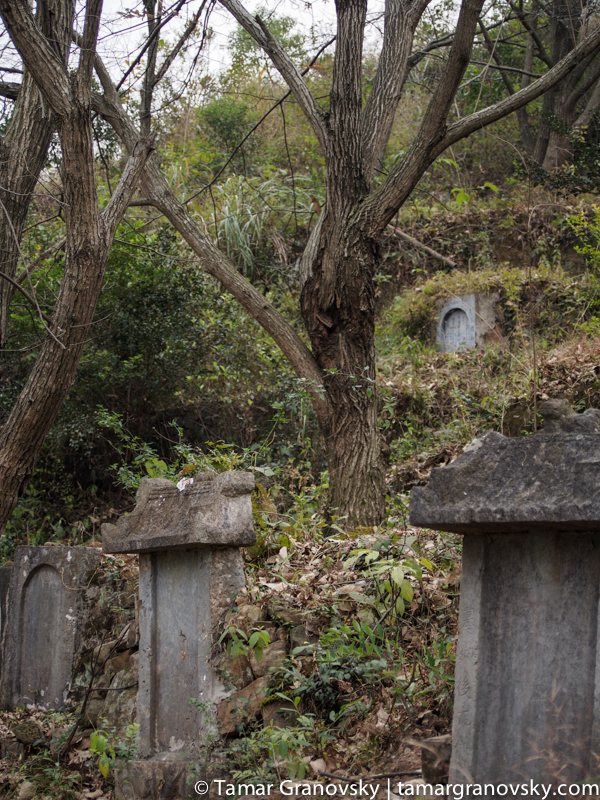
Tombstones in the Countryside, Xingping, Guangxi Province, China

Tombstones in the Countryside, Xingping, Guangxi Province, China

I have a friend who takes tours when she travels. She has asked me several times to join her, and says that tours take you to places you might not otherwise easily see. I enjoy travelling on my own for the very same reason. There are many benefits to independent travel. I set my own pace, schedule, and itinerary. I eat what I want, whenever and wherever I feel like it. I decide my daily activities and go with the flow as each day unfolds. I can stick to my plan for a particular day, but I may just as easily deviate from it and do something different. I choose whether to take a day or night train, or bus, or whether, instead, I want to fly somewhere. Although I’ve never gone on a tour, I suspect that I have more opportunities on my own, to chat with locals and even other travellers, than do people on tours. Guided groups may be logistically easier, but really they are just another, and to my mind more limited, way of seeing the world. The fact remains that however one travels, solo or with a group, we are all tourists. 

Many friends and family members tell me I am brave to travel solo in places that are so foreign to my Western cultural upbringing. I don’t think I am particularly brave; this is simply what I want to do. And by travelling on my own, I have learned some important things about myself.

My voyage of discovery has led me to many places and has changed me in a number of ways. I have learned to manage with less and laugh more. By travelling on my own, I have had to become more outgoing and sociable, and my many adventures (and even misadventures) have left me feeling confident and adaptable. In essence, learning more about the world and how other people live, makes me feel like my own world has expanded. I would like to think that I am more easy-going now, although I don’t know if family and friends would completely agree with this: after all, I am who I am…. But having survived my many travel mistakes, from being bitten by a dog in Laos, to several brushes with travel scams, I now feel that I’m just not as troubled when things go wrong. I have learned that there is no point in being stressed out; when you go with the flow, things have a way of working out perfectly fine.

Me! at the Great Wall, China

Me! at the Great Wall, China

For those of you who are beginning to feel your wanderlust grow beyond being satisfied by a long weekend here, or a two-week vacation there, I offer just a few tips that have helped me in my travels.

  • Plan, but also try to go with the flow: When I plan a short vacation overseas, I tend to over-schedule. Create a skeleton of a strategy first, and firm up the more important logistical details before you leave on your voyage, but always make sure you allow for flexibility. You will discover, by speaking with locals or fellow travellers, that your expectations and goals may change.
  • Set your budget: You do not need infinite funds to see the world but you do need to know what you can afford. Your money will carry you farther if you travel in places like Southeast Asia. It will, of course, run out much more quickly in North America or Europe.
  • Pack lightly: I travel with very little – I have been away from home since the beginning of August and travel with a carry-on bag and a day pack, and this includes a camera with three lenses and a travel tripod. Washing items by hand is a simple endeavour and, depending on where you find yourself, it costs very little to have your clothes cleaned for you. Remember, if you need anything else, you can always buy it.
  • Be adaptable: Travelling for a longer period of time can really take you outside your comfort zone. Depending on where you travel, chances are transportation will not run like clock-work. Each new environment provides different challenges and no two places are exactly alike. Consider the situation, stay calm, and adapt accordingly.
  • Eat well and remain open-minded: In most of the world, food is a central link to culture, tradition and family. Do not be afraid to try food that may be utterly foreign to you. Ask locals, such as guesthouse employees, taxi or tuk tuk drivers, where they eat. Consider taking a cooking class. I have done so in the past, have learned a lot about why a cuisine uses particular ingredients, and have thoroughly enjoyed myself.
  • Do not be afraid to venture off the beaten path: But also, don’t ignore more heavily explored areas. There is good in both, and keeping your eyes and heart open to each will allow you to connect to a place and people.
  • Respect the local culture.
  • Learn a few words of the language of the country you are travelling in. This will carry you a long way! Ask questions of locals and other travellers. When given the chance, most people will be glad to have a conversation with you – even if you end up using a sign language of sorts to communicate.
  • Establish a routine: Visit the same restaurant, cafe, fruit stand as often as you can – even daily, if possible. You’ll get to know the people there. It is always a pleasure to become an honourary part of the community, if only for a short while.
  • Stay connected with friends and family. It will make travel easier for you. Today, long distance communication is easier than ever, via email and Skype. At times these modes of communication are a life-saver! 
  • Trust your gut.
  • Pace yourself and allow for downtime. It has taken me years to figure this one out.
  • Have fun! Learn! Maybe you can even blog about it!
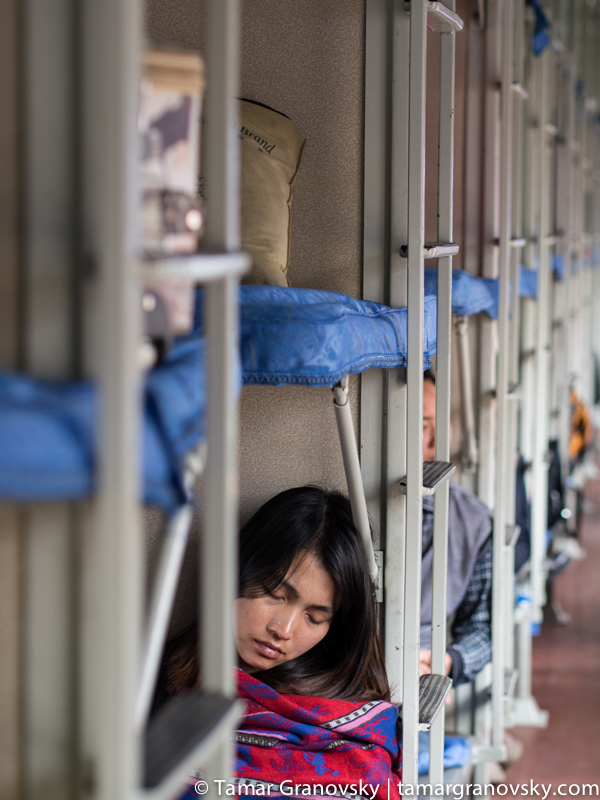
Dali to Kunming by Train, Yunnan, China
Dali to Kunming by Train, 3-Level Hard Sleepers During Day-time Travel, Yunnan, China