Author Archives: Tamar Granovsky

Unknown's avatar

About Tamar Granovsky

Tamar Granovsky began working in photography in Boston, Massachusetts. She is now based in Montreal, Quebec. In 2018 she was named LensCulture’s Top 50 Emerging Talents. She has been included in various juried group exhibitions including the 5th Biennial of Fine Art and Documentary Photography in Barcelona; Photography Now 2017, at the Center for Photography in Woodstock; and the 22nd Juried Show: Peter Urban Legacy Exhibition at the Griffin Museum. In 2020 her work appeared in Boston as part of 8th Edition Regional Photographers Showcase of The FENCE. Her first solo show was at Cambridge’s Multicultural Arts Center, in September / October 2019. Prior to her career as a photographer, Tamar had several solo and group exhibitions, in Canada, in mixed media sculpture installation and was a recipient of a Canada Council Exploration Program Grant. Her pursuit of photography follows a career in sculpture, with a 17-year hiatus from the arts, as an archivist. The reflective, evocative, and grounding properties of the medium feed Tamar’s love for photographic work.

Why I Fell in Love with My iPhone

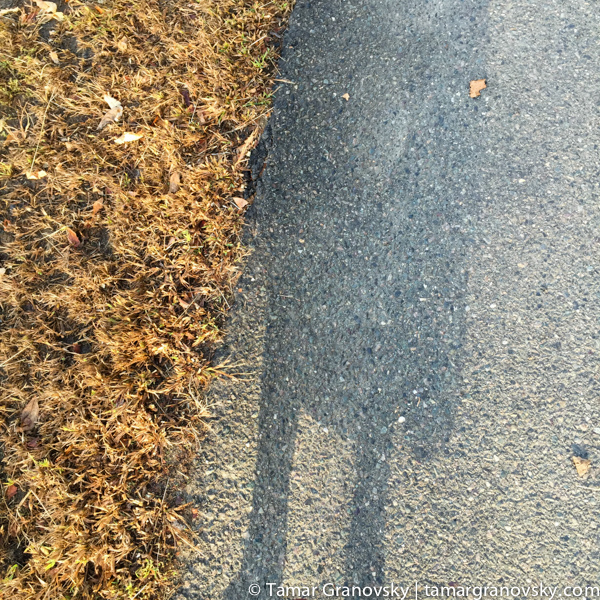
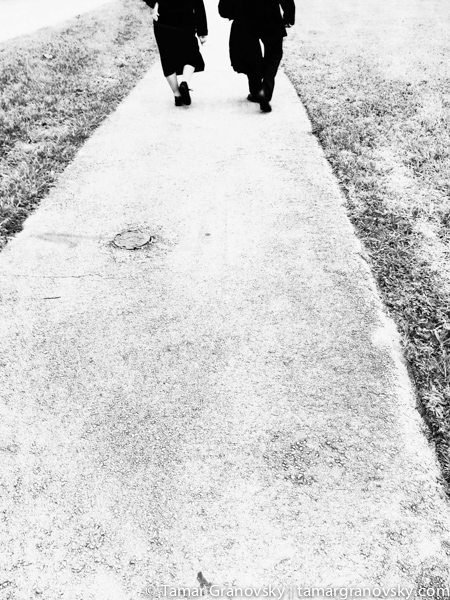
Century Village Saturday Morning Walk to Schule

Century Village Saturday Morning Walk to Schule

Lately, I rarely *purposely* head out to take photographs. Instead, they are mostly products of the rhythm of my life as I go about my day. I am working on two projects but besides these, all other photographs are taken as something catches my eye. Diagonal lines, that is my position to the subject, play a greater part in the photographs. My eyes and heart are always on the look out, now. The radar is on and I am on alert. I now push the story-telling aspect of photography thus, I try to trigger questions rather than simply tell. This is slow to come but it is coming. I think about it constantly.

I have learned that it is incredibly important to photograph, first, for myself. Doing this allows me to follow my instincts, play, explore, and create images that are personal. I want to share my work with others, mind you, and clearly do so via this blog, my website, and Instagram. Since I bought my iPhone I take it out to shoot, often, and have worked particularly hard and long, after, when I post-process the picture.

Here
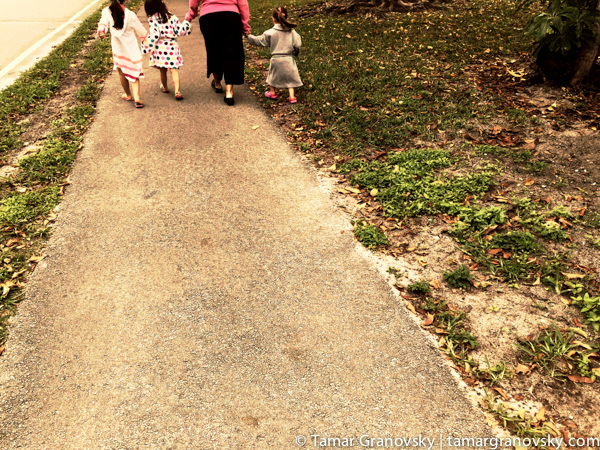
Here

There

There

I still use the Olympus OMD-EM5. I love it because I can choose the lens I want to use (although I typically head out with only one lens so that I am not encumbered and I can just go with the flow based on the one option I give myself), manipulate the ISO, aperture, and shutter speed; the images are of a higher quality and the higher control and resolution add a whole layer of beauty and precision. Nevertheless, I find myself predominantly utilizing the iPhone.

The truth of the matter is that even though I LOVE my “real” camera I simply adore the hands-on-ness of the iPhone and the post-processing applications (apps) I use to create the final images. It provides a direct way of looking at and capturing the subject and light, moving the image into a creative idea through the apps, and then sharing it with others through social media. I no longer think that taking a photograph with a small mobile device (that happens to be a telephone among other things) is not photography. It is, as I’ve said, simply another camera.

Those of you who have followed my blog know that I was a sculptor, once upon a time. The work I created was very hands-on. Tactility was critical to me. When I drew, I used my fingers. It turns out this is the same with photography. I fell in love with the act of photography a few years ago but am discovering my voice now that I clasp a “smart” phone in my hands. It is my primary capture tool through which I have the opportunity to finger-paint a body of work. Snapping the subject is the starting point. I am interested in what I can do, creatively, afterward. I have become quite manipulative with my “darkroom” apps on the computer – more so than with Adobe products such as Lightroom and Photoshop. Images are slowly developing into works that are abundant in content and expression. Imagine: a camera and a darkroom all in one. I have fully embraced this process and have gone from taking a photograph to making one. The potential is great and it is all done with my fingers.

Century Village Bus Depot

Century Village Bus Depot

I still attempt to do things precisely when I compose “in-camera.” Before I shoot I make sure to get the exposure set properly and place the focus point, manually, as well. To do this, I tap the screen of the iPhone (a lot) to indicate where to focus and adjust the exposure. It is more difficult to keep the iPhone camera still so I use a tripod more often and also accept blur as a happy accident, occasionally. Though I get the camera set correctly as best as I can when I take a shot, I enjoy using many of the post-processing apps available to me and with which I go wild; they help shape and push my work further. However, it is important that the end result look like a photograph and NOT a drawing or painting.

I tend to use two to five apps as I edit. My goal is to find a balance between adding layers of complexity to the the original subject and keeping the vision uncomplicated and coherent. The end result has to be fairly simple and (I can only hope) strong – so that someone looking at a photograph of mine responds to it, emotionally. I am experimenting with both colour and black and white and pushing light and shadow to the extreme for high contrast. Colours are processed so that they are washed out (“bleached”), pushed further (typically by warming saturation, adding “filters,” etc.), or have all of the saturation removed so that the picture becomes black and white. Manipulating the photographs in my Century Village, Florida series encourages a timeless feeling that conjures up memories for the viewer and each photograph is tailored to help convey the story.
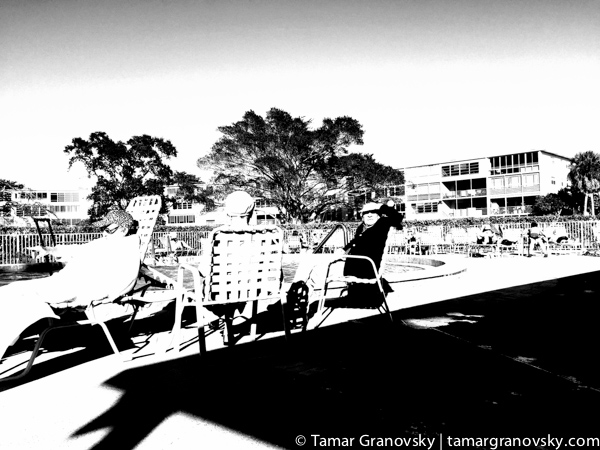
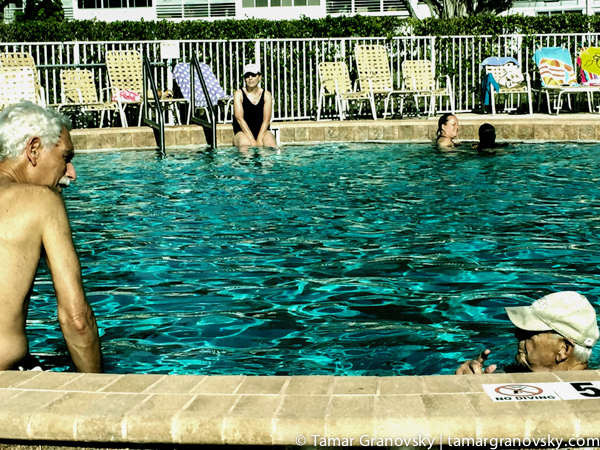
At the Pool

At the Pool

The principal apps I use are: Camera+; ProCamera; Pure; Filterstorm Neue; Afterlight; Picfx; Photo fx; Mextures; and Bleach Bypass and/or SkipBleach.

I am drawn to the immediacy of using my iPhone as a camera and I can edit on the go. That is, when I have a moment, at any time of the day, I take my phone out and use my fingers to manipulate and “paint” the photograph.  I spend hours on my work and stop the editing process when my inner voice says, “that’s it!”
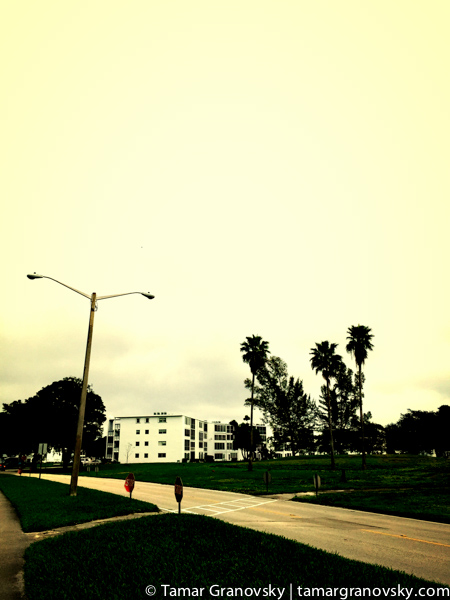
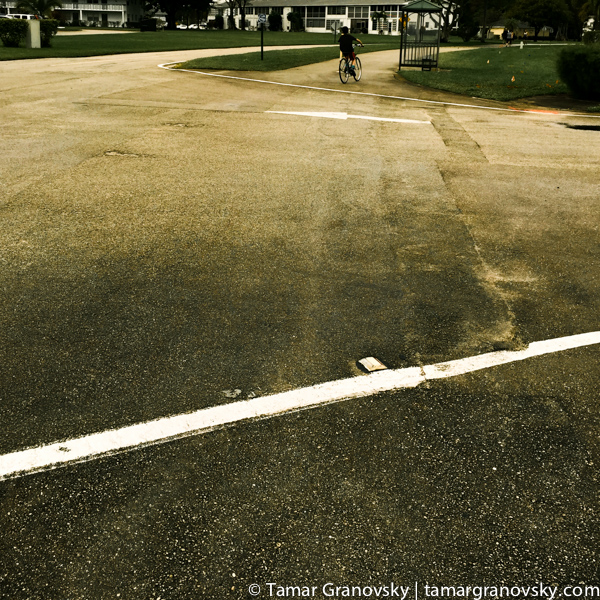
Intersection

Intersection

Shuffle Board

Shuffle Board

Flag

Flag


Ashes, Ashes, We All Fall Down

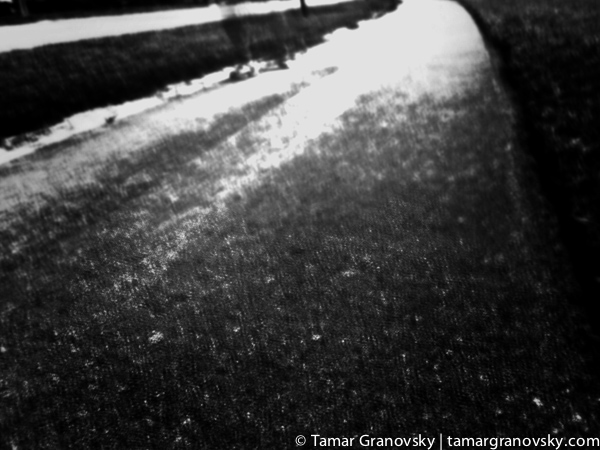
Morning Walk

Morning Walk

I am still here, ensconced in a gated retirement community in Florida, surrounded by many who are twenty or more years older than me. I watch and interact with my parents (who are in their mid-80s) and others who live here; I have time for reflection. Why is it that we, as a society in North America, neglect the elderly? How is it that we have become so youth obsessed that we dread the slightest wrinkle or another grey hair – each an inevitability? As Ezekiel Emanuel says in his The Atlantic article, Why I Hope to Die at 75, “Americans seem to be obsessed with exercising, doing mental puzzles, consuming various juice and protein concoctions, sticking to strict diets, and popping vitamins and supplements, all in a valiant effort to cheat death and prolong life as long as possible. This has become so pervasive that it now defines a cultural type: what I call the American immortal.”

Aging, of course, is a deeply personal experience and, to some, it is very emotional and even frightening. Why do we see it as a disease to fight rather than a stage of life to embrace? Is there a means for us to tolerate and accept this process – particularly within our own families? Can we learn to offer dignity to those who are “growing old” and also face our own decline with grace?

Most people are unwilling to confront aging and mortality. Many are in denial. Some fear losing their independence, becoming frail and/or a shadow of what they may once have been (mentally or physically). Many of us fear death – which is a certainty and comes to all living things.

In my last blog posting I mentioned my desire to learn the stories of some of the people who live in Century Village to see how they face and cope with this process. How do people deal with illness and the loss of partners, family members, their peers? What allows some of us to age with ease and find purpose in our lives while others cannot? In future postings I will present this project/photo essay, as I work on it.

But not today. Instead, today, more background images to this project (almost all of these photographs were taken during my  morning, 4.25 mile walks).

Swim

Swim

Berkshire A

Berkshire A

Bicycle Ride

Bicycle Ride

Morning Run

Run

Walk to Schule

Saturday Walk to Schule

Afternoon Games

Afternoon Games


Life in the 80s: Century Village, Florida

At the Pool

At the Pool

According to the 2014 U.S. Census Bureau, “[B]y adding an average of 803 new residents each day between July 1, 2013 and July 1, 2014, Florida passed New York to become the nation’s third most populous state.” This mirrors migration trends coming from Central and Latin America. Although, one could *almost* believe that part of the migration tendency is a result of retirees’ movement to the land of sun, oranges, and the beach.

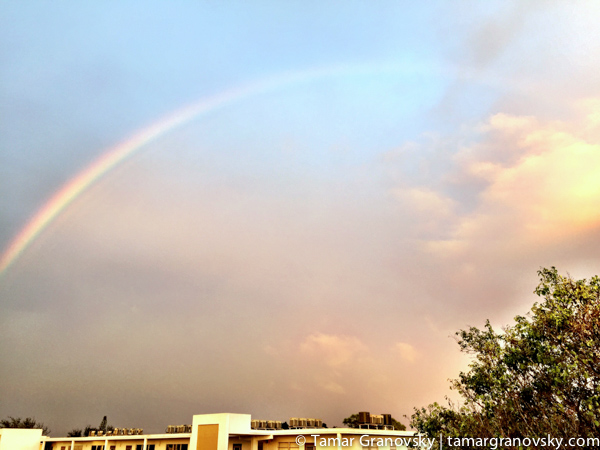
Over the Rainbow

Over the Rainbow

There are four Century Village “retirement” communities (for people 55 years or older) in South Florida. Built in the 1980s, they are in Boca Raton, Deerfield Beach, Pembroke Pines, and West Palm Beach. The residents at Century Village are extremely homogeneous with a racial makeup of 98.41% White (95.6% Non-Hispanic White and most with English as their mother-tongue) according to the 2000 census. Demographics are clearly changing fourteen years later, though. For instance, there has been an influx of younger Quebecois with a population of over 2000, in Deerfield Beach. Those who live here feel safe. As I take my morning walk around this “village” where my parents are staying, I am surrounded by both vital seniors (some well into their late 80s and early 90s) as well as those who face physical or mental challenges. Many still live with their partners but others confront and struggle with loss and death.

My parents joined their friends in the Century Village, Deerfield Beach, in 2000. They are all over seventy years of age and most are “snowbirds” who are thrilled to get away from northern winters of snow, ice and freezing temperatures. They enjoy the warmth of the sun and go for daily walks around the grounds. There are pools, a community centre (with cultural and art activities and a gym), and opportunities to meet new people. The beach is a ten-minute car ride away. The community has just about everything those living here could want.

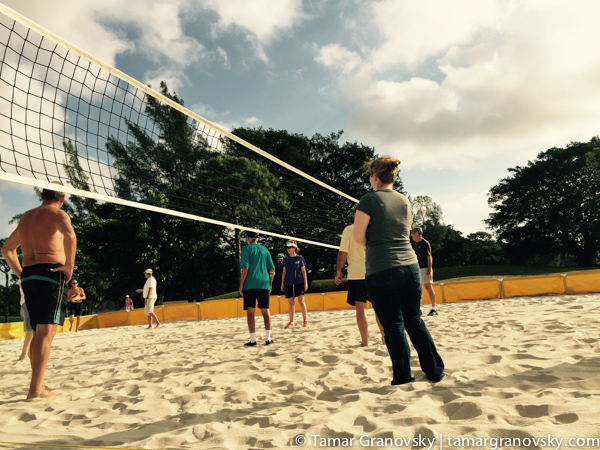
At the Volleyball Court

At the Volleyball Court

This coming February my mother will turn 86. My dad, who is 85, has had multiple small strokes which have led to a degree of dementia (he also is diabetic, has heart issues, and other ailments that are not unusual for a North American man of his age). My mom is his sole caregiver. At home in Montreal she can walk, take buses, the metro, or taxis to get around and my sister and her partner help her out as much as possible. In Florida, it is more difficult since she does not drive (it’s virtually impossible to get from place to place without a car in Florida). So, I volunteered to join her here for three months, to drive, cook, help clean, and keep my father occupied with walks and scrabble games, which he is still able to enjoy and even win on occasion.

My mother is in good health as are many of her friends. Together, they go to movies, the opera, and out to eat. However, the reality is that because of my father’s decline my parents are left out on occasion and are sometimes lonely as a result. My mother tries to get out with or without my dad. Friends seem to not call or drop by like they used to and I believe the reason for this is the fact that my father is not healthy, cannot hear well, cannot remember well, and cannot carry on a conversation. He is no longer the funny, smart, quick-tongued, articulate, and engaging man he once was. Plainly put, he is old and despite retaining a great sense of humour and good attitude, he can be difficult to be around when he is not silent and in his own world.

My father exhausts and worries my mother for obvious reasons. She has not only him to care for but herself and their household as well. He is dependent on her to give him his medication, take him to doctor appointments, keep his daily routine on track, give him his meals, monitor his extreme between-meal nibblings (one of many symptoms related to the dementia), take him for walks, take care of the bills, etc. None of this is atypical as we get older.

For better or worse, decrepitude is in the cards should we live to a ripe old age. My father’s movement toward infirmity means that during my sojourn in Century Village I must confront the process of aging and deterioration without averting my gaze. My goal, while here, is to get to know some of the residents, photograph them and their surroundings, and explore and tell the story of how they live here, learn about their community, and how they have come to grips with the process of aging and being at the edge of North American society.

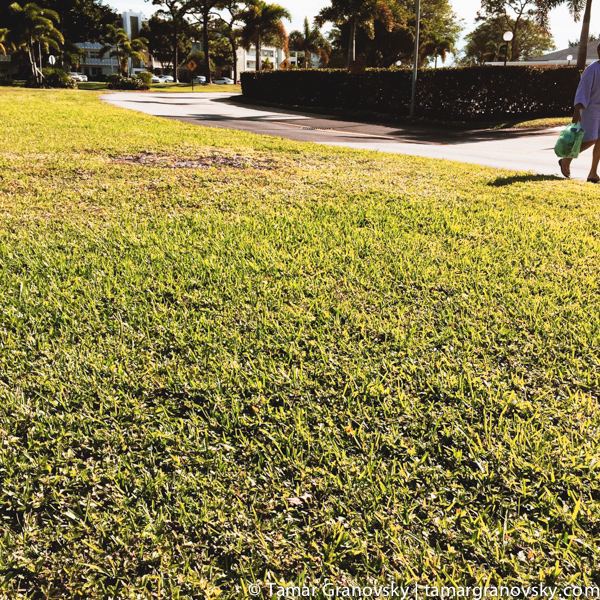
The Grounds

The Grounds

The Grounds

The Grounds

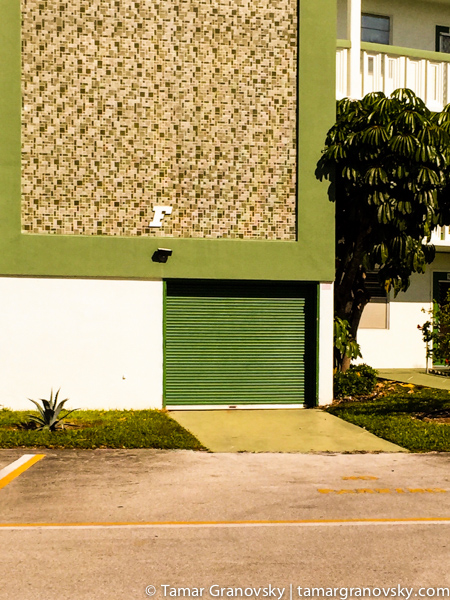
Building F

Grantham F

The Grounds

The Grounds

At the Pool

At the Pool


Look At Me. I Am Here

Abandoned House, Maine

Abandoned House, Maine

Every photograph is, in some respect, a self-portrait. The photographs I take say as much about me as they do about my subjects, since how I perceive the world is purely subjective. Photography is about seeing, feeling, longing, remembrance, and connection. It should suggest questions, without necessarily giving answers. The camera frames what I see and the moment I frame something, I express myself by what I’ve chosen to include and to exclude. The act of taking a photograph is a very personal endeavour.

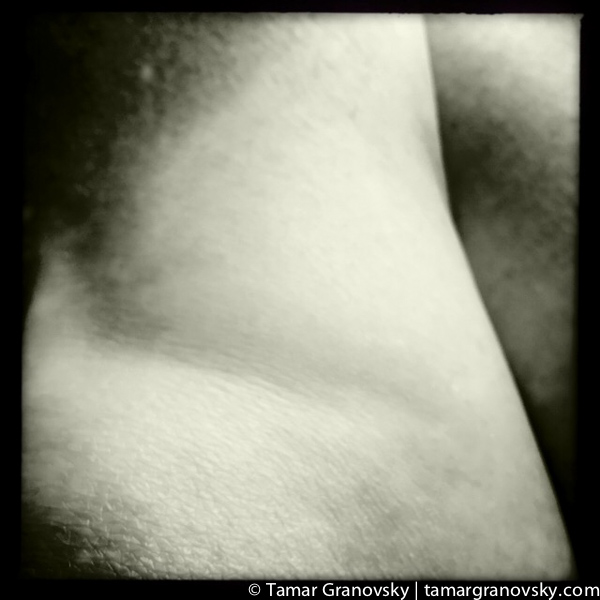
All of our time is spent with our selves. Given that, I have decided that I might as well take photographs of my own body, self-portraits if you will, to try to get below my own surface.  After all, I am here. I want to see my self – get very close. Dig deeply.

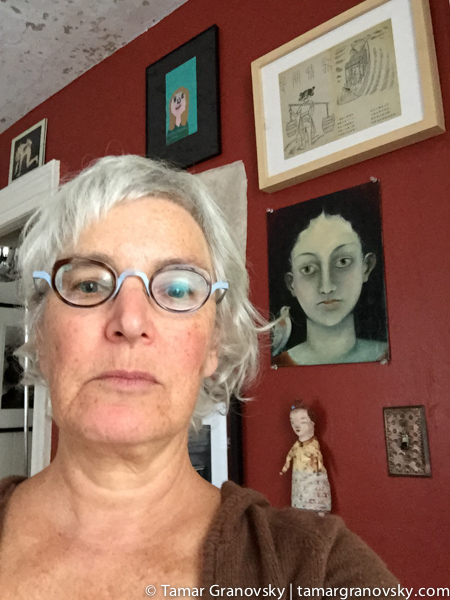
Recently, I bought a “smart” phone and have tried taking some “selfies.” I discovered that I have difficulty looking at and pointing the camera toward my own face. This year, I turned fifty-five. I am aging and photographs reveal this reality. No matter, I have decided to dive into social media and show self-portraits on Instagram. I am interested in identity and understanding how we see and identify ourselves.

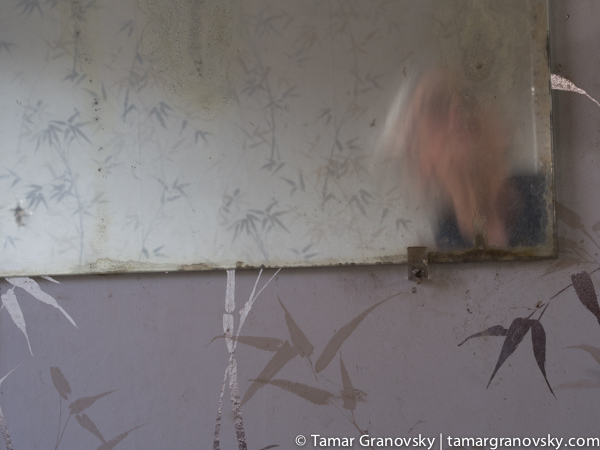
At Home (one of my very first "selfies")

At Home (one of my very first “selfies”)

Yet, the truth of the matter is that I like to be behind the lens rather than in front of it. I am, at heart, a voyeur and like looking into other people’s windows (literally and figuratively); this is why I keep the shades down at night. So, I have decided to peer into myself.  What do I see? How can I capture and communicate my emotions?

On the street I am attentive. I take the camera with me and shoot with purpose. However, now that I have an in-phone camera I shoot with a new-found frequency, more loosely, and freely. I am ever more connected to the process, to play, impulse, and chance. I suspect the phone changes the way I photograph because it is always there – better than any “Instamatic” ever was. Much of the time I turn it toward me.

The iPhone and Olympus OMD-EM5 camera are the tools through which I speak. And yet turning the camera on myself, my face, my body, I find they fail me. My body appears conspicuous. The skin ages. Joints creak. I am a stranger to myself. This “otherness” changes, daily. I am here and although it requires effort, these self-portraits open a dialogue with my self.

Along the Charles River

Along the Charles River

Along the Charles River

Along the Charles River

At Home

At Home

Sunday Afternoon

Sunday Afternoon

One Bright Day

One Bright Day


The Abandoned House: Rockport, Maine

Outside

Outside

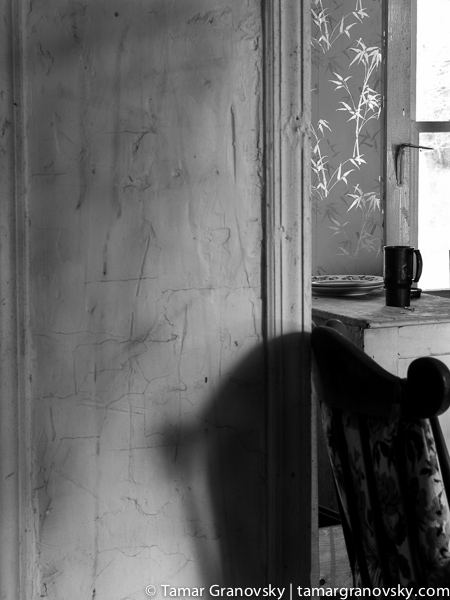
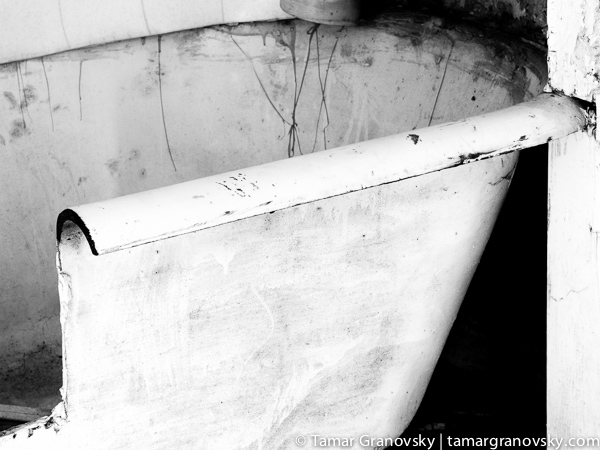
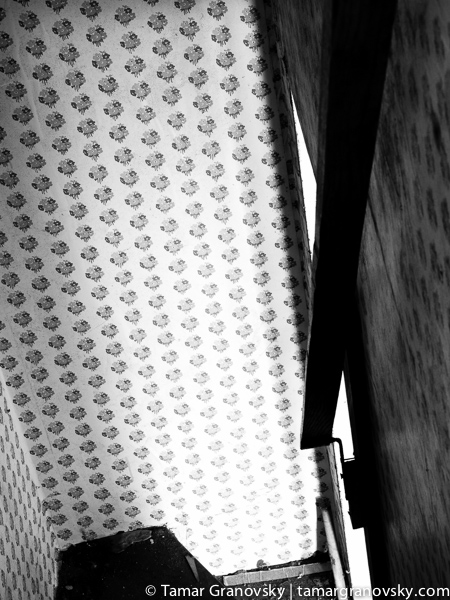
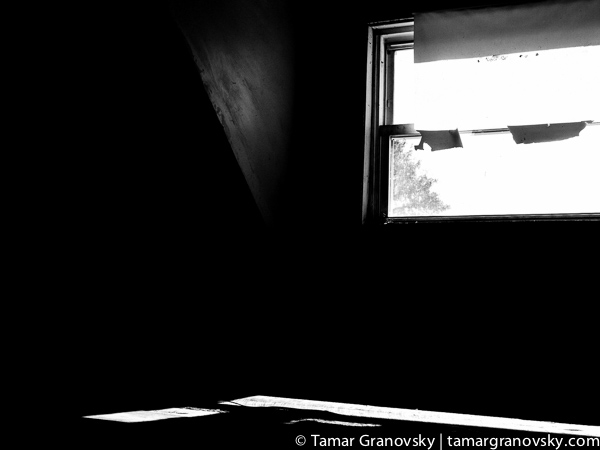
Haunted? Probably not. However, there is something irresistible about entering an abandoned building. Who inhabited it?  What did they do? How many people have passed through? The questions can go on. Answers are elusive yet the environment is rife with traces of the past. Often these places also show the marks of others who have visited before you:  vandalism like broken glass or graffiti, for example. When you go into a deserted house there is a chance you will discover collapsing floors or roofs.

Relics of architecture of times past such as fairgrounds, German bunkers, crashed airplane sites, grain elevators, factories, and other uninhabited architectural spaces are, I find, intensely beautiful. I feel a strong urge to explore them and thus truly gravitate toward them like a magnet. Somehow, I belong in these frozen places. Below are photographs of one small, neglected and no longer inhabited house in Rockport, Maine.

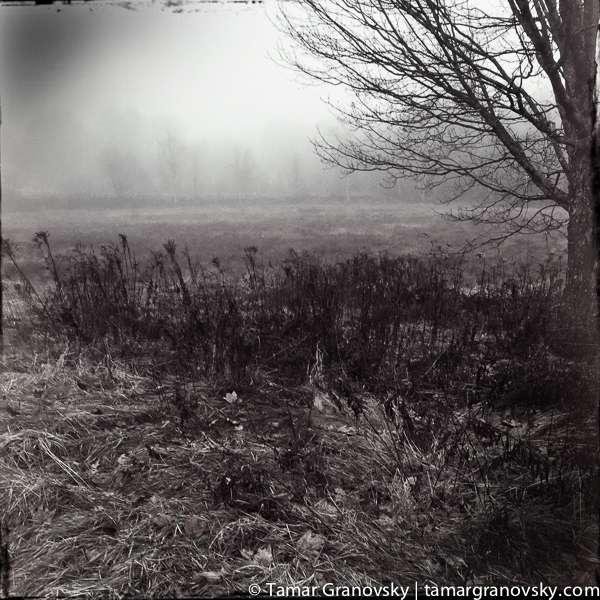
The photos were taken with my iPhone (using the Hipstamatic software) or with my Olympus OMD-EM5, on a tripod. The Hipstamatic software satisfies our general. tangible, nostalgic longings (why else develop such an app for the iPhone?); through various “lenses” and “film” you can produce different black and white contrasts, photographs that mimic Polaroid shots, tintypes, and other analogue-like photography. The photographs taken with my Olympus micro-four-thirds camera were lightly processed to convert colour into black and white  – as I wanted them to look.

I chose black and white because it lends itself to high contrast but may also be worked so that images are softer and more subtle. With colour removed, lines, shapes and light take on a more important role. Certain details in a colour image may go unnoticed or become too busy; black and white can remove these distractions. Black and white was appropriate for transmitting the nature of this place  – the extraordinary within the ordinary. It is more abstract and “symbolic” and takes you to another place and time. And, for the first time, I see my work differently when it is not in colour.

Outside

Outside

Outside

Outside

Inside Looking Out

Inside Looking Out

Inside

Inside

Inside

Inside

Inside

Inside

Inside

Inside

Inside

Inside

Outside My Door


Outside My Home

No Bird on the Wires (or in the birdhouse)

I have been in quite an artistic funk of late. I am at a crossroad and do not know where I am heading so cannot figure out the route I need to take to get there. I only know that I am ready to move forward. I look at the photographic work of others and it seems they have a purpose. As they do – I, too, want to produce images that are beautiful, emotional, have power, and touch people deeply. It is the way I feel about the world and life. Such intangibles.

Then I remind myself that there is a wealth of interesting life all around me – right outside my door. Nothing is insignificant.  The ordinary is what I must keep my eyes and heart open to.  My intention is to really see. My intention is to connect to the world.  Perhaps then I will find the latent core of what surrounds me or, at the very least, get a glimpse of understanding. If I head out there with the purpose of capturing images that can have an emotional impact then I will likely not succeed. I tend to forget that I work best on instinct. If I second-guess myself I end up less receptive to the everyday, to mysteries and questions. This process will take years of hard, ongoing, work, time, and patience. I am just at the beginning. And yet, and yet… I hope to never quite get there so that I may continue to discover the world.

Outside My Home

Playground Slide

Outside My Home

Broadway Street

Outside My Home

M.I.T.

Outside My Home

M.I.T.

Outside My Home

Cloud