Author Archives: Tamar Granovsky

Unknown's avatar

About Tamar Granovsky

Tamar Granovsky began working in photography in Boston, Massachusetts. She is now based in Montreal, Quebec. In 2018 she was named LensCulture’s Top 50 Emerging Talents. She has been included in various juried group exhibitions including the 5th Biennial of Fine Art and Documentary Photography in Barcelona; Photography Now 2017, at the Center for Photography in Woodstock; and the 22nd Juried Show: Peter Urban Legacy Exhibition at the Griffin Museum. In 2020 her work appeared in Boston as part of 8th Edition Regional Photographers Showcase of The FENCE. Her first solo show was at Cambridge’s Multicultural Arts Center, in September / October 2019. Prior to her career as a photographer, Tamar had several solo and group exhibitions, in Canada, in mixed media sculpture installation and was a recipient of a Canada Council Exploration Program Grant. Her pursuit of photography follows a career in sculpture, with a 17-year hiatus from the arts, as an archivist. The reflective, evocative, and grounding properties of the medium feed Tamar’s love for photographic work.

Dr. StrangeBlog; Or, How I Learned to Stop Worrying (Ha!) and Love my Website

Self-Portrait

Self-Portrait

Having both a blog and website allows me to put my images together so that I may develop and heighten my work, one photograph at a time. With the blog, I typically have just taken the photographs not long before. Posting them (with text for augmentation), provides an almost-instant gratification as well as a chance to show off and receive immediate feedback. By contrast, my website is a long term investment – a repository for some of the pieces I am most proud.

Over the last month I have spent much time analyzing the projects (books and websites) of other photographers, trying to understand what they have done to structure their images in progression. These past ten days or so, I have been re-developing my website. Looking at photographs I took over a year or two ago (many not looked at in that period of time) has made me see the work in a new light and has given me the distance to be more critical and objective. At the same time I found a few over-looked treasures. In re-doing my website I have come to realise that sequencing is something of an art – in which intuition plays a role. Each photograph has to stand on its own yet also work as part of the whole so that there is a rhythm or flow (so connections are made from one image to another).

So much for the blog and onto the website: tamargranovsky.com


Calipatria: Low Down City, 184 Feet Below Sea Level

Calipatria, California

Calipatria, California

Very recently I had the pleasure of taking a photography workshop with Gerd Ludwig, on the art of storytelling. In just 5.5 days we six students were taught to develop our eye and came out better photographers because of this. We first met at Gerd’s home to review each other’s portfolios. This was followed by learning about the theory behind photographic story-telling, and then instruction/theory on the importance of light (including strobe). Afterwards, we headed out for three days of shooting at the Salton Sea, which ended with a full day of editing and sequencing and a final slide show of our work from “the sea.”

Gerd demanded much but in return gave us his all (as did his assistant, Molly Peters – thank you both so much!). He was a tough task master (with a terrific sense of humour, thankfully!) who was very generous with his knowledge. He is equally genuine with his compliments and his criticism. He pushed each of us a notch or two beyond where we, as photographers, had been before we met him. He astutely took note of our strengths and weaknesses, pressing us to make the best use of those strengths and acknowledge but then set aside the weaknesses. I was able to build on the lessons I learned from Ernesto Bazan’s workshop a few weeks ago and am grateful to both men for being brilliant teachers (and marvellous photographers).

Calipatria, California

Calipatria, California

The following may appear obvious but is not something most people think about: it is easy to take one only shot of something or just keep clicking away and not work the scene by moving about one’s subject from different perspectives, so that one shoots with intention. Both teachers reminded us to take various shots of the subject so that alternative angles/contexts are shown (it will be fairly obvious when you really “capture” the essence). As both Gerd and Ernesto stressed, it is more difficult to photograph with purpose. It is critical to pay attention to the complete frame (so that the photograph is self-contained and conveys a story and/or feeling with consistency, and is composed so that all elements in the image play a role). We were reminded that when something catches our eye we need to move beyond eye-level and change perspective by walking around the subject, getting low, climbing high, pointing up or down. Simply put, don’t wait for your subject to move – instead, move yourself. Shoot from the feet, so to speak.

Insightfully, Gerd noted that I tend to not consider the role of colour – critical to colour photography (perhaps this is why I have recently started experimenting with black and white and why it feels good. With black and white I do not worry about one colour or shade overtaking another and I can focus on the subject). So, during the three days of shooting I tried hard not to have tunnel vision as I concentrated on composition and subject. Colour became an important element rather than something that is there by chance (whether I can keep this up is another story but I shall work on it – along with black and white).

Now on to Calipatria…

It turns out that we did not actually stay by the Salton Sea but rather in Calipatria, California. As much as I fell in love with the landscape of the Salton Sea I realised that it was Calipatria that really held me captive. Located in the Imperial Valley (and, if you have not caught on yet, near the Salton Sea), this semi-rural “city” is 3.7 square miles, with farming as its main industry. According to Wikipedia, “Calipatria is one of the state’s poorest cities in income per capita due to agricultural paychecks and a declined economy in the 1990s.”

California has been in a state of drought for several years now and, so far, most farmers have not been targeted for their water usage – but now there is some discussion about water being redirected to more populous areas like San Diego. This does not bode well for the environment nor for an economy that is already in decline and people whose health is suffering because of heat and drought.

Calipatria, California

Calipatria, California

The desert, fiery weather, and lack of rain do not bode well for people who rely on farming for their livelihood. Yet the people of Calipatria (and Imperial County) are used to working hard despite adversity. Country Singer Justin Moore says it all in his song “Small Town, USA” :

A lot of people called it prison when I was growin’ up
But these are my roots and this is what I love
Cause everybody knows me and I know them
And I believe that’s the way we were supposed to live…

…Around here we break our backs just to earn a buck
We never get ahead but we have enough

Calipatria, at most, is 10 square blocks; “downtown” is a mere two short ones. It comprises a post office, library, city hall, police/fire department, elementary/middle/high schools, a supermarket, a convenience store, two small restaurants and a doughnut shop, a laundromat, a liquor store, and not much else. There are three churches. The inn is at the end of town (most visitors to Calipatria are family members or friends of those in the prison at the edge of the city). If residents need to shop they travel to nearby Brawley. Children attend school during the week, adults work. The streets of Calipatria were desolate on both weekdays and weekend. Possibly the time of year had had something to do with this: temperatures were over 100F.  No matter, there is little in the way of amenities, thus there’s nothing to do but stay indoors, behind closed blinds that keep out the searing heat and bright sun. I saw only a few residents hanging out in the shade of their yards. Even the park was deserted. This left Calipatria silent – aurally and visually.
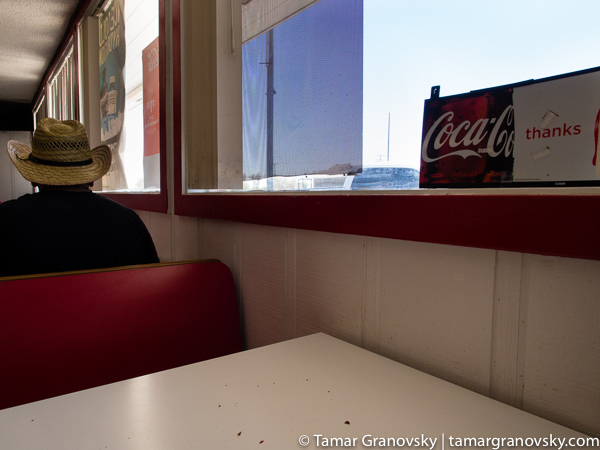
Calipatria, California

Calipatria, California

At first glance, Calipatria appears an ordinary, homogeneous, suburban terrain. Some homes are dilapidated and protected by dogs and chain link fences – the people who live inside have precious little. However, just as many of the humble homes I saw are obviously lovingly maintained. It was the everyday things, the small moments, the details of this place that first struck me and the details that I sought out: tilted telephone poles mirroring palm trees, neat lawns and fences, debris, rusted vintage automobiles, a lone person in the landscape. The sprinkling of people I spoke with grew up in or near Calipatria and chose to stay; each one was fiercely proud of place. Perhaps this is, in part, what had captivated me about the setting of this city, and which I, in turn, tried to capture in photos.

For three days I walked quietly up and down the streets, trying to immerse myself in and find the beauty of the City of Calipatria – 184 feet below sea level. It was another opportunity to learn to be true to myself and my voice, which my workshops with both Gerd and Ernesto had supported. Through all of this, I have figured out that I do not have an interest in telling narratives. Instead, I prefer to create images that hint at memory, emotion, or understanding.

Calipatria, California

Calipatria, California

Calipatria, California
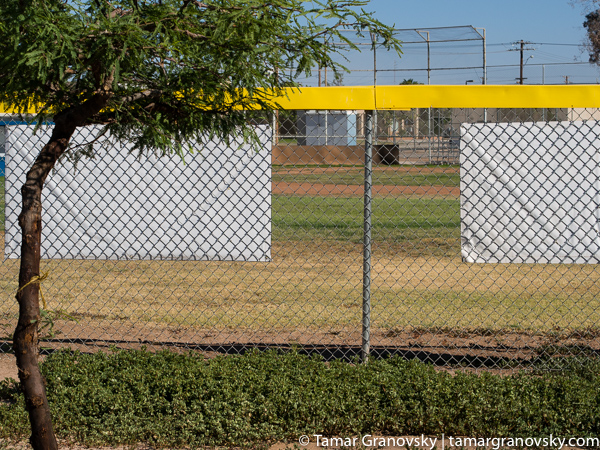
Calipatria, California
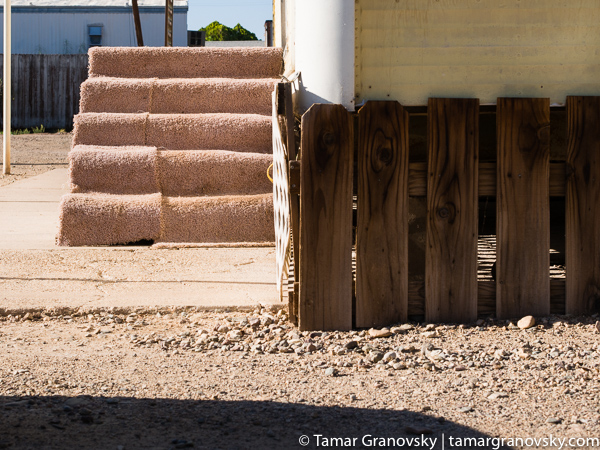
Calipatria, California

Calipatria, California

Calipatria, California

Calipatria, California
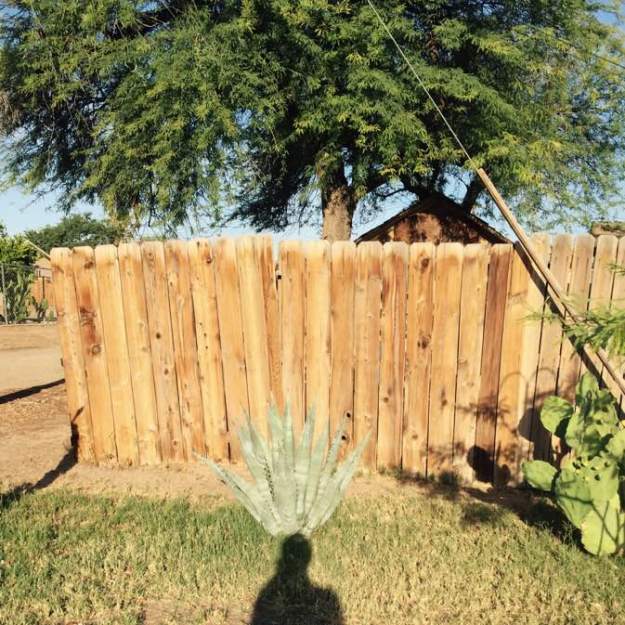
Calipatria, California

Calipatria, California
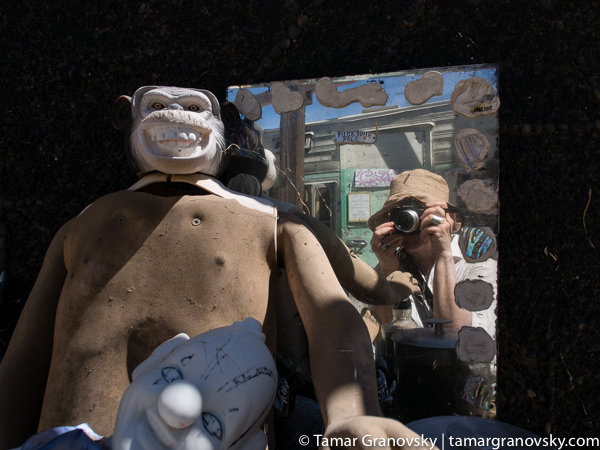
Calipatria, California

Calipatria, California

Calipatria, California

No “real” blog post this week. Please be patient, my dear readers. I am taking a workshop with Gerd Ludwig at the Salton Sea and am working on a short story, in Calipatria. Proof that I am here:

Calipatria, California

Calipatria, California

Calipatria, California

Calipatria, California

Calipatria, California
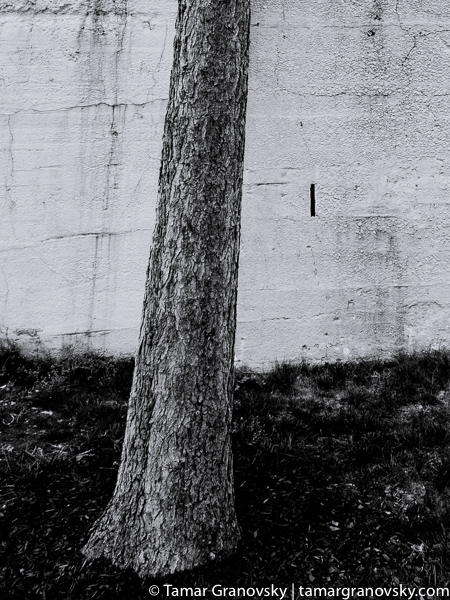
Calipatria, California
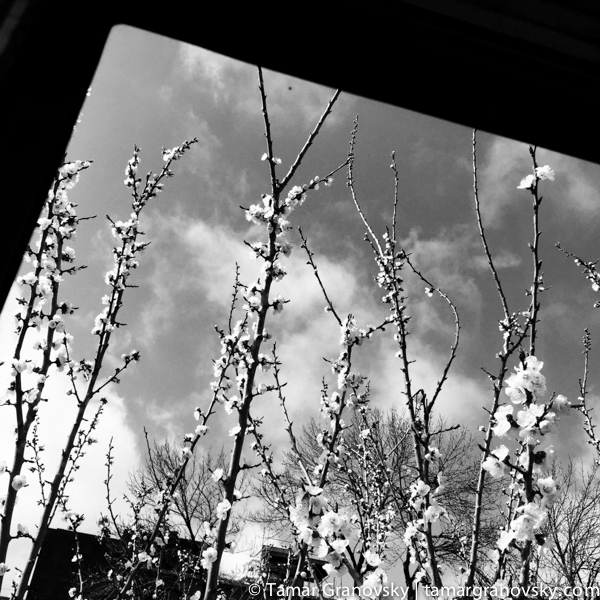
East Jesus, Salton Sea, California

East Jesus, Salton Sea, California (near Calipatria)


A Little Photo Workshop in Brooklyn

Brooklyn Window

Window, Carroll Garden, Brooklyn

Last weekend I was fortunate enough to take part in a photo workshop offered by Ernesto Bazan. Ernesto claims to be a harsh task master, but in truth he is a rigorous, competent, insightful, and generous man with high standards for his students; he knows they can reach greater levels by the time they leave him. After I adjusted to his leadership it became clear that I would come out thinking about photography in a new light. He offers constructive critiques emphasizing form, content, and avoidance of distraction (his mantra), so that one element does not overcome the other; it is not just about tightening composition, or simply showing something, but adding a human/emotive element to the photograph even if a person is nary to be seen. We were working to improve our photographic skills beyond the strictly technical issues – we were encouraged to develop our own photographic language.

I came upon Ernesto by chance when I saw a set of photographs, online, by one of his student’s. His name is Colin Steel and I contacted him because I loved his work and had wanted to know where he took the images. One thing led to another and eventually I came in touch with Ernesto Bazan. Seeing the strength of the work of Bazan’s students, besides Colin, I realised that I was sold – as if it was meant to be.

Girl with Mother at Food Stand, Williamsburg Smorgasburg

Girl with Mother at Food Stand, Williamsburg Smorgasburg, Brooklyn

My workshop was in Brooklyn and was made up of first-timers (despite the fact that many students return again and again). We melded into a cohesive and supportive group learning much from each other. Our lives/backgrounds and photographic experiences varied; many were generating work of a high calibre which pushed me to do my damnedest to work toward their level.

The most important thing that I learned last week was how to see with my camera, as if it is an appendage and a part of my soul. As a visual artist I know how to see but I did not take note of every detailed element framed by the camera (i.e., I am not always aware of things that may be a distraction — what seized me is not conveyed, because the diversion(s) leads the viewer’s eye astray from the subject). The workshop was only 2.5 days but already I have developed new habits  – how to look through the lense when something grabs my heart so that I can get to the core of it and keep a keen eye out for extraneous elements.

Food Stand, Williamsburg Smorgasburg

Food Stand, Williamsburg Smorgasburg, Brooklyn

I began this workshop photographing what I thought I “should” photograph rather than allow myself to have something touch me and guide my instincts.  A fellow student mentioned to me that Ernesto had said, in conversation with her, that she should work with her natural inclination and photograph what talks to her heart. Upon hearing this I started listening to mine. It became clear that my best images came from freeing my mind so that I was guided by my feelings or first impulse, if you will.

Church Yard, Carroll Garden, Brooklyn

Church Yard, Carroll Garden, Brooklyn

Park Tree, Williamsburg, Brooklyn

Park Tree, Williamsburg, Brooklyn

Grey, Grey, Boston

Apricot Tree Outside my Bedroom Window

Apricot Tree Outside my Bedroom Window

Slowly, Spring is coming.  We, like everyone else in the Northeast, have been teased in BostonA bright day offers hope but is then followed by many grey days. As I write this, the promise is that the next few days will embrace Spring fully. Despite the occasional wind, we are really starting to feel the warmth. The first flowers are splashing colour onto the urban landscape. Garlic leaves are shooting up, extending themselves in our garden. Asparagus stems are bursting through the earth. Our apricot tree has just bloomed; the petals have already fallen and its flowers are beginning the transformation into fruit.

Some weeks ago, in the darker days, I decided to go for a long walk, despite cool temperatures, grey skies and wind. My hands were in fingerless gloves so that I could easily hold onto my camera and access it.

The photos from that walk could easily have been taken last week (but not quite… the snow is gone, for starters, and Spring is truly starting to arrive). That day the wind blew and blew. The air was crisp. Boston was grey.

Chinatown

Chinatown

Back Bay

Back Bay

Overlooking the Turnpike

Overlooking the Turnpike

Back Bay

Back Bay

Back Bay

Back Bay

Back Bay

Back Bay